Изображение

Превращайте аналитические выводы ИИ в реальные действия

Присоединяйтесь к списку ожидания AeroGenie уже сегодня!

В тренде

Categories

BAT Approved to Service South Korean-Registered Aircraft
August 24, 2026By ePlane AI
BAT Approved to Service South Korean-Registered Aircraft
0
0
Batam Aero Technic
South Korea MOLIT
Aircraft Maintenance Approval

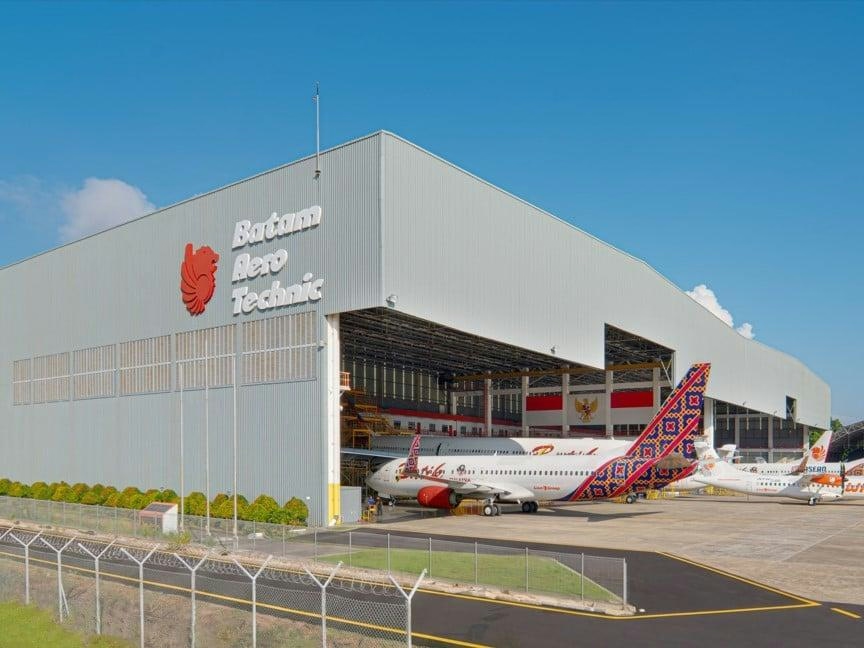
BAT Secures Approval to Service South Korean-Registered Aircraft

Batam Aero Technic (BAT) has obtained official certification from South Korea’s Ministry of Land, Infrastructure and Transport (MOLIT), authorizing the company to provide maintenance services for aircraft registered under South Korean regulations. This approval follows a thorough and rigorous audit process, marking a significant milestone in BAT’s international expansion strategy.

Strengthening Regional and International Presence

The MOLIT certification enhances BAT’s standing as a prominent maintenance, repair, and overhaul (MRO) provider within Southeast Asia and elevates its profile in the global aviation market. Originally established to support the Lion Group’s fleet, BAT specializes in servicing high-frequency narrow-body aircraft, delivering efficient and reliable maintenance solutions. The company benefits from Lion Group’s integrated aviation ecosystem, which encompasses airlines, cargo and logistics operations, travel services, aviation support businesses, and training institutions. This comprehensive network allows BAT to combine specialized MRO expertise with extensive operational resources, ensuring consistent and dependable service delivery to its clients.

Navigating Regulatory and Competitive Challenges

BAT’s entry into servicing South Korean-registered aircraft introduces new challenges, particularly in meeting the stringent regulatory standards imposed by South Korean aviation authorities. These regulators have intensified their scrutiny of maintenance practices to ensure compliance with international safety regulations. Maintaining adherence to these rigorous requirements will be essential for BAT to establish and sustain trust among South Korean carriers.

The market response to BAT’s certification has been positive, with growing interest from South Korean airlines considering BAT as a viable alternative for their maintenance needs. However, this development is likely to prompt established MRO providers in the region to intensify their efforts to secure contracts with South Korean operators, thereby increasing competition within the sector.

South Korean regulators continue to closely monitor maintenance-related decisions, which may impact BAT’s operational scope and potential for further market expansion. As BAT navigates these regulatory and competitive dynamics, its ability to uphold high safety standards and deliver consistent service quality will be critical to its success.

With MOLIT approval secured, BAT is well-positioned to broaden its footprint in the global aviation maintenance market. Leveraging its integrated approach and operational expertise, the company aims to meet the evolving demands of international carriers while addressing the challenges inherent in a highly regulated and competitive environment.

More news
Heather Bullard: Veteran Leader in Aviation Supply Chain Management

Heather Bullard: Veteran Leader in Aviation Supply Chain Management

Heather Bullard: Veteran Leader in Aviation Supply Chain Management GREENSBORO, NC — With over 30 years of experience in aviation and aerospace manufacturing, Heather Bullard has established herself as a distinguished supply chain leader. Currently heading operations at JetZero in Greensboro, North Carolina, Bullard plays a pivotal role in supporting advanced aerospace development programs. Her responsibilities encompass overseeing intricate supply chain operations, fostering strong supplier relationships, and enhancing operational efficiency within highly technical production environments. A Career Marked by Progressive Leadership Bullard’s 31-year career reflects a steady progression through leadership roles, including more than a decade at Honda Aircraft Company, where she managed supply chain operations, procurement, and contract administration. Her expertise spans the full spectrum of aerospace production, from procurement and supplier management to risk mitigation and operational execution. These skills have become increasingly critical as the aviation industry confronts growing supply chain disruptions and fluctuating maintenance schedules. The sector itself is under intense scrutiny as companies strive to bolster supply chain resilience and operational effectiveness. Industry competitors are adopting strategic measures to maintain their positions. Bombardier, for instance, has reinforced its leadership in the business jet market and expanded its defense modification capabilities in Canada to navigate ongoing supply chain challenges. Meanwhile, Honeywell Aerospace continues to wrestle with escalating supply chain difficulties, and Lufthansa Technik has achieved revenue growth despite margin pressures. These developments underscore the vital role of robust supply chain management across the aviation industry. Leadership Shaped by Experience and Resilience Bullard’s leadership style is characterized by a strong analytical approach, exceptional organizational skills, and the capacity to perform under pressure. These attributes were shaped by her upbringing as the daughter of military parents and as a first-generation college graduate. While raising a family, she earned a Bachelor of Business Administration from Friends University, cultivating the discipline and perseverance necessary to balance competing priorities in demanding environments. Navigating a predominantly male industry, Bullard attributes her success to the confidence and courage instilled early in life. She has frequently been one of the few women in daily meetings, a reality that remains common in many professional settings. Her approach stresses the importance of speaking out professionally and contributing with assurance, regardless of gender representation. Bullard views confidence not as immunity to failure but as the resilience to learn from setbacks and continue moving forward. “When someone fails, there is a decision to make: give up or push forward, learn, and succeed the next time,” she explains. This philosophy has guided her through the complexities of supply chain management, where teams are often held accountable for challenges beyond their control. As the aviation industry evolves amid global supply chain pressures and competitive dynamics, leaders like Heather Bullard are essential in fostering resilience, operational excellence, and the advancement of women in technical fields. Her dedication to mentorship and risk management positions her as a role model for the next generation of aerospace professionals.
AerFin Expands Boeing 777 Fleet

AerFin Expands Boeing 777 Fleet

AerFin Expands Boeing 777 Fleet Amid Market Shifts and Industry Challenges AerFin is enhancing its support for airline operators across North and Latin America by expanding its Boeing 777 inventory at its Miami hub. This strategic move provides customers with direct access to an increasing stock of Boeing 777 components, aiming to reduce lead times and improve operational continuity for carriers throughout the Americas. Strategic Growth and Market Focus Since 2021, AerFin has acquired 179 whole assets, comprising 64 airframes and 115 engines, as part of a broader strategy to address the rising demand for widebody aircraft materials. Alongside significant investments in Airbus A330 aircraft, the company has made targeted acquisitions of 777-300ER assets, reflecting the growing market appetite for widebody support. Jacqueline Fernandez, Senior Vice President for the Americas at AerFin, highlighted the importance of the region, stating, “The Americas remains a key market for widebody operations, and operators need dependable access to material to keep aircraft available and costs under control.” She added that the expanded 777 inventory in Miami enables the company to respond swiftly to customer needs while providing valued local expertise. Navigating Industry Challenges and Competitive Pressures AerFin’s expansion occurs amid a complex and evolving industry landscape. The company faces potential challenges including rising operational costs, geopolitical uncertainties, and possible delays in aircraft deliveries, all of which could affect the pace and efficiency of its fleet growth and service capabilities. Market dynamics are also shifting, with increased competition expected not only in the Americas but globally. For instance, Africa is emerging as one of the fastest-growing air travel markets, with airlines such as Ethiopian Airlines expanding their fleets. These developments may influence AerFin’s strategic decisions as it seeks to maintain its market position and adapt to changing demand patterns. James Bennett, Chief Commercial Officer at AerFin, underscored the company’s commitment to these challenges, stating, “The 777 continues to be an important platform for airlines around the world, and our investment reflects both current demand and long-term market confidence. By building inventory and positioning it close to our customers, we’re helping operators access quality material faster while benefiting from the flexibility and support that comes with partnering with AerFin.” AerFin’s Miami warehouse and office serve as a central component of its global network, acting as a strategic gateway to customers across North America, Latin America, and the Caribbean. As the company navigates industry headwinds and intensifying competition, its focus remains on delivering reliable access to critical aircraft components and supporting the operational needs of airlines in a rapidly changing market.
Steiner Expands MRO Services at Akron-Canton Airport

Steiner Expands MRO Services at Akron-Canton Airport

Steiner Expands MRO Services at Akron-Canton Airport Amid Industry Challenges Steiner Aviation International has significantly expanded its maintenance, repair, and overhaul (MRO) services at Akron-Canton Regional Airport (CAK), enhancing its airframe maintenance and inspection capabilities to accommodate a broader range of business and regional aircraft. With over 25 years of expertise in aircraft maintenance and avionics, the company now supports models including the Embraer ERJ 135/145, Cessna Citation 500, 550, 560, 560+, and 560XL, as well as all Beechcraft King Air and Dassault Falcon variants. Workforce Expansion and Service Enhancement To address the growing demand and expanded service offerings, Steiner Aviation has increased its technical workforce by five, adding three A&P technicians alongside two avionics specialists. This strategic augmentation aims to enhance capacity in both airframe maintenance and avionics, reinforcing Steiner’s commitment to delivering a responsive and customer-centric alternative to larger MRO providers. The company’s investment in skilled personnel underscores its dedication to meeting the evolving requirements of business and regional aircraft operators. Navigating a Complex Industry Landscape The expansion occurs amid a challenging environment for the MRO sector, which is contending with rising labor costs and a shortage of qualified technicians. These issues are further complicated by increasingly stringent regulatory demands, shortages of raw materials, and uncertainties stemming from global trade tensions and geopolitical instability. Such factors collectively affect operational efficiency and long-term planning within the industry. Moreover, analysts have identified a "supercycle" in the MRO market, characterized by unexpected maintenance needs that necessitate earlier-than-planned servicing, alongside a deceleration in aircraft retirements due to production delays from manufacturers. This dynamic compels MRO providers to rapidly adjust their capacity and resource allocation to align with shifting market demands. In response, competitors have pursued strategic initiatives such as workforce partnerships and extended service agreements. For instance, American Airlines has introduced workforce collaborations to mitigate technician shortages, while Embraer has expanded its heavy maintenance service contracts to ensure sustained support. Within this context, Steiner Aviation’s expansion at Akron-Canton positions the company to better serve operators seeking flexible, high-quality maintenance solutions. By broadening its technical capabilities and workforce, Steiner aims to effectively navigate industry headwinds while supporting the complex and evolving needs of its clientele.
Airbus Reports Record Orders and Freighter Launch Amid Hybrid-Work Debate

Airbus Reports Record Orders and Freighter Launch Amid Hybrid-Work Debate

Airbus Reports Record Orders and Freighter Launch Amid Hybrid-Work Debate Labor Dispute and Remote Work Policy Airbus has retreated from its initial plan to restrict remote work following significant protests at its Spanish factories, where approximately 40 percent of the 14,000 employees participated in walkouts. The company will now permit managers to continue the existing arrangement of two days per week working from home, abandoning the proposed limit of one day. Although the dispute also involved issues such as pay, holiday scheduling, and transportation, production operations remained uninterrupted. This episode underscores the increasing sensitivity of labor relations as Airbus intensifies its ambitious production expansion. Strong Operational Performance and Order Growth Operationally, Airbus continues to demonstrate robust performance. In July, the company delivered 67 aircraft, bringing the total for the year to 418 and maintaining its trajectory toward the 2026 target of approximately 870 commercial jets. The order backlog remains substantial, standing at 9,222 aircraft at the end of the first half of the year, supported by 886 gross and 821 net bookings. Momentum has accelerated since then, with net orders exceeding 1,000 for the year, including over 200 in July alone. Significant contracts include China Eastern Airlines’ order for 25 A330-900s and Hainan Airlines’ commitment to 40 A320neo-family jets, reflecting strong demand from China and deals secured at the Farnborough Airshow. Financially, Airbus reported a 47 percent increase in first-half net profit year-on-year, with earnings per share rising to EUR 2.84. Revenue grew by 12 percent to EUR 33.2 billion, while earnings before interest and taxes (EBIT) surged 70 percent to EUR 2.75 billion. The company reaffirmed its full-year guidance of around 870 deliveries and an adjusted EBIT of EUR 7.5 billion, citing improvements in engine supply. Looking further ahead, Airbus projects adjusted EBIT of EUR 12 to 13 billion by 2029 and has approved a EUR 5 billion share buyback program over three years. Infrastructure Expansion and New Programs To support its growing order book, Airbus is investing heavily in infrastructure. In Belfast, construction has commenced on a 6,200-square-meter expansion aimed at increasing A220 wing-manufacturing capacity, with completion expected in the first half of 2028. Concurrently, Airbus is advancing its A350F freighter program, targeting a maiden flight in the third week of September. This initiative could challenge Boeing’s dominance in the air cargo sector. The company maintains its official schedule of a first flight before the end of 2026, initial deliveries in the second half of 2027, and production ramp-up in 2028. Defense and Space Developments In the defense and space sectors, Airbus anticipates additional airlifter orders through NATO’s pooled A400M program, although market uptake remains gradual. The company was recently appointed prime contractor for the SpainSat NG-III satellite by Hisdesat and delivered the first NH90 Standard-2 special-operations helicopter to France’s DGA procurement agency. Airbus Helicopters also secured a U.S. Army contract for ten UH-72B Lakota helicopters valued at $115.4 million, with options that could increase the total to $140.7 million. Market Context and Share Performance Despite these operational achievements and record-breaking orders, Airbus’s share price has yet to fully reflect its strong momentum, closing on Friday at EUR [price not provided]. The company’s performance unfolds amid intensifying competition, with Boeing securing its first-ever order from Uganda Airlines and Embraer winning E-Jet contracts at Farnborough, highlighting a dynamic and competitive aerospace market.
Lion Group Expands Engine MRO Services with Launch of Batam Aero Engine

Lion Group Expands Engine MRO Services with Launch of Batam Aero Engine

Lion Group Expands Engine MRO Services with Launch of Batam Aero Engine Lion Group has inaugurated Batam Aero Engine (BAE), a new facility that significantly broadens its aircraft engine maintenance, repair, and overhaul (MRO) capabilities within Indonesia. Commencing operations on August 19, 2026, in Batam, the facility is designed to deliver comprehensive maintenance services for jet and turboprop engines, as well as auxiliary power units (APUs). Enhancing Indonesia’s MRO Capacity and Regional Competitiveness BAE represents a strategic move by Lion Group to enhance domestic engine maintenance capacity and elevate Indonesia’s position in the competitive Asian MRO market. The facility is equipped to perform both on-wing maintenance—servicing engines while still installed on aircraft—and off-wing services, which involve the removal of engines for detailed inspection, repair, and overhaul. Its technical capabilities include advanced borescope inspections utilizing IPLEX NX, IPLEX GX/GT, and Mentor Flex equipment, alongside Low Pressure Turbine (LPT) module replacements conducted by certified personnel. This expansion occurs amid rapid growth and intensifying competition in the global engine MRO sector. Established industry players such as ORIX, AerFin, and HAECO are simultaneously investing in new facilities and enhancing their service offerings to maintain market share. These developments present challenges for BAE, including the need to manage capacity constraints and comply with stringent regulatory standards to uphold quality and safety. Despite these challenges, Lion Group identifies significant growth opportunities. The European engine MRO market, for instance, is projected to expand at a compound annual growth rate (CAGR) of 4.1% over the next decade, signaling robust industry momentum and potential for cross-regional collaboration. BAE’s strategic location along vital regional aviation and trade routes, coupled with Batam’s established industrial and aviation infrastructure, positions the facility to attract maintenance contracts from across Asia. Daniel Putut Kuncoro Adi, president director of Lion Group, underscored the facility’s dual focus on domestic and international markets, stating, “We hope this facility can serve domestic needs as well as friendly countries and further strengthen Indonesia’s aviation industry.” Workforce Development and Strategic Importance The launch of BAE is anticipated to create new opportunities for skilled aviation professionals, including engine technicians, engineers, inspectors, and quality assurance specialists. The facility aims to support workforce development through practical training, certification programs, and fostering closer collaboration between the MRO sector and educational institutions. Sokhib Al Rokhman, director of airworthiness and aircraft operations at Indonesia’s Directorate General of Civil Aviation, emphasized the strategic significance of the new facility: “We want to strengthen aviation independence by making Batam Aero Engine an MRO hub that is efficient, responsive, and competitive in the Asian market.” As Lion Group advances with BAE, it confronts a dynamic and evolving market landscape that demands continuous investment, innovation, and collaboration to secure a leading position in the region’s expanding aviation maintenance sector.
Russia Announces Combat AI Integration in Su-57D Fighter Jet

Russia Announces Combat AI Integration in Su-57D Fighter Jet

Russia Announces Combat AI Integration in Su-57D Fighter Jet On August 14, 2026, the Russian state news agency TASS reported that the newly developed two-seat Su-57D stealth fighter will serve as a test platform for combat artificial intelligence (AI) currently under development at the Sukhoi Design Bureau. This announcement was made by Mikhail Strelets, director of Sukhoi, during an interview on the state-run Zvezda television program *Military Acceptance*. While the information originates from Russian state sources, independent verification remains limited. Nonetheless, it is confirmed that Russia has constructed and flown a two-seat Su-57D, with the second cockpit reportedly designed for drone command functions. Development and Flight Details The Su-57D is a two-seat variant of the Su-57 (NATO reporting name: Felon), with its maiden flight occurring on May 19, 2026, at the Komsomolsk-on-Amur Aircraft Production Association (KnAAZ). The flight lasted approximately 40 minutes and was piloted by Sergei Bogdan, Sukhoi’s chief test pilot. The aircraft is a modified early T-50 prototype featuring a tandem two-seat cockpit beneath an elongated canopy, with the rear seat elevated relative to the front. This configuration is intended to facilitate roles such as combat training, airborne strike coordination, and control of unmanned combat aerial vehicles (UCAVs). In November 2023, United Aircraft Corporation filed a patent for this twin-seat Su-57 design, emphasizing its focus on UAV coordination. The rapid progression from patent filing to first flight—less than 30 months—demonstrates the program’s accelerated development pace. However, no independently verified photographs of the Su-57D have been publicly released to date. Combat AI and Operational Intentions According to Mikhail Strelets, the addition of a second operator’s cockpit enables the implementation of advanced sixth-generation technologies, specifically the control of unmanned aerial vehicles from an airborne command post. The Su-57D is intended to operate in conjunction with the S-70 Okhotnik-B heavy UCAV and potentially manage drone swarms or group systems. While TASS paraphrased these capabilities, no detailed information has been provided regarding the AI’s architecture, autonomy levels, operational timelines, or decision-making authority. Independent defense analysts urge caution, interpreting these claims as developmental objectives rather than confirmed operational capabilities. It is also important to clarify personnel roles: Mikhail Strelets serves as Sukhoi’s bureau director, while Sergei Bogdan is the test pilot, a distinction sometimes confused in social media discussions. Strategic Context and Global Implications Russia’s announcement emerges amid intensifying global competition in military AI integration. The United States Air Force has already demonstrated AI-controlled fighter intercepts with the X-62A, while Western defense contractors such as Lockheed Martin Skunk Works continue to advance sensor-driven autonomous systems. These developments underscore a growing technological rivalry between Russia and Western nations, with significant implications for the global defense market. Countries like India are actively seeking participation in advanced fighter programs, including France’s Future Combat Air System (FCAS), to maintain technological parity. Concurrently, Ukraine’s efforts to develop autonomous strike capabilities highlight a broader trend of nations investing heavily in AI-driven military technologies to counter Russian advances. While the Su-57D program signals Russia’s ambition to integrate AI into air combat, its actual capabilities remain to be independently verified. The accelerating global race for combat AI integration is poised to reshape the future landscape of aerial warfare.
MRO Recruitment Challenges Amid Aviation’s Talent Shortage

MRO Recruitment Challenges Amid Aviation’s Talent Shortage

MRO Recruitment Challenges Amid Aviation’s Talent Shortage The aviation industry is confronting a critical shortage of skilled personnel in Maintenance, Repair, and Overhaul (MRO) roles, intensifying recruitment challenges across the sector. As airlines and maintenance providers contend with growing engine MRO backlogs, aging aircraft fleets, and the integration of digital maintenance technologies, the demand for licensed engineers, digitally proficient engine specialists, and certified technicians has become increasingly urgent. This talent scarcity is driving up costs and reshaping the competitive landscape for MRO services worldwide. Engine Maintenance Bottlenecks and Aging Fleets The sector is currently experiencing an MRO super cycle, with global expenditure expected to rise from $136 billion to nearly $193 billion by 2030. This surge is largely attributed to aircraft operating five to seven years beyond their original design life, deferred maintenance schedules, and a 40% increase in heavy maintenance checks (C/D checks) since early 2026. Engine MRO services represent the most significant constraint. In 2025, more than 648 aircraft equipped with next-generation geared turbofan (GTF) engines—such as those on the A320neo, A220, and E-Jets E2—were grounded awaiting maintenance, causing widespread disruption to airline operations. Capacity limitations in engine MRO are resulting in substantial financial losses, estimated at $11 billion, alongside the grounding of hundreds of aircraft. These losses are exacerbated by operational inefficiencies and aircraft unavailability, with annual costs related to MRO shortages now exceeding $27 billion. The Aeronautical Repair Station Association (ARSA) attributes approximately $14 billion of these losses directly to workforce shortages. Maintenance demand is projected to escalate sharply, with required maintenance hours increasing from 310 million annually to 565 million by 2043, driven by aging fleets and sustained high utilization rates. Regional Shifts and Growing Competition for Talent The geographic distribution of MRO demand and recruitment is shifting, with Asia-Pacific, Latin America, and emerging European hubs expanding their maintenance infrastructure and investing in digital tools to alleviate capacity constraints. For instance, FL Technics’ new hangar in Punta Cana, Dominican Republic, attracted over 3,500 job applicants and plans to employ up to 2,000 staff in the coming years. Liebherr-Aerospace is establishing a service center in Dubai South, certified by both the European Union Aviation Safety Agency (EASA) and the UAE’s General Civil Aviation Authority (GCAA), to support air management components. Safran’s facility in Querétaro, Mexico, aims to create more than 450 jobs focused on certified LEAP and CFM56 engine technicians, with a target to test up to 350 engines annually by 2030. Meanwhile, Lufthansa Technik is constructing a 55,000 square meter facility near Porto, Portugal, specializing in aircraft component and engine part repairs, expected to generate approximately 700 skilled positions. Despite these expansions, competition for qualified workers is intensifying not only within the aviation sector but also from adjacent industries such as defense and space. This cross-sector demand further complicates recruitment efforts. Europe, in particular, is projected to represent 21% of the global engine maintenance market between 2026 and 2035, with its in-service commercial engine fleet growing at an annual rate of 3.3%, surpassing the global average. Industry Initiatives: Training and Technological Innovation In response to these challenges, airlines and MRO providers are enhancing advanced training programs and adopting innovative technologies to attract and retain talent. Virtual reality tools are increasingly employed to simulate emergency scenarios, providing immersive training experiences that improve readiness and engagement. Lufthansa Technik’s revenue growth in the first half of 2026, despite margin pressures, reflects strong global demand for MRO services, although concerns about market predictability persist. Strengthening recruitment strategies and workforce planning, alongside embracing digital transformation, remains essential for the aviation industry to address the ongoing talent shortage and maintain operational resilience in the face of mounting maintenance demands.
Sustainability Shifts from Corporate Pledges to Infrastructure Investment Amid Changes in Aviation, AI, and Natural Capital

Sustainability Shifts from Corporate Pledges to Infrastructure Investment Amid Changes in Aviation, AI, and Natural Capital

Sustainability Shifts from Corporate Pledges to Infrastructure Investment Amid Changes in Aviation, AI, and Natural Capital Sustainability investment is increasingly moving beyond symbolic corporate pledges, becoming a decisive factor in infrastructure development, financing strategies, and resource management across key industries. Innovations in sustainable aviation fuel, renewable energy integration for data centers, advanced water management techniques, and the emergence of natural capital markets illustrate how both private and public sectors are responding to intensifying environmental challenges. This transformation is visible across a broad geographic spectrum, from Latin America and the United States to Southeast Asia, where businesses now regard emissions reduction, energy security, water availability, and ecosystem valuation as integral commercial priorities rather than peripheral environmental concerns. In regions such as Africa, where infrastructure gaps and limited access to climate finance persist, these global trends offer valuable insights into embedding sustainability within investment frameworks. Aviation: From Pledges to Concrete Action The aviation industry, long recognized as one of the most difficult sectors to decarbonize due to the limitations of battery technology and direct electrification for long-haul flights, is beginning to implement tangible sustainability measures. A notable development is the framework agreement between Syzygy Plasmonics and the International Finance Corporation (IFC) to explore sustainable aviation fuel projects across Latin America. Syzygy’s innovative light-driven technology, combined with the IFC’s role as a development finance institution, highlights the importance of bridging the gap between pilot technologies and commercially viable, bankable projects. Globally, airlines and manufacturers are adopting diverse strategies to reduce their environmental impact. Initiatives such as the United Kingdom’s ‘Operation Blue Skies’ and electric air service trials in Norway and Sweden exemplify proactive efforts to advance sustainable aviation. Collaborations between major players like Airbus and Air Canada on sustainable aviation fuel projects further demonstrate industry commitment. Meanwhile, companies such as Bombardier are enhancing transparency by publicly disclosing their full environmental footprints. For emerging markets, particularly in Africa where aviation demand is expected to grow, success will hinge on developing the necessary infrastructure, securing reliable electricity supplies, establishing feedstock supply chains, implementing certification systems, and attracting long-term capital investment. AI and Data Centers: Emerging Sustainability Pressures The rapid expansion of artificial intelligence (AI) is introducing new sustainability challenges, especially concerning the energy and water demands of data centers. ENGIE’s recent 48-megawatt solar power purchase agreement with data center operator QTS in Texas exemplifies how operators are increasingly relying on long-term renewable energy contracts to address rising electricity consumption and associated emissions. As AI drives demand for high-performance computing, data centers face growing pressure from investors and customers alike to minimize their environmental footprint. However, renewable energy procurement addresses only part of the sustainability equation. Data centers also require substantial water resources for cooling, which can place significant strain on local utilities. Companies such as Gradiant are expanding their focus on water management solutions tailored to data centers and semiconductor manufacturing facilities, reflecting heightened concerns about the capacity of communities to support expanding digital infrastructure in terms of both energy and water availability. Investment Challenges and Market Uncertainty The transition from corporate sustainability pledges to substantial infrastructure investment entails significant financial commitments and inherent risks. Fitch Ratings has cautioned about the potential for a market correction in the AI sector, noting that uncertainties surrounding AI’s long-term revenue prospects could complicate investment decisions. Market responses are likely to be uneven, with some sectors advancing rapidly while others adopt a more cautious approach. As sustainability increasingly becomes a core element of commercial strategy, the dynamic interplay between technological innovation, financing mechanisms, and regulatory frameworks will be critical in determining how effectively industries can achieve environmental objectives while managing economic risks. This evolving landscape underscores the imperative for coordinated action among corporations, investors, and governments to ensure that sustainability commitments are translated into practical, scalable solutions.
Chromalloy Celebrates 75 Years in Aerospace Engineering and Engine Lifecycle Management

Chromalloy Celebrates 75 Years in Aerospace Engineering and Engine Lifecycle Management

Chromalloy Celebrates 75 Years in Aerospace Engineering and Engine Lifecycle Management Chromalloy, a global leader in aftermarket engineering and manufacturing solutions for the aviation, defense, and energy sectors, is commemorating its 75th anniversary. This milestone underscores decades of innovation, enduring customer partnerships, and a steadfast commitment to advancing the aerospace industry. A Legacy of Innovation and Industry Leadership Since its founding in 1951, Chromalloy has transformed from a specialized manufacturer into an international organization serving airlines, military operators, lessors, original equipment manufacturers (OEMs), and maintenance, repair, and overhaul providers (MROs). The company offers advanced integrated solutions, repair services, and asset lifecycle management designed to extend the operational life of aircraft engines and critical gas turbine components. With a global network of facilities and a highly skilled workforce, Chromalloy remains dedicated to enhancing safety, reliability, and performance across the aerospace sector. Throughout its history, Chromalloy has been at the forefront of aerospace aftermarket innovation. The company pioneered repair technologies, manufacturing advancements, and engineering solutions that have reshaped how operators maintain and prolong the life of essential engine components. Notably, Chromalloy’s development of FAA-approved replacement parts has played a pivotal role in improving engine durability and sustainability. These efforts have enabled customers to boost engine performance, increase operational efficiency, and reduce waste. Celebrating Achievements and Facing Future Challenges To mark this significant anniversary, Chromalloy’s facilities worldwide are hosting events that honor the company’s achievements and the expertise of its employees. Many engineers and technicians have dedicated decades to mastering the complex disciplines that ensure aircraft operate safely, and this deep institutional knowledge remains a cornerstone of the trust customers place in Chromalloy’s critical engine components. Despite this success, the company faces ongoing challenges. Sustaining a culture of innovation amid intensifying competition, adapting to evolving regulatory standards, and managing the lifecycle of aging aircraft engines are key priorities. Chromalloy’s established reputation and technical expertise may attract increased investor interest, while competitors are expected to intensify efforts to match its advancements in materials and technology. This dynamic could prompt strategic partnerships or acquisitions within the sector as companies seek to strengthen their market positions. Chris Celtruda, Chromalloy’s President and Chief Executive Officer, reflected on the milestone, stating, “Celebrating seventy-five years is a testament to the dedication and expertise of our employees around the world, and to the trust our customers have placed in us across generations. This anniversary marks a major milestone in the company’s growth strategy and our commitment to delivering innovative, cost-effective solutions to the aviation industry.” Looking forward, Chromalloy remains focused on its mission to provide innovative solutions that keep aircraft flying safely, efficiently, and sustainably. By extending the useful life of critical engine components and reducing reliance on replacement materials, the company’s repair and manufacturing technologies continue to support a more sustainable future for aviation.
FLYTO Employs Digital Twins to Evaluate New Aircraft

FLYTO Employs Digital Twins to Evaluate New Aircraft

FLYTO Employs Digital Twins to Evaluate New Aircraft Advancing Aircraft Testing Through Simulation South Korean startup FLYTO is addressing one of aviation’s most costly challenges: identifying aircraft issues during flight. Specializing in simulation tools for drones, electric vertical takeoff and landing vehicles (eVTOLs), and other emerging aircraft, FLYTO aims to enable engineers to detect and resolve problems within virtual environments before undertaking expensive and risky real-world flight tests. At the core of FLYTO’s technology is its VeriAero product, a high-precision flight-data acquisition unit that captures critical parameters such as speed, attitude, altitude, control inputs, engine status, and aircraft response. This data is integrated into a sophisticated flight-physics model and a three-dimensional digital environment capable of replicating terrains, urban landscapes, airports, and vertiports. The focus is not on creating visually striking virtual aircraft but on developing robust models that can accurately simulate specific aircraft behaviors under conditions that are costly, unsafe, or difficult to reproduce in reality. This approach allows developers to conduct repeated simulations of variables including weather fluctuations, low-altitude urban operations, route deviations, vertiport approaches, control delays, and emergency scenarios well in advance of any physical flight campaign. Such capabilities are increasingly critical as advanced air mobility introduces electrically powered, highly automated aircraft that must coexist with traditional aviation, navigate new vertiport infrastructures, and operate safely within complex urban environments and variable weather conditions. Challenges and Industry Implications Despite its promise, integrating digital twins into aircraft evaluation presents significant challenges. FLYTO must ensure the accuracy and reliability of simulation data while managing the substantial costs associated with developing and maintaining sophisticated digital twin models. Additionally, the company faces the task of incorporating advanced artificial intelligence technologies into existing production systems. The growing reliance on digital twins is also driving demand for skilled professionals capable of managing and interpreting complex simulation data. Market responses to these developments are mixed. While some traditional manufacturers remain cautious about adopting new simulation technologies, competitors are likely to accelerate their own digital twin initiatives to maintain a competitive edge. Regulatory agencies such as the Federal Aviation Administration (FAA) are still formulating frameworks for advanced air mobility and collaborating with industry stakeholders to simulate how eVTOLs might share airspace and facilities with conventional aircraft. It is important to emphasize that digital twins do not replace real-world testing or serve as a means of aircraft certification. Although simulation may be incorporated into the FAA’s certification process as part of compliance demonstration, it remains necessary to conduct engineering analyses, safety assessments, inspections, ground testing, and extensive flight testing. FLYTO’s objective is to complement and expedite these processes by providing better models, broader scenario coverage, and cost reductions. Company Background and Future Prospects FLYTO’s credibility is grounded in its experience delivering aviation training simulators within South Korea, including supplying simulators to educational institutions and developing a Boeing 737NG maintenance simulator. Recently, the company secured Pre-A funding led by The Wells Investment and MYSC. This investment will support enhancements to aircraft physics models, expansion of operational scenarios, and commercialization of its validation platform tailored for aviation and urban air mobility sectors. Although the funding amount was not disclosed, this milestone highlights FLYTO’s ambition to evolve from hardware and data-collection tools toward a comprehensive software-driven platform serving the broader aviation industry.
line









