
Превращайте аналитические выводы ИИ в реальные действия

В тренде
Categories
Bell Textron and Ukraine advance plans for combat helicopter partnership
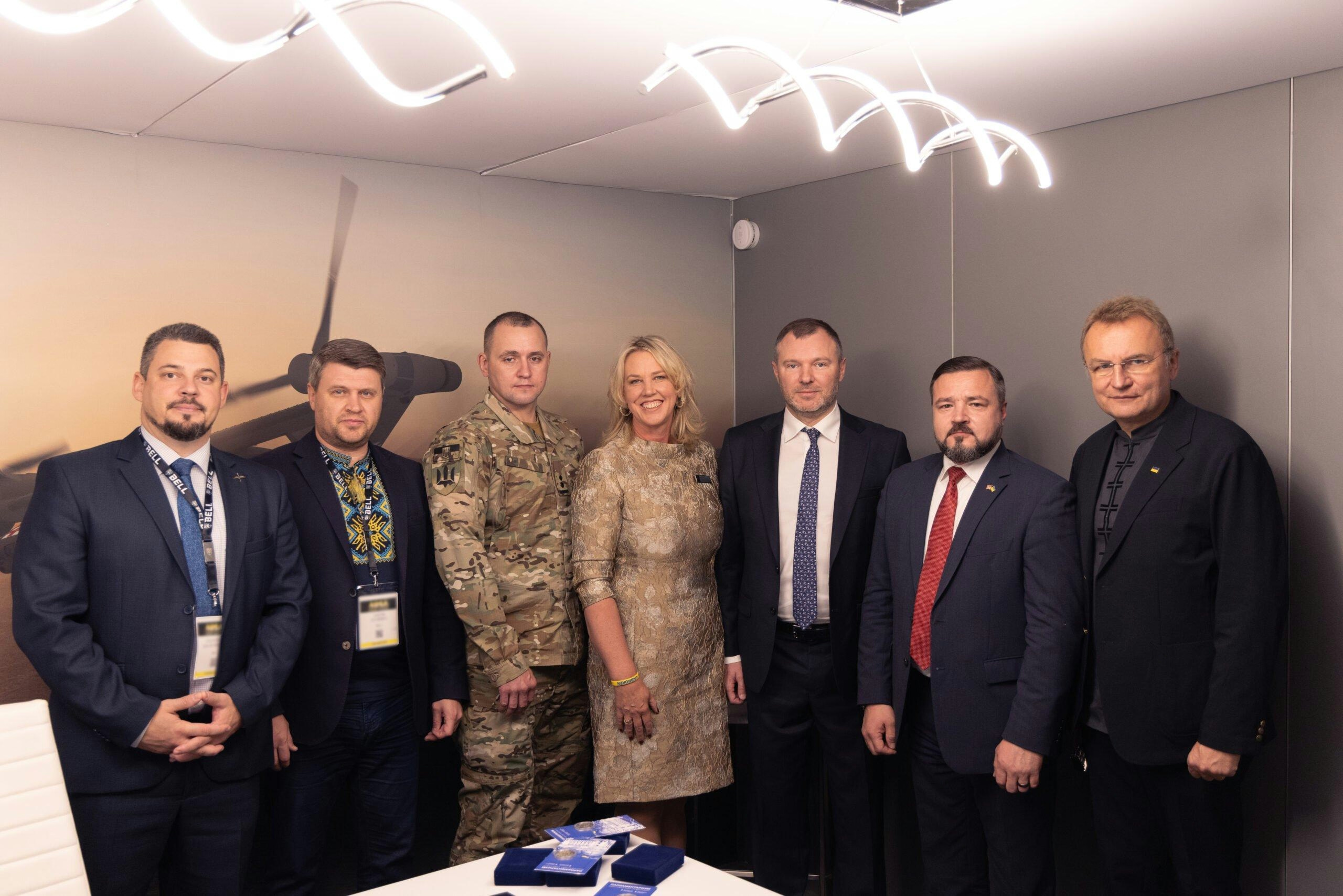
Bell Textron and Ukraine Advance Plans for Combat Helicopter Partnership
Bell Textron has formalized key agreements with Ukraine’s Ministry of Economy, Ecology, and Agriculture, alongside UkraineInvest, marking a significant development in potential industrial collaboration on advanced combat helicopters. The signing ceremony, held in Washington, sets the stage for Ukraine to pursue the acquisition of AH-1Z Viper and UH-1Y Venom helicopters through the U.S. Foreign Military Sales (FMS) program. Should the deal be finalized, Bell would work closely with the U.S. government to supply these aircraft to the Ukrainian Armed Forces, aiming to enhance Ukraine’s air combat capabilities amid ongoing security challenges.
Strategic Significance and Capabilities
Jeffrey Schloesser, Senior Vice President for Strategic Pursuits at Bell, described the agreement as a critical milestone in the company’s efforts to support Ukraine. He noted, “We are proud to announce this agreement, and the potential to supply these incredible aircraft to Ukraine. This initiative has been in development for some time, and we look forward to bringing it to completion.” Bell Textron, a global leader in both commercial and military aviation, is offering its H-1 family of helicopters—the AH-1Z Viper and UH-1Y Venom—two of the most advanced platforms in its military portfolio. These helicopters are engineered for interoperability, sharing approximately 85% of their components, which reduces maintenance demands and operating costs while increasing mission flexibility. Schloesser emphasized that the H-1 helicopters could play a pivotal role in modernizing Ukraine’s defense forces by providing a substantial upgrade to its current air support capabilities.
Challenges and Broader Implications
Despite the promising outlook, the partnership faces several challenges. The FMS process is complex and will require meticulous coordination among Bell, the U.S. government, and Ukrainian authorities to ensure full compliance with international arms export regulations. The transfer of advanced military technology also presents logistical and supply chain difficulties, particularly given the ongoing conflict in Ukraine, which may affect the stability and security of supply routes and operational deployment.
The agreement has attracted attention from defense analysts and industry competitors alike. Market observers anticipate increased scrutiny of the deal’s terms and strategic implications, while rival defense firms may respond by lobbying against the partnership or seeking alternative opportunities to supply military equipment to Ukraine.
If successfully completed, this cooperation would mark a significant milestone in U.S.-Ukrainian defense collaboration and reaffirm Bell Textron’s commitment to supporting international partners with advanced, interoperable systems designed for contemporary combat environments. For Ukraine, the agreement underscores ongoing efforts to modernize its military aviation fleet in response to persistent security threats. As both parties navigate regulatory, logistical, and geopolitical complexities, the proposed partnership exemplifies the evolving nature of international defense cooperation and the strategic imperative of enhancing Ukraine’s military capabilities.

Etihad Airways Suspends Airbus A380 Flights on Key Route

Aditya Birla Group Seeks Approval for Aircraft Leasing in GIFT City

Qatar Airways Highlights Innovation and Connectivity at Arabian Travel Market 2026

Hong Kong's Five-Year Plan Includes Andrew Fan's Aircraft Parts Processing Hub Proposal

ACIA Aero Leasing Delivers ATR72-600 to Air Nostrum

RTX Appoints Jill Albertelli as Head of Pratt & Whitney

TAT Technologies Joins Beyond Aero Hydrogen Aircraft Program

AURAK Study Highlights Barriers to Air Taxi Adoption in Emerging Economies

Xiamen Air Selects Altitude for 787 Maintenance at Heathrow

Etihad and Swissport Extend Global Partnership
