
Превращайте аналитические выводы ИИ в реальные действия

В тренде
Categories
Beta Completes Initial Test Flights in U.S. Air Taxi Pilot Program
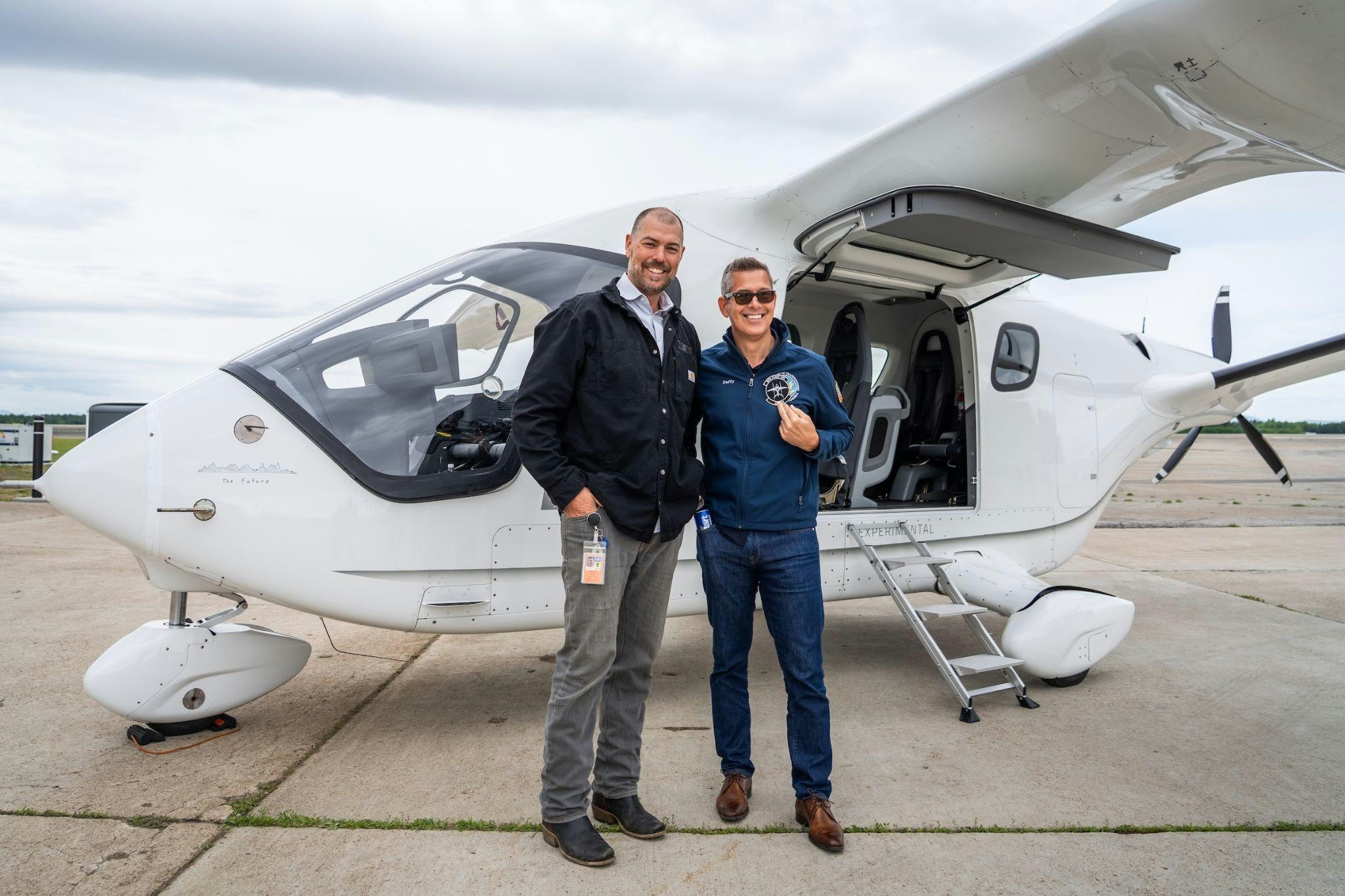
Beta Completes Initial Test Flights in U.S. Air Taxi Pilot Program
Beta Technologies announced on Friday the successful completion of its first test flights under the U.S. government’s electric vertical takeoff and landing (eVTOL) pilot program, marking a significant advancement in the development of flying taxis. The Vermont-based aerospace firm, supported by Amazon, utilized its Alia 250 eVTOL aircraft to transport manufactured organs for United Therapeutics between airports in Maryland and Virginia, covering approximately 275 nautical miles.
Advancing Medical Transport Through Electric Flight
Beta’s CEO, Kyle Clark, emphasized the broader implications of these missions, stating that the flights pave the way for routine medical applications of electric aviation at substantially reduced costs nationwide. This demonstration underscores the potential for eVTOL technology to extend beyond traditional air taxi services, encompassing a wider range of urban air mobility solutions, including critical medical transport.
The U.S. Air Taxi Pilot Program, initiated by executive order last year and managed by the Department of Transportation alongside the Federal Aviation Administration (FAA), seeks to expedite the integration of electric air taxis into the national airspace. The program encompasses eight projects across 26 states, with Beta participating in seven, making it the most active company involved.
Industry Challenges and Market Dynamics
Beta is among several competitors, such as Joby Aviation and Archer Aviation, striving to obtain FAA certification and launch commercial passenger flights. However, the certification process has encountered delays, with Beta projecting certification for its Alia 250 eVTOL in 2028, while its conventional takeoff and landing aircraft aims for certification in 2027.
The industry faces additional obstacles, including safety concerns and ongoing legal disputes. A recent lawsuit involving Boeing-owned Wisk Aero highlighted issues related to reduced software testing for autonomous air taxis, drawing attention to the critical need for stringent safety protocols as the sector evolves.
Market sentiment has also cooled considerably. Since its November initial public offering, Beta’s shares have declined by approximately 50 percent. Similarly, shares of Joby Aviation and Archer Aviation have fallen by more than one-third this year, while the U.K.-based Vertical Aerospace has seen its valuation drop by 68 percent. These declines reflect the impact of regulatory uncertainties and legal challenges on investor confidence.
Despite these hurdles, Beta’s successful test flights represent a promising step forward for electric air taxis and urban air mobility. As companies continue to navigate technical, regulatory, and market challenges, the vision of routine electric air travel—serving passengers as well as critical medical and cargo missions—draws nearer to realization.
Fly Alliance Sells Parts Business to Former CEO
Google Acquired 100 Million Spirit Airlines Emails to Train AI for $10 Million
Mammoth Freighters Delivers 777-200LRMF to Jetran

Star Navigation Systems Partners with Aero Intelligence and Toronto Metropolitan University
Archer's Air Taxi Bet Is Heading for the 2028 Olympics

Aviation Industry Update
CCA Increment 2 Introduces New Engines for Next-Generation Drone Fighter
J-36 Designers Raise Concerns Over Military AI Hallucinations

AkzoNobel stock holds steady as aerospace coatings innovation supports long-term growth

University of Nebraska at Kearney Opens Loper Flight Academy with Seven Tecnam P-Mentors
