
Превращайте аналитические выводы ИИ в реальные действия

В тренде
Categories
Boeing 777X Offers Greater Range Than 777-300ER
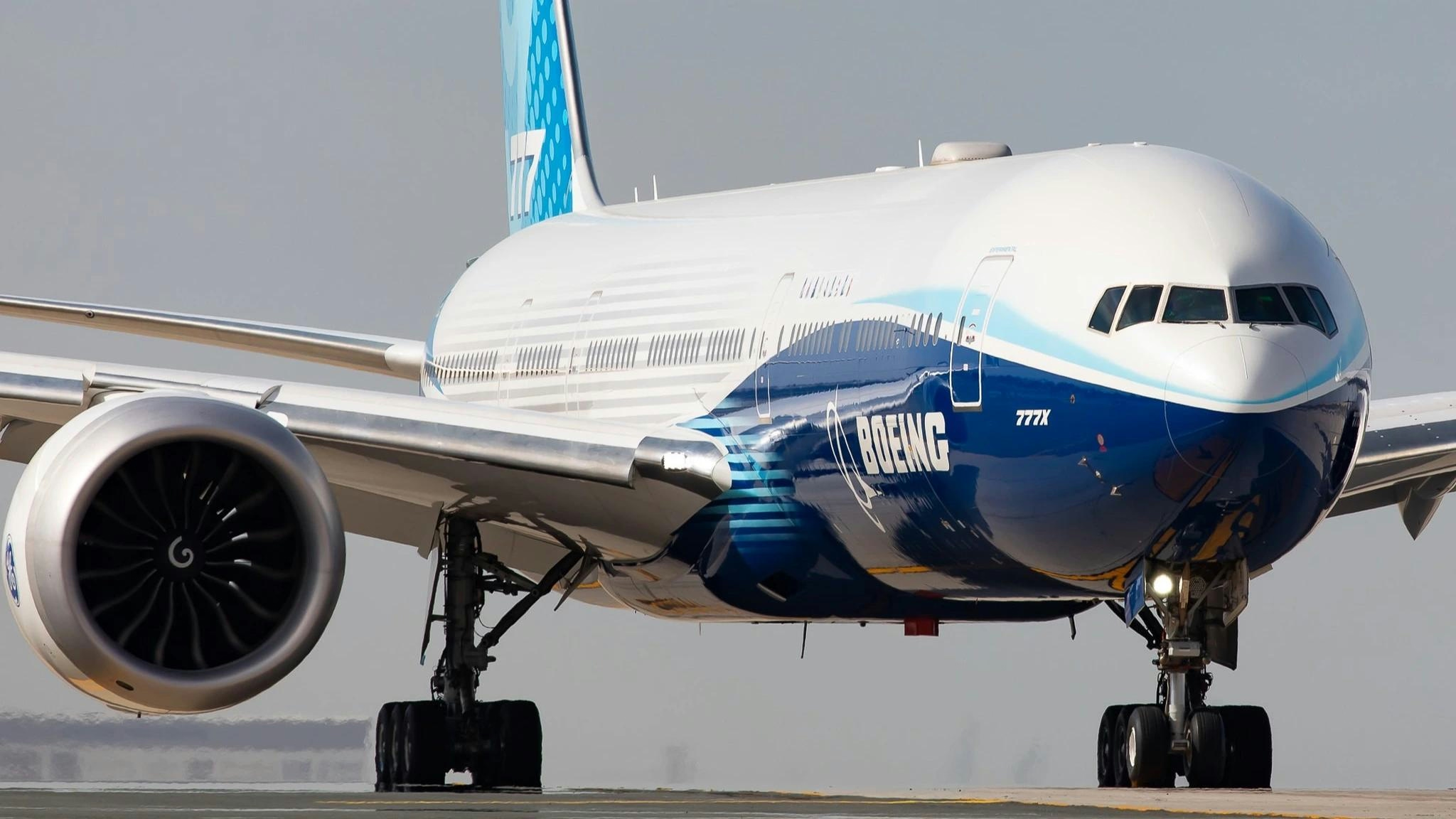
Boeing 777X Surpasses 777-300ER in Operational Range
The Boeing 777 series has been a cornerstone of the widebody aircraft market for decades, with the 777-300ER standing out as the most widely adopted variant. Although production of the passenger 777-300ER has ceased, Boeing has been advancing its next-generation model, the 777X, since 2013. Originally scheduled to enter commercial service in 2020, the 777X’s debut has been postponed to at least 2027. Despite these delays, the aircraft continues to garner substantial interest from global airlines due to its enhanced capacity, improved fuel efficiency, and notably, its extended operational range.
Range and Variants
Range remains a pivotal factor for airlines operating long-haul flights, and the 777X family offers significant improvements in this regard. Boeing’s specifications identify two primary passenger variants within the 777X lineup: the 777-8, which boasts a range of 8,745 nautical miles (16,190 kilometers), and the larger 777-9, with a range of 7,285 nautical miles (13,500 kilometers). The family also includes a freighter variant, broadening its appeal in the cargo sector.
Interestingly, the smaller 777-8 surpasses the 777-9 in range despite sharing the same wingspan and fuel capacity. This discrepancy arises because the heavier and larger 777-9 carries more passengers and payload, which reduces its maximum range. When compared to previous models, the 777-300ER was favored for its balance between capacity and operating economics, while the earlier 777-200LR held the longest range in the family at 8,555 nautical miles. However, the 777-200LR experienced fewer orders due to its lower fuel efficiency. It is important to note that actual operational range can vary depending on airline-specific cabin configurations and payload requirements.
| Aircraft | Range (NM) | Range (km) |
|---|---|---|
| Boeing 777-8 | 8,745 | 16,190 |
| Boeing 777-9 | 7,285 | 13,500 |
| Boeing 777-300ER | — | — |
| Boeing 777-200LR | 8,555 | — |
Market Challenges and Competitive Landscape
While the 777X’s extended range positions it as a formidable option for ultra-long-haul routes, its commercial introduction faces several external challenges. Geopolitical tensions, particularly between the United States and China, have disrupted Boeing’s delivery schedules and affected its order book in the critical Asia-Pacific market. Despite these obstacles, Boeing recently reported its first profitable year since 2018, with increased production rates signaling renewed market confidence.
Competition in the long-haul segment is intensifying as airlines such as Air Premia, SAS Scandinavian Airlines, and Air China launch new international routes that could alter market dynamics. Furthermore, the development of next-generation freighters, including the Airbus A350F and Boeing’s own 777-8F, is expected to influence the cargo sector and reshape competitive pressures.
The Boeing 777X’s range advantage over the 777-300ER underscores its technical progress, yet its ultimate success will depend on how effectively Boeing navigates the complex interplay of market demands and geopolitical factors.

Etihad Airways Suspends Airbus A380 Flights on Key Route

Aditya Birla Group Seeks Approval for Aircraft Leasing in GIFT City

Qatar Airways Highlights Innovation and Connectivity at Arabian Travel Market 2026

Hong Kong's Five-Year Plan Includes Andrew Fan's Aircraft Parts Processing Hub Proposal

ACIA Aero Leasing Delivers ATR72-600 to Air Nostrum

RTX Appoints Jill Albertelli as Head of Pratt & Whitney

TAT Technologies Joins Beyond Aero Hydrogen Aircraft Program

AURAK Study Highlights Barriers to Air Taxi Adoption in Emerging Economies

Xiamen Air Selects Altitude for 787 Maintenance at Heathrow

Etihad and Swissport Extend Global Partnership
