
Превращайте аналитические выводы ИИ в реальные действия

В тренде
Categories
Boeing Adjusts Supply Chain Amid Conflict Zone Challenges
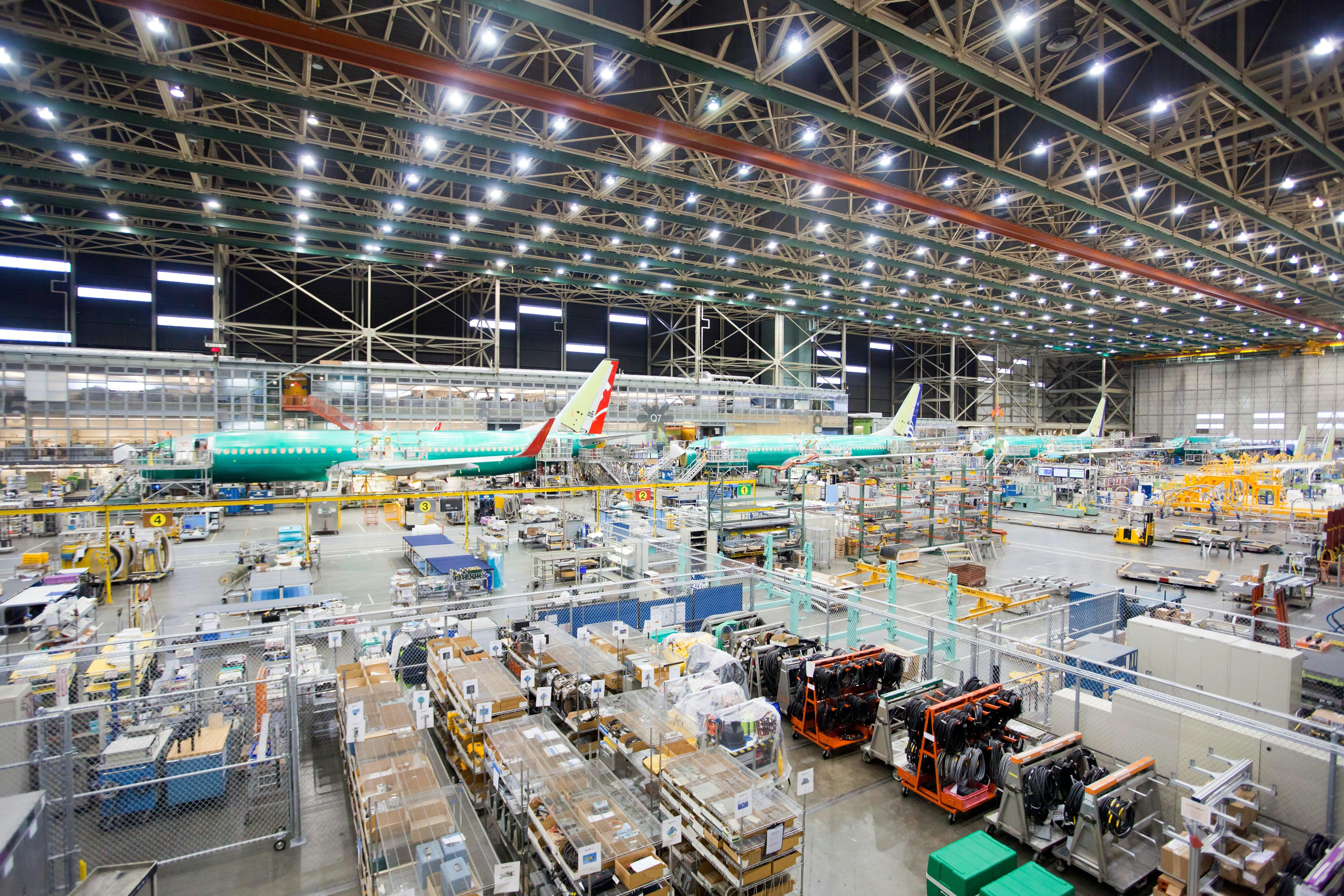
Boeing Adjusts Supply Chain Amid Conflict Zone Challenges
Supply Chain Disruptions Linked to Middle East Conflict
Boeing is undertaking a comprehensive reassessment of its global supply chain in response to escalating conflict in the Middle East, which is disrupting critical transport corridors and introducing new risks to aircraft production. In March 2026, the aerospace manufacturer requested that its suppliers evaluate their exposure to the region, particularly regarding shipping and logistics, as rising tensions threaten the smooth transit of essential components across continents.
Although the Middle East is not a primary source of aircraft parts, its strategic position as a transit hub connecting Europe, Asia, and Africa makes it a vital link in Boeing’s supply network. The recent escalation of conflict, notably in Iran, has compelled cargo operators to reroute shipments, resulting in longer transit times and complicating the delivery of time-sensitive materials. These logistical diversions, coupled with a tightening of global air freight capacity and surging oil prices approaching $100 per barrel, have driven up transportation costs and intensified pressure on already strained supply chains.
Boeing’s review extends beyond its immediate suppliers to include lower-tier partners who may rely on affected airspace or shipping lanes. Companies have been instructed to report any dependence on routes passing through the conflict zone, as even minor delays risk disrupting assembly schedules and delivery commitments. The company emphasized, “As we continue to monitor the situation in the Middle East, we are assessing potential impacts to the stability of our supply chain.”
Broader Industry Challenges and Market Implications
The supply chain difficulties are compounded by broader challenges facing the aviation sector. The industry is still recovering from disruptions triggered by the COVID-19 pandemic, including persistent shortages of semiconductors, castings, engine parts, and skilled labor. Many manufacturers, including Boeing, operate with limited inventory buffers, rendering them vulnerable to even modest logistical setbacks. Additionally, rising production costs driven by tariff volatility and labor shortages further complicate efforts to sustain stable output.
Despite a surge in commercial aircraft orders in January 2026 that signals renewed confidence in the aerospace market, ongoing conflicts in the Middle East are constraining air cargo capacity and elevating freight rates, threatening to undermine these positive trends. The instability is also impacting global food supply chains, with increased production costs and disruptions in key imports and exports potentially affecting Boeing indirectly through higher operational expenses and delivery delays.
Beyond logistics, the Middle East remains a critical market for Boeing, particularly for long-haul widebody aircraft favored by major carriers such as Emirates, Qatar Airways, and Etihad Airways. These airlines represent a significant portion of Boeing’s widebody backlog and future growth prospects. Prolonged instability in the region could therefore have repercussions not only on production and delivery schedules but also on demand for new aircraft.
As Boeing and its suppliers navigate these multifaceted challenges, the company’s proactive review seeks to identify vulnerabilities early and mitigate risks that could slow production. However, with rising costs, tariff uncertainties, and ongoing labor shortages, maintaining steady production flows is becoming increasingly complex amid a volatile global environment.
Embraer Delivers 2,000th E-Jet as Airbus A220 Seeks Market Share
iniBuilds Releases Second In-Depth A380 Video
Ryanair and Alaska Airlines Apply AI to Operational Decision-Making

Digital Payments, AI, and Aviation Strengthen Philippines-India Relations
PlaneSense Suspends PC-12 Jet Card Sales
How AI Could Transform Bird-Strike Prevention for Business Aviation
American Airlines and Boeing Complete First 737 MAX Landing Gear Swap
Vietjet and Thales sign major MRO and AI deals in Paris
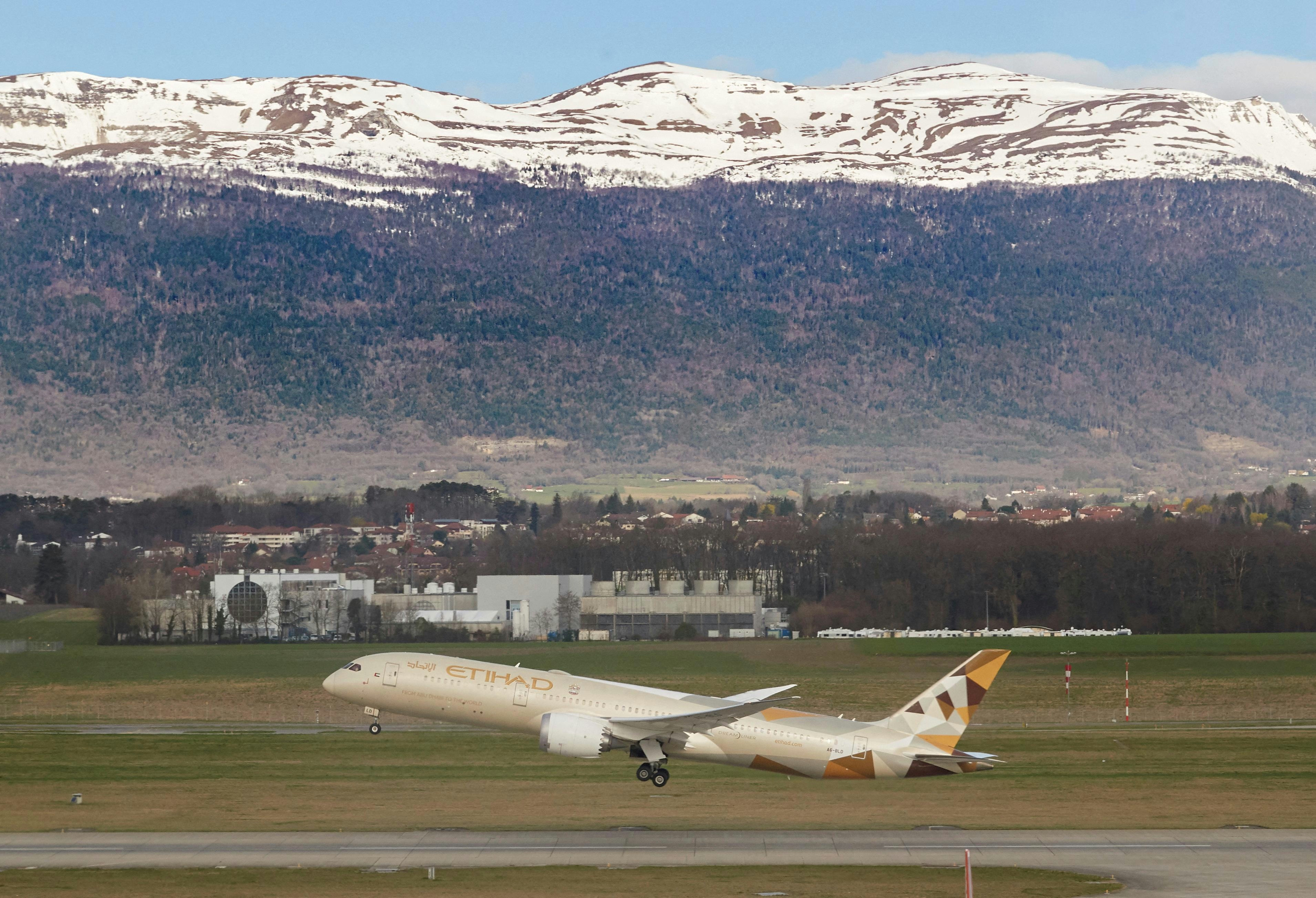
Etihad CEO Cites Aircraft Capacity as Limiting Factor Amid Growth in China and Africa

Artificial Intelligence Enters the Cockpit
