
Превращайте аналитические выводы ИИ в реальные действия

В тренде
Categories
Boeing Reports No Delays in Jet Deliveries or Orders from Gulf Airlines Amid Iran Conflict
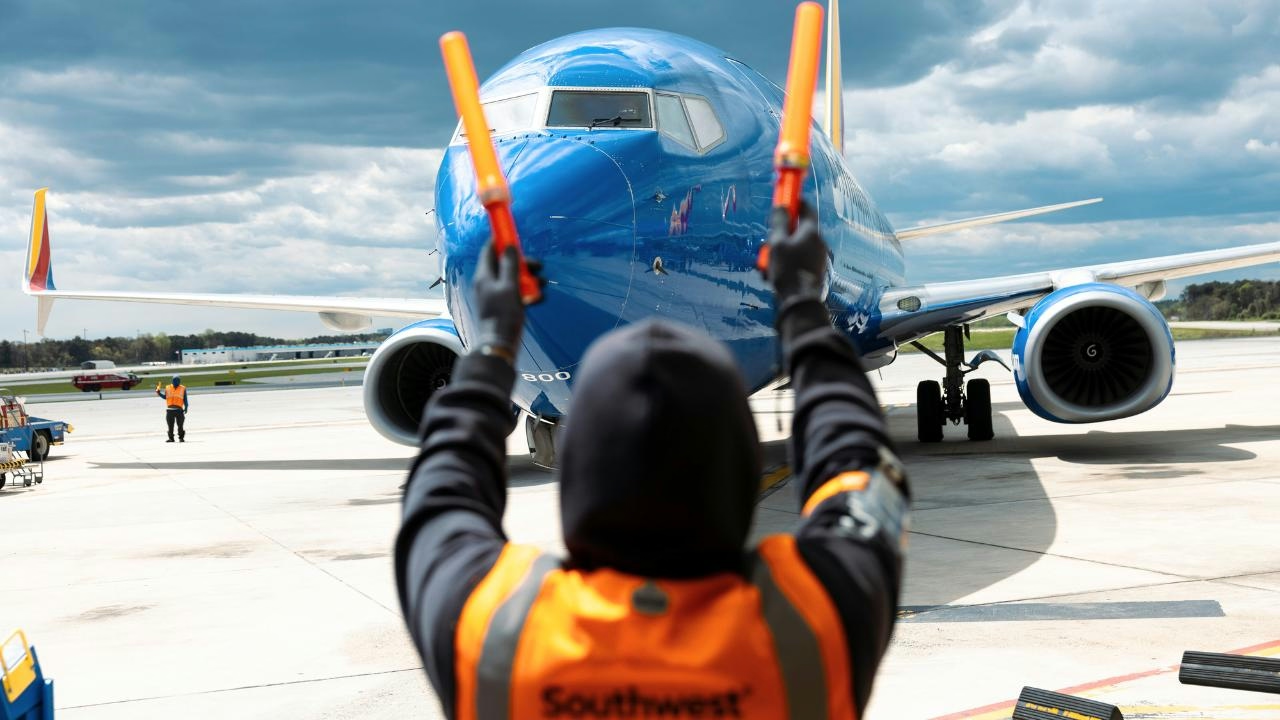
Boeing Confirms Steady Jet Deliveries to Gulf Airlines Amid Iran Conflict
Boeing has affirmed that Gulf carriers are not seeking to delay or restructure their aircraft deliveries or orders this year, despite the ongoing conflict involving Iran. The US aerospace manufacturer attributes this stability to the region’s robust long-term growth prospects and the resilience demonstrated by its airline customers.
Fahad Al Mheiri, Boeing’s vice president for the Middle East, Gulf, and North Africa, emphasized that regional airlines remain firmly committed to their fleet expansion plans. While acknowledging the significant financial and operational pressures facing airlines, Al Mheiri noted that Boeing has not engaged in any discussions regarding order restructuring or delivery delays. He highlighted the airlines’ global operations and their capacity to manage short-term disruptions, such as fluctuating travel demand and rising fuel costs, as key factors underpinning this commitment. The recent full reopening of UAE airspace in May and Emirates operating at approximately 90% of its capacity further signal a recovery in the region’s aviation sector.
Regional Demand and Operational Resilience
Al Mheiri pointed to the strong underlying demand for Boeing aircraft in the Middle East, where more than 930 jets remain on order. The region accounts for roughly 14% of Boeing’s commercial aircraft backlog, with no significant delivery deferrals or supply chain disruptions currently affecting plans. Since the beginning of 2026, Boeing has delivered over a dozen aircraft to Middle Eastern carriers, including the first two 787 Dreamliners to Saudi Arabia’s Riyadh Air in June.
Despite the geopolitical tensions, Boeing’s outlook for the region remains optimistic. Al Mheiri underscored that the fundamental factors that have established the Gulf Cooperation Council (GCC) as a global aviation hub remain intact, ensuring that deliveries will continue as scheduled. Emirates president Tim Clark echoed this sentiment at the Farnborough Airshow in July, confirming that the airline has no plans to defer orders. Meanwhile, the expansion of Dubai’s Al Maktoum International Airport is progressing on schedule, with completion targeted for 2032.
When questioned about sustained demand for new aircraft amid escalating regional tensions, Al Mheiri expressed confidence in the structural resilience of Gulf carriers. He cited the region’s strategic geographic position as a bridge between East and West, the adoption of modern, fuel-efficient long-haul aircraft, and substantial government investment in aviation infrastructure as key drivers supporting ongoing growth.
Challenges Amid Geopolitical Tensions
Nonetheless, the regional aviation sector faces renewed challenges. The escalation of tensions between the United States and Iran has compelled airlines to adjust their operations. The European Union Aviation Safety Agency (EASA) recently extended its advisory for airlines to avoid airspace over Bahrain, Kuwait, Qatar, the UAE, and Oman until August 31, with a separate warning issued for Jordan.
Beyond immediate operational concerns, Boeing must also contend with broader risks. Geopolitical instability could disrupt supply chains and undermine customer confidence, while market reactions may lead to volatility in Boeing’s stock price due to perceived risks. Additionally, European airlines and competitors might shift their focus toward other aircraft manufacturers, potentially altering the competitive landscape in the region.
Despite these uncertainties, Boeing remains confident in the Gulf’s aviation sector and its own regional commitments, citing strong fundamentals and sustained demand for new aircraft as the foundation for continued growth.

Etihad and Swissport Extend Global Partnership

Sepehran Airlines B737 Returns to Mashhad After Tyre and Engine Issues

Etihad Deploys Widebody Fleet to Meet Strong Demand

Korean Air Finalizes $36.2 Billion Deal with Boeing

Australia’s RFDS Queensland Section Orders Six King Air 260Cs

Korean Air Finalizes Order for 103 Boeing Jets and Engines
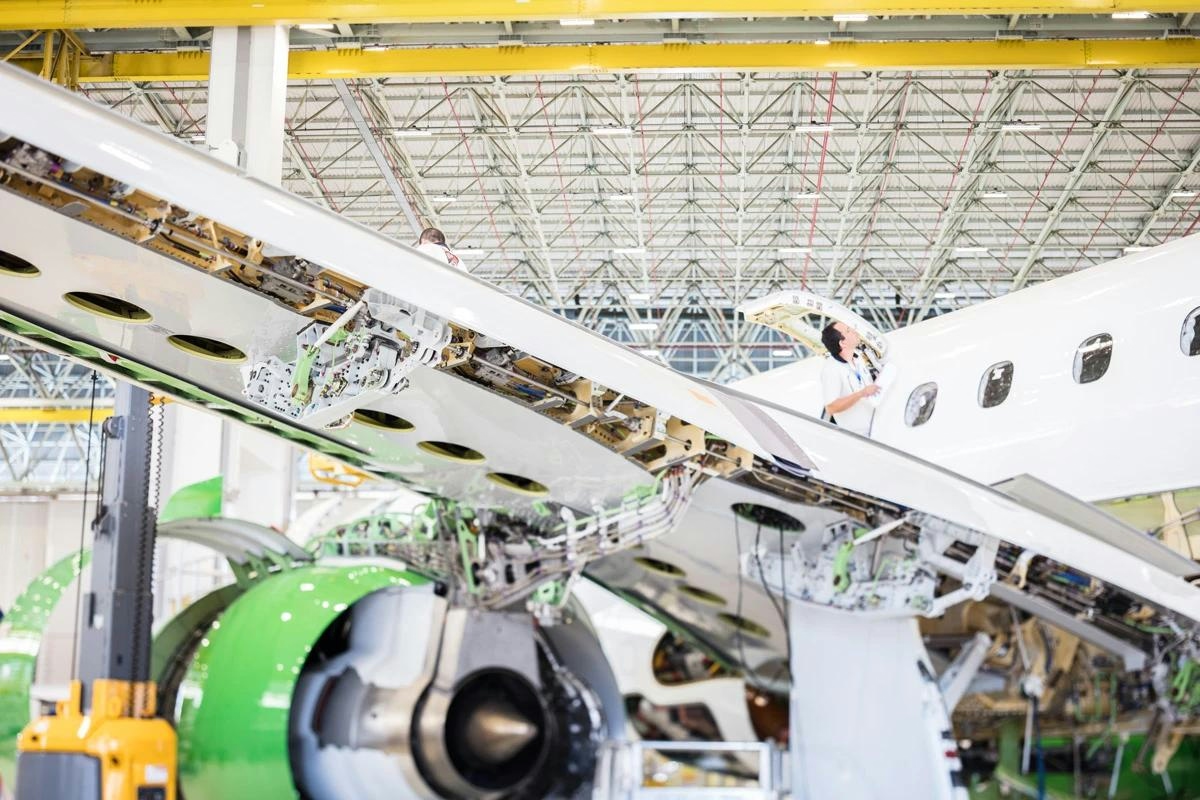
Embraer E195-E2 Features Distinctive Engine Placement Among Regional Jets
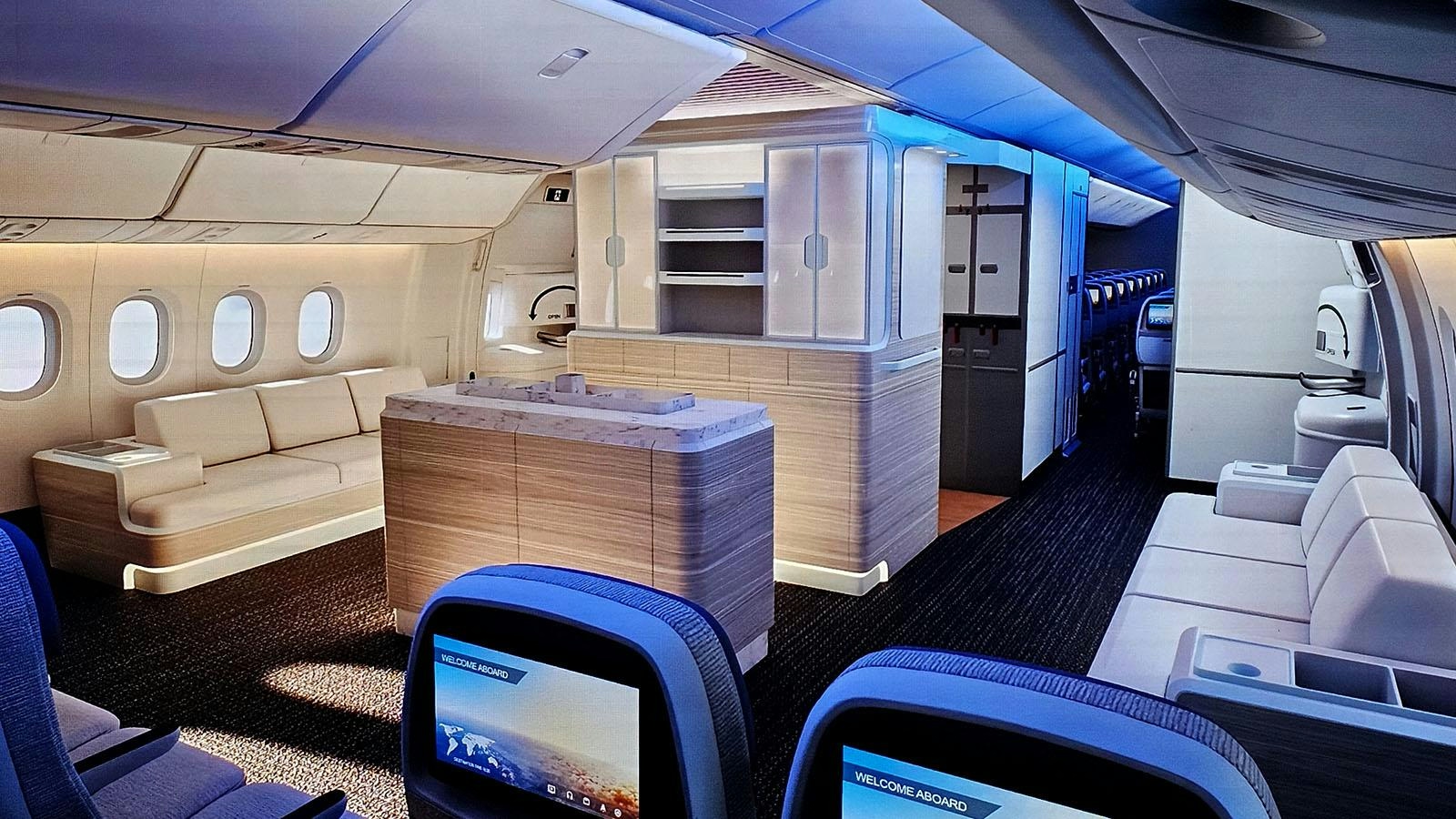
What Passengers Can Expect on Boeing’s New 777X Jet

How Ethiopian Airlines Became Africa’s Leading Carrier Amid Gulf Competition

Joby Aviation Extends Autonomous Flight Capabilities with Cross-Country Tour
