Изображение

AeroGenie — Ваш интеллектуальный второй пилот.

Спрашивайте что угодно. Анализируйте все. Действуйте незамедлительно.

В тренде

Categories

Boeing Shares Fall After Qatar Airways Cancels Order
May 27, 2025By ePlane AI
Boeing Shares Fall After Qatar Airways Cancels Order
0
0
Boeing
Qatar Airways
737 Max 10

Boeing Shares Decline Following Qatar Airways Order Cancellation

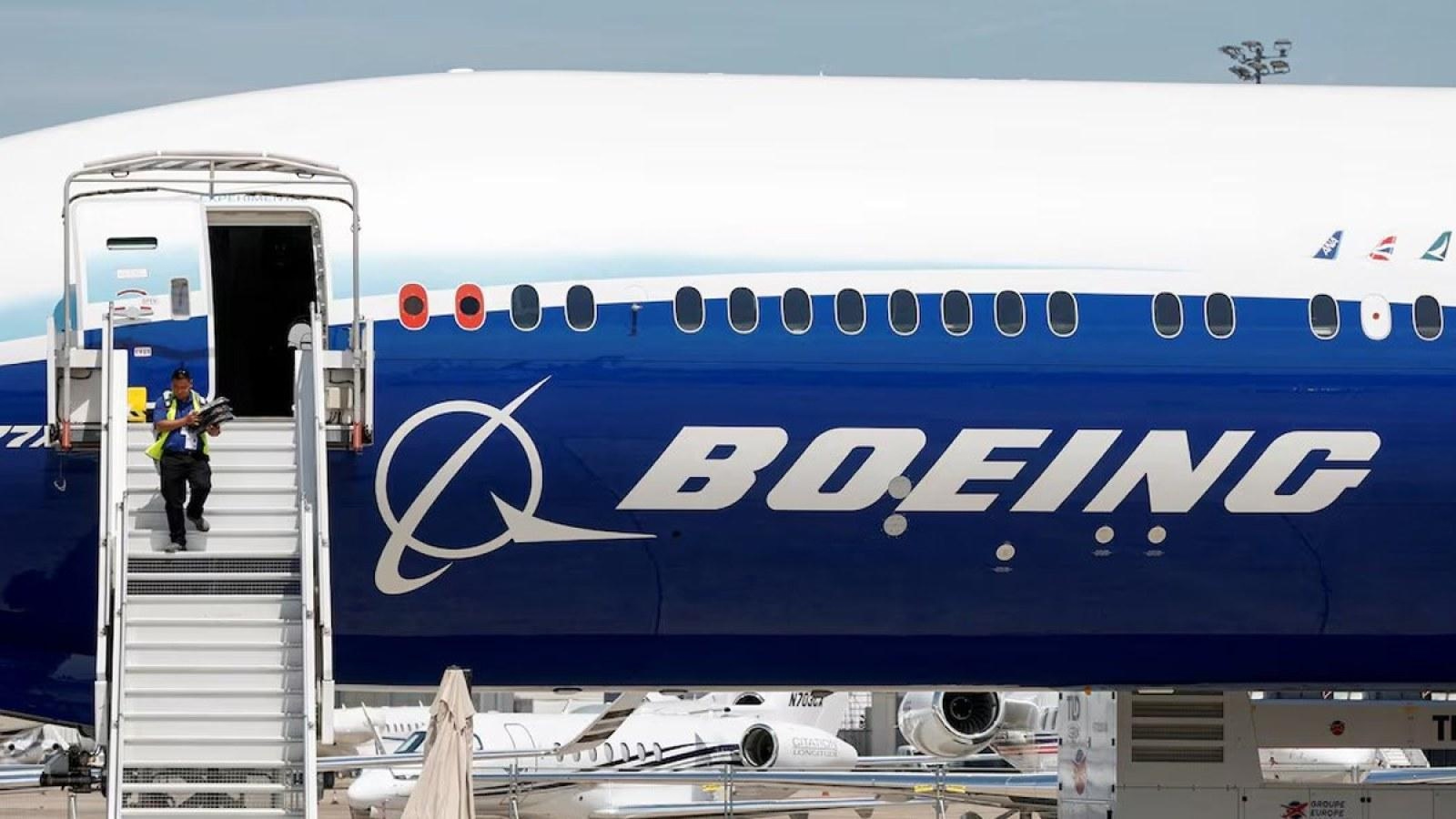
Boeing (NYSE: BA) experienced a decline in its share price on Tuesday after Qatar Airways announced the cancellation of a significant order for the company’s 737 Max 10 aircraft. This decision resulted in an estimated $4.3 billion reduction in Boeing’s market value, underscoring persistent challenges for the aerospace manufacturer. Despite this, the broader market reaction remained relatively subdued.

Qatar Airways’ Strategic Shift to Airbus

The order in question originated in 2022, when Qatar Airways committed to acquiring up to 50 Boeing 737 Max 10 jets, comprising 25 firm orders and options for an additional 25. However, with the 737 Max 10 still pending regulatory certification, the airline’s decision to withdraw was anticipated by industry analysts. Qatar Airways has redirected its focus toward Airbus, placing an order for the A321neo, a direct competitor to Boeing’s single-aisle offering.

Nonetheless, Boeing maintains a significant relationship with Qatar Airways. The airline’s recent commitment to purchase up to 210 wide-body aircraft, including the 787 and 777X models, remains intact. This ongoing partnership offers some reassurance to investors regarding the long-term collaboration between the two companies.

Challenges and Developments in Boeing’s Product Line

The cancellation arrives amid a challenging period for Boeing, which continues to grapple with delays and technical difficulties across several programs. The 777X project, in particular, has faced multiple setbacks, including a suspension of testing due to issues with engine thrust links. Boeing has responded by introducing redesigned components aimed at resolving these problems, with plans to resume testing and advance toward certification. The 777X is now projected to enter service in 2026, marking a six-year delay from its original timeline.

Market Response and Analyst Perspectives

Although the cancellation negatively impacted Boeing’s order backlog and market capitalization, the immediate effect on the stock price was limited, with shares declining only marginally during afternoon trading. Market reactions were mixed, and competitor responses remain uncertain at this stage.

Wall Street analysts continue to hold a generally positive view of Boeing’s prospects. Over the past three months, the consensus rating stands at Moderate Buy, based on 15 Buy recommendations, four Holds, and one Sell. Following a 15.58% increase in the stock price over the past year, the average price target is $213.37 per share, indicating a potential upside of approximately 5.77%.

Outlook Amid Industry Volatility

Boeing’s recent setbacks highlight the volatility inherent in the aerospace sector, as airlines reassess fleet strategies and manufacturers navigate complex certification processes. While the loss of the Qatar Airways 737 Max 10 order represents a notable setback, Boeing’s sustained partnerships and ongoing efforts to address technical challenges may contribute to stabilizing its position over the longer term.

More news
Boeing 737 MAX Deliveries Delayed Due to Wiring Issue

Boeing 737 MAX Deliveries Delayed Due to Wiring Issue

Boeing 737 MAX Deliveries Delayed by Wiring Issue Boeing has announced a delay in the delivery of certain 737 MAX aircraft due to a wiring defect identified during production inspections. The issue involves minor scratches on electrical wiring, which have been traced back to a machining error in the manufacturing process. Importantly, Boeing clarified that this problem affects only jets still in production or awaiting delivery and does not impact aircraft currently operating with airlines such as Southwest Airlines and American Airlines. The scratches are described as minor and repairable within a few days per aircraft, according to Boeing engineers. The company has not specified the total number of planes affected by the defect. Although the repairs are straightforward, the issue is expected to slow delivery rates during the first quarter of 2026. Production Outlook and Industry Context Despite this setback, Boeing maintains that its target of delivering approximately 500 737 MAX jets in 2026 remains unchanged. The manufacturer plans to sustain its current production rate of 42 jets per month, with an anticipated increase to 47 jets later in the year. In February, Boeing achieved its strongest monthly delivery performance since 2018, with 51 aircraft handed over to customers. Deliveries are a critical component for both Boeing and its airline clients, directly influencing fleet expansion and revenue forecasts. The company has reassured customers that the wiring issue does not compromise the safety of aircraft already in service. Airlines operating the 737 MAX have not reported any operational issues related to this defect. Boeing has committed to informing airline customers promptly should further inspections or corrective measures become necessary. This manufacturing challenge arises amid Boeing’s ongoing efforts to restore confidence with regulators and airline partners following a high-profile incident in January 2024, when a panel detached from a recently delivered 737 MAX during flight. Although no serious injuries occurred, the event intensified regulatory scrutiny. In response, Boeing implemented significant changes, including leadership restructuring, operational reforms within its factories, and the acquisition of a key supplier to strengthen manufacturing oversight. The Federal Aviation Administration has since relaxed some restrictions after Boeing demonstrated improvements in production quality, and airlines have reported enhanced quality in recently delivered aircraft. Looking forward, Boeing continues to prioritize its commercial aircraft programs, with the 737 MAX remaining its most vital product line. The company currently holds a backlog exceeding 6,100 aircraft orders, approximately two-thirds of which are for the 737 MAX family. Financially, Boeing reported a profit of $2.2 billion in 2025, marking its first annual profit since 2018, signaling a recovery as it strives to meet delivery targets and rebuild trust in its manufacturing processes.
Electric Air Taxi Tests Begin in Florida Following Federal Approval

Electric Air Taxi Tests Begin in Florida Following Federal Approval

Electric Air Taxi Tests Commence in Florida Following Federal Authorization Florida is poised to become one of the pioneering states in the deployment of electric air taxis, following the U.S. Department of Transportation’s (DOT) recent approval of an expansive testing program for next-generation aircraft. This initiative forms part of the Federal Aviation Administration’s (FAA) Advanced Air Mobility and Electric Vertical Takeoff and Landing (eVTOL) Integration Pilot Program, which seeks to accelerate the adoption of electric aircraft across 26 states through eight coordinated pilot projects. Florida’s Role in the National Program Although specific cities and counties within Florida have not yet been disclosed, the state’s Department of Transportation will manage the local implementation of the program. Federal officials describe this as a “statewide effort featuring multiple industry partners.” Among the companies participating are Archer Aviation, BETA Technologies, Electra Aero, Joby Aviation, and an additional, unnamed entity. Wisk, another significant player in the electric aircraft sector, is also slated to conduct extensive testing under the broader initiative. The testing will proceed in three operational phases, concentrating on cargo delivery, passenger transportation, automation, and medical response applications. These efforts are supported by substantial public and private investments, underscoring the transformative potential of electric air mobility. U.S. Transportation Secretary Sean Duffy emphasized the collaborative nature of the program, stating, “Working together, we will ensure America leads the way in safely leveraging next-gen aircraft to radically redefine personal travel, regional transportation, cargo logistics, emergency medicine, and so much more.” Anticipation and Industry Developments in Florida Florida’s inclusion in the pilot program arrives amid heightened expectations that electric air taxis could alleviate urban transportation congestion. In December, Archer Aviation unveiled its six-engine “Midnight” prototype in Miami, attracting attention from political figures, business leaders, and industry executives alike. The company has also announced plans to partner with developers, including billionaire Stephen Ross, to construct “vertiports” in the region. These facilities are envisioned as quiet electric aircraft landing sites in locations such as West Palm Beach and private golf courses. Despite the enthusiasm, Archer confirmed on Tuesday that the precise Florida locations and timelines for testing remain undecided. A company spokesperson told the South Florida Sun Sentinel, “Specific locations have not been shared yet. We look forward to working with the Florida Department of Transportation and our other partners to share more details in the future.” During its December presentation, Archer proposed a South Florida route network connecting the region’s three international airports, general aviation facilities, and privately operated vertiports. Challenges and Broader National Context The success of the pilot program will hinge on overcoming a range of technical, regulatory, and public acceptance challenges. Industry observers are closely monitoring the scalability and safety of these electric air taxis as competitors such as Joby Aviation and Pilatus Aircraft vie for market share. Notably, the absence of Los Angeles as a test site may impact Archer’s ambitions related to the 2028 Olympics, highlighting the competitive and rapidly evolving nature of the sector. Beyond Florida, pilot projects will be led by agencies in New York and New Jersey, Texas, Utah, Pennsylvania, Louisiana, North Carolina, and Albuquerque, New Mexico. This nationwide effort marks a significant step toward ushering in a new era of aviation centered on electric vertical takeoff and landing technology.
FlyHouse Acquires Dallas-Based Part 145 Jets MRO

FlyHouse Acquires Dallas-Based Part 145 Jets MRO

FlyHouse Expands Maintenance Footprint with Acquisition of Dallas-Based Jets MRO FlyHouse, a Van Nuys-based aviation services company, has announced the acquisition of Jets MRO, a United States FAA Part 145-certified maintenance, repair, and overhaul (MRO) provider. This strategic move significantly broadens FlyHouse’s maintenance capabilities and establishes a vital operational presence at Dallas Executive Airport, complemented by a component repair facility in South Florida. Strengthening Infrastructure and Service Capabilities Jets MRO operates a 40,000-square-foot hangar at Dallas Executive Airport and maintains a component repair division in Miami. The company holds certifications to service a range of business aircraft, including Bombardier’s Challenger and Learjet series, as well as Textron Aviation’s Beechjet and Citation family jets. According to Jack E. Lambert, Jr., chief executive of FlyHouse, the acquisition “strengthens our maintenance infrastructure and establishes an important base at Dallas Executive and South Florida,” underscoring the strategic value of the expanded footprint. Implications for the Business Aviation MRO Sector The acquisition is poised to intensify competition within the business aviation MRO market. FlyHouse’s enhanced capabilities and expanded geographic reach may alter market dynamics, prompting established players to reassess their strategic positioning. Industry analysts suggest that competitors such as West Star Aviation could respond by pursuing consolidation or adjusting their service offerings to maintain market share. Market observers anticipate heightened scrutiny of pricing and service quality across the sector as operators evaluate the benefits of FlyHouse’s expanded network. The deal may also influence customer preferences and reshape existing partnerships, as business aviation operators consider the broader range of maintenance options now available. As the MRO landscape continues to evolve, attention will focus on how FlyHouse integrates Jets MRO’s assets and how competitors adapt to the shifting competitive environment.
Avianca to Expand Fleet with Two A330-900 Aircraft

Avianca to Expand Fleet with Two A330-900 Aircraft

Avianca to Expand Fleet with Two Airbus A330-900 Aircraft MIAMI — Avianca has announced plans to enhance its long-haul operations by adding two Airbus A330-900 aircraft to its existing fleet of more than 15 widebody jets serving international routes. These new aircraft will be based in Colombia, underscoring the airline’s commitment to improving connectivity and promoting tourism within the country. Fleet Expansion and Operational Impact Each A330-900 will be configured with 377 seats and will feature the Business Class Americas experience. The aircraft are scheduled to enter service in the second half of 2026, operating on routes throughout the Americas. This expansion will also support the Abra Group’s growing medium- and long-haul operations, further strengthening the group’s network and operational capabilities. Gabriel Oliva, President of Avianca Group, described the acquisition as a significant milestone in the airline’s long-haul growth strategy. He emphasized that the new aircraft would reinforce Avianca’s investment in Colombia while expanding connectivity between the Americas and the rest of the world. However, integrating these advanced widebody jets presents operational challenges. The airline will need to invest in additional crew training and adapt maintenance procedures to accommodate the latest aircraft technology. These measures are critical to ensuring a seamless transition and maintaining service reliability as Avianca scales up its long-haul services. Competitive and Economic Context Avianca’s fleet expansion intensifies competition within the Latin American aviation market. Competitors such as LATAM Airlines Group and Gol are also increasing their widebody fleets, which may prompt strategic responses including network enhancements and competitive pricing to retain market share. The airline’s growth ambitions unfold amid a complex economic and regulatory environment in Latin America. Industry leaders, including Azul’s CEO, have highlighted structural challenges such as regulatory barriers, economic volatility, and infrastructure constraints that could influence the pace and success of expansion efforts. Despite these hurdles, Avianca’s investment in the A330-900 aircraft signals a strong commitment to consolidating its regional presence and connecting more destinations across the Americas. The introduction of these aircraft is expected to improve the passenger experience and support the airline’s long-term growth objectives.
FAA Selects Utah to Lead Five-State Electric Flight Pilot Program

FAA Selects Utah to Lead Five-State Electric Flight Pilot Program

FAA Selects Utah to Lead Five-State Electric Flight Pilot Program Utah at the Forefront of Electric Aviation Innovation The Federal Aviation Administration (FAA) has designated Utah to spearhead a significant pilot program aimed at advancing electric flight technology. The three-year Electric Vertical Takeoff and Landing (eVTOL) Integration Pilot Program will focus on the safe integration of Advanced Air Mobility (AAM) aircraft into the national airspace. These electric aircraft, capable of vertical takeoff and landing, are envisioned to enhance the transportation of people and goods, particularly in regions with limited accessibility. Utah’s leadership role involves coordinating efforts across five states as part of a larger initiative encompassing eight projects in 26 states. The program brings together nearly three dozen public and private partners, including government agencies and industry leaders. Testing will occur in diverse environments ranging from urban centers and rural corridors to mountainous terrain and wildfire-prone areas, reflecting the broad potential applications of eVTOL technology. Potential Impact and Challenges AAM aircraft are expected to play a transformative role in connecting communities, supporting emergency response operations such as wildfire management, and eventually providing passenger transportation services. The Utah Department of Transportation highlights the program’s potential to stimulate economic growth, foster research, and develop a skilled workforce within the state. Governor Spencer Cox emphasized Utah’s reputation as a hub of innovation, stating that the partnership positions the state at the cutting edge of aviation technology while creating new economic and educational opportunities. Despite this optimism, the program faces considerable challenges. FAA Administrator Bryan Bedford identified regulatory complexities, technological integration, and safety concerns as significant obstacles that must be addressed to enable the widespread adoption of electric aviation. Industry Response and Future Prospects The market reaction to the FAA’s initiative has been cautiously optimistic. Leading companies in the electric aviation sector, including Archer Aviation, Beta Technologies, Joby Aviation, and Wisk, regard the program as a vital platform for developing scalable electric air taxi models. While competition among these firms may intensify, there is also an expectation of collaboration to overcome shared challenges in this emerging industry. The success of the pilot program will hinge on navigating regulatory and technical barriers while leveraging opportunities for innovation and economic development. Should Utah’s leadership prove effective, it could play a pivotal role in shaping the future landscape of electric aviation across the United States.
Singapore Airlines and Amadeus Renew Partnership to Enhance Aviation Innovation

Singapore Airlines and Amadeus Renew Partnership to Enhance Aviation Innovation

Singapore Airlines and Amadeus Renew Partnership to Enhance Aviation Innovation Singapore Airlines (SIA) and Amadeus have reaffirmed their commitment to advancing innovation and improving traveler experiences through the renewal of their multiyear strategic partnership. This agreement encompasses both EDIFACT and New Distribution Capability (NDC) channels, ensuring continued collaboration as the two companies navigate the evolving landscape of the aviation industry and its technological progress. Strengthening Global Access and Distribution The renewed partnership guarantees that Amadeus will retain uninterrupted access to Singapore Airlines’ comprehensive range of fares, products, and services for all travel sellers connected to the Amadeus Travel Platform. This arrangement supports SIA’s extensive indirect sales network, which remains a cornerstone of its commercial strategy and growth objectives. By leveraging Amadeus’ advanced distribution capabilities, the collaboration aims to streamline transaction processes, strengthen relationships with travel agents, and provide travelers with a more seamless and comprehensive booking experience. This renewal comes amid a complex market environment for Singapore Airlines. Although the carrier continues to report robust revenue figures, its net profit has recently declined, prompting scrutiny over how ongoing investments in innovation might affect short-term financial performance. Market responses have been mixed, with some investors recognizing the long-term benefits of digital transformation, while others express concern about immediate costs and potential operational challenges. Accelerating NDC Adoption and Retailing Transformation A key element of the partnership is the accelerated adoption of NDC, a technology that enables airlines to offer real-time, data-driven pricing and richer product differentiation. For travel agencies, this translates into access to a wider array of personalized offers, including fares, ancillary services, and branded experiences. The deeper integration of NDC is expected to improve transparency and consistency for travelers, while also supporting revenue optimization for both Singapore Airlines and its distribution partners. As the aviation sector adapts to new retailing standards, Singapore Airlines and Amadeus face the challenge of seamlessly integrating emerging technologies while ensuring compliance with evolving regulatory frameworks. Competitors may respond with their own innovation initiatives, either through collaborative efforts to elevate industry standards or by pursuing aggressive strategies to surpass the advancements made by this partnership. Enhancing Personalization and Customer Experience Beyond technological enhancements, the renewed alliance underscores a shared vision of delivering hyper-personalized travel experiences. By expanding NDC content and capabilities, Singapore Airlines and Amadeus aim to meet the growing expectations of modern travelers by offering tailored services that reflect individual preferences and needs. As the aviation industry continues its transformation, the strengthened partnership positions both companies to lead in digital retailing and customer-centric innovation. The ultimate success of this collaboration will depend on their ability to balance long-term strategic ambitions with the immediate demands of a competitive and dynamic market.
Sogeclair Announces New Leadership and Technological Advances

Sogeclair Announces New Leadership and Technological Advances

Sogeclair Announces New Leadership and Strategic Innovations Amid Market Challenges Sogeclair, a prominent supplier to the commercial and VIP aviation sectors specializing in aircraft cabin interiors, has announced key leadership appointments alongside forthcoming technological advancements as part of its strategy to reinforce its presence in North America. Leadership Appointments to Drive Growth and Innovation Billy Darveau, a mechanical engineer with over 15 years of experience within Sogeclair’s North American operations, has been appointed Vice President for Digital Engineering in North America. In this capacity, Darveau will oversee engineering activities across Canada and the United States, with a focus on enhancing the group’s competitive edge, fostering strategic partnerships, and providing robust support to customers. Joining Darveau is Romain Dusan, who has been named Vice President for Cabin Interiors in North America. Bringing more than 20 years of aerospace and technology expertise, Dusan will prioritize strengthening relationships with clients and partners, facilitating the deployment of advanced cabin interior solutions, and expanding Sogeclair’s market footprint throughout the region. These leadership changes arrive at a critical juncture as Sogeclair contends with intensifying competition from established industry players such as Omron Healthcare, Withings, and Abbott Laboratories, particularly within the health self-monitoring segment. The competitive environment is expected to grow fiercer, with rivals likely to increase investments in research and development and pursue new strategic alliances to maintain their market dominance. While the new appointments and technological initiatives may generate investor interest, questions remain regarding Sogeclair’s capacity to effectively challenge these entrenched competitors. Technological Innovations Unveiled for Aircraft Interiors Expo 2026 Looking ahead, Sogeclair has announced plans to showcase three innovative cabin interior solutions at the Aircraft Interiors Expo 2026, scheduled for April 14-16 in Hamburg, Germany. These designs aim to elevate the business and first-class passenger experience through enhanced comfort and functionality. The Minisuite Front-Row Monument represents a redesigned front-row configuration that offers an open, premium space for one or two passengers, maximizing cabin area and redefining traditional seating arrangements. Complementing this is an upgraded Privacy Door, which improves personal space, acoustic comfort, and cabin aesthetics, responding to the growing demand for individualized passenger environments. Additionally, Sogeclair will introduce two new meal table designs: a single-piece business-class table integrated into the seat console and a bifold table embedded within the sideledge, both intended to facilitate companion dining in front-row minisuite settings. These innovations will be presented within the Vista demonstrator at AIX 2026 (booth 6D70L, Hall B6), underscoring Sogeclair’s commitment to advancing cabin interior technology despite the challenges posed by a highly competitive market. As Sogeclair advances with its leadership transition and product development initiatives, industry observers and investors alike will closely monitor the company’s progress in achieving its strategic objectives.
Impact of Middle East Conflict on Airbus and Boeing

Impact of Middle East Conflict on Airbus and Boeing

Impact of Middle East Conflict on Airbus and Boeing The ongoing conflict in the Middle East continues to generate significant uncertainty across the region, with no immediate resolution in sight. This instability is profoundly affecting the global aviation industry, particularly major manufacturers Airbus and Boeing, both of which have substantial exposure to Middle Eastern markets. Exposure and Operational Disruptions Middle Eastern airlines and aircraft lessors currently hold orders for 1,710 aircraft, accounting for approximately 9% of Airbus’ backlog and 14% of Boeing’s. Airbus commands a 43% share of these orders, while Boeing accounts for 57%, with Embraer playing a comparatively minor role in the region. The conflict has already resulted in the cancellation of over 37,000 flights to and from the Middle East, severely disrupting airline operations and grounding more aircraft than are currently in service. The repercussions extend beyond flight cancellations. Escalating oil prices and rising freight rates have introduced unprecedented challenges for airlines, with volatility in the jet fuel market threatening to ground additional aircraft and strain fragile supply chains. Global air cargo capacity has contracted by more than 20%, complicating the transport of critical aircraft parts and components necessary for production and maintenance. Financial and Production Challenges For aircraft lessors, many of whom have placements with Middle Eastern carriers or operate within the region, the ongoing conflict raises concerns about outstanding orders with Airbus and Boeing. There is growing apprehension that lenders may soon face requests to restructure debt payments if the crisis persists, adding further financial strain to an already pressured sector. Production and delivery schedules for both manufacturers are increasingly at risk. Deliveries planned over the next 18 months are particularly vulnerable, and a prolonged conflict could jeopardize even those scheduled for 2028. Aircraft production typically begins 12 to 18 months before delivery—a process known in the industry as “cutting metal.” While most aircraft slated for delivery this year are already in production, delays are anticipated as airlines and lessors reassess their fleet requirements. Although formal requests for production delays have yet to materialize, such discussions may become inevitable if the situation does not improve. It is expected that production will continue, but deliveries could be postponed until regional stability is restored. Market Response and Industry Outlook The market has reacted sharply to these developments. Airline stocks have experienced significant declines, and insurance premiums have risen due to increased war risk. Competitors are adjusting flight routes and operational strategies in an effort to mitigate the impact of ongoing disruptions. Upcoming first-quarter earnings calls, beginning in April, are expected to address the conflict’s ramifications. Boeing’s Chief Financial Officer, Jay Malave, is scheduled to speak at a Bank of America investors’ conference on March 17, where the company’s exposure and strategic response to the crisis are likely to be key topics. As the conflict endures, Airbus, Boeing, and the broader aviation industry face mounting operational and financial challenges, with the outlook remaining highly uncertain.
Oklahoma Chosen as Base for New Electric Air Taxi Program

Oklahoma Chosen as Base for New Electric Air Taxi Program

Oklahoma Designated as Central Hub for Electric Air Taxi Program Oklahoma has been selected as a primary hub for a pioneering electric air taxi initiative, marking a significant step forward in the advancement of next-generation aviation technology. Supported by the White House, the Electric Vertical Takeoff and Landing (eVTOL) Integration Pilot Program seeks to test electric air taxis capable of transporting passengers and cargo using aircraft that take off and land vertically. This initiative places Oklahoma at the forefront of efforts to integrate electric aircraft into the United States’ transportation infrastructure. California-based Joby Aviation, a prominent company in the rapidly developing eVTOL sector, anticipates that early operations in Oklahoma could commence as soon as this year, contingent upon the finalization of federal agreements. The program aims to explore a variety of applications, ranging from regional passenger flights to medical deliveries, as part of a broader strategy to incorporate electric aviation into everyday use. Program Structure and Strategic Importance The pilot program is designed to facilitate real-world testing of eVTOL aircraft prior to full federal certification. It involves coordination among federal agencies, including the Department of Transportation (DOT) and the Federal Aviation Administration (FAA), alongside state and local authorities. The objective is to assess how these aircraft can safely operate within U.S. airspace and to develop the necessary infrastructure to support future commercial services. Officials emphasize that the initiative is intended to accelerate regulatory approvals and prepare communities for the arrival of advanced aviation technologies. JoeBen Bevirt, CEO of Joby Aviation, described the program as “a defining moment for American innovation,” highlighting that communities across the country will soon witness the future of flight in their own skies. Oklahoma’s selection is part of a multi-state application led by the Utah Department of Transportation, encompassing regions from the Pacific Northwest to the Plains. The program will test various operational scenarios and explore new applications for electric aviation, including passenger transport, cargo delivery, and emergency response services. Joby’s aircraft, capable of vertical takeoff and landing as well as transitioning to winged flight, will be central to these tests. Federal officials underscore that this program forms a critical component of a broader strategy to sustain U.S. leadership in aerospace innovation. Greg Bowles, Joby’s Chief Policy Officer, noted that “America has set the pace and the standard in aerospace innovation since the Wright Brothers,” reinforcing the country’s commitment to maintaining its competitive edge. Challenges and Future Prospects Despite the promise of the program, Oklahoma’s role as a base for electric air taxis faces considerable challenges. The eVTOL market is intensely competitive, with companies such as Archer Aviation, Beta Technologies, and Wisk also striving for market dominance. The sector must navigate rapid technological advancements, evolving regulatory frameworks, and the development of robust infrastructure to support operations. Regulatory approval and integration into existing transportation systems remain complex tasks, requiring ongoing oversight from the DOT and FAA. The industry also confronts risks related to production timelines, intellectual property protection, and public acceptance. The trajectory toward operational electric air taxi services is uncertain, with growth contingent upon overcoming these technical, regulatory, and competitive obstacles. The program now advances to the next phase, where federal officials and partners will finalize agreements and operational details. Joby Aviation expects flights to begin within 90 days of completing these agreements. The company is simultaneously pursuing federal type certification for its aircraft and plans to expand manufacturing capacity to meet anticipated demand for electric air taxi technology.
Boeing’s 787 Dreamliner Production Shows Significant Recovery

Boeing’s 787 Dreamliner Production Shows Significant Recovery

Boeing’s 787 Dreamliner Production Shows Significant Recovery Boeing’s 787 Dreamliner production is experiencing a marked resurgence amid a growing global demand for widebody aircraft. This recovery positions the manufacturer to strengthen its market presence and intensify competition with Airbus. Currently, Boeing holds a backlog of 1,103 Dreamliners, with production slots fully booked for several years. This backlog underscores the ongoing shortage of widebody aircraft as international air travel continues its post-pandemic recovery. Expansion and Production Targets To address this surge in demand, Boeing has prioritized the expansion of its North Charleston facility, committing $1 billion to replicate its final assembly line capabilities. This investment aims to increase production from seven jets per month to ten by 2026, with ambitions to reach as many as 16 per month by the end of the decade. These targets are crucial for Boeing as it seeks to keep pace with Airbus’s sustained widebody production increases and leverage the current market momentum. The revival in 787 production has already generated significant market activity. In January 2026, Boeing secured 107 aircraft orders—the strongest start to a year since 2012—including a substantial 787-10 agreement with Delta Air Lines. This momentum has placed additional pressure on Airbus, which projects 870 aircraft deliveries for 2026, a figure slightly below analyst expectations. Boeing’s accelerated production schedule and positive free cash flow outlook have bolstered investor confidence, although challenges such as workforce shortages and supply chain constraints persist. The 787 Dreamliner’s Market Role and Evolution The 787 Dreamliner occupies a distinctive niche in the aviation market, replacing aging 767 models and offering airlines an ultra-fuel-efficient solution for long, thin routes. Since its maiden flight in 2009 and entry into service with ANA in 2011, the 787 has introduced several innovations, including a largely composite airframe, advanced electrical systems, and next-generation engines. These advancements have delivered notable performance improvements despite early difficulties related to globalized sourcing, technical issues, and the 2013 battery grounding incident. Production of the 787 peaked at 14 jets per month during 2018-2019 before the pandemic necessitated significant cuts and consolidation of assembly operations in Charleston in 2021. The current recovery represents a strategic shift, with Boeing rebuilding capacity to support fleet renewal and airlines’ emissions reduction goals. The 787-8 variant targets ultra-long, low-density routes, while the 787-9, now the family’s bestseller, serves a broad spectrum of long-haul markets. The 787-10, offering higher capacity but shorter range, is optimized for regional long-haul services. Although Boeing’s 787 deliveries have yet to return to pre-pandemic levels, the company’s renewed emphasis on production efficiency and market responsiveness is reshaping the competitive landscape. Should Boeing maintain its current trajectory and successfully navigate ongoing supply chain and labor challenges, the 787 Dreamliner is set to play a pivotal role in the future of global aviation.
line










