image

AeroGenie — ваш интеллектуальный второй пилот.

Спрашивайте о чём угодно. Анализируйте всё. Действуйте мгновенно.

В тренде

Categories

Boeing Surpasses Airbus in Orders for the First Time in a Decade
January 14, 2026By ePlane AI
Boeing Surpasses Airbus in Orders for the First Time in a Decade
0
0
Boeing Orders
Airbus Orders
737 Max

Boeing Surpasses Airbus in Orders for the First Time in a Decade

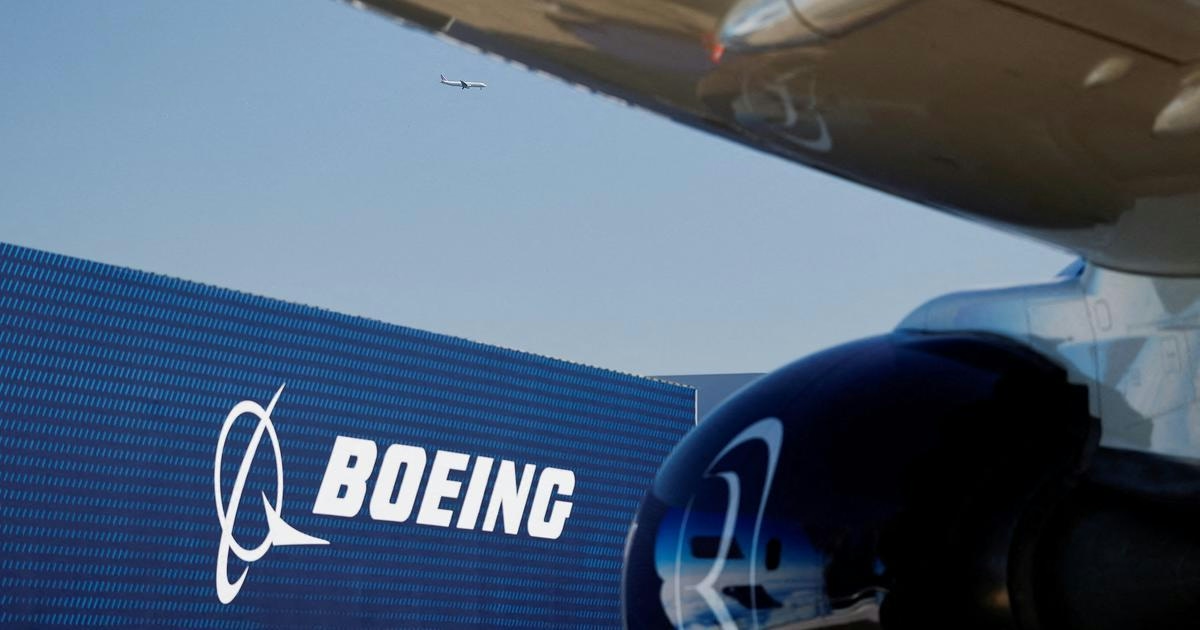
Boeing has overtaken Airbus in net aircraft orders for the first time since 2018, signaling a notable recovery for the American aerospace manufacturer after several difficult years. In 2025, Boeing secured 1,173 new orders, surpassing Airbus’s total of 1,000. This shift reflects a growing preference among airlines worldwide for American-made jets, a trend that some analysts suggest is influenced by efforts to maintain favorable relations with the U.S. government.

Recovery Amid Regulatory Easing and Market Dynamics

Boeing’s resurgence follows a turbulent period marked by intense scrutiny after two fatal crashes and a near-catastrophic incident involving its flagship 737 Max model since 2018. The easing of restrictions by U.S. regulators has been interpreted as a renewed vote of confidence in Boeing’s safety measures, encouraging airlines to increase their orders. The Financial Times has reported that some carriers may also be motivated by strategic considerations to strengthen ties with Washington.

Despite Boeing’s lead in new orders, Airbus retained its advantage in aircraft deliveries last year. Airbus delivered 793 aircraft, exceeding its revised annual target, while Boeing delivered 600, the highest number for the company in seven years. This delivery gap is partly attributable to Airbus’s larger backlog, which has constrained its ability to fulfill new orders as swiftly as Boeing.

Production and Industry Outlook

Boeing’s recovery is largely credited to its enhanced capacity to deliver new single-aisle jets, particularly the 737 Max, at a faster pace than Airbus. The company is also preparing to increase production of both the 737 Max and the 787 Dreamliner to meet growing demand.

The broader aviation sector is experiencing robust growth, with airlines such as Delta Air Lines projecting a 20% increase in profits this year, driven primarily by high-end customers. As carriers continue to modernize their fleets and expand capacity, both Boeing and Airbus stand to benefit from the sustained expansion in global air travel.

More news
Inside the Design and Production of Aviation Interiors

Inside the Design and Production of Aviation Interiors

Inside the Design and Production of Aviation Interiors Aircraft interior modifications may seem straightforward at first glance, but each upgrade or structural alteration undergoes a rigorous and highly regulated process. At FL Technics, a prominent aircraft maintenance, repair, and overhaul (MRO) provider, engineering, compliance, and production teams work in close collaboration to transform design concepts into certified, airworthy solutions. Donaldas Barkauskas, Head of Design & Production, and Pavel Olenskij, Head of Airworthiness, oversee how their Design Organisation Approval (DOA) and Production Organisation Approval (POA) teams manage these complex projects, ensuring compliance and quality throughout. Integrated Design and Production Processes In the aviation sector, interior design and production are intrinsically linked. At FL Technics, these functions operate as a unified, certified process. According to Olenskij, the Design Office is responsible for developing the engineering solution, whether it involves a minor interior modification or a comprehensive refurbishment, and preparing the full technical documentation. Production then manufactures the component, delivering to the customer both the part and a single installation document that specifies the correct installation procedure. This integrated DOA–POA approach streamlines the process for airlines, leasing companies, and ACMI providers by offering a complete, compliant solution from initial concept through to installation, all managed under one roof. Balancing Customer Needs with Regulatory Compliance Aircraft operators frequently seek customized solutions tailored to their operational and commercial objectives. However, not every proposed idea can be safely or legally implemented. Barkauskas emphasizes that while customers naturally present their needs, the role of the design and production teams is to assess the feasibility of these ideas within the constraints of aircraft safety and regulatory requirements. Compliance remains paramount, and regulations can differ significantly between regions such as Europe and the United States. Olenskij notes that some operators proactively plan for potential jurisdictional transitions, which can result in considerable time and cost savings. Beyond regulatory compliance, there is a growing trend among operators to invest in high-value, innovative solutions that enhance both crew working environments and passenger experiences. Olenskij highlights that while compliance ensures safety, intelligent design choices create added value. The true advantage lies in the combination of both elements. Industry Trends and Emerging Challenges The aviation interiors sector is undergoing notable shifts. For instance, the recent relocation of JetMS’s interiors production from the United Kingdom to Lithuania is altering supply chain dynamics and may affect production timelines. These changes are mirrored in the market’s evolving focus, with increased attention on business aviation interiors showcased at events such as the Aircraft Interiors Expo 2026, where advanced design and technology innovations are prominently featured. Competition within the industry is intensifying. Lufthansa Technik’s ACJ318 Elite upgrade program and the installation of Starlink connectivity systems by NetJets and ExecuJet exemplify the sector’s emphasis on integrating cutting-edge technology and enhancing passenger comfort in business jets. Selecting the Appropriate Partner Choosing a DOA or POA partner is not a matter of finding a universal solution. Only a select number of organizations possess the capability to manage the full range of aircraft modifications. FL Technics addresses this challenge by combining its certified expertise with a network of trusted partners to deliver comprehensive, end-to-end solutions. Barkauskas explains that operators seek partners capable of managing entire projects efficiently and reliably. By collaborating with specialized partners, FL Technics ensures customers receive seamless, comprehensive service, thereby eliminating the complexities associated with coordinating multiple suppliers. As the aviation interiors industry continues to evolve, the integration of design, production, and advanced technology remains essential for delivering safe, innovative, and market-leading solutions.
Heston MRO Opens New Station on Auckland Line

Heston MRO Opens New Station on Auckland Line

Heston MRO Establishes New Station at Auckland Airport Heston MRO has officially opened its newest international line station at Auckland Airport, marking the company’s first permanent foothold in New Zealand. This development, achieved through a partnership with local maintenance provider Fieldair, aims to address the increasing demands of Heston MRO’s international clientele operating flights across Australia and New Zealand. The new facility enhances the company’s regional presence, allowing it to deepen relationships with existing airline partners and extend operational coverage throughout the area. The Auckland station is equipped to service both wide-body and narrow-body aircraft, offering comprehensive maintenance solutions tailored to long-haul and regional operators alike. Through its collaboration with Fieldair, Heston MRO will deliver full Part 145 engineering services, encompassing line maintenance and aircraft certification for international fleets. Beyond maintenance, the station will also provide Part 147 technical training programs designed to strengthen the regional aviation workforce. Additionally, joint non-destructive testing services, including advanced Level 2 capabilities, will be available, drawing on the combined expertise of Heston MRO and Fieldair across Australia and New Zealand. Asta Zirlyte, CEO of Heston MRO, emphasized the strategic importance of the new station, stating, “The opening of the Auckland station is a natural evolution of our customer relationships. Many of our existing airline partners who rely on us across major Australian airports also fly into New Zealand. By expanding our geographical offering to Auckland, we can now provide them with the same high-quality, ‘Total Technical Care’ solutions across their entire Pan-Tasman network.” Industry Challenges Amid Expansion Heston MRO’s expansion into Auckland occurs against a backdrop of significant challenges within the maintenance, repair, and overhaul (MRO) industry. Recent analyses from Aviation Week highlight the difficulties faced by MRO providers worldwide in servicing aging aircraft fleets, which increase operational complexity and costs. This trend poses potential obstacles for Heston MRO as it seeks to efficiently maintain legacy aircraft, a concern heightened by airlines’ tendencies to extend the service life of older models. Looking forward, the aviation sector is anticipated to encounter increased volatility by 2026, influenced by internal divisions within the Federal Reserve and elevated market valuations. These economic factors may impact business aviation and the emerging advanced air mobility market, thereby affecting demand for MRO services. Furthermore, ongoing supply chain disruptions and the risk of new tariffs continue to introduce operational uncertainties for business aviation providers, including those expanding their regional footprint. Despite these headwinds, Heston MRO’s strategic establishment of a station in Auckland positions the company to better serve its customers across Australasia. By leveraging local expertise and strengthening regional capabilities, Heston MRO aims to navigate the evolving market landscape while maintaining its commitment to comprehensive technical support.
Delta Places Order for 30 Boeing 787-10 Dreamliners

Delta Places Order for 30 Boeing 787-10 Dreamliners

Delta Air Lines Orders 30 Boeing 787-10 Dreamliners Delta Air Lines has placed an order for 30 Boeing 787-10 Dreamliners, a move that has been met with widespread approval from industry analysts and frequent flyers alike. This decision has also reignited discussions about the balance between maintaining fleet and cabin consistency versus prioritizing operational flexibility and economic efficiency. For Delta, which operates nearly 1,000 mainline aircraft with an average age just under 15 years, embracing complexity has long been a strategic choice when it aligns with the airline’s broader objectives. Strategic Fleet Composition and International Ambitions Delta’s widebody fleet, although constituting only about 20 percent of its total aircraft, plays a crucial role in the airline’s international operations, premium revenue generation, and long-term profitability. Unlike many of its competitors, Delta has historically maintained a diverse long-haul fleet, favoring operational flexibility over uniformity. This approach is rooted in the legacy of its 2008 merger with Northwest Airlines, which left the airline with a predominantly Airbus widebody lineup. The Airbus A330 family currently anchors Delta’s medium- and long-haul international routes, while the A350-900 serves as the flagship aircraft for ultra-long-haul flights. Boeing 767s have also been a mainstay of Delta’s widebody operations but are increasingly viewed as outdated in terms of efficiency and cost-effectiveness. The introduction of the Boeing 787-10 Dreamliners is intended to modernize this segment of the fleet, particularly as Delta plans to phase out its aging 767s. The new aircraft will enhance the airline’s premium cabin offerings, featuring larger premium cabins and upgraded passenger amenities. This aligns with Delta’s strategic emphasis on expanding its premium segment, which currently accounts for 60 percent of the airline’s total revenue. The 787-10’s advanced technology and lower operating costs are expected to improve Delta’s competitiveness on key international routes, especially those across the Atlantic and to South America. Market Impact and Operational Considerations Industry observers anticipate that Delta’s acquisition of the 787-10 will intensify competition for premium long-haul travelers, placing additional pressure on rivals such as American Airlines and United Airlines, both of which are also targeting the lucrative premium international market. The order signals Delta’s intent to broaden its global reach and capture a larger share of high-yield customers by leveraging the Dreamliner’s range and efficiency to open new routes and enhance existing services. Integrating the 787-10s into Delta’s already complex fleet will present operational challenges, particularly in pilot training, maintenance, and logistics. Nevertheless, Delta’s extensive experience managing one of the industry’s most varied fleets suggests it is well-prepared to navigate these complexities. Ultimately, Delta’s latest order highlights its commitment to balancing fleet diversity with financial and operational performance. The airline is betting that the advantages of flexibility and premium growth will outweigh the costs associated with increased complexity. As Delta prepares to introduce the Dreamliners, it is positioning itself to compete more aggressively in the global premium travel market while continuing to refine the composition of its international fleet.
Sabre and AirBorneo Announce Long-Term Technology Partnership

Sabre and AirBorneo Announce Long-Term Technology Partnership

Sabre and AirBorneo Announce Long-Term Technology Partnership Sabre Corporation has formalized a long-term technology partnership with AirBorneo, the newly established airline owned by the government of Malaysia’s Sarawak state. Since commencing operations in January 2026, AirBorneo has selected Sabre’s advanced technology solutions to support its planning and pricing strategies from inception. This collaboration aims to build a strong operational foundation that will enhance regional connectivity and facilitate future growth. Strategic Technology Integration Under the terms of the multi-year agreement, AirBorneo will implement Sabre’s Network Planning and Optimisation suite to automate and manage flight schedules, codeshare agreements, and route profitability. The airline will also utilize Sabre Mosaic Revenue Optimizer, a tool designed to dynamically adjust seat availability and fare conditions in response to fluctuating market demand and business objectives. Complementing these capabilities, Sabre Market Intelligence and Global Demand Data will provide AirBorneo with essential insights and competitive benchmarks to guide its network and revenue strategies. Megat Ardian Wira Mohd Aminuddin, CEO of AirBorneo Holdings, emphasized the airline’s commitment to establishing a modern and competitive carrier that strengthens connectivity within Sarawak and the broader region. He noted that partnering with Sabre prior to launching operations ensures that AirBorneo’s pricing, planning, and revenue management systems are grounded in robust, data-driven methodologies. This approach is intended to enhance passenger service, support informed business decisions, and lay the groundwork for sustainable expansion. Challenges and Industry Implications While the partnership highlights a strong focus on technological innovation, both Sabre and AirBorneo face several challenges moving forward. The successful integration and scaling of Sabre’s solutions will be critical to realizing the partnership’s goals, presenting execution risks that must be carefully managed. Additionally, regulatory constraints within the highly regulated aviation sector could affect the deployment of new technologies. As AirBorneo pursues expansion, scaling operational and manufacturing capacities may introduce further complexities. Market responses to the announcement have been cautious, with investors balancing the long-term potential benefits against operational and regulatory uncertainties. The collaboration may also trigger competitive responses, as rival airlines might seek similar technology partnerships or invest in enhancing their digital capabilities to maintain market positioning. Despite these challenges, the alliance between Sabre and AirBorneo underscores the increasing significance of data-driven decision-making and advanced technology in the aviation industry. Both emerging and established carriers are recognizing the necessity of adapting to evolving market demands to deliver seamless passenger experiences and maintain competitive advantage.
Airbus Books 889 Aircraft Orders in 2025, Up from 826 in 2024

Airbus Books 889 Aircraft Orders in 2025, Up from 826 in 2024

Airbus Books 889 Aircraft Orders in 2025, Surpassing Delivery Targets Despite Challenges Airbus has reported a significant increase in aircraft orders for 2025, securing 889 commitments compared to 826 in 2024. This growth reflects sustained demand for the European aerospace giant’s commercial jets amid a complex operating environment. Over the course of the year, Airbus delivered 793 aircraft, exceeding its revised target of 790 despite encountering several obstacles, including quality issues related to fuselage panels on the A320 family and a major recall that led to a downward revision of its initial delivery goal from 820 aircraft earlier in December. Delivery Performance and Order Backlog December proved to be a particularly strong month for Airbus, with 136 aircraft delivered—nearly doubling the 72 units delivered in November and surpassing the 123 deliveries recorded in December 2024. The company also secured 203 new orders during the month, offset by 14 cancellations. Airbus’s current order backlog stands at 8,754 aircraft, which equates to roughly 11 years of production at the current delivery pace. This substantial backlog underscores the company’s robust market position and the enduring demand for its products. Airbus’s ability to meet and slightly exceed its delivery targets amid ongoing supply chain disruptions and technical setbacks highlights its efforts to stabilize production processes. A key factor contributing to the improved delivery rate was the anticipated enhancement in the supply of LEAP engines during the second half of 2025. These developments align with recent market forecasts, including those from Bloomberg, which indicate that the company’s share price remains stable despite the operational challenges. Industry Context and Outlook The competitive dynamics within the aerospace sector are evolving, with Boeing, Airbus’s primary competitor, also demonstrating a strong recovery. Boeing delivered its highest number of aircraft since 2018 and achieved the most net orders in seven years, signaling renewed momentum for the U.S. manufacturer. This resurgence reflects a broader trend of robust global demand for commercial aircraft, intensifying competition between the two industry leaders. Looking ahead, Airbus is scheduled to release its full-year 2025 financial results on February 19. The company is expected to announce new targets for 2026, building on its performance this year. Despite the operational headwinds faced in 2025, Airbus’s ability to navigate supply chain and quality control challenges positions it with cautious optimism as it prepares for the year ahead.
Thailand to Lift Age Restrictions on Commercial Aircraft

Thailand to Lift Age Restrictions on Commercial Aircraft

Thailand Removes Age Limits on Commercial Aircraft Thailand’s Civil Aviation Authority (CAAT) has announced the removal of age restrictions on commercial aircraft registered in the country, marking a significant shift in regulatory policy. Moving away from fixed age limits, the CAAT will now focus on assessing the airworthiness of each aircraft through established evaluation processes. Operators will continue to bear responsibility for maintaining compliance under the Air Navigation Act to ensure ongoing safety standards are met. Aligning with International Standards This regulatory update brings Thailand in line with international aviation practices, which prioritize rigorous maintenance and inspection regimes over arbitrary age caps. Under the new framework, mid-life and older aircraft operating in Thailand will be subject to enhanced inspection requirements and more frequent oversight by the CAAT. Aircraft lessors, particularly those managing older fleets, are advised to review and update maintenance and inspection clauses in their agreements with Thai lessees to reflect these changes. Implications for Thailand’s Aviation and Tourism Sectors The timing of this policy change is critical for Thailand’s aviation and tourism industries, both of which are navigating recovery challenges. In 2025, the country experienced a 7.23% decline in foreign tourist arrivals alongside a 4.7% drop in tourism revenue, prompting calls for strategies aimed at attracting higher-spending and longer-stay visitors. Concurrently, Thai airlines, still recovering from the financial and operational impacts of the COVID-19 pandemic, have struggled to renew and expand their fleets amid global supply constraints on new aircraft deliveries. By removing age restrictions, the CAAT aims to provide airlines with greater flexibility to acquire or lease mid-life aircraft, thereby mitigating delays and shortages associated with new aircraft procurement. Industry analysts suggest this could open new opportunities for lessors specializing in mid-life planes, as Thai carriers may increasingly consider older aircraft to meet operational needs. However, this potential is tempered by a global trend of airlines retaining mid-life aircraft longer than initially planned, reducing the availability of such planes for lease or sale. Future Outlook for the Aviation Market Looking ahead, Thailand’s aviation sector faces intensifying competition, with premium travel demand projected to outpace economy class growth in 2026. Additionally, anticipated major airline mergers are expected to reshape the competitive landscape. While the removal of aircraft age restrictions offers Thai airlines enhanced operational flexibility and supports sector recovery, industry experts emphasize that broader economic conditions, tourism trends, and market consolidation will ultimately influence the policy’s impact on the industry.
Saudia Technic Sends 40 Students to U.S. for Aviation Maintenance Training

Saudia Technic Sends 40 Students to U.S. for Aviation Maintenance Training

Saudia Technic Sends 40 Students to U.S. for Aviation Maintenance Training Advancing Aviation Maintenance Skills through International Collaboration Spartan College of Aeronautics and Technology’s Tulsa campus has recently welcomed 40 students from Saudia Technic to undertake Federal Aviation Administration (FAA) Part 147 Aviation Maintenance Technology training. This cohort, comprising both men and women from Saudi Arabia, will receive comprehensive instruction in airframe and powerplant certification. Upon completion, the trainees are expected to return to Saudia Technic, the maintenance, repair, and overhaul (MRO) division of Saudia Airlines headquartered in Jeddah, to contribute their enhanced expertise. This initiative is closely aligned with the strategic objectives of Saudi Vision 2030, which aims to establish the Kingdom as a leading global aviation hub by localizing advanced MRO capabilities. Saudia Technic, currently employing over 2,700 certified aviation technicians, regards this program as a critical investment in cultivating a highly skilled and technologically sophisticated workforce. Thamer Filimban, head of Learning and Development at Saudia Technic, emphasized the importance of this effort, describing it as a pivotal step toward building the most capable maintenance workforce in the region. Partnership and Training Excellence The collaboration with Spartan College not only facilitates FAA certification but also immerses Saudi trainees in U.S. aviation maintenance practices at one of the nation’s largest aviation training centers. Established in 1928, Spartan College has trained more than 100,000 pilots and technicians from over 40 countries, offering FAA-approved maintenance programs across multiple campuses. The partnership was developed through close cooperation between Abdulrahman Sadawi, Supervisor of Learning and Development at Saudia Technic, and Dan Bregman, Executive Vice President of Strategy and Development at Spartan. Kari Pahno, President of Spartan’s Tulsa campus, expressed pride in supporting Saudi Arabia’s commitment to technical training and workforce development. Challenges and Industry Implications While the program represents a significant opportunity for skill enhancement, it also presents several challenges. Saudia Technic must ensure that the training maintains high quality and relevance, particularly as students adapt to differing regulatory and safety standards in the United States. The logistics of managing an international student exchange further complicate the initiative. Additionally, the return of these newly trained technicians to Saudi Arabia may intensify competition within the local aviation maintenance sector, potentially prompting rival firms to upgrade their own training programs or expand maintenance capabilities to preserve market share. This partnership exemplifies a broader industry trend, with airlines and MRO providers increasingly turning to international training solutions to address a global shortage of qualified maintenance technicians. However, specific details regarding the program’s cost, duration, and post-graduation employment obligations have not been publicly disclosed.
African aviation needs strategic transformation to speed progress

African aviation needs strategic transformation to speed progress

African Aviation Needs Strategic Transformation to Accelerate Progress Africa’s aviation sector is at a pivotal moment, with demand for air travel growing faster than the global average. This surge is driven by a youthful population, an expanding middle class, increased regional trade integration, and ambitious initiatives such as the Single African Air Transport Market (SAATM). Despite these positive trends, airlines and airports across the continent continue to face significant challenges, including thin profit margins, high operating costs, currency volatility, infrastructure deficiencies, and complex regulatory frameworks. To achieve sustainable growth, the African aviation industry must move beyond incremental improvements and embrace strategic transformations that have proven effective globally. Key areas for focus include fleet modernisation, revenue diversification, cost discipline, flexible business models, and digital transformation grounded in data-driven decision-making. Fleet Modernisation and Operational Efficiency Modernising fleets remains one of the most critical strategies for African airlines. Many carriers still operate ageing, fuel-inefficient aircraft that incur high maintenance costs. Given that fuel expenses can constitute up to 40% of operating costs, transitioning to newer-generation aircraft such as the Airbus A220, A320neo, or Boeing 737 MAX offers immediate advantages through enhanced fuel efficiency, reduced emissions, and improved reliability. Simplifying fleet composition also enhances crew productivity, lowers training and spare parts expenses, and increases scheduling flexibility. For regional connectivity, deploying appropriately sized turboprops and smaller jets can render thin routes profitable, supporting domestic and intra-African travel without reliance on unsustainable subsidies. Access to capital remains a significant obstacle, but innovative leasing arrangements, power-by-the-hour maintenance contracts, and partnerships with lessors provide viable pathways for fleet renewal without overburdening balance sheets. Nonetheless, the sector must contend with supply chain disruptions, including temporary fuel shortages and delays in aircraft deliveries, which can adversely affect operational efficiency and profitability. Revenue Diversification and Airport Transformation Dependence solely on passenger ticket sales is no longer a sustainable business model. Airlines and airports must diversify their revenue streams to enhance resilience. Ancillary revenues—such as baggage fees, seat selection, priority boarding, onboard sales, and travel insurance—are underexploited in many African markets. When carefully tailored to local consumer preferences, these sources can significantly increase unit revenues without suppressing demand. Airports, in particular, need to reconsider their commercial strategies. In mature markets, non-aeronautical revenues from retail, food and beverage, advertising, property development, and parking often account for more than half of total income. Many African airports, however, remain overly reliant on aeronautical charges. Developing airport cities, logistics parks, hotels, and business hubs can transform airports into dynamic economic centers. Cargo operations also represent a substantial opportunity, driven by the continent’s expanding e-commerce, pharmaceutical, and perishables sectors. Integrating cargo capacity strategically with passenger services can enhance air logistics reliability and profitability. Cost Discipline and Competitive Dynamics Achieving cost discipline is essential for building structurally efficient organisations. African airlines face some of the highest unit costs globally, influenced by taxes, charges, fuel pricing inefficiencies, and fragmented supply chains. While not all cost factors are within the airlines’ control, optimising procurement, renegotiating supplier contracts, adopting shared services, and fostering regional cooperation can generate meaningful savings. Enhancing aircraft utilisation and operational efficiency is equally critical. Market responses to these challenges have been varied. Some airlines have benefited from robust European demand, improving profit margins, while others struggle to adapt to volatile market conditions. Competitors are making strategic investments in infrastructure and capacity, particularly in key markets such as South Africa and Nigeria, where domestic aviation is uneven but expanding. Innovation and the Path Forward Emerging technologies, including electric aircraft and advanced air mobility solutions from innovators like Beta Technologies and Astro Mechanica, have the potential to reshape Africa’s aviation landscape. Embracing digital transformation and adopting flexible business models will be vital for African carriers to maintain competitiveness and resilience in a rapidly evolving environment. Ultimately, strategic transformation rather than incremental change is imperative for African aviation to unlock its full potential and contribute meaningfully to the continent’s economic growth.
AerCap to Lease Six Airbus A330-900s to Virgin Atlantic

AerCap to Lease Six Airbus A330-900s to Virgin Atlantic

AerCap to Lease Six Airbus A330-900s to Virgin Atlantic AerCap Holdings N.V. has entered into a significant purchase and leaseback agreement with Virgin Atlantic for six new Airbus A330-900 aircraft, marking a pivotal advancement in the airline’s fleet renewal strategy. Deliveries are slated to commence in the second quarter of 2026 and extend through the end of 2027. This acquisition will support Virgin Atlantic’s efforts to modernize its widebody fleet and improve operational efficiency on routes spanning the United Kingdom, France, the United States, and other international destinations. Details of the Agreement and Fleet Modernization Under the terms of the agreement, AerCap, a global leader in aviation leasing, will acquire the aircraft from Virgin Atlantic’s existing orderbook and subsequently lease them back to the airline. This arrangement allows Virgin Atlantic to upgrade its fleet with state-of-the-art, fuel-efficient aircraft while preserving financial and operational flexibility. The Airbus A330-900, part of the A330neo family, is distinguished by its advanced technology, enhanced aerodynamics, and new engine designs, which collectively contribute to significant reductions in fuel consumption and emissions compared to older models. This deal arrives at a critical juncture for the aviation industry, which faces mounting pressure to adopt more sustainable practices. Virgin Atlantic’s integration of the A330-900 aligns with its commitment to lowering carbon emissions per passenger kilometer and providing a quieter, more comfortable experience for travelers. The new aircraft will gradually replace older widebody jets, reinforcing Virgin Atlantic’s position as one of the most fuel-efficient carriers in the sector. Industry Context and Market Challenges The agreement also reflects broader challenges and shifts within the global aviation market. Airbus remains focused on maintaining high production rates for the A330neo amid intensifying competition, particularly following substantial Boeing orders anticipated in 2025. The market environment is further complicated by economic uncertainties, including internal divisions within the Federal Reserve and concerns over market valuations, which may introduce volatility in 2026. These factors have the potential to influence both AerCap’s leasing strategy and Virgin Atlantic’s fleet planning. Responses from competitors are also shaping the industry landscape. Airlines such as Delta Air Lines have diversified their fleets with new Boeing 787 orders, while Air India recently took delivery of its first Boeing 787-9. Meanwhile, carriers like Avelo Airlines are adjusting their operations by reducing some Boeing 737s, reflecting a broader trend of route launches and fleet optimization across the sector. Despite these challenges, the AerCap-Virgin Atlantic agreement underscores the commitment of both companies to innovation and sustainability. With the first of the six A330-900s scheduled for delivery in 2026, Virgin Atlantic will be better positioned to meet evolving regulatory requirements and passenger expectations. Concurrently, AerCap continues to solidify its role as a key facilitator of fleet modernization in a rapidly evolving market.
Do the Boeing 747 and 767 Use the Same Engine?

Do the Boeing 747 and 767 Use the Same Engine?

Do the Boeing 747 and 767 Use the Same Engine? At first glance, it may seem improbable that the Boeing 747 and 767 share the same engine, given their distinct roles and configurations. The 747, a four-engine long-haul flagship, contrasts sharply with the 767, a more efficient twin-engine widebody designed for medium to long-haul routes. Nonetheless, the question arises frequently among aviation enthusiasts, primarily because both aircraft have been associated with the Rolls-Royce RB211 engine family. To clarify whether these two jets truly share an engine, it is essential to examine the design, certification, and adaptation processes of modern aircraft engines. Shared Engine Family, Distinct Variants Both the Boeing 747 and 767 have, at various times, been equipped with engines from the Rolls-Royce RB211 family. This commonality originates from Rolls-Royce’s development of the RB211 as a scalable engine platform rather than a single, uniform design. For instance, variants of the RB211-524 powered later models of the Boeing 747, including the 747-400, while closely related RB211 variants were also certified for use on the Boeing 767. However, this does not imply that the two aircraft use identical engines. Each RB211 variant was specifically engineered to suit the particular aircraft it powered, with differences in thrust ratings, control systems, and installation requirements. Although the core design and engineering philosophy remained consistent, the final engine configurations were customized to meet the unique performance and certification demands of each airframe. In essence, the 747 and 767 share an engine family but not a single, interchangeable powerplant. Engine Design Philosophy and Adaptation The ability of an engine family like the RB211 to serve multiple aircraft types is rooted in the development approach of large commercial engines. Instead of designing entirely new engines for each aircraft, manufacturers often create a common core that can be adapted for various applications. This modular strategy reduces development costs, simplifies certification processes, and enhances reliability for operators. In the case of the RB211, Rolls-Royce employed a modular architecture that allowed key components, such as the engine core, to be shared across different variants. This design flexibility enabled the RB211 to power both the 747 and 767, albeit in configurations tailored to the specific requirements of each aircraft. Contemporary Engine Usage and Operational Roles Despite their shared heritage with the RB211 family, the Boeing 747 and 767 do not typically operate with the same engines today. The 747 is most commonly powered by engines such as the Rolls-Royce Trent 900 or the General Electric GE90, reflecting advances in engine technology and the aircraft’s evolving operational profile. Conversely, the 767 generally employs General Electric CF6 or Pratt & Whitney PW4000 engines, choices that align with its efficiency and versatility. The 767’s adaptability is further demonstrated by its use in specialized roles, including Coulson Aviation’s Very Large Airtanker (VLAT) program, where its fuel efficiency and operational flexibility are critical assets. This underscores the aircraft’s continued relevance in diverse aviation sectors. Conclusion While both the Boeing 747 and 767 have utilized engines from the Rolls-Royce RB211 family, they do not share the same, identical engine. Each aircraft employs a variant specifically tailored to its operational needs, exemplifying the broader industry trend toward modular engine design. Today, the two aircraft are powered by different, more advanced engines, reflecting the ongoing evolution of commercial aviation technology.
Ask AeroGenie











