
Превращайте аналитические выводы ИИ в реальные действия

В тренде
Categories
Bombardier Shares Decline Amid Aviation Sector Slowdown and Supply Chain Issues
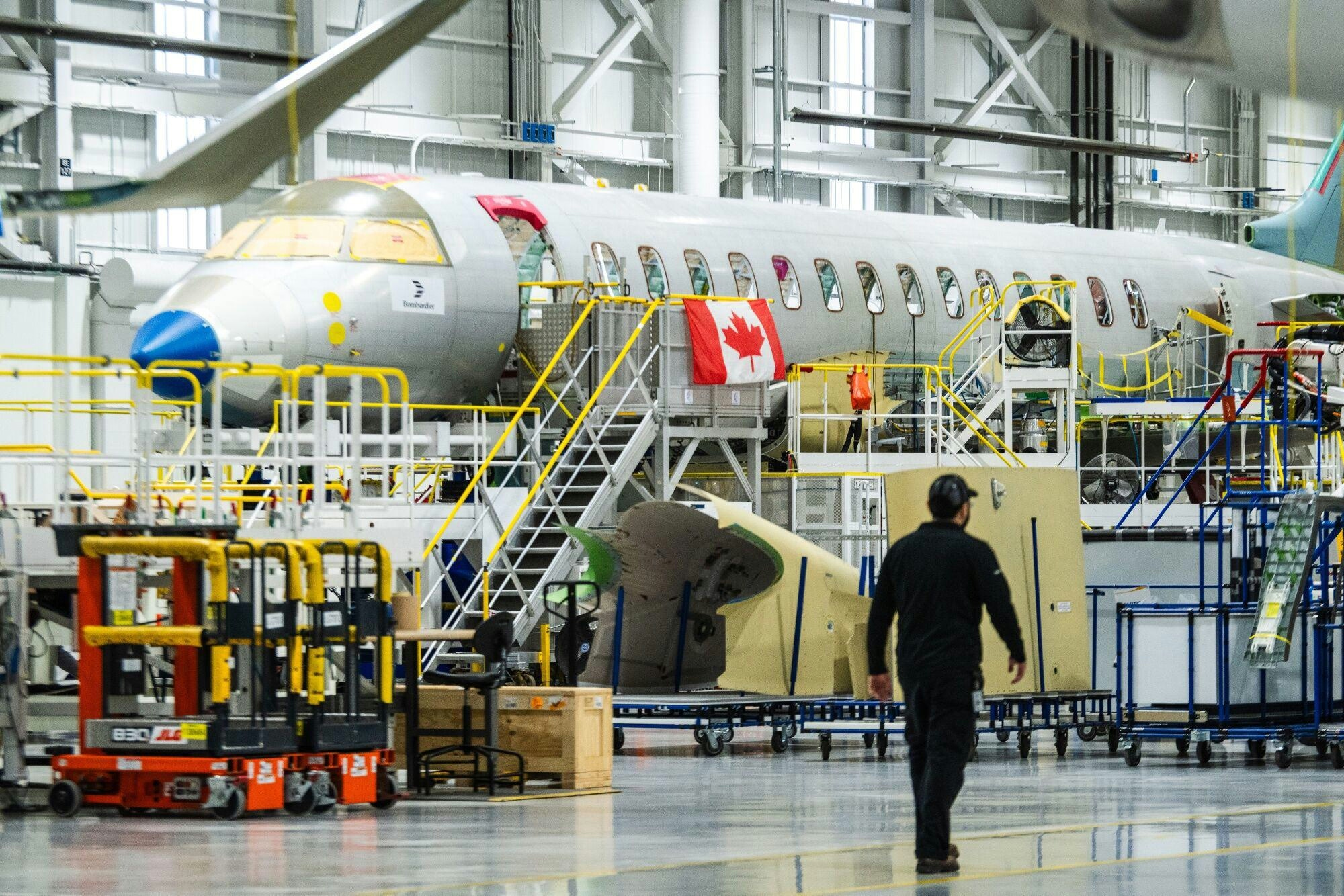
Bombardier Shares Decline Amid Aviation Sector Slowdown and Supply Chain Issues
Bombardier (ISIN: CA0977512007), the Canadian manufacturer specializing in business jets, is experiencing a decline in its share price amid a broader slowdown in the aviation sector and persistent supply chain disruptions. As of March 17, 2026, European investors tracking the stock on Xetra are closely observing the company’s performance for signs of recovery. However, ongoing challenges continue to cloud the near-term outlook for margins and cash flow.
Sector-Wide Challenges and Company Performance
The recent volatility in Bombardier’s shares reflects widespread headwinds affecting the aviation industry. Since divesting its rail business in 2021, Bombardier has concentrated exclusively on luxury private jets. Despite this strategic focus, the company has reported softer order intake alongside ongoing supply chain bottlenecks. These difficulties are not unique to Bombardier; competitors such as Dassault Aviation are also grappling with delivery delays caused by sluggish supply chains. Workforce challenges further compound sector pressures, as illustrated by Hyundai’s eVTOL subsidiary Supernal, which recently reduced its workforce significantly.
Despite these obstacles, Bombardier has shown resilience. Demand for flagship models like the Global 7500 remains strong among ultra-high-net-worth individuals, even as corporate fleet renewals slow amid tighter cost controls. A notable development is Bombardier’s recent agreement with Vista, involving up to 160 Challenger 3500 jets valued at nearly $5 billion, signaling sustained interest in business aviation despite the challenging environment.
Market Dynamics and Strategic Positioning
On Xetra, where Bombardier shares trade alongside the Toronto listing, European investors note thinner liquidity compared to North American exchanges, which tends to amplify price swings in response to news. The company’s business jet segment now depends heavily on order backlog, backlog conversion, and aftermarket services to maintain revenue stability. Bombardier’s backlog remains robust at over $15 billion, providing some visibility, though delivery delays stemming from supplier constraints continue to erode investor confidence.
Since exiting the transportation sector, Bombardier has streamlined its operations into a pure-play business aviation firm, focusing on premium, long-range jets. This strategic shift has enhanced operating leverage, with services revenue now accounting for more than 30% of total sales, offering a more stable and recurring income stream. Nevertheless, the capital-intensive nature of jet production exposes Bombardier to risks from raw material inflation and labor shortages—key concerns for investors focused on margins.
The Global jet lineup now generates over 70% of Bombardier’s revenues, supported by strong brand loyalty in North America and growing demand from the Middle East. European sales, particularly relevant for Xetra investors, represent approximately 25% of deliveries and benefit from service centers located in Germany and Switzerland. However, regulatory pressures related to emissions and noise standards may necessitate costly upgrades, presenting a trade-off between compliance and short-term profitability.
Private aviation demand has become increasingly bifurcated. While fractional ownership and charter services remain steady, outright corporate purchases have slowed as companies scrutinize luxury expenditures more closely. Bombardier’s order book reflects this trend, with steady inflows for ultra-long-range models but deferrals in the mid-size segment. Persistent inflation, geopolitical tensions, and intensified competition from Gulfstream and Dassault continue to weigh on market sentiment.
For investors in the DACH region, Bombardier’s emphasis on reliability and cabin customization remains attractive. Nonetheless, the current environment presents a complex mix of opportunities and risks as the aviation sector navigates ongoing uncertainty.
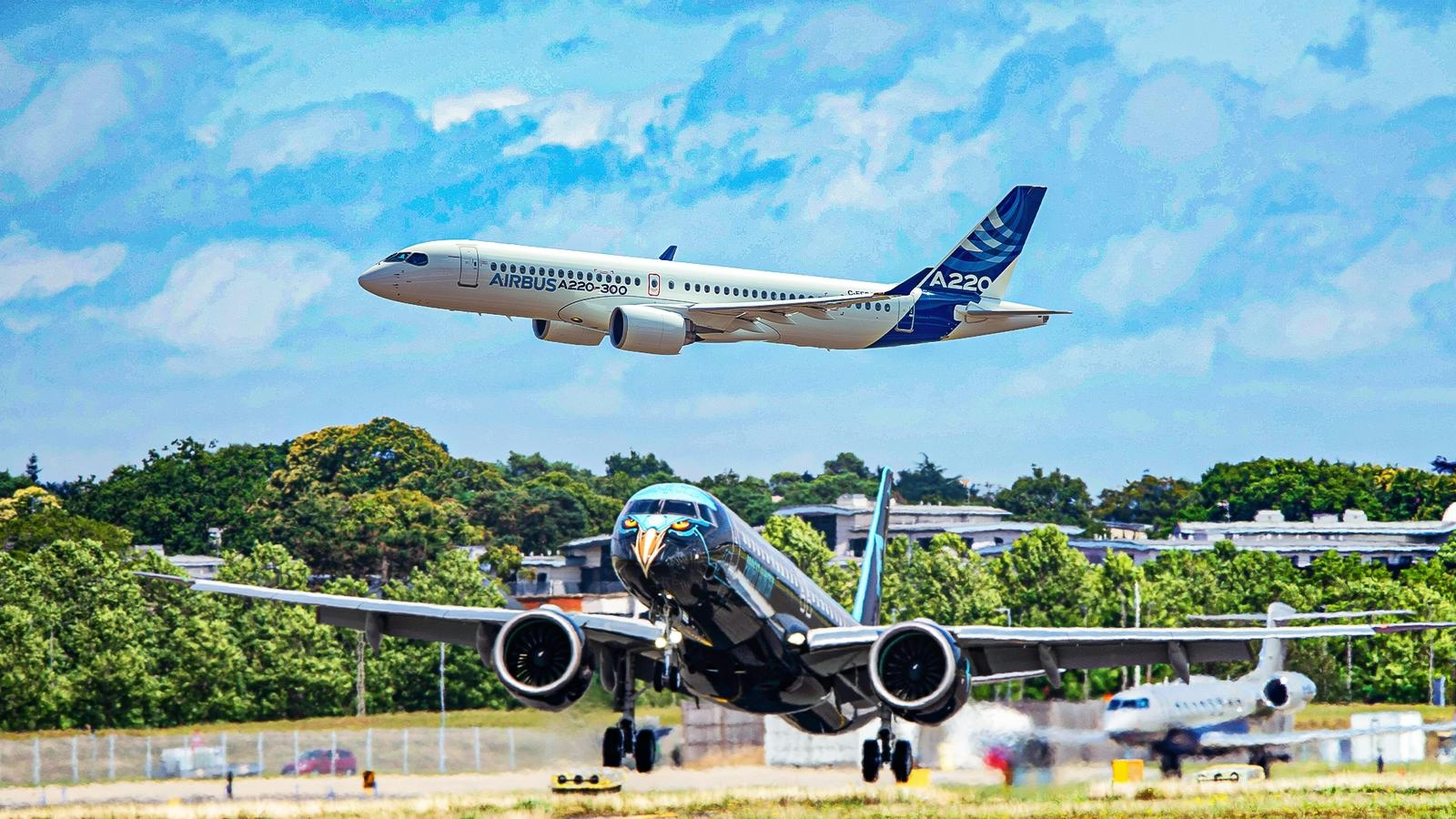
Embraer Delivers 2,000th E-Jet as Airbus A220 Seeks Market Share
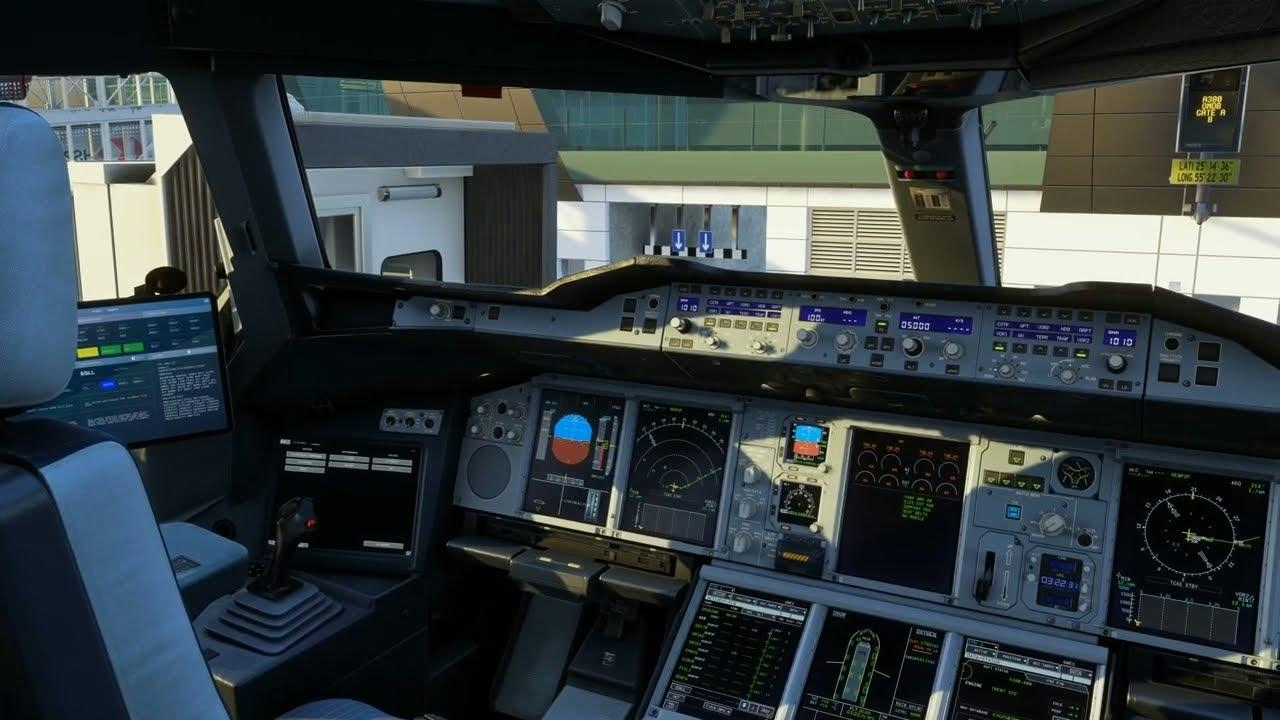
iniBuilds Releases Second In-Depth A380 Video
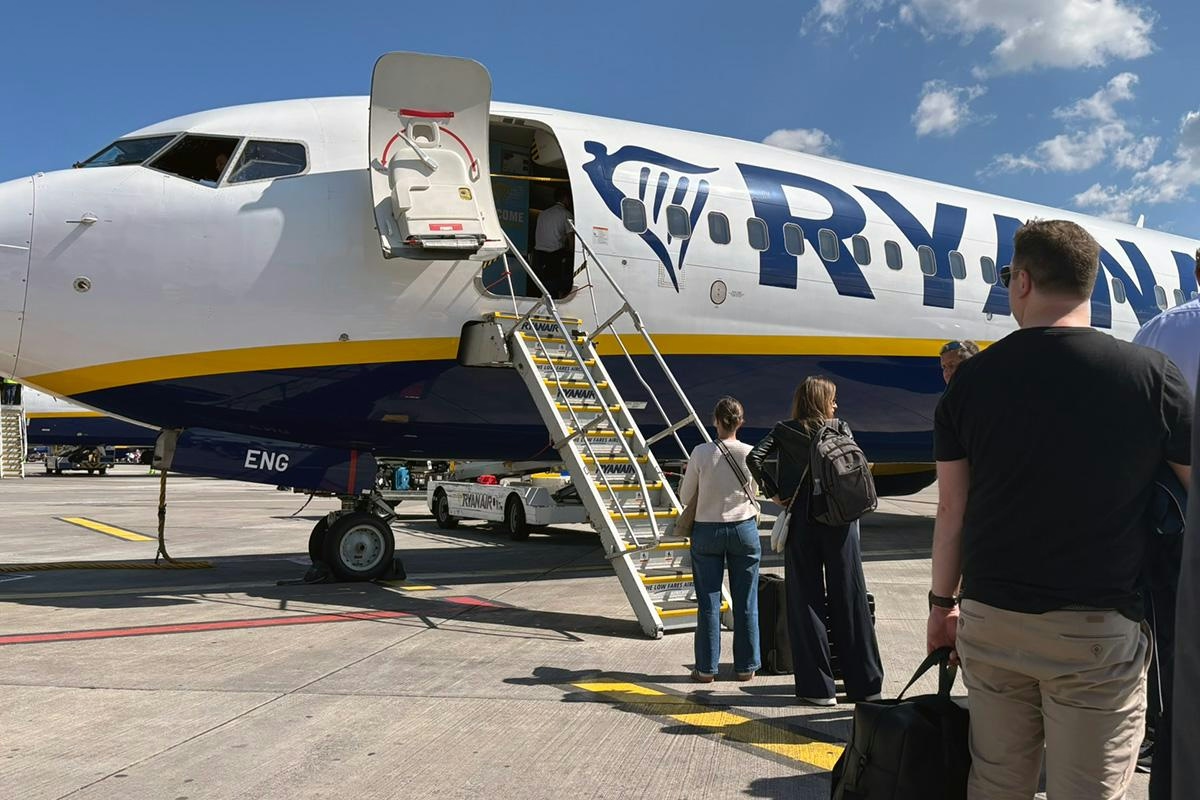
Ryanair and Alaska Airlines Apply AI to Operational Decision-Making

Digital Payments, AI, and Aviation Strengthen Philippines-India Relations
PlaneSense Suspends PC-12 Jet Card Sales
How AI Could Transform Bird-Strike Prevention for Business Aviation
American Airlines and Boeing Complete First 737 MAX Landing Gear Swap

Vietjet and Thales sign major MRO and AI deals in Paris
Etihad CEO Cites Aircraft Capacity as Limiting Factor Amid Growth in China and Africa

Artificial Intelligence Enters the Cockpit
