Изображение

Превращайте аналитические выводы ИИ в реальные действия

Присоединяйтесь к списку ожидания AeroGenie уже сегодня!

В тренде

Categories

British Airways to Pay Pilots $100,000 Annually for Taxiing at Chicago O'Hare
May 3, 2026By ePlane AI
British Airways to Pay Pilots $100,000 Annually for Taxiing at Chicago O'Hare
0
0
British Airways
Ground Taxi Operations
Chicago O'Hare Airport

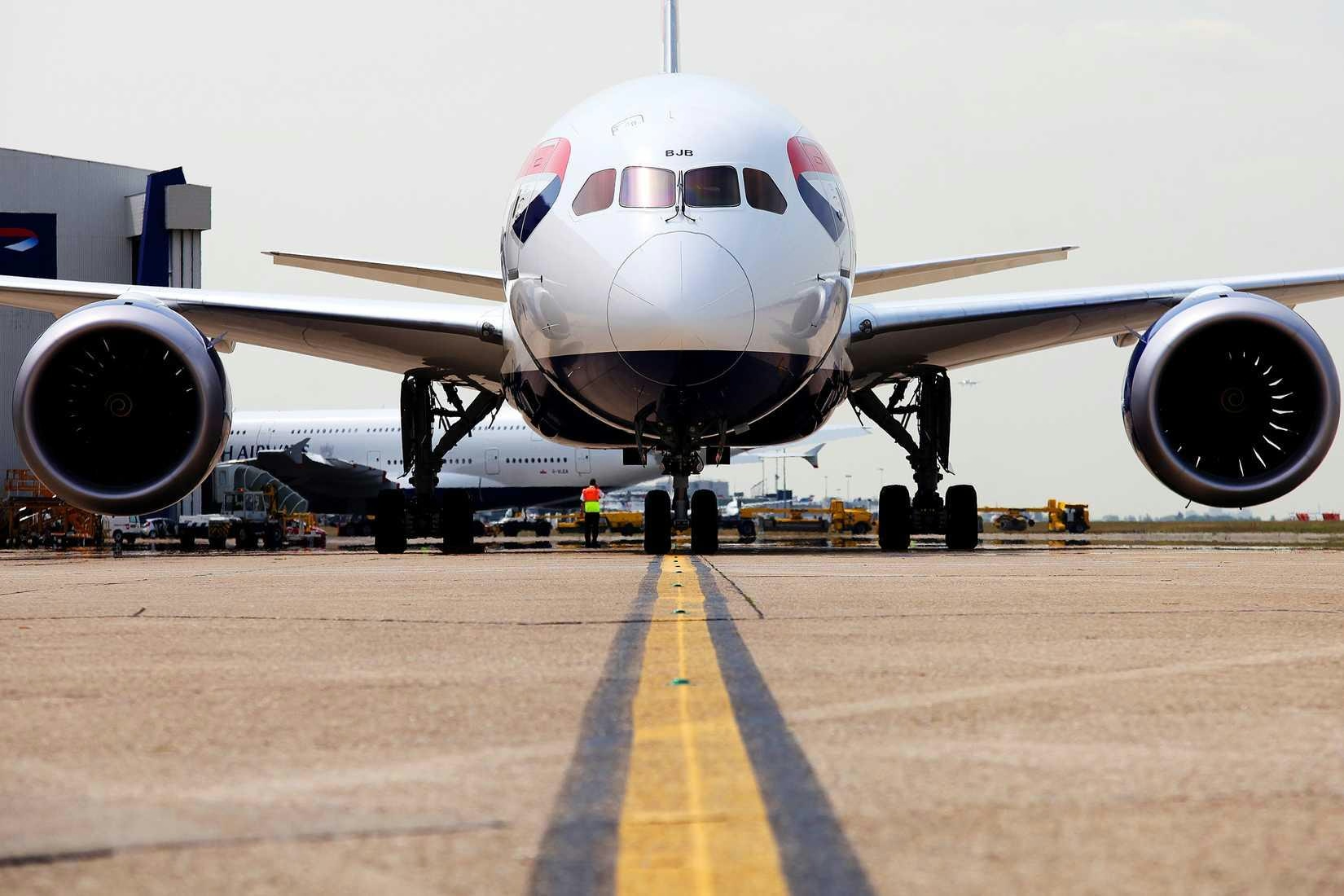
British Airways Introduces Ground Taxi Pilot Positions at Chicago O’Hare with Salaries up to $100,000

British Airways has announced a new recruitment initiative targeting pilots for specialized ground operations at Chicago O’Hare International Airport (ORD). The airline is offering annual salaries reaching $100,000 for “taxi crew” pilots whose primary responsibility will be maneuvering aircraft on the ground, rather than piloting flights. This strategic move forms part of British Airways’ broader efforts to expand its presence in the U.S. market and enhance operational efficiency at one of its busiest North American hubs.

Addressing Congestion and Delays at O’Hare

Chicago O’Hare ranks among the world’s busiest airports, handling over 70 million passengers annually. It is frequently plagued by congestion and delays, especially during peak travel times and adverse weather conditions. A significant contributor to these delays is the taxiing process—moving aircraft between gates and runways. By deploying dedicated taxi pilots, British Airways aims to streamline ground movements, reduce aircraft turnaround times, and improve on-time performance metrics.

The taxi crew pilots will be responsible for conducting pre-taxi inspections, maintaining communication with ground control, and safely navigating widebody aircraft such as the Boeing 777 and 787 between parking stands and runway holding points. Notably, these pilots will not be involved in takeoff or landing procedures, which remain under the purview of the primary flight crew.

Role Requirements and Compensation

Candidates for these positions must hold a valid Air Transport Pilot (ATP) certificate or its equivalent, along with appropriate type ratings or relevant experience. The roles are shift-based, covering early mornings, late nights, and weekends to ensure continuous ground support during peak operational periods. The salary range of $90,000 to $100,000 annually places these roles above many first officer positions at regional U.S. airlines. British Airways is also expected to provide standard employee benefits, including healthcare and retirement plans, although specific details may vary.

Operational and Market Challenges

This initiative comes amid a complex operational environment at O’Hare. The Federal Aviation Administration (FAA) has proposed flight caps at the airport to mitigate congestion, a measure that could affect British Airways alongside other major carriers such as United and American Airlines. Furthermore, British Airways has recently intensified efforts to restore service to mid-sized American cities like St. Louis, often supported by local government incentives. These expansions may trigger competitive responses from other airlines, potentially impacting British Airways’ market share.

The airline is also navigating customer relations challenges following recent modifications to its loyalty program, which led to status downgrades for many frequent flyers. These developments highlight the delicate balance British Airways must maintain between operational innovation, regulatory compliance, and customer satisfaction.

Industry Trends and Strategic Implications

The creation of taxi crew roles reflects a broader industry trend toward operational specialization, particularly in response to the ongoing pilot shortage in North America. Such positions may attract experienced pilots seeking more stable, ground-based roles while continuing to contribute to airline operations. By alleviating some responsibilities from primary flight crews and optimizing aircraft utilization, British Airways aims to tighten scheduling and enhance punctuality at one of the world’s most challenging airports.

More news
Boeing 777-9 and Airbus A350-1000: Comparing the Next Generation of Widebody Jets

Boeing 777-9 and Airbus A350-1000: Comparing the Next Generation of Widebody Jets

Boeing 777-9 and Airbus A350-1000: Comparing the Next Generation of Widebody Jets The impending entry of the Boeing 777-9 into commercial service will mark the arrival of the largest twin-engine airliner ever constructed. However, by that time, its primary competitor, the Airbus A350-1000, will have already been in operation for nearly a decade. During this period, the A350-1000 has established a robust global customer base and demonstrated its capabilities on some of the world’s longest routes. This staggered timeline frames the competition between the two aircraft less as a comparison of theoretical specifications and more as a test of whether Boeing’s larger, higher-capacity design can surmount Airbus’s significant operational head start. The rivalry between the 777-9 and the A350-1000 extends beyond mere seat counts and range figures. Airlines and industry analysts consider a range of factors including passenger capacity, operating economics, engine technology, certification schedules, real-world route applicability, and order volumes. These considerations underscore the complex decisions faced by carriers such as Lufthansa, which must weigh the distinct advantages offered by each model. Capacity and Range: Critical Performance Metrics Boeing states that the 777-9 accommodates between 375 and 450 passengers in a two-class configuration, with some layouts seating up to 426. In contrast, Airbus positions the A350-1000 with a typical three-class seating capacity ranging from 350 to 410 passengers, with a maximum around 369 seats. This translates to approximately a 16% capacity advantage for the 777-9, a significant factor in lowering seat-mile costs, as highlighted by aviation consultancy AirInsight. In terms of range, the A350-1000 holds a clear lead. Airbus and British Airways documentation cite a maximum range of up to 8,700 nautical miles (16,112 kilometers), with some sources suggesting capabilities extending to 9,000 nautical miles. Boeing has recently increased the 777-9’s advertised range to 8,000 nautical miles (14,816 kilometers), narrowing the gap but still trailing the Airbus offering. This range advantage makes the A350-1000 particularly well-suited for ultra-long-haul routes, a market segment where it has already secured a strong foothold. Engineering Innovations and Operational Efficiency The Airbus A350-1000 incorporates advanced materials, with carbon-fiber reinforced polymer comprising 53% of its structural weight. This use of lightweight composites contributes to reduced overall weight, lower fuel consumption, and decreased maintenance costs over the aircraft’s operational lifespan. Boeing, on the other hand, emphasizes the 777-9’s larger cabin size, which allows fixed costs to be distributed across more seats, thereby enhancing efficiency on routes with high passenger demand. A distinctive engineering feature of the 777-9 is its record-breaking wingspan of 235 feet, 5 inches (71.75 meters). To accommodate existing airport gate infrastructure, Boeing has developed folding wingtips that reduce the wingspan to 212 feet, 9 inches (64.85 meters) while on the ground. Airbus did not require such a solution, as the A350-1000’s wingspan of 64.75 meters fits within current airport facilities. Boeing asserts that the extended wingspan in flight contributes to up to 20% lower fuel consumption, underscoring the aircraft’s aerodynamic efficiency. Market Dynamics and Future Prospects Market responses to these aircraft reflect their respective strengths. The A350-1000’s superior range secures its position in ultra-long-haul markets, while the 777-9’s greater capacity appeals to airlines focused on high-density routes. Airbus continues to refine the A350 family to address growing demand for large widebody aircraft, balancing technological innovation with shareholder expectations. Concurrently, Boeing is advancing the capabilities of the 777X series to maintain its competitive edge. The ongoing competition between the Boeing 777-9 and Airbus A350-1000 is poised to shape the trajectory of long-haul aviation. Each aircraft offers unique advantages, and their rivalry will influence airline fleet strategies and passenger experiences well into the coming decade.
Caracas Airport to Resume Cargo Flights on August 5, Plans Passenger Service by Month’s End

Caracas Airport to Resume Cargo Flights on August 5, Plans Passenger Service by Month’s End

Caracas Airport to Resume Cargo Flights on August 5, Plans Passenger Service by Month’s End Venezuela’s Simón Bolívar International Airport in Maiquetía is set to resume cargo operations on Tuesday, August 5, marking a critical step in reopening the country’s primary international gateway following a six-week closure caused by the June 24 earthquake doublet. The seismic event severely damaged the airport’s infrastructure, cracking the main runway and collapsing parts of the terminal, effectively cutting off Venezuela’s principal air connection to the world. Phased Recovery and Operational Targets The Maiquetía International Airport Institute (IAIM) has outlined a phased recovery plan, with commercial passenger flights expected to restart on August 24. Authorities anticipate that by December 2026, the airport will operate at approximately 85 percent of its pre-earthquake capacity. In a circular dated July 31, IAIM formally informed cargo carriers, customs agents, warehousing firms, and freight forwarders that both inbound and outbound cargo flights will resume under stringent national and international aviation safety and security protocols. The Ministry of People’s Power for Transport confirmed the August 5 date, describing the cargo flight resumption as part of a “progressive and sustainable restoration of airport services.” IAIM Director General Aníbal Rafael Bellorín Pereira underscored the institute’s commitment to maintaining a safe and transparent environment for all airport operators. Cargo operations are vital to Venezuela’s ongoing reconstruction efforts. Since the earthquake, freight has been rerouted through alternative hubs such as Valencia’s Arturo Michelena International Airport, resulting in increased transit times and costs that have further strained supply chains. The reopening of Maiquetía will facilitate more direct delivery of reconstruction materials to La Guaira and the metropolitan Caracas area. Prioritizing Cargo Flights Before Passenger Service The 19-day interval between the resumption of cargo flights and the planned return of passenger services is not attributable to runway conditions, as both cargo and passenger aircraft will utilize the same certified runway. Instead, the delay reflects the status of terminal infrastructure. Cargo operations require a functional runway, airside fuel and ground handling services, customs clearance, and air traffic control, but do not depend on passenger-specific facilities such as check-in counters, immigration checkpoints, security screening, baggage handling systems, or boarding bridges. Passenger flights, by contrast, necessitate fully operational terminal systems. Engineers continue to assess whether the existing terminal can be repaired or if temporary facilities will be required. The current plan envisions initiating passenger service with eight commercial flights per day, employing provisional infrastructure at both domestic and international terminals. This approach is reminiscent of the strategy adopted in Chile following the 2010 Santiago airport earthquake, where temporary passenger processing facilities were utilized during terminal reconstruction. Airline Response and Future Outlook The airport’s reopening has elicited a positive response from airlines. Copa Airlines is increasing flight frequencies, United Airlines is introducing a new Houston-Caracas route, and carriers such as American Airlines and Avianca are restoring their Miami-Caracas and Bogotá-Caracas services, respectively. While the resumption of cargo flights represents a significant milestone, ensuring the readiness of terminal facilities for passenger operations remains a considerable challenge. Authorities remain focused on restoring full airport functionality, with a roadmap targeting 85 percent operational capacity by the end of 2026.
China Develops eVTOL Capable of Serving as Air Taxi, Firefighter, and Cargo Hauler

China Develops eVTOL Capable of Serving as Air Taxi, Firefighter, and Cargo Hauler

China Develops eVTOL Capable of Serving as Air Taxi, Firefighter, and Cargo Hauler A Versatile Platform for Multiple Missions AutoFlight, a Chinese aviation startup, is pioneering a modular approach to electric vertical takeoff and landing (eVTOL) aircraft by developing a versatile 2-ton airframe designed to support a range of applications. This foundational platform underpins a family of aircraft variants, including the Prosperity passenger air taxi, a cargo hauler, a firefighting model, and a larger 5-ton heavy-lift version named Matrix. By employing a single adaptable design, AutoFlight aims to streamline production and certification processes, enabling rapid deployment across diverse operational roles without the need to redesign the core structure. The Prosperity air taxi distinguishes itself through an innovative wing configuration. Rather than a conventional single long wing, it features two shorter, staggered sets of wings—one positioned above and the other below the fuselage—each equipped with tilting propellers. This diamond-shaped layout significantly reduces the aircraft’s ground footprint, a critical advantage for urban environments where space constraints limit landing pad size, particularly on rooftops. The teardrop-shaped cabin, nestled beneath the wings, contributes to a cohesive and aerodynamic profile, emphasizing the integration of components into a unified vehicle rather than a collection of disparate parts. Expanding Capabilities Across Sectors The modular wing-and-boom design serves as the backbone for AutoFlight’s expanding product line. By replacing the passenger cabin with a cargo pod, the aircraft transforms into the CarryAll, which has already completed certified delivery flights. Further modifications, such as reinforcing the frame and installing tanks for water or fire retardant, produce a firefighting variant capable of rapid deployment in areas inaccessible to conventional fire trucks. Scaling the platform upward results in the Matrix, a 5-ton heavy-lift model tailored for industrial applications. Despite their differing roles, all variants share fundamental aerodynamic principles and supply chains, facilitating streamlined certification and manufacturing. This strategy aligns closely with China’s government initiative to develop the “low-altitude economy,” a sector encompassing passenger air taxis alongside logistics, industrial, and consumer aerial services. The broad scope of this initiative reflects the country’s vast geography and the practical challenges of integrating eVTOL technology into existing infrastructure. While safety regulations, infrastructure development, and economic viability continue to pose challenges for urban passenger air taxi services, industry experts anticipate that logistics and industrial applications will achieve faster growth. Market Response and Industry Implications Market reception to AutoFlight’s approach has been measured but optimistic. The company recently secured a contract to supply 50 aircraft to Kazakhstan’s AAAG, underscoring the appeal of a flexible platform capable of fulfilling multiple roles. For governments and operators in regions with diverse needs and limited infrastructure, a single certified airframe adaptable to passenger transport, firefighting, or cargo delivery presents a practical and cost-effective solution. Competitors are closely monitoring these developments. Major players such as Volkswagen Group China are increasing investments in local research and software capabilities to remain competitive in a sector still defining its parameters. While many eVTOL startups focus on certifying individual models, AutoFlight’s multi-role platform approach may establish a new benchmark for efficiency and adaptability within the emerging low-altitude economy.
Singapore Chooses Thales for Next-Generation AI Air Traffic Management System

Singapore Chooses Thales for Next-Generation AI Air Traffic Management System

Singapore Selects Thales for Next-Generation AI Air Traffic Management System The Civil Aviation Authority of Singapore (CAAS) has awarded a contract to Thales to develop and implement a next-generation Air Traffic Management System (ATMS) alongside advanced air traffic control radars. This initiative marks a significant advancement toward enhancing the safety, efficiency, and sustainability of Singapore’s aviation sector. Advancing Air Traffic Control with AI Integration The new NexGen ATMS will replace the existing LORADS III system with Thales’ TopSky – ATC One, a state-of-the-art automation platform designed to meet the growing demands of air travel in Singapore. Central to this upgrade is the integration of artificial intelligence, which enables a fully connected air traffic control environment. TopSky – ATC One equips controllers with real-time decision-support tools, streamlined workflows, and an intuitive human-machine interface. A notable feature is TopSky – Sequencer, an AI-driven sequencing solution that optimizes aircraft arrivals and departures, aiming to reduce delays, fuel consumption, and carbon emissions. A critical aspect of the project involves knowledge transfer, with CAAS officers participating in the project office in France and engaging in localization efforts in Singapore. This collaborative approach is intended to facilitate seamless integration and ensure the system’s long-term sustainability. Enhancing Capabilities and Ensuring Security The NexGen ATMS incorporates advanced cybersecurity protocols that comply with both International Civil Aviation Organization (ICAO) and Singaporean standards. Its open architecture is designed for scalability, allowing for future upgrades and the integration of third-party technologies as aviation systems evolve. In addition to the new management system, Thales will deploy two next-generation air traffic control radars. These radars will enhance continuous aircraft detection capabilities, even under adverse weather conditions, providing controllers with more accurate and reliable data to improve situational awareness and flight management. Challenges and Industry Impact Despite the promising outlook, the transition to the new system presents challenges, particularly in maintaining robust cybersecurity as the AI-powered platform integrates with existing infrastructure. Careful planning will be essential to manage the migration from LORADS III to the NexGen ATMS, minimizing operational disruptions. The announcement has been met with positive market reactions, bolstering investor confidence in Thales’ expertise in AI and air traffic management. Competitors in the industry are expected to accelerate their development of advanced air traffic technologies to keep pace in this rapidly evolving sector. Pascale Sourisse, Senior Executive Vice-President for International Development at Thales, emphasized the significance of the partnership with CAAS, stating, “We are honoured to continue our long-standing partnership with CAAS on such an ambitious programme for Singapore. NexGen ATMS represents a new chapter in Singapore’s air traffic management. Our joint experience delivering transformative projects with CAAS, such as LORADS III, has enabled us to co-innovate and develop future-ready solutions that will support the safe and efficient management of air traffic for years to come.” With the implementation of NexGen ATMS, Singapore aims to establish a new global benchmark in air traffic management, leveraging artificial intelligence and advanced technologies to reinforce its status as a leading international aviation hub.
Liebherr-Aerospace Begins Construction on Shanghai Facility

Liebherr-Aerospace Begins Construction on Shanghai Facility

Liebherr-Aerospace Initiates Construction of New Shanghai Manufacturing Facility Liebherr-Aerospace Technology (Shanghai) Co. Ltd. has officially begun construction on a new manufacturing plant in Shanghai’s Lingang New Area, marking a pivotal advancement in the company’s global expansion strategy. The groundbreaking ceremony was held at the Large Aircraft Industrial Park, where the facility will occupy approximately 16,000 square meters in the northern section of Phase III. This single-story, steel-structured building is designed with a 30-meter span and an 18.3-meter height, providing substantial space for the precision manufacturing and assembly of large-scale aircraft components. Focus on Local Production and Strategic Integration The new Shanghai facility will specialize in producing high-strength structural steel components critical to aircraft landing gear systems, alongside advanced surface treatment processes. By establishing local production capabilities, Liebherr-Aerospace aims to significantly reduce long-distance logistics and transportation costs, particularly for the COMAC C919 landing gear system. This strategic move is expected to enhance service responsiveness and operational efficiency, positioning the company as a key regional hub for precision machining and surface treatment. Furthermore, the facility will offer on-site support for C919 production, deepening Liebherr’s integration into China’s rapidly expanding aviation sector. The establishment of this plant is anticipated to invigorate Shanghai’s high-end equipment manufacturing industry and stimulate the growth of the aviation manufacturing cluster within the Lingang New Area. Nevertheless, Liebherr-Aerospace faces challenges including navigating complex local regulatory frameworks, managing supply chain logistics, and ensuring the seamless integration of advanced manufacturing technologies. Despite these obstacles, the project has already bolstered investor confidence in Liebherr’s global strategy, while potentially prompting competitors to intensify their efforts within the aerospace manufacturing domain. Global Expansion and Technological Innovation Alongside its expansion in China, Liebherr-Aerospace continues to strengthen its global aviation market presence. The company has secured a contract to supply Boeing with brake remote electronic units (REUs) for the Boeing 777-8 Freighter. These REUs function as data concentrators within the aircraft’s braking system, supporting Boeing’s new active brake monitoring system and complying with both EASA and FAA regulations concerning latent failure detection. Dr. Klaus Schneider, Chief Technology Officer at Liebherr-Aerospace & Transportation SAS, emphasized the importance of this achievement, stating, “We have worked in close collaboration with our customer over the past decade. To be on board Boeing commercial airplanes with our electronic products is an important milestone for Liebherr.” The REUs are developed and manufactured by Liebherr-Aerospace Lindenberg GmbH in Germany, in partnership with CUONICS GmbH and Liebherr-Electronics and Drives GmbH. These collaborations highlight Liebherr’s ongoing commitment to technological innovation and quality within the aerospace sector. As construction advances in Shanghai, Liebherr-Aerospace’s strategic investments are poised to reinforce its market position both in China and globally, amid an increasingly competitive and evolving aerospace landscape.
Air taxis may become the quickest way to the airport

Air taxis may become the quickest way to the airport

Air Taxis Poised to Revolutionize Airport Commutes The future of urban transportation may soon take to the skies with the advent of air taxis—electric vertical takeoff and landing (eVTOL) aircraft designed to bypass ground traffic and reduce travel times dramatically. These fully electric vehicles, which resemble large drones but operate similarly to helicopters, are set to transform the way passengers travel to and from airports, offering a swift alternative to congested roads and crowded public transit. Regulatory Advances and Industry Progress In a significant move forward, the U.S. Department of Transportation approved eight pilot programs spanning 26 states in March, underscoring growing governmental support for eVTOL technology. Typically accommodating up to four passengers alongside a pilot, some air taxi models are also being developed for autonomous operation. Joby Aviation, a prominent company in this sector, recently completed demonstration flights between Manhattan and JFK Airport, reducing a journey that often exceeds an hour by car to a mere 10 minutes by air. Air taxis could become operational in select American cities as early as this year, with Los Angeles aiming to launch a comprehensive program ahead of the 2028 Olympic Games. The Federal Aviation Administration (FAA) is actively working to expedite the industry’s introduction, with Deputy Administrator Chris Rocheleau emphasizing the agency’s dedication to facilitating the rapid deployment of air taxi services. Internationally, cities such as Guangzhou and Shenzhen in China have already initiated air taxi operations, signaling a global trend toward urban aerial mobility. Challenges to Mainstream Adoption Despite the promising outlook, several obstacles must be addressed before air taxis can become a widespread transportation option. Infrastructure development remains a critical challenge, as the establishment of dedicated heliports and vertiports within urban areas is essential for efficient operations. Additionally, existing FAA regulations, including outdated rules related to supersonic air travel over land, may impede progress. The industry also faces internal competition and legal disputes, notably between companies like Joby Aviation and Electra, involving allegations of trade secret theft and corporate espionage. These conflicts have the potential to delay regulatory approvals and slow the pace of commercial rollout. Market Potential and Future Outlook Consumer interest in faster, on-demand mobility solutions continues to drive market enthusiasm. Initial pricing for air taxi rides is expected to be comparable to premium ground transportation services, with fares to JFK Airport potentially reaching $150. However, as the sector matures and scales, prices could decrease substantially, with projections suggesting fares might fall to around $25 by 2030. As companies accelerate efforts to secure regulatory clearance and develop the necessary infrastructure, air taxis are rapidly transitioning from a futuristic concept to an imminent reality. This emerging mode of transport promises to offer travelers a novel, efficient alternative for airport commutes, reshaping urban mobility in the years ahead.
Russia Accelerates MC-21 Production Amid Western Sanctions

Russia Accelerates MC-21 Production Amid Western Sanctions

Russia Accelerates MC-21 Production Amid Western Sanctions Strategic Push to Sustain Domestic Aviation Industry Russia is intensifying state support for its MC-21-310 narrowbody jet and Il-114-300 turboprop programmes, positioning aircraft manufacturing as a critical test of Moscow’s capacity to maintain an independent aviation sector amid ongoing Western sanctions. Prime Minister Mikhail Mishustin announced enhanced funding measures during a government meeting on July 30, 2026, shortly after President Vladimir Putin’s visit to the Irkutsk Aviation Plant, operated by Yakovlev, United Aircraft Corporation, and Rostec. The government’s immediate focus is to prevent disruptions on assembly lines as Russia replaces foreign engines, avionics, and composite materials—previously sourced from Western suppliers such as Airbus, Boeing, and Pratt & Whitney—with domestically produced alternatives. This industrial transition is essential not only for commercial aviation but also for preserving aviation sovereignty, which depends on a complex ecosystem of design bureaux, engine manufacturers, composite producers, certification authorities, leasing entities, maintenance networks, and skilled labor. Challenges of Import Substitution and Production Continuity Western sanctions have severely limited Russia’s access to foreign-made components, compelling a shift toward domestic substitutes. This has necessitated significant redesigns and caused delays, complicating efforts to maintain production schedules. The government has committed over 250 billion rubles in support of the aviation sector through 2026, yet persistent delays threaten Russia’s ability to fulfill fleet requirements and sustain operational continuity. Funding has now been secured for 18 MC-21-310 aircraft at various stages of assembly in Irkutsk, providing a production bridge as the import-substitution campaign advances through the certification process. Mishustin stressed that ensuring uninterrupted production is now a government priority, reflecting the strategic importance of maintaining industrial momentum beyond commercial considerations. Aeroflot remains the launch customer with a firm order for 18 aircraft, while additional orders will depend on certification progress, manufacturing readiness, and the credibility of projected production rates. The MC-21-310, powered by Russian PD-14 turbofan engines and equipped with domestic avionics and locally sourced systems, is positioned as Moscow’s alternative to the Airbus A320 and Boeing 737 families. However, the aircraft’s full type certification is now targeted for June 2027 after multiple delays, meaning assembly continues in parallel with ongoing testing. This approach exposes the programme to continued uncertainties in financing, storage, configuration management, and delivery planning. Regional Aircraft and Future Production Goals In addition to the MC-21, Russia has allocated 2.6 billion rubles (approximately US$32 million) to complete three serial Il-114-300 turboprops for the Arkhangelsk Aviation Enterprise. These aircraft are intended to replace ageing An-24 and An-26 models on regional routes, where smaller capacities and challenging operating conditions prevail. Looking ahead, Russia aims to achieve an annual production rate of 36 MC-21 aircraft by 2032. However, the prospects for large-scale production and market viability remain uncertain as the sector contends with certification challenges and the need to align after-sales support with fleet ambitions. The 18 MC-21-310 airframes currently under production in Irkutsk represent tangible progress, but their strategic value will depend on the reliable delivery and economic operation of certified aircraft by Russian airlines.

Rolls-Royce Engine Assembly Technician: Mariani Dawood

Rolls-Royce Engine Assembly Technician: Mariani Dawood From Bookshop to Aerospace Engineering Mariani Dawood serves as an Engine Assembly Technician at Rolls-Royce’s Seletar Engine Assembly and Test Unit in Singapore, where she is instrumental in assembling the company’s advanced Trent 900 and Trent 1000 engines. Her path into the aerospace industry began unexpectedly while working at a bookshop in Changi Airport. During her breaks, Mariani found herself captivated by the sight of planes taking off, fascinated by the immense scale and power of flight. This curiosity inspired her to pursue studies at Temasek Polytechnic’s aviation academy, where her commitment and aptitude earned her a coveted place in the Rolls-Royce internship programme. A Role at the Heart of Engineering Excellence Now a full-time technician, Mariani is part of a team that upholds Rolls-Royce’s global reputation for engineering precision and innovation. She describes her work as a continuous learning journey, with each day presenting new challenges and opportunities for professional growth. Reflecting on her early fascination, she remarks, “I wondered in awe about how something so big could fly in the sky for hours. Now, I get to be part of the team that makes it possible.” Her role is critical not only to the assembly process but also to the broader mission of advancing aerospace technology. Industry Context and Future Outlook Mariani’s contributions come at a significant moment for Rolls-Royce, which recently revised its earnings guidance upward following a 46% increase in first-half operating profit and strong growth across its three core business divisions. This robust financial performance has been positively received by the market, with shares rising by more than 5%. Nevertheless, the company continues to navigate challenges such as fuel price volatility linked to geopolitical instability in the Middle East. These external pressures underscore the importance of a skilled and adaptable workforce, qualities exemplified by technicians like Mariani. As the aerospace sector undergoes rapid transformation, competition for talent is intensifying globally. Industry competitors are expected to enhance their focus on recruitment, retention, and training, particularly in regions like Eurasia, where Boeing projects substantial demand for new mechanics. For Rolls-Royce, investing in employees such as Mariani is essential not only to meet immediate operational needs but also to build long-term capability and resilience in a dynamic market environment. Mariani Dawood’s journey highlights the intersection of personal passion and broader industry trends that are shaping the future of aerospace. Her ongoing development within Rolls-Royce exemplifies the critical role skilled technicians play in powering the next generation of flight.
GE90 Main Fuel Oil Heat Exchanger Overview

GE90 Main Fuel Oil Heat Exchanger Overview

GE90 Main Fuel Oil Heat Exchanger: Maintenance and Industry Context The GE90 Main Fuel Oil Heat Exchanger is an essential component within GE Aviation’s flagship engine, responsible for regulating fuel and oil temperatures to maintain optimal engine performance. A recent GE Aviation Maintenance Minute video provides detailed guidance on the correct removal and installation procedures for this heat exchanger, underscoring the importance of following approved aircraft or engine manuals and utilizing appropriate safety equipment throughout the process. Maintenance Challenges and Industry Implications Beyond the practical maintenance advice, the operation and upkeep of the GE90 Main Fuel Oil Heat Exchanger highlight several broader challenges faced by the aerospace industry. The initial investment required for such advanced heat exchangers is substantial, and their intricate design demands complex maintenance protocols that comply with rigorous aerospace standards. These factors contribute to elevated research and development expenditures within the aircraft heat exchanger market. Environmental considerations are increasingly influential, as the efficiency of the heat exchanger directly affects engine emissions and fuel consumption. With tightening regulatory scrutiny, manufacturers and operators are compelled to balance performance objectives with sustainability goals, adding complexity to maintenance and operational strategies. Market Dynamics and Future Outlook Market responses reflect both the significant growth potential in the aerospace sector and the obstacles presented by these technical and regulatory challenges. Competitors are prioritizing enhancements in engine durability and efforts to reduce total ownership costs. At the same time, the industry must contend with supply chain disruptions and geopolitical uncertainties, which can impact fuel prices and the demand for advanced engine components. In this evolving landscape, while meticulous maintenance of the GE90 Main Fuel Oil Heat Exchanger remains critical for safe and efficient engine function, addressing cost pressures, environmental impact, and shifting market conditions is equally vital. Continued innovation and strict adherence to best practices will be essential for meeting the complex technical and regulatory requirements of the aerospace industry.
AI-Driven Pricing Raises Ticket Costs on Busy Airline Routes

AI-Driven Pricing Raises Ticket Costs on Busy Airline Routes

AI-Driven Pricing Raises Ticket Costs on Busy Airline Routes The Emergence of AI in Airline Pricing Artificial intelligence is fundamentally transforming how airlines determine ticket prices, particularly on high-traffic routes. By leveraging sophisticated AI models that analyze current demand alongside historical booking trends and broader market data, airlines can now adjust fares in real time to align with passengers’ willingness to pay. This dynamic pricing strategy has led to noticeable increases in ticket costs on popular routes, especially during peak travel periods, making low-cost fares increasingly rare. Impact on Different Market Segments While AI-driven pricing tends to elevate prices on flights with strong demand, it simultaneously enables airlines to reduce fares on less popular routes. By lowering prices where demand is weaker, carriers can attract more bookings and improve seat occupancy. This nuanced approach means that not all ticket prices are rising; however, the era of last-minute bargains on busy routes appears to be diminishing. Market and Regulatory Responses The adoption of AI-based pricing has elicited mixed reactions from consumers and industry stakeholders. Many passengers have voiced frustration over the scarcity of affordable fares on frequently traveled routes, raising questions about fairness and accessibility. In response, some travelers are turning to alternative airlines or seeking travel options that offer more transparent or competitive pricing. Airlines themselves are adopting varied strategies to navigate this evolving landscape. Some are investing heavily in similar AI technologies to maintain competitiveness, while others are experimenting with alternative pricing models aimed at price-sensitive customers. Meanwhile, regulators have begun scrutinizing the effects of AI-driven pricing on consumer costs and market competition. This increased oversight may result in new guidelines designed to ensure equitable pricing practices. Industry Perspectives on AI Pricing Technology Among the technology providers fueling this shift is Israeli company Fetcherr, which supplies AI pricing software to nearly a dozen airlines, including WestJet and Azul. Co-founder Uri Yerushalmi highlights the complexity of their models, stating, “Our models analyse dozens if not hundreds of classes of variables to come up with fares. You can only now do that because of AI.” This capability allows airlines to process vast amounts of data to optimize pricing strategies more precisely than ever before. As the airline industry continues to integrate AI-driven pricing, it faces the ongoing challenge of balancing revenue maximization with customer satisfaction and regulatory compliance. While the technology offers powerful tools for enhancing profitability, its broader implications for travelers and market dynamics remain under close observation.
line









