
Превращайте аналитические выводы ИИ в реальные действия

В тренде
Categories
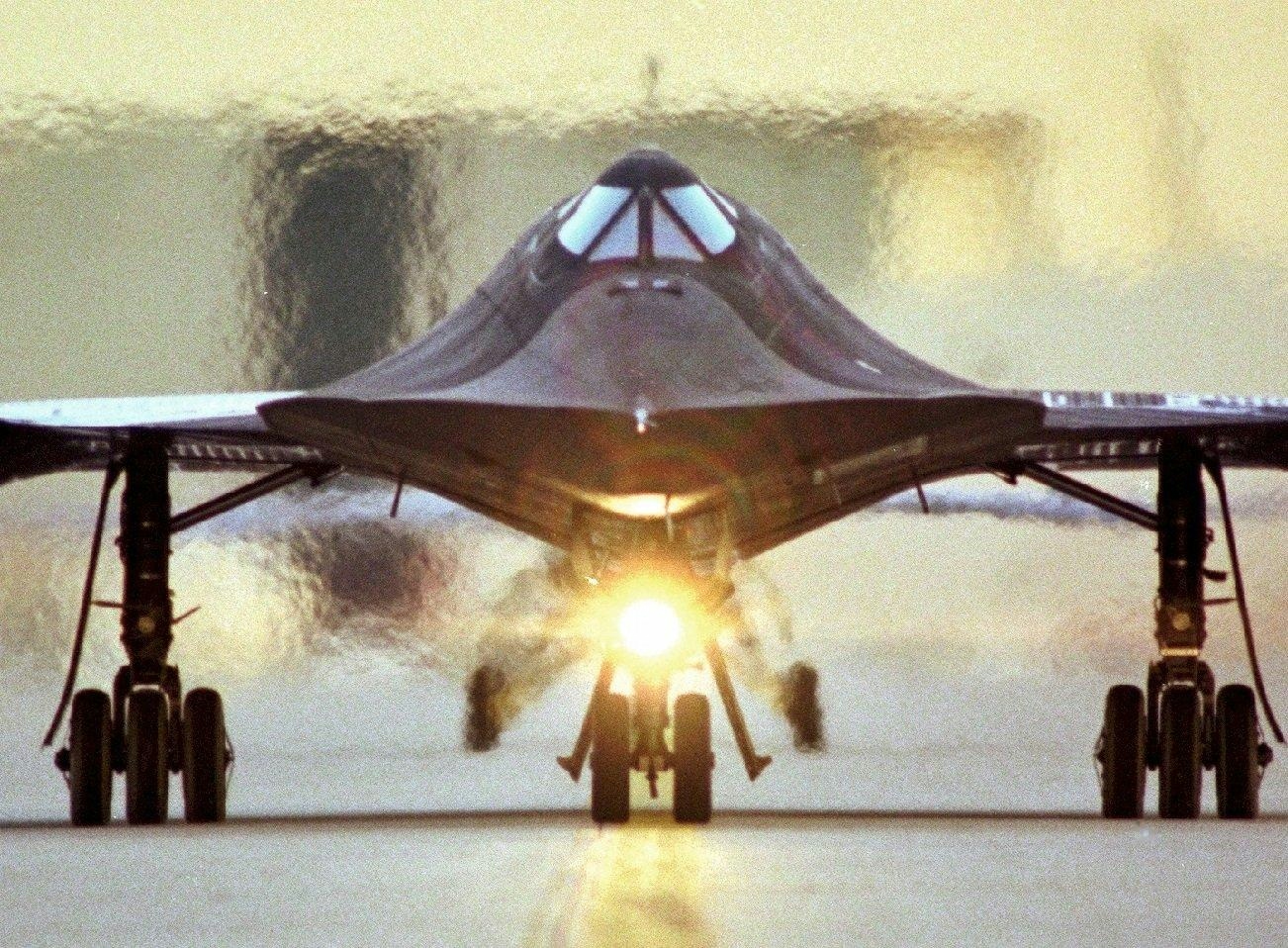
Can Fusion Engines Enable Hypersonic Fighters to Outpace Missiles?
Can Fusion Engines Enable Hypersonic Fighters to Outpace Missiles?
The advent of fusion-powered engines holds the potential to transform military aviation by enabling aircraft to achieve extraordinary speeds, potentially reaching Mach 6 or even Mach 17—equivalent to over 13,000 miles per hour. Such capabilities would allow jets to surpass the velocity of most current missile threats, fundamentally reshaping the landscape of air defense, surveillance, and rapid global deployment.
Advantages of Fusion Propulsion
Beyond sheer speed, fusion propulsion offers significant efficiency benefits. Fusion reactions require substantially less fuel than conventional jet engines, which could allow aircraft to remain airborne for extended periods—ranging from days to weeks—without the need for refueling. This endurance would provide strategic advantages, including prolonged patrol missions and the ability to rapidly project power across continents.
Technical and Developmental Challenges
Despite its promise, fusion engine technology remains in the experimental stage, with numerous scientific and engineering obstacles to overcome before practical application is possible. Creating a compact and reliable fusion reactor suitable for flight demands breakthroughs in energy containment, thermal management, and materials science. These challenges suggest that operational fusion-powered aircraft are still many years, if not decades, away from realization.
Strategic Implications and Industry Response
The potential impact of fusion propulsion has attracted considerable attention from defense contractors and government agencies, prompting increased investment as the technology advances. The competitive environment is intensifying, with former U.S. defense officials urging accelerated development of hypersonic weapons and propulsion systems to maintain strategic parity with China and Russia.
This urgency is mirrored in broader aerospace trends, such as the development of new small turbofan engines designed for autonomous fighters, aimed at enhancing aircraft performance and survivability against sophisticated missile threats. Should fusion propulsion become viable, it could usher in a new era of aerial competition, with nations vying to deploy the fastest and most enduring aircraft.
While the prospect of fusion-powered hypersonic fighters is compelling, the path forward is fraught with technical, strategic, and geopolitical challenges. Ultimately, the race to outpace missile threats will depend as much on sustained innovation and investment as on breakthroughs in fusion technology itself.

Etihad Airways Suspends Airbus A380 Flights on Key Route

Aditya Birla Group Seeks Approval for Aircraft Leasing in GIFT City

Qatar Airways Highlights Innovation and Connectivity at Arabian Travel Market 2026

Hong Kong's Five-Year Plan Includes Andrew Fan's Aircraft Parts Processing Hub Proposal

ACIA Aero Leasing Delivers ATR72-600 to Air Nostrum

RTX Appoints Jill Albertelli as Head of Pratt & Whitney

TAT Technologies Joins Beyond Aero Hydrogen Aircraft Program

AURAK Study Highlights Barriers to Air Taxi Adoption in Emerging Economies

Xiamen Air Selects Altitude for 787 Maintenance at Heathrow

Etihad and Swissport Extend Global Partnership
