
Превращайте аналитические выводы ИИ в реальные действия

В тренде
Categories
Caracas Airport to Resume Cargo Flights on August 5, Plans Passenger Service by Month’s End
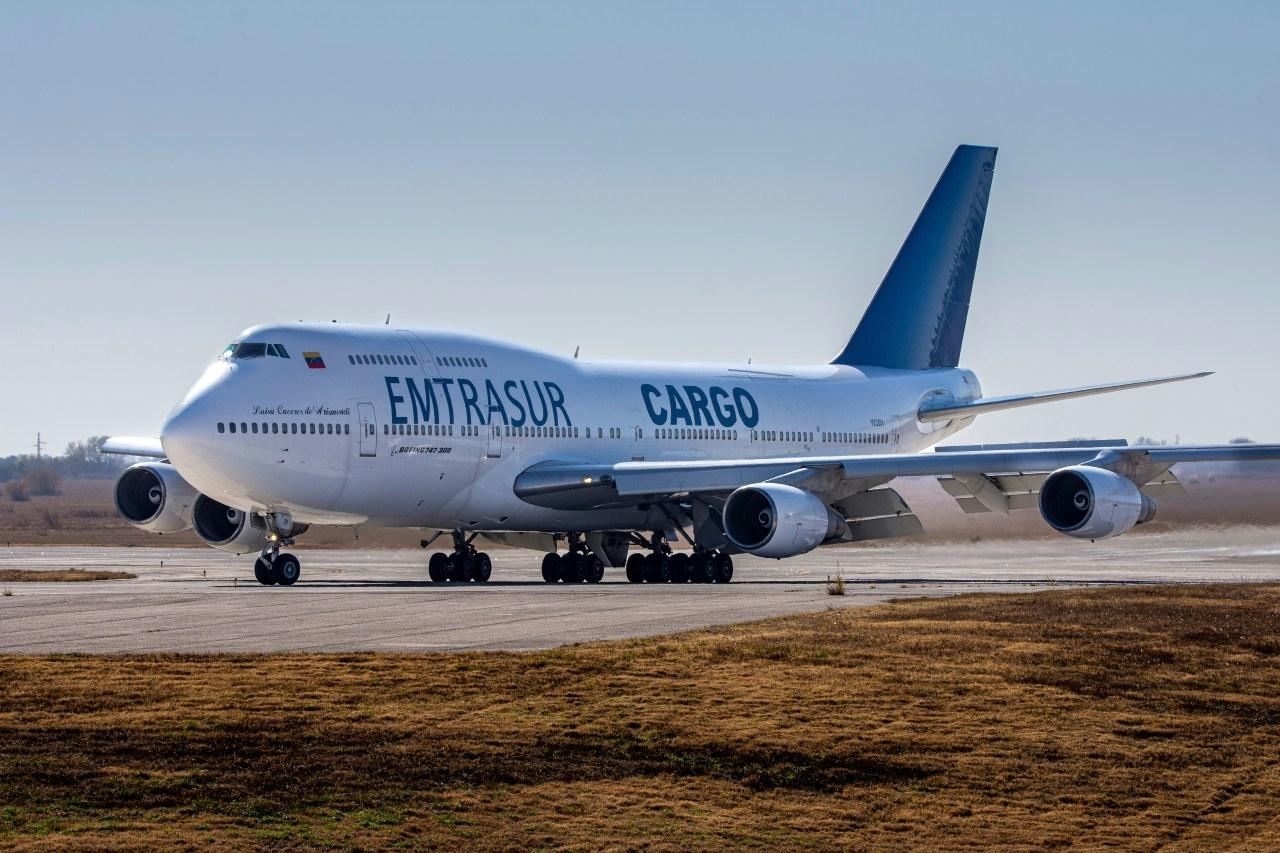
Caracas Airport to Resume Cargo Flights on August 5, Plans Passenger Service by Month’s End
Venezuela’s Simón Bolívar International Airport in Maiquetía is set to resume cargo operations on Tuesday, August 5, marking a critical step in reopening the country’s primary international gateway following a six-week closure caused by the June 24 earthquake doublet. The seismic event severely damaged the airport’s infrastructure, cracking the main runway and collapsing parts of the terminal, effectively cutting off Venezuela’s principal air connection to the world.
Phased Recovery and Operational Targets
The Maiquetía International Airport Institute (IAIM) has outlined a phased recovery plan, with commercial passenger flights expected to restart on August 24. Authorities anticipate that by December 2026, the airport will operate at approximately 85 percent of its pre-earthquake capacity. In a circular dated July 31, IAIM formally informed cargo carriers, customs agents, warehousing firms, and freight forwarders that both inbound and outbound cargo flights will resume under stringent national and international aviation safety and security protocols. The Ministry of People’s Power for Transport confirmed the August 5 date, describing the cargo flight resumption as part of a “progressive and sustainable restoration of airport services.” IAIM Director General Aníbal Rafael Bellorín Pereira underscored the institute’s commitment to maintaining a safe and transparent environment for all airport operators.
Cargo operations are vital to Venezuela’s ongoing reconstruction efforts. Since the earthquake, freight has been rerouted through alternative hubs such as Valencia’s Arturo Michelena International Airport, resulting in increased transit times and costs that have further strained supply chains. The reopening of Maiquetía will facilitate more direct delivery of reconstruction materials to La Guaira and the metropolitan Caracas area.
Prioritizing Cargo Flights Before Passenger Service
The 19-day interval between the resumption of cargo flights and the planned return of passenger services is not attributable to runway conditions, as both cargo and passenger aircraft will utilize the same certified runway. Instead, the delay reflects the status of terminal infrastructure. Cargo operations require a functional runway, airside fuel and ground handling services, customs clearance, and air traffic control, but do not depend on passenger-specific facilities such as check-in counters, immigration checkpoints, security screening, baggage handling systems, or boarding bridges.
Passenger flights, by contrast, necessitate fully operational terminal systems. Engineers continue to assess whether the existing terminal can be repaired or if temporary facilities will be required. The current plan envisions initiating passenger service with eight commercial flights per day, employing provisional infrastructure at both domestic and international terminals. This approach is reminiscent of the strategy adopted in Chile following the 2010 Santiago airport earthquake, where temporary passenger processing facilities were utilized during terminal reconstruction.
Airline Response and Future Outlook
The airport’s reopening has elicited a positive response from airlines. Copa Airlines is increasing flight frequencies, United Airlines is introducing a new Houston-Caracas route, and carriers such as American Airlines and Avianca are restoring their Miami-Caracas and Bogotá-Caracas services, respectively.
While the resumption of cargo flights represents a significant milestone, ensuring the readiness of terminal facilities for passenger operations remains a considerable challenge. Authorities remain focused on restoring full airport functionality, with a roadmap targeting 85 percent operational capacity by the end of 2026.

Etihad Airways Suspends Airbus A380 Flights on Key Route

Aditya Birla Group Seeks Approval for Aircraft Leasing in GIFT City

Qatar Airways Highlights Innovation and Connectivity at Arabian Travel Market 2026

Hong Kong's Five-Year Plan Includes Andrew Fan's Aircraft Parts Processing Hub Proposal

ACIA Aero Leasing Delivers ATR72-600 to Air Nostrum

RTX Appoints Jill Albertelli as Head of Pratt & Whitney

TAT Technologies Joins Beyond Aero Hydrogen Aircraft Program

AURAK Study Highlights Barriers to Air Taxi Adoption in Emerging Economies

Xiamen Air Selects Altitude for 787 Maintenance at Heathrow

Etihad and Swissport Extend Global Partnership
