Изображение

AeroGenie — Ваш интеллектуальный второй пилот.

Спрашивайте что угодно. Анализируйте все. Действуйте незамедлительно.

В тренде

Categories

CCC Wins U.S. Defense Department Contract for Nav-Aids Pressure Test Adapters
October 2, 2025By ePlane AI
CCC Wins U.S. Defense Department Contract for Nav-Aids Pressure Test Adapters
0
0
Canadian Commercial Corporation
Nav-Aids Pressure Test
U.S. Department Of Defense

CCC Awarded U.S. Defense Department Contract for Nav-Aids Pressure Test Adapters

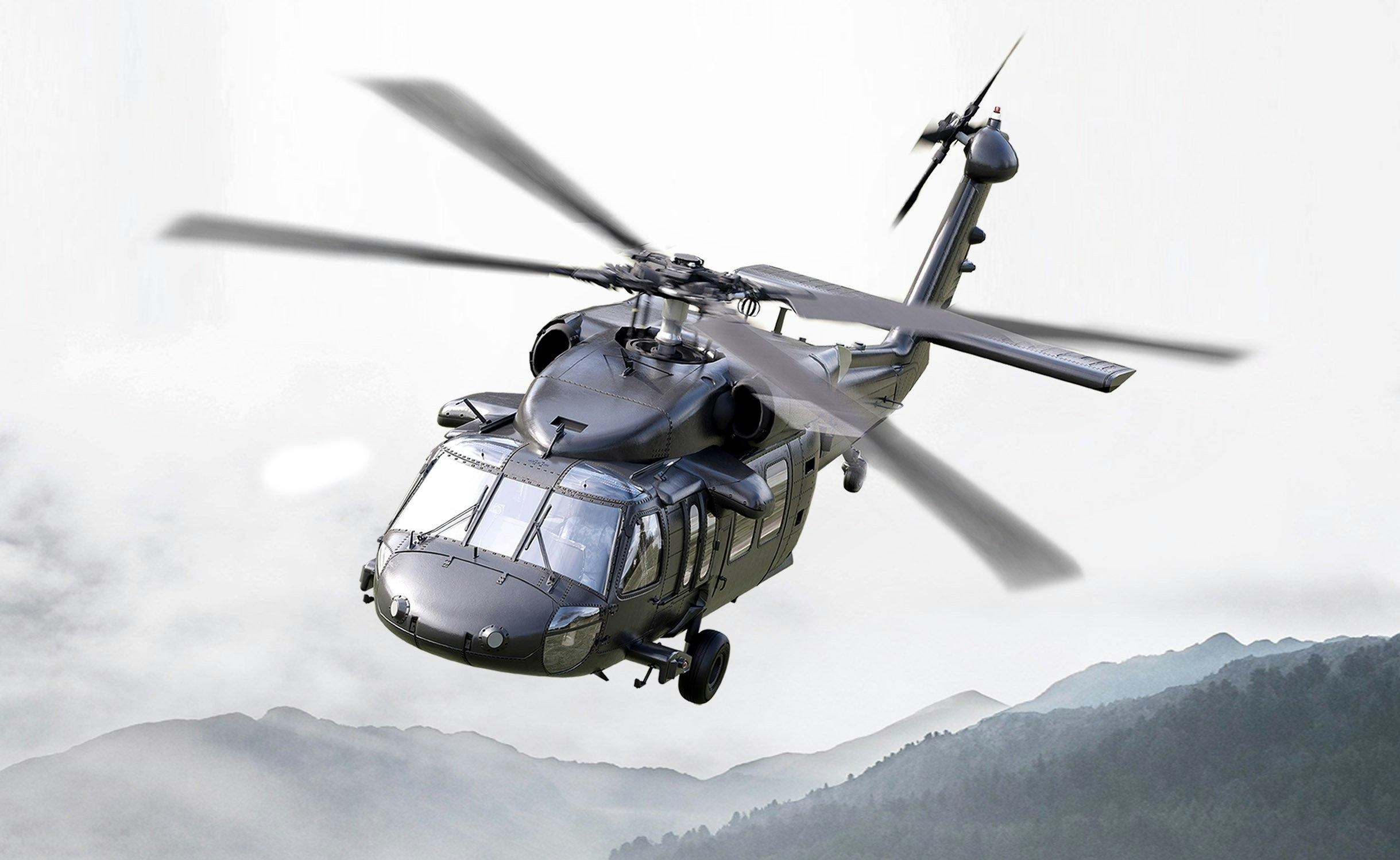
The Canadian Commercial Corporation (CCC) has secured a contract from the United States Department of Defense (U.S. DoD) to supply pressure test adapters produced by Nav-Aids Ltd., a Montreal-based specialist in avionics testing equipment. These adapters are intended to support U.S. Army maintenance teams working on Black Hawk helicopters, facilitating the safe connection of test instruments, leak detection, pressure stability verification, and comprehensive system health evaluations.

Nav-Aids’ Role and Product Capabilities

Nav-Aids is internationally recognized for its expertise in pitot-static test adapters and air data accessory kits, serving a diverse clientele across civil, corporate, military, and space aviation sectors. The company’s pressure test adapters are engineered to provide secure, leak-proof connections between aircraft ports or probes and testing devices, ensuring precise readings during maintenance and troubleshooting operations. With a portfolio exceeding 500 aircraft-specific adapters, available individually or as part of integrated testing kits, Nav-Aids also offers extensive technical support and after-sales service, reinforcing its standing as a reliable partner in aviation safety.

Contract Facilitation and Industry Context

The contract was awarded through CCC’s free U.S. DoD Prime Contractor service, which assists Canadian companies in delivering solutions to the U.S. military. The adapters will be supplied to the U.S. Army Command, responsible for the Active Army, Army Reserve, and Army National Guard, as well as providing support to civil authorities during emergencies. The U.S. Army’s 2024 budget totals US$185.5 billion, with US$15.77 billion earmarked for Research, Development, Test, and Evaluation.

This contract win occurs amid intense competition within the defense sector. Prominent firms such as Northrop Grumman recently secured a $972 million contract from the U.S. Air Force for modeling and simulation support, while companies like GovCIO and DroneShield continue to obtain significant defense agreements. This competitive landscape may subject CCC to increased scrutiny regarding its ability to deliver products on schedule and within budget, while also prompting rivals to intensify efforts to expand their market share through pricing strategies or accelerated innovation.

As CCC and Nav-Aids proceed with fulfilling the contract for the U.S. Army, the agreement underscores both the opportunities and challenges confronting Canadian defense suppliers in a highly dynamic and closely monitored market.

More news
German Consulate General Says EU-India Free Trade Agreement Could Boost Aviation Cooperation

German Consulate General Says EU-India Free Trade Agreement Could Boost Aviation Cooperation

EU-India Free Trade Agreement Poised to Enhance Aviation Cooperation BENGALURU — The proposed Free Trade Agreement (FTA) between the European Union and India holds significant promise for advancing collaboration within the aviation sector, according to Annett Baessler, Deputy Consul General of the German Consulate General in Bengaluru. Speaking at the 9th International Conference on the Future of Aviation and Aerospace 2026, hosted by IIM Bangalore in partnership with TBS Education, France, Baessler emphasized the potential for growth in areas such as maintenance, repair and overhaul (MRO), workforce development, and deeper integration between the Indian and European aviation industries. Opportunities and Challenges in Aviation Collaboration Baessler highlighted Europe’s highly integrated aviation market as a source of competitive advantage for German and European companies on the global stage. She noted that India, currently the world’s fifth-largest aviation market, is projected to become the third-largest within the next decade, rapidly emerging as a key manufacturing and design hub. European firms are actively supporting this expansion, with Airbus alone holding approximately 1,250 aircraft orders from Indian customers. The Indian MRO sector is also expected to grow substantially, with projections estimating its value at $9.5 billion over the next ten years. Despite these promising prospects, Baessler acknowledged that fully leveraging the EU-India FTA’s potential in aviation will require careful navigation of complex regulatory frameworks to ensure mutual benefits for both regions. The agreement is also likely to intensify competition from other global aviation players, compelling airlines and service providers to adapt to a more dynamic market environment. Both Europe and India are anticipated to increase investment in aviation infrastructure, creating new opportunities for companies engaged in aircraft manufacturing and maintenance services. Insights from Industry Experts Prof. S Raghunath, chair of the conference at IIM Bangalore, underscored India’s established strengths in MRO and lifecycle intelligence, drawing attention to the country’s longstanding role as the IT backbone of the world. He remarked, “While aircraft sales generate revenue, far greater value lies in keeping those aircraft operational. We already have the technology, the engineering talent, and the skilled workforce needed to capitalize on it.” During a panel discussion, Sunil Bhaskaran, director of the Air India Aviation Academy, pointed out that air travel penetration in India remains low, with only about one-tenth of the population currently flying. He suggested that the FTA could unlock significant growth potential by encouraging greater collaboration and investment in the sector. Kota Harinarayana, former programme director and chief designer of the Tejas Light Combat Aircraft, reflected on India’s achievements in military aviation during a panel on “Make in India – The Achievements of Indian Companies.” He noted that while India has developed a robust ecosystem for combat aircraft manufacturing and technology, a similar focus on civil aviation is necessary to fully realize the sector’s potential. Outlook for EU-India Aviation Partnership As negotiations on the EU-India Free Trade Agreement continue, stakeholders remain optimistic that the accord could act as a catalyst for deeper cooperation in aviation. Although challenges related to regulatory alignment and increased competition persist, the evolving partnership is expected to generate new momentum for innovation and growth, benefiting both regions and contributing to the advancement of the global aviation industry.
Why Recent Google Discover Changes Are Important for AerCap Holdings NV

Why Recent Google Discover Changes Are Important for AerCap Holdings NV

The Impact of Google Discover’s 2026 Core Update on AerCap Holdings NV Google’s 2026 Discover Core Update is set to significantly alter the way investors and market participants receive news about AerCap Holdings NV (IE00BGLK5V15), the world’s largest aircraft lessor. By prioritizing personalized, mobile-first financial content, the update aims to deliver timely and relevant information directly into users’ feeds, potentially influencing investor sentiment and the company’s stock performance. Enhanced Personalization and Mobile-First Delivery The update marks a departure from traditional search-based news discovery, as Google now leverages users’ Web and App Activity to surface tailored stories proactively. For those following AerCap, this means that news related to leasing trends, fleet utilization, and the broader aviation sector recovery will appear automatically in mobile feeds without requiring active searches. Investors who rely on mobile devices for quick market updates will encounter visually rich, data-driven stories covering topics such as aircraft leasing demand, fleet expansion, and AerCap’s strategic initiatives, including its diversification into sustainable aviation fuel-compatible jets and lease renegotiations amid ongoing supply chain challenges. This shift is particularly consequential for AerCap, as the update emphasizes high-quality, mobile-optimized content that adheres to Google’s E-E-A-T standards—Experience, Expertise, Authoritativeness, and Trustworthiness. Publishers focusing on Discover are now more likely to provide comprehensive coverage of AerCap’s financial and operational developments, including maintenance reserve collections, sale-and-leaseback transactions, and key financial indicators like return on equity and cash flow from lease extensions. Consequently, investors gain expedited access to critical updates such as regional jet transitions and cargo fleet adjustments driven by the growth of e-commerce, offering a competitive informational advantage in a rapidly evolving market. Broader Market Implications and Competitive Dynamics The enhanced granularity of Discover’s personalization means that users with interests in related areas—such as Boeing delivery delays or aviation finance—will receive AerCap-specific updates on compensation clauses, fleet substitutions, and comparative analyses with peers like Air Lease and BOC Aviation. This level of detail enables investors to better anticipate both opportunities, such as earnings outperformance linked to high fleet utilization, and risks, including potential lessee defaults in emerging markets. These developments may have wider repercussions for AerCap’s market presence. As financial news about the company becomes more accessible and immediate, shifts in market reactions and investor behavior could influence AerCap’s stock valuation. Competitors within the aviation leasing sector are also expected to adjust their digital marketing and communication strategies to capitalize on Discover’s capabilities, thereby intensifying the emphasis on authoritative, mobile-first content. In an industry where timing is critical, Google’s update ensures that AerCap’s commanding position—holding approximately 30% of the global market share—remains prominent among engaged investors. Whether tracking geopolitical risks, interest rate fluctuations, or strategic fleet decisions, the new Discover experience transforms routine scrolling into a source of real-time market intelligence. For retail investors, this advancement facilitates quicker responses to shifts in the aviation leasing landscape, potentially allowing them to stay ahead of institutional flows. Ultimately, Google’s 2026 Discover Core Update represents more than a technical enhancement; it is a pivotal development in the delivery, consumption, and impact of financial news concerning AerCap Holdings NV in an increasingly mobile-centric world.
Why Recent Changes to Google Discover Matter for AAR Corp

Why Recent Changes to Google Discover Matter for AAR Corp

Why Recent Changes to Google Discover Matter for AAR Corp Transforming Investor Access to Aviation Supply Chain News Google’s 2026 Discover Core Update is reshaping how investors receive news about AAR Corp (NYSE: AIR), delivering personalized insights on the aviation supply chain directly to mobile feeds. This development is particularly impactful for investors who depend on their smartphones for rapid market updates, as it facilitates quicker and more targeted access to information on parts demand, maintenance, repair, and overhaul (MRO) growth, and defense contracts—eliminating the need for active searching. Rolled out earlier in 2026 and finalized by late February, the update fundamentally alters the presentation of financial news. Google Discover now operates independently of traditional search queries, instead leveraging behavioral signals such as the time users spend on relevant articles, their previous searches, and engagement with related content to anticipate interests. For AAR Corp, this means that high-value updates concerning commercial aviation segment expansion, government services performance, or supply chain challenges are more likely to be proactively featured in users’ feeds. Enhancing Financial Storytelling Through Mobile-First Visuals This mobile-first, visually driven approach to financial news offers investors a distinct advantage in monitoring developments related to NYSE: AIR. Content that includes charts illustrating backlog growth, maps detailing global distribution centers, or peer comparisons of free cash flow generation is prioritized, enabling faster analysis of critical metrics such as adjusted EBITDA margins and segment revenue breakdowns. The update’s emphasis on proactive content delivery ensures that investors receive timely insights into strategic initiatives—such as AAR’s expansion of MRO capacity, acquisitions of specialized suppliers, or responses to supply chain disruptions—often before they initiate any search themselves. For AAR Corp, a prominent provider of aviation services and aftermarket parts, this evolution in news dissemination aligns with broader shifts in investor behavior. As mobile consumption of financial content increases, the company’s focus on supply chain solutions across commercial and defense sectors gains greater visibility through Discover’s prioritization of topical depth and visual storytelling. For instance, stories highlighting AAR’s role in supporting aging fleets amid delays in new aircraft deliveries may surface based on users’ prior engagement with related subjects, such as production increases at Embraer or Bombardier. Intensified Competition and Strategic Communication Imperatives However, the update also heightens competition within the information space. Google’s algorithm now favors fresh content that complies with E-E-A-T principles—Experience, Expertise, Authoritativeness, and Trustworthiness—prompting publishers to optimize for high-quality, visually engaging stories not only about AAR Corp but also its industry peers. This dynamic could lead to a more crowded and competitive environment, necessitating that AAR Corp maintain a compelling and consistent narrative presence to distinguish itself. Ultimately, Google Discover’s 2026 update enhances the visibility and engagement of AAR Corp’s financial news, providing investors with faster and more relevant insights. At the same time, it raises the stakes as multiple companies vie for attention on the same platform. For investors, this translates into more timely and tailored information; for AAR Corp, it underscores the critical importance of strategic communication in an increasingly dynamic digital landscape.
Airbus Projects Significant Growth in India and Asia-Pacific Aviation

Airbus Projects Significant Growth in India and Asia-Pacific Aviation

Airbus Projects Significant Growth in India and Asia-Pacific Aviation Expanding Market and Demand for Aircraft Airbus’s latest Global Services Forecast highlights a transformative period ahead for the aviation sector in India and the broader Asia-Pacific region. Over the next two decades, this area is expected to emerge as the world’s largest and fastest-growing aviation market, driven by a surge in passenger traffic, expanding aircraft fleets, and increasing demand for aviation services. By 2044, Airbus estimates the Asia-Pacific aviation services market will be valued at approximately US$138.7 billion. This growth will be underpinned by long-term requirements in aircraft maintenance, ground operations, training, and technical support, positioning the region as a strategic focus for airlines, service providers, and manufacturers alike. Central to Airbus’s forecast is the anticipated need for around 19,500 new passenger aircraft in the Asia-Pacific region over the next 20 years, accounting for nearly 46% of global demand. This surge is particularly pronounced in India, where domestic air travel is expanding at one of the fastest rates worldwide. Factors such as urbanization, economic development, rising incomes, and improved air connectivity are driving this rapid growth. To accommodate these trends, airlines are increasingly seeking advanced, fuel-efficient aircraft, which in turn is expected to stimulate investment in Maintenance, Repair, and Operations (MRO) facilities, pilot and technician training academies, and digital aviation services aimed at enhancing operational reliability and efficiency. Competitive and Operational Challenges Despite the optimistic outlook, Airbus faces notable operational challenges. The company anticipates a year-over-year decline in first-quarter deliveries projected for 2026, raising concerns about its capacity to meet the soaring demand in the region. Concurrently, Boeing is experiencing a resurgence, having returned to profitability in 2025 and intensifying efforts to reclaim market share in Asia-Pacific. However, Boeing’s progress is complicated by ongoing geopolitical tensions, particularly with China, which continue to impact its regional operations. Market responses to Airbus’s growth projections are varied. While several airlines have expressed strong interest in the A320neo family, others, especially in India, face constraints due to limited availability of widebody aircraft, which may affect their expansion plans. This situation highlights the complexity of addressing diverse airline requirements within a rapidly evolving and competitive market. Outlook for Aviation Services in Asia-Pacific Airbus anticipates robust growth across key aviation service segments in the Asia-Pacific region. Maintenance operations support is expected to see increased demand for engineering expertise, technical record keeping, and fleet planning. Ground operations and training will expand, with a focus on developing pilot and technician academies to support both new and existing routes. Additionally, investment in digital and lifecycle support services is projected to rise, aiming to optimize operational efficiency and reliability. As passenger numbers continue to climb in India, China, Indonesia, and Southeast Asia, airlines will be compelled to expand their fleets and enhance service offerings. Despite the operational and competitive challenges faced by industry players, the Asia-Pacific region remains at the forefront of global aviation growth, with Airbus and Boeing competing vigorously for leadership in this dynamic market.
Growth in Aircraft Tube and Duct Assemblies Linked to Next-Generation Aircraft Production Through 2035

Growth in Aircraft Tube and Duct Assemblies Linked to Next-Generation Aircraft Production Through 2035

Growth in Aircraft Tube and Duct Assemblies Linked to Next-Generation Aircraft Production Through 2035 The global market for aircraft tube and duct assemblies is expected to experience substantial growth through 2035, propelled by the increasing production of next-generation, fuel-efficient aircraft and the continuous modernization of both commercial and military aviation sectors. According to the latest IndexBox report, the industry is anticipated to enter 2026 with stronger demand fundamentals, more disciplined procurement practices, and a supply base that is increasingly diversified across regions. Market Outlook and Demand Drivers Between 2026 and 2035, the production of new commercial aircraft models such as the Airbus A320neo and Boeing 737 MAX families will serve as a primary catalyst for market expansion. Airlines’ efforts to enhance fuel efficiency and comply with stringent emissions regulations are driving demand for lighter, more durable tube and duct assemblies. These components are increasingly manufactured from advanced materials, including titanium alloys and composites, which are essential not only for regulatory compliance but also for achieving operational efficiency targets across commercial and military fleets. The aftermarket segment will continue to provide a stable source of revenue, supported by the maintenance, repair, and overhaul (MRO) needs of a large, aging global fleet. Unlike new aircraft production, this segment is less susceptible to cyclical fluctuations, offering consistent demand for suppliers. Furthermore, the modernization of military aviation platforms—particularly in North America, Europe, and the Asia-Pacific region—will stimulate demand for specialized, high-performance assemblies tailored to next-generation fighter jets, transport aircraft, and unmanned systems. Emerging sectors such as business aviation and Advanced Air Mobility (AAM) are also contributing to market growth by introducing new platforms that require specialized tube and duct assemblies. Additionally, increased aircraft utilization rates in the post-pandemic environment are accelerating component wear, thereby shortening replacement cycles for critical parts. Regional and Competitive Dynamics The market is increasingly segmented into high-volume, cost-sensitive sectors serving narrowbody fleets and high-value, specification-intensive sectors catering to widebody and advanced mobility platforms. Developing economies are witnessing growth in local flight networks, which is expanding access to remote regions and generating employment opportunities in technical and manufacturing fields. This regional diversification is reshaping supply chains and competitive dynamics, as manufacturers adapt to localized demand and invest in advanced manufacturing capabilities. Challenges and Constraints Despite promising growth prospects, the market faces several challenges. The reliance on advanced materials such as titanium and specialty alloys links market expansion closely to the commercial aerospace production cycle and defense procurement budgets. Volatility in raw material prices and supply chain disruptions remain significant risks. Regulatory barriers, including stringent and costly certification processes imposed by authorities such as the FAA and EASA, create high entry barriers, prolonging development and qualification timelines and delaying revenue realization for suppliers. In the aftermarket segment, intense pricing competition from contract manufacturers and distributors is compressing profit margins. Additionally, shifting demand patterns, such as declining requirements for heavy maintenance checks on North American regional aircraft, may temper aftermarket growth in certain areas. Long-Term Trajectory Overall, the aircraft tube and duct assemblies market is projected to achieve steady compound annual growth through 2035, supported by the long-term expansion of air travel and ongoing fleet renewal mandates. Success for suppliers will depend on material innovation and the ability to navigate rigorous certification processes, as the industry continues to adapt to evolving regulatory, economic, and technological challenges.
Dubai Opens First Commercial Air Taxi Vertiport

Dubai Opens First Commercial Air Taxi Vertiport

Dubai Launches First Commercial Air Taxi Vertiport Dubai has inaugurated its first commercial air taxi vertiport, marking a pivotal advancement in the city’s pursuit of cutting-edge urban air mobility. Situated near Dubai International Airport, the newly opened four-story facility covers approximately 3,000 square meters and includes two dedicated takeoff and landing pads designed for electric vertical takeoff and landing (eVTOL) aircraft. The vertiport also features a two-level parking structure and is engineered to handle up to 170,000 passengers annually. Commercial operations are anticipated to commence by the end of 2026. Expanding Urban Air Mobility Infrastructure This development forms part of a larger strategy to establish a network of four vertiports throughout Dubai, with future sites planned for the city center, Palm Jumeirah, and Dubai Marina. The initiative aims to significantly reduce travel times within the city; for instance, a flight from Dubai International Airport to Palm Jumeirah is expected to take approximately 10 minutes, a substantial improvement over the current 45-minute car journey. The vertiport is equipped with state-of-the-art infrastructure, including charging stations for electric aircraft, underscoring Dubai’s commitment to sustainable and technologically advanced transportation solutions. Dubai authorities have hailed the project as a “first of its kind,” highlighting its importance in shaping the future landscape of urban mobility. The launch coincides with a rapidly evolving competitive environment in autonomous and aerial transport. Notably, companies such as WeRide and Uber have recently introduced fully driverless robotaxi services in Dubai, signaling a broader regional shift toward autonomous mobility. Challenges and Global Competition Despite the promising outlook, the air taxi sector faces potential challenges stemming from ongoing legal disputes among major industry players. In the United States, Joby Aviation and Archer Aviation are engaged in legal battles, including a U.S. Trade Commission investigation into Joby for alleged import violations. These conflicts may influence global market dynamics and regulatory frameworks, potentially affecting the pace at which air taxi services are adopted in Dubai and other international markets. In response to these challenges, competitors are intensifying efforts to secure regulatory approvals and expand their operational footprint. For example, Port San Antonio in Texas is emerging as a significant testing ground for air taxi technology through a federal pilot program, reflecting the global race to lead in urban air mobility innovation. As Dubai advances its vertiport network, the city is not only establishing a benchmark for sustainable urban transportation but also navigating the complexities of a fast-changing and highly competitive global market.
The Technology Behind Air Force One’s Engines and Presidential Security

The Technology Behind Air Force One’s Engines and Presidential Security

The Technology Behind Air Force One’s Engines and Presidential Security Air Force One, officially designated the VC-25, operates at altitudes and speeds slightly beyond those of typical commercial jets. While its exterior closely mirrors that of a civilian Boeing 747, the aircraft’s interior is a fortified command center designed to maintain presidential safety and operational capability under any circumstance. Although much attention is given to its advanced communications and defensive systems, the engines powering Air Force One are equally critical, representing decades of technological refinement and security-driven innovation. The CF6 Engine: Commercial Reliability Meets Military Demands The VC-25A is equipped with four General Electric CF6-80C2B1 turbofan engines, each generating 56,700 pounds of thrust. These engines enable the aircraft to reach speeds up to 630 miles per hour (Mach 0.92) and altitudes of 45,100 feet, performance metrics comparable to those of modern long-haul airliners despite the aircraft’s age. The CF6 family is a cornerstone of commercial aviation, powering a range of aircraft including the Boeing 747, 767, Airbus A300, and A310. With over 50 million collective flight hours, the CF6 is among the most extensively tested engines in aviation history. The U.S. Air Force’s choice of the CF6 was driven not by commercial priorities such as fuel efficiency or cost reduction, but by the engine’s proven reliability and capacity to operate flawlessly under extreme conditions. These engines form part of a comprehensive suite of hardened systems designed to ensure the aircraft’s survivability and continuous operation, even in the most hostile environments. Enhancements for Security and Operational Resilience Although visually similar to those on a standard Boeing 747-200, Air Force One’s engines have undergone extensive modifications for military application. These include integration with advanced avionics and secure communications systems, enabling the aircraft to function as a mobile command center capable of maintaining presidential command authority even during catastrophic events. A significant design challenge has been ensuring the engines’ resilience to intense electromagnetic radiation, such as that produced by nuclear detonations or sophisticated electronic warfare. To meet this challenge, the aircraft’s systems—including its engines—are shielded and reinforced, allowing Air Force One to continue operating in conditions that would incapacitate conventional aircraft. Industry Influence and Strategic Implications The specialized nature of Air Force One’s engines has had a notable impact on both military and commercial aviation markets. According to Air & Space Forces Magazine, these engines deliver enhanced performance and efficiency compared to earlier models, setting new benchmarks for reliability. The demand for such robust propulsion technology has also intensified competition within the aerospace sector. Recent legal disputes, such as those between Joby Aviation and Archer Aviation over trade secrets and technology sourcing, highlight the strategic importance and global interest in advanced propulsion systems and their security ramifications. A Legacy of Adaptation and Security From Cold War contingencies to the complexities of today’s global security environment, the evolution of Air Force One’s engines illustrates how commercial aviation technology can be adapted, hardened, and enhanced to meet the unique demands of presidential transport. This ongoing development underscores a singular priority: safeguarding the President’s safety and command capability regardless of the threat.
B-29 DOC 'Pull a Plane' Event Rescheduled to October Due to Engine Maintenance

B-29 DOC 'Pull a Plane' Event Rescheduled to October Due to Engine Maintenance

B-29 DOC ‘Pull a Plane’ Event Rescheduled to October Due to Engine Maintenance Doc’s Friends Inc. has announced that the 2026 B-29 DOC and WSU Tech Foundation “Pull a Plane” event will now be held on October 17, following further delays in essential engine maintenance. Originally scheduled for March and subsequently postponed to April 19, the event has been delayed again as ongoing repairs have impacted the readiness of the historic B-29 DOC aircraft. Engine Maintenance Challenges and Impact on Scheduling Josh Wells, executive director of B-29 DOC, explained that two of the aircraft’s four engines were removed in November for inspection and sent to the engine manufacturer for repair. “With two engines removed, the aircraft has been unable to be moved out of the hangar due to changes in weight distribution and center of gravity,” Wells said. The extended timeline for the engines’ return to Wichita has directly affected installation schedules and event preparations, necessitating the postponement. This delay occurs amid heightened scrutiny of engine maintenance across the aviation industry. Rising fuel costs and evolving maintenance agreements have posed challenges for carriers worldwide, including South American airlines such as Azul. These factors have intensified focus on engine reliability and cost management, influencing attendance and sponsorship dynamics for aviation events like “Pull a Plane.” Organizers and competitors alike are prioritizing comprehensive maintenance planning to uphold safety and operational predictability. “Maintaining DOC’s airworthiness is critical to preserving its legacy and ensuring it can continue flying for future generations,” Wells emphasized. He acknowledged the precision and time required for such extensive engine work and praised the engine manufacturer’s commitment to quality repairs. Although the team had anticipated readiness by April, revised timelines for engine return prompted the decision to reschedule the event to October. Fundraising and Community Engagement Since its inception in 2021, the “Pull a Plane” event has become a significant fundraiser for Doc’s Friends Inc. and the WSU Tech Foundation, raising over $600,000 to support aviation education and preservation. The competition involves teams of 25 participants racing to pull the B-29 aircraft 25 feet across concrete in the fastest time. Courtney Sendall, executive director of the WSU Tech Foundation, highlighted the event’s role in advancing accessible, career-focused education. “Events like ‘Pull a Plane’ directly support our mission by creating opportunities for students and strengthening the regional workforce,” she said. Sendall expressed gratitude for the ongoing support from sponsors, participants, and the community. Registration for teams and individuals remains open, with limited sponsorship opportunities still available. Wells described the event as more than a competition, calling it “a reflection of Wichita’s aviation heritage and the community’s commitment to its future.” He added that the event not only helps ensure the continued operation of DOC but also supports the development of the next generation of aviation and technical professionals. The organizers look forward to welcoming participants and supporters in the fall. For further information or to contribute to the B-29 DOC, visit www.b29doc.com.
Germany Takes Delivery of Final Airbus A400M Transport Aircraft

Germany Takes Delivery of Final Airbus A400M Transport Aircraft

Germany Completes Delivery of Final Airbus A400M Transport Aircraft Germany has officially taken delivery of its 53rd and final Airbus A400M Atlas transport aircraft, marking the conclusion of its comprehensive procurement program for the type, the Ministry of Defence announced this week. This milestone signifies the fulfillment of Germany’s largest A400M order, a process initiated in 2014 that has significantly enhanced the Bundeswehr’s airlift capabilities. Transformation of German Airlift Capacity The introduction of the A400M fleet has allowed the Luftwaffe to retire its aging Transall C-160 aircraft, thereby expanding its operational reach and versatility. German A400Ms have been instrumental in a variety of missions, ranging from humanitarian aid deliveries to the Caribbean following natural disasters, to supporting military operations in the Middle East. Notably, these aircraft have conducted aerial refuelling missions from Jordan during campaigns against the Islamic State, underscoring their strategic value. Despite exploring options to resell 13 of its A400Ms in recent years, Germany was unable to finalize any agreements. Additionally, a proposal to create a multinational transport squadron comprising approximately 10 German A400Ms was considered but ultimately not pursued. Market and Geopolitical Context The completion of Germany’s A400M order occurs amid shifting dynamics in the global military aviation market. This development coincides with the entry of Germany’s first F-35A fighter jet into final production, a factor that may influence future procurement decisions and provoke competitive responses. Concurrently, France has proposed expanding its own A400M fleet under a revised military procurement plan, a move that could reshape market dynamics and affect Airbus’s competitive standing. Geopolitical tensions, particularly between the United States and China, are also influencing the military aviation sector. These frictions have the potential to disrupt Boeing’s delivery schedules and order book in the Asia-Pacific region, thereby impacting the competitive landscape among leading military transport aircraft manufacturers. To date, Airbus has delivered 139 production A400M Atlas aircraft globally. The company’s current order backlog includes 39 aircraft destined for Kazakhstan, France, and Spain, reflecting sustained demand for the platform amid evolving market conditions and geopolitical uncertainties.
Cresta Expands Enterprise AI Collaborations with United Airlines, Aqua Finance, and Accenture

Cresta Expands Enterprise AI Collaborations with United Airlines, Aqua Finance, and Accenture

Cresta Expands Enterprise AI Collaborations with United Airlines, Aqua Finance, and Accenture Cresta is solidifying its position in the enterprise AI market by expanding collaborations with prominent organizations including United Airlines, Aqua Finance, and Accenture. The company’s unified platform integrates AI agents, real-time guidance, and conversation analytics, enabling enterprises to optimize customer interactions and drive measurable business value. Strengthening Partnerships and Industry Presence A key highlight of Cresta’s recent activities was its participation in the Accenture AI Leaders Podcast, where company executives explored how AI can transform customer conversations into a strategic advantage. By deepening its alliance with Accenture, a leading global consulting firm, Cresta is enhancing its role in large-scale customer experience (CX) transformation initiatives. This partnership aligns with Accenture’s reported revenue growth fueled by AI adoption, reflecting a broader market trend and increasing demand for enterprise AI solutions. At the HumanX event in San Francisco, Cresta further demonstrated its commitment to innovation and customer engagement. The company hosted an exhibition booth alongside an AI-powered “Wellness Lounge,” where its AI agent facilitated scheduling massages for attendees. Cresta’s executive Ping Wu contributed to panel discussions focused on scaling AI from pilot projects to enterprise-wide deployments, underscoring the company’s thought leadership in the AI sector. Operational Impact Across Sectors Cresta showcased significant operational improvements achieved by United Airlines through the use of its real-time AI insights. The airline reported a 50% reduction in response times, a 50% decrease in contacts for key inquiries, and a 15% improvement in handle time. These results highlight Cresta’s ability to deliver efficiency gains in high-volume, service-intensive environments, reinforcing its appeal to blue-chip clients. In the financial services sector, Aqua Finance serves as a notable reference customer. The deployment of Cresta’s Knowledge Agent, which integrates CRM data, knowledge bases, and workflows, resulted in a 50% reduction in after-call work and a 61% increase in dollars collected per hour. These improvements not only enhance productivity and revenue but also contribute to higher agent satisfaction and more effective coaching, reflecting Cresta’s dual focus on operational performance and employee experience. Navigating a Competitive Landscape Cresta operates within a rapidly evolving and competitive enterprise AI market. Rivals such as OpenAI are intensifying their efforts, with internal revenue growth and strategic moves targeting competitors like Anthropic. Meanwhile, Accenture’s partnerships—including its collaboration with Anthropic to scale AI-driven cybersecurity operations and its investment in General Robotics to advance AI-powered robotics in manufacturing and logistics—illustrate the dynamic environment in which Cresta competes. In response, Cresta has launched a U.S. campaign titled “AI Agents That Pass the Test,” emphasizing key attributes such as performance, latency, security, guardrails, and customer experience. With April designated as Customer Appreciation Month and a series of success stories from enterprise clients, Cresta’s initiatives underscore a strategic focus on delivering demonstrable return on investment, building trust, and driving scaled adoption of AI agents. As the enterprise AI sector grows increasingly competitive, Cresta’s emphasis on operational results and strategic partnerships positions it for continued advancement.
line










