
Превращайте аналитические выводы ИИ в реальные действия

В тренде
Categories
China Expands Y-20B Fleet with Indigenous WS-20 Engines, Reducing Dependence on Russian D-30s
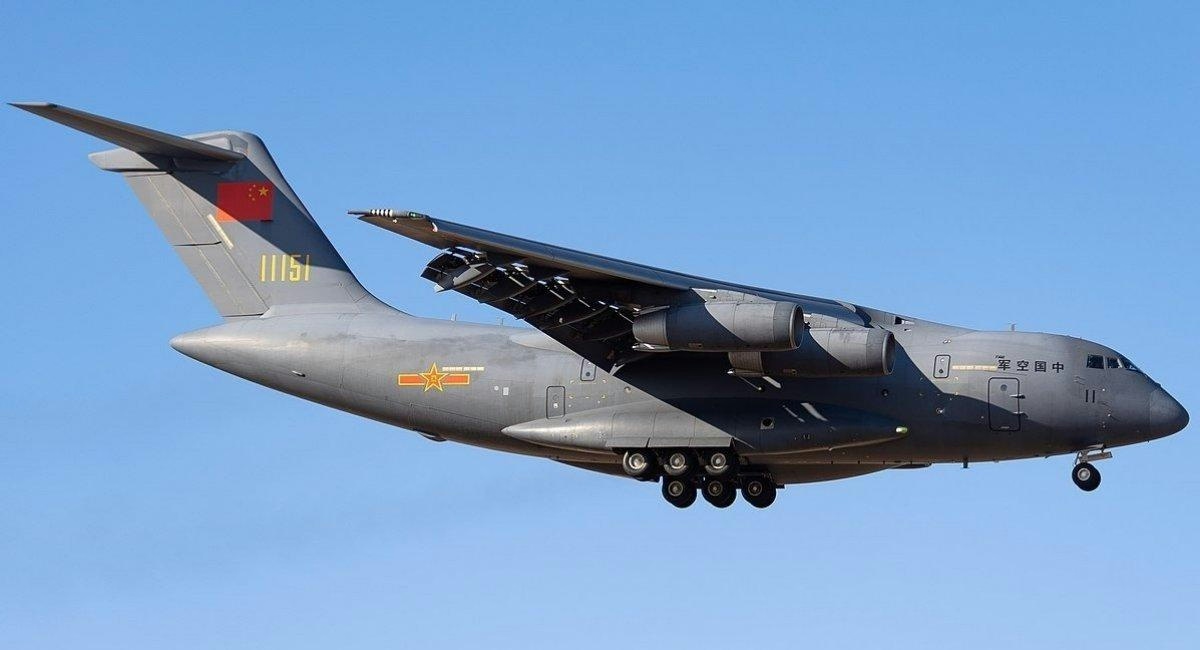
China Expands Y-20B Fleet with Indigenous WS-20 Engines
China’s People’s Liberation Army Air Force (PLAAF) has increased its fleet of Y-20B strategic airlifters to ten aircraft, marking a significant advancement in reducing dependence on Russian-made engines. The Y-20B, the latest variant of China’s heavy transport aircraft comparable to Russia’s Il-76, is now powered by the domestically developed WS-20 turbofan engine, replacing the Russian D-30KP Series II engines used in earlier models.
This development was underscored during a recent “elephant walk” at Kaifeng Air Base in central China, as reported by Janes. Satellite imagery from November 2024 showed five Y-20Bs stationed at the base, while PLAAF officials had publicly acknowledged only three as recently as September 2025. Although most serial numbers were obscured in official footage, one aircraft was identified as belonging to the 37th Air Regiment of the 13th Transport Aviation Division, based at Kaifeng.
The released footage offered one of the clearest views yet of the WS-20 engine’s fan assembly, which features 32 narrow, high-aspect-ratio fan blades connected by dampers. This design has led to speculation that the WS-20 may be derived from the AEF1200 commercial turbofan developed by the Aero Engine Corporation of China (AECC).
Strategic Implications and Technical Challenges
The PLAAF currently operates approximately 55 Y-20 aircraft in total. Of these, around 45 are the original Y-20A variant powered by Russian D-30KP engines, each producing 117.7 kN of thrust. The Y-20 family represents China’s largest airlifters and accounts for roughly 55 percent of the country’s estimated 135 heavy and medium military transport aircraft. With a maximum payload capacity of up to 60 tonnes, the Y-20 is broadly comparable to Russia’s Il-76MD-90A in terms of carrying capacity.
China’s decision to equip the Y-20B with indigenous WS-20 engines reflects a broader strategic push for technological self-reliance in military aviation. However, this transition presents several challenges. Ensuring the reliability and performance of the WS-20 engines relative to the proven Russian D-30s remains a critical concern. Additionally, integrating the new engines into the existing fleet and managing potential supply chain complexities associated with the WS-20’s development and production are essential factors for the program’s long-term success.
Market analysts observe that China’s progress in developing and deploying its own high-thrust turbofan engines could enhance confidence in the country’s technological capabilities and military self-sufficiency. In response, competitor nations may accelerate their own indigenous engine development programs to maintain parity with China’s advancements.
As China continues to expand and modernize its strategic airlift capabilities, the successful deployment of the Y-20B with WS-20 engines will be closely monitored as an indicator of the country’s growing aerospace ambitions and industrial capacity.

Etihad and Swissport Extend Global Partnership
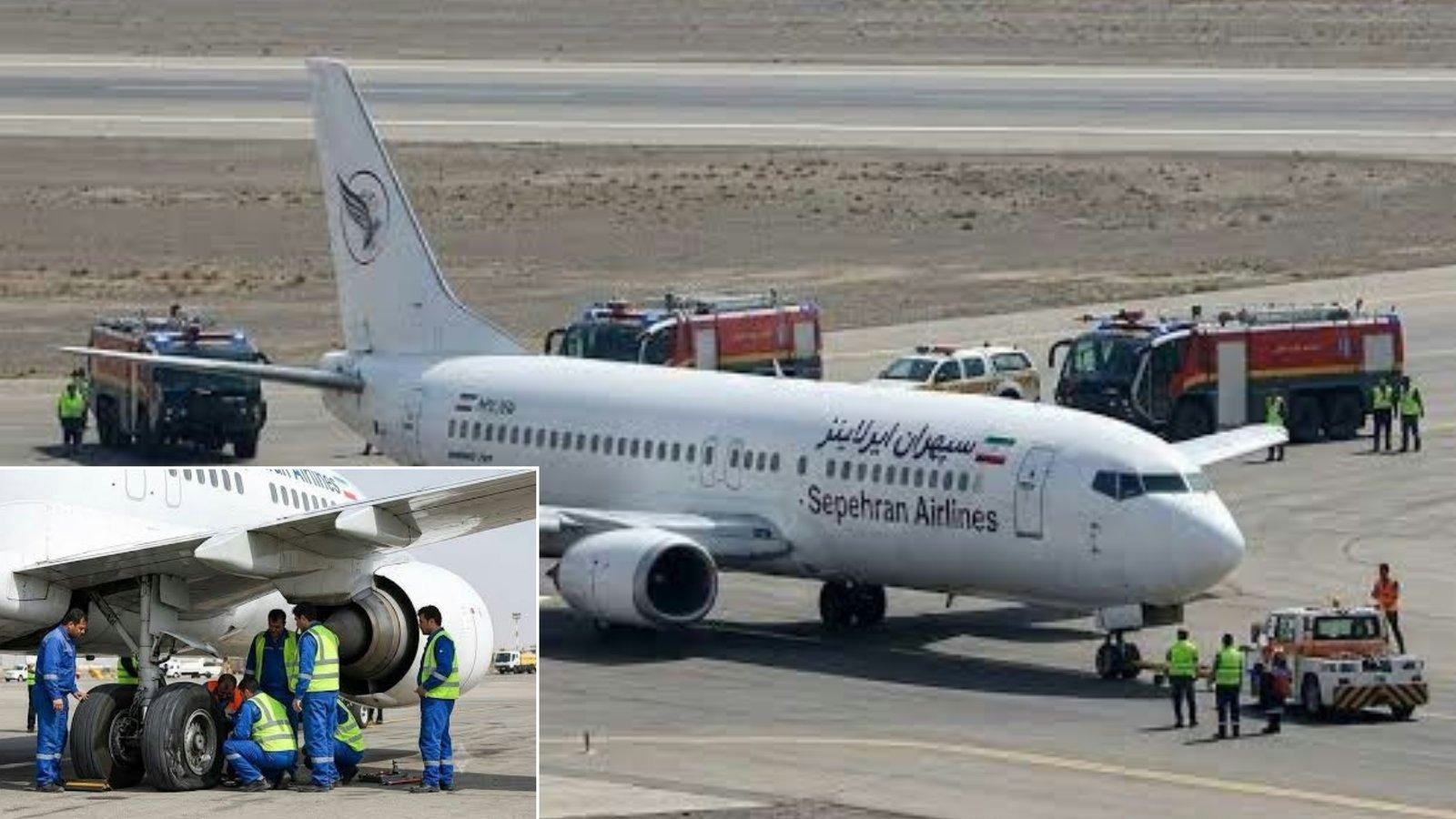
Sepehran Airlines B737 Returns to Mashhad After Tyre and Engine Issues

Etihad Deploys Widebody Fleet to Meet Strong Demand
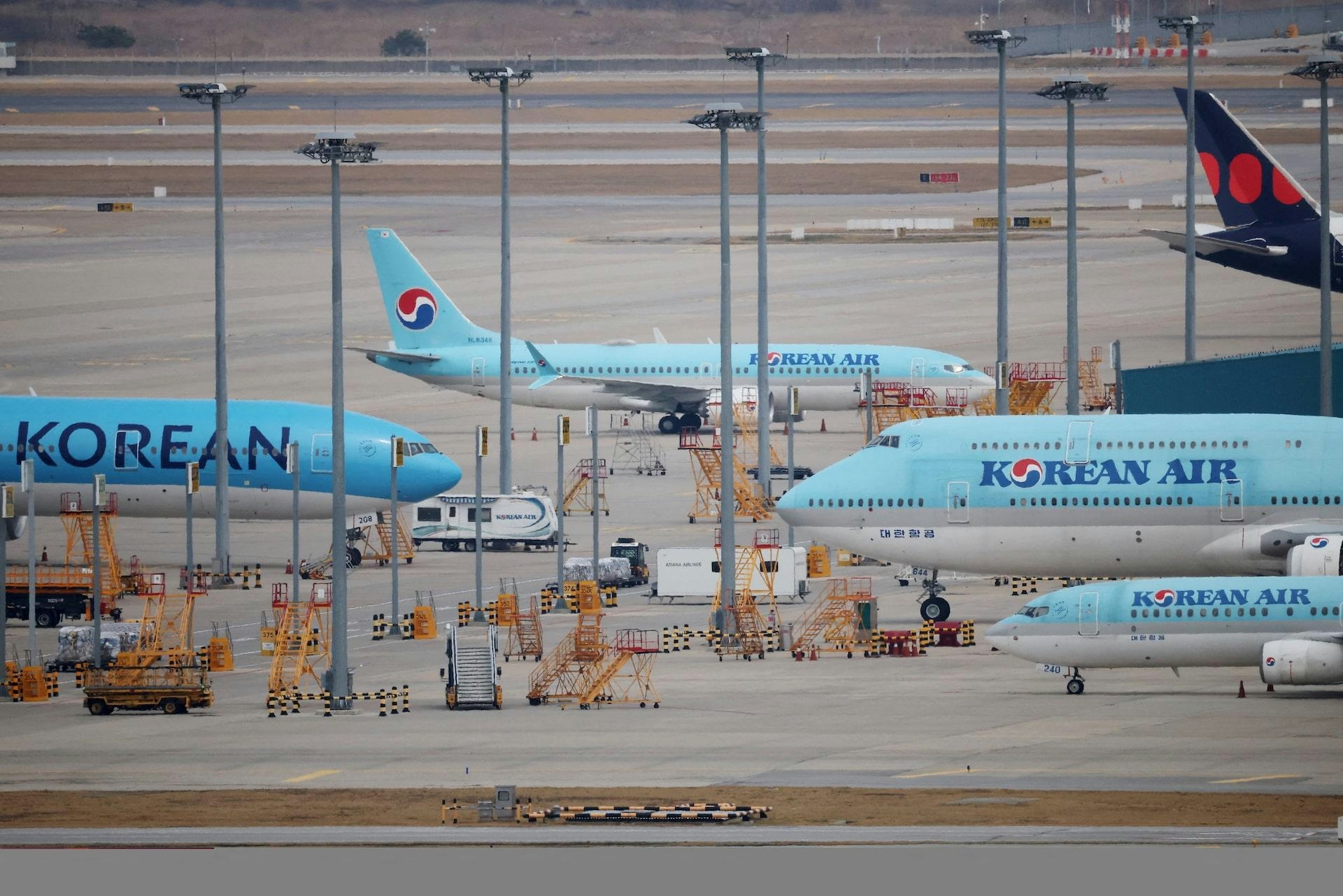
Korean Air Finalizes $36.2 Billion Deal with Boeing

Australia’s RFDS Queensland Section Orders Six King Air 260Cs
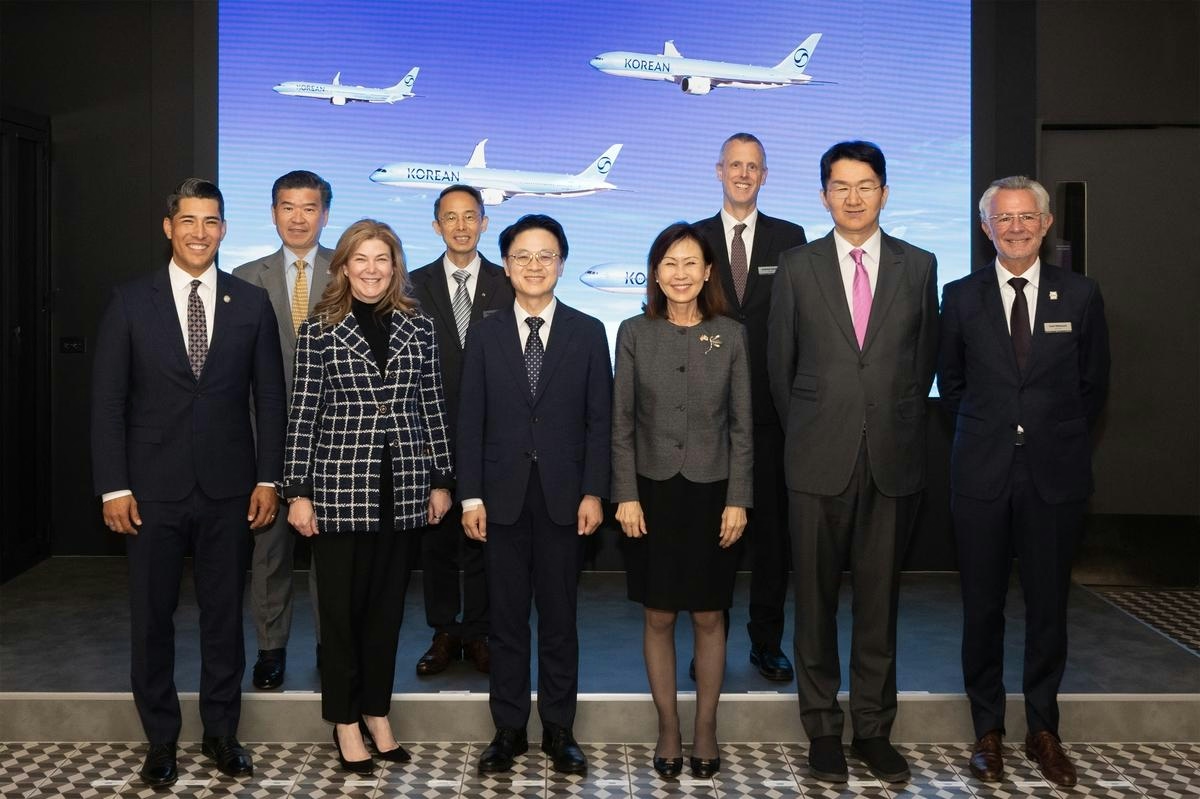
Korean Air Finalizes Order for 103 Boeing Jets and Engines
Embraer E195-E2 Features Distinctive Engine Placement Among Regional Jets
What Passengers Can Expect on Boeing’s New 777X Jet
How Ethiopian Airlines Became Africa’s Leading Carrier Amid Gulf Competition
Joby Aviation Extends Autonomous Flight Capabilities with Cross-Country Tour
