
Превращайте аналитические выводы ИИ в реальные действия

В тренде
Categories
China Identifies 2026 as a Pivotal Year for Low-Altitude Air Taxi Industry
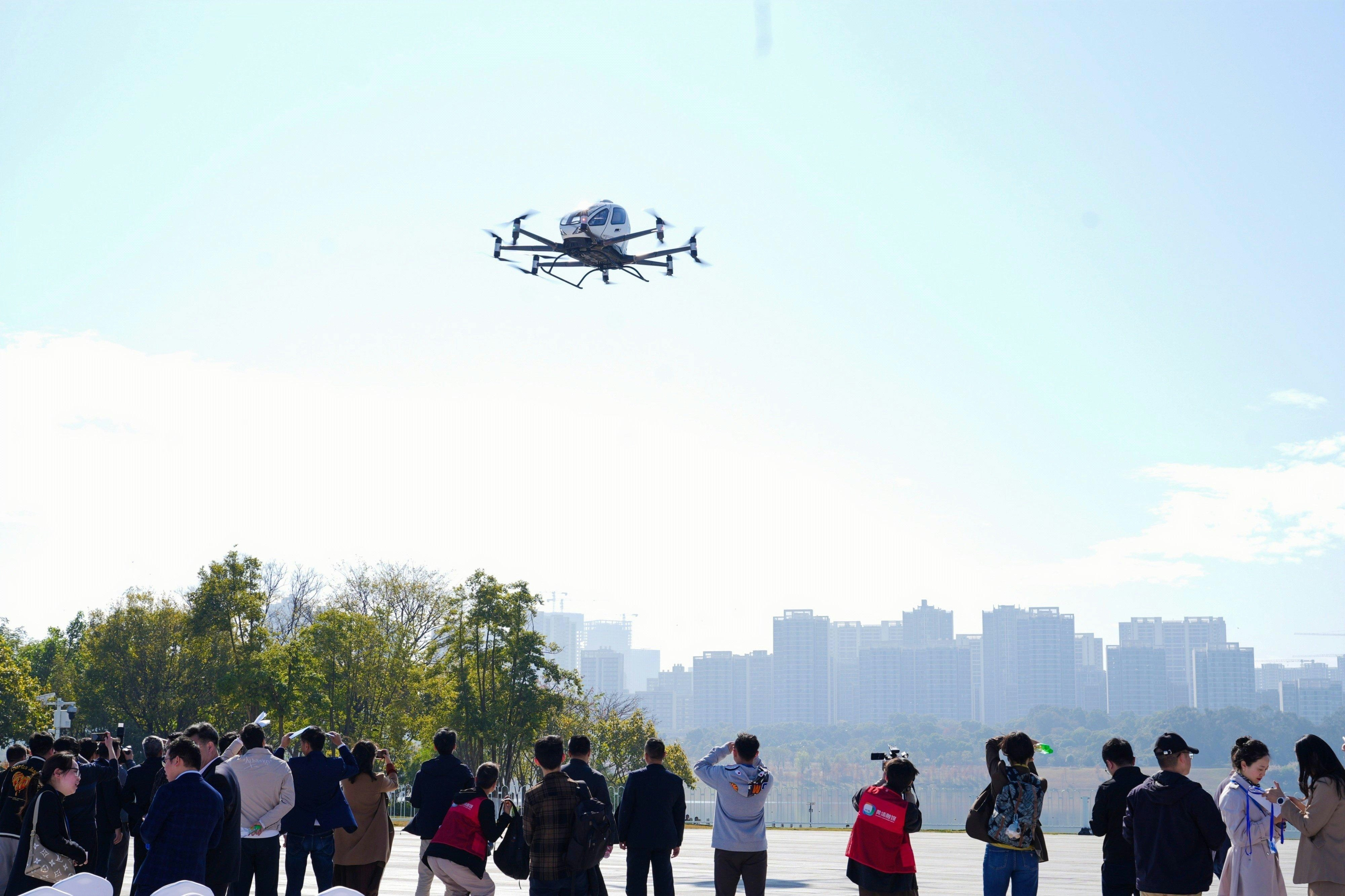
China Identifies 2026 as a Pivotal Year for Low-Altitude Air Taxi Industry
Demonstrations Signal a New Era in Urban Air Mobility
In downtown Wuhan, the capital of Hubei Province, a silent aircraft lifted off before an attentive audience, hovering gracefully above the Hongshan Auditorium. This demonstration featured four distinct electric vertical takeoff and landing (eVTOL) vehicles, designed to transport both passengers and goods. Far from a cinematic spectacle, the event was a highlight of Hubei’s provincial economic agenda meeting, underscoring China’s swift transition from conceptual planning to active implementation of its low-altitude economy. This sector has now been elevated to a national strategic priority, reflecting the country’s commitment to advancing urban air mobility.
2026: A Crucial Milestone for Commercial Deployment
Industry leaders and regulators increasingly regard 2026 as a decisive year for the commercial introduction of eVTOL air taxis. Several manufacturers are engaged in a competitive race to obtain regulatory certifications and scale up production, aiming to transform the industry from a conceptual phase into a commercially viable enterprise. Huang Xiaofei, vice-president of strategy at Shanghai-based Volant Aerotech, emphasized the significance of this timeline, stating, “The year 2026 will be the crucial node for the low-altitude industry to ‘cross the chasm.’ eVTOL, as the core technological direction of a billion-yuan market, has moved from concept into a commercial sprint phase.”
Hubei Province is positioning itself at the forefront of this emerging industry. Local officials report the development of nine eVTOL models, with four already having completed successful test flights. The region’s low-altitude sector has experienced robust growth, with major companies in Wuhan reporting revenue increases exceeding 30 percent this year. This growth has contributed to an aviation industry output valued at 9.6 billion yuan within Hubei alone.
Challenges and Global Competition
Despite the promising momentum, the industry faces significant challenges. Regulatory complexities, safety concerns, and the need for technological standardization remain critical obstacles that could impede progress. Authorities are tasked with establishing clear airspace management protocols and rigorous safety standards to foster public trust and ensure operational reliability. Additionally, the commercialization of eVTOL services will require substantial investment in infrastructure and coordinated policy support.
The global market is closely monitoring these developments. International competitors, such as Archer Aviation in the United States, are accelerating their own eVTOL programs, positioning themselves as leading providers of urban air transit in cities like Los Angeles. This intensifying competition is expected to drive further innovation and investment, as companies and nations compete for leadership in the nascent air taxi sector.
As China’s low-altitude economy moves from blueprint to reality, the year 2026 emerges as a pivotal moment that could shape the future of urban air mobility, not only within China but across the global aviation industry.

Etihad Airways Suspends Airbus A380 Flights on Key Route

Aditya Birla Group Seeks Approval for Aircraft Leasing in GIFT City

Qatar Airways Highlights Innovation and Connectivity at Arabian Travel Market 2026

Hong Kong's Five-Year Plan Includes Andrew Fan's Aircraft Parts Processing Hub Proposal

ACIA Aero Leasing Delivers ATR72-600 to Air Nostrum

RTX Appoints Jill Albertelli as Head of Pratt & Whitney

TAT Technologies Joins Beyond Aero Hydrogen Aircraft Program

AURAK Study Highlights Barriers to Air Taxi Adoption in Emerging Economies

Xiamen Air Selects Altitude for 787 Maintenance at Heathrow

Etihad and Swissport Extend Global Partnership
