Изображение

Превращайте аналитические выводы ИИ в реальные действия

Присоединяйтесь к списку ожидания AeroGenie уже сегодня!

В тренде

Categories

China Southern Airlines Places $21 Billion Order for Airbus Jets
May 1, 2026By ePlane AI
China Southern Airlines Places $21 Billion Order for Airbus Jets
0
0
China Southern Airlines
Airbus A320neo
Fleet Expansion

China Southern Airlines Places $21 Billion Order for Airbus Jets

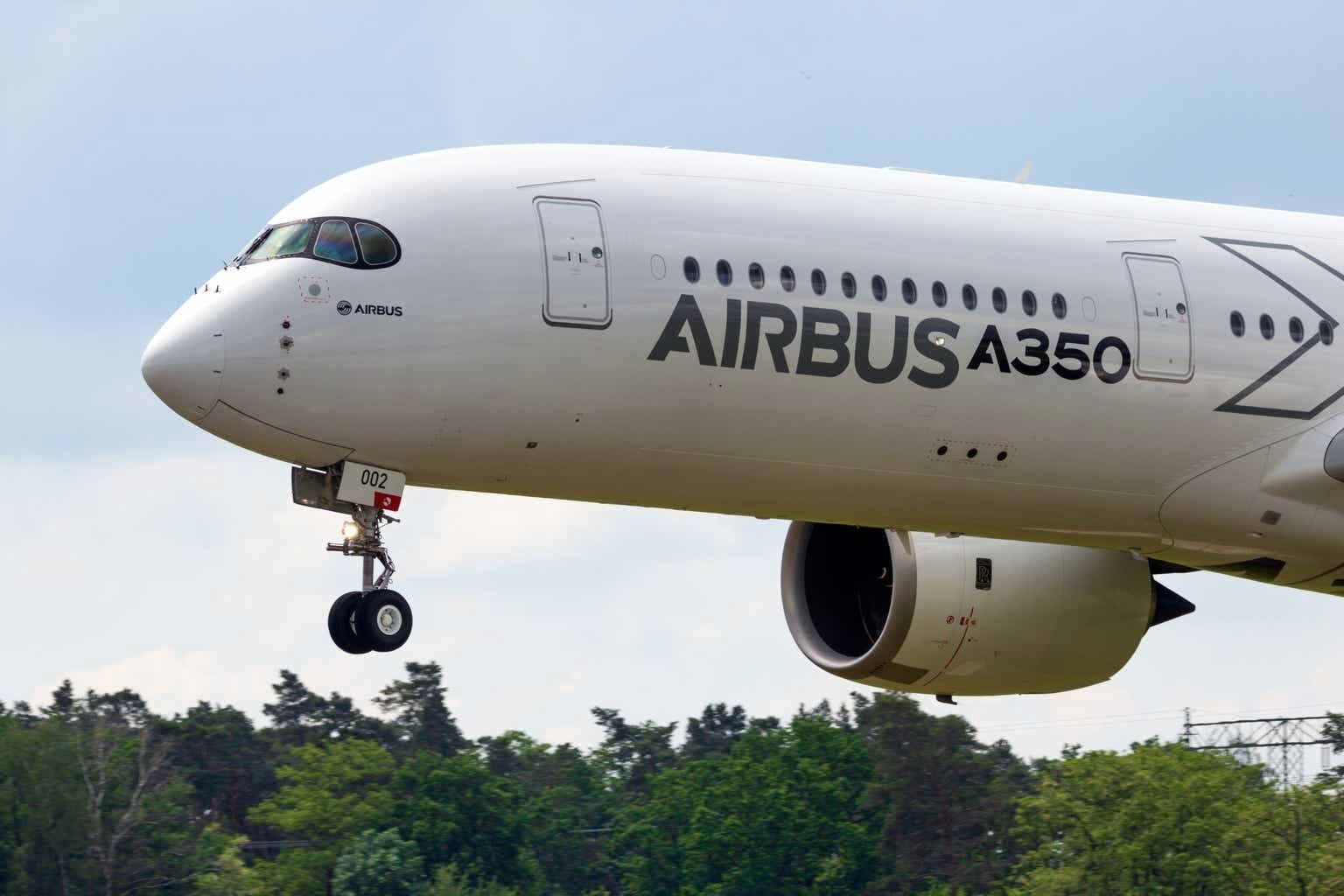
China Southern Airlines Co. Ltd. and its subsidiary, Xiamen Airlines Co. Ltd., have announced a significant order for 137 Airbus A320neo family aircraft, with a catalog value of approximately $21.4 billion. According to a stock exchange filing released on Wednesday, the agreement allocates 102 aircraft to China Southern and 35 to Xiamen Airlines. Deliveries are scheduled to be made in batches between 2028 and 2032. Airbus has reportedly offered substantial price concessions, resulting in a transaction value below the listed catalog price.

Strategic Fleet Expansion Amid Financial Challenges

This major procurement comes at a time when China Southern is navigating mixed financial results. Although the airline reported revenue growth in 2025, it simultaneously recorded a net loss of CNY 1.95 billion, underscoring persistent profitability challenges. The decision to expand the fleet despite these financial pressures reflects a strategic commitment to modernization and capacity growth. This move aligns with a broader industry trend, as other leading Chinese carriers, including China Eastern and Air China, have recently placed large orders for Airbus A320neo-family jets. Collectively, these orders signal a concerted shift among Chinese airlines toward expanding their narrowbody fleets with Airbus aircraft.

Market Impact and Industry Context

The order contributes to Airbus’s strengthening foothold in the Chinese aviation market, where domestic carriers are increasingly favoring the A320neo family for fleet renewal and expansion. Airbus reported robust first-quarter order volumes, driven in part by demand from Chinese airlines. However, the manufacturer continues to face challenges, including a decline in A320neo deliveries due to ongoing supply chain and production constraints affecting the broader aerospace industry. The latest commitment from China Southern and Xiamen Airlines underscores the sustained confidence in Airbus’s narrowbody aircraft as a cornerstone of future growth in the region.

More news
Hong Kong's Metrojet Adds Bombardier Global 8000 to Fleet

Hong Kong's Metrojet Adds Bombardier Global 8000 to Fleet

Hong Kong’s Metrojet Integrates Bombardier Global 8000 into Fleet Metrojet, a prominent business aviation company based in Hong Kong, has announced the addition of Asia’s first Bombardier Global 8000 to its managed fleet. This acquisition represents a significant advancement for the company, introducing a new standard of long-range private travel to the region. The Global 8000 is widely recognized for its superior performance capabilities and luxurious cabin environment, positioning Metrojet at the forefront of business aviation innovation. Operational Excellence and Industry Impact Dave Yip, CEO of Metrojet, described the milestone as a defining moment for the company. He emphasized that the arrival of the Global 8000 highlights Metrojet’s capacity to provide world-class management solutions for some of the most sophisticated aircraft in the industry. Yip noted a growing interest from other Bombardier owners, expressing confidence that Metrojet’s established Bombardier maintenance expertise will enable the company to deliver consistent excellence and assurance. Captain Stewart Borg, Director of Flight Operations at Metrojet, underscored the operational achievement involved in integrating the technologically advanced Global 8000 into the fleet. He praised the precision, collaboration, and expertise required to manage the aircraft, attributing the success to the professionalism of the Operations team. Borg affirmed that this integration reinforces Metrojet’s commitment to safety and operational excellence. Challenges and Competitive Landscape Despite the promising prospects, the introduction of the Global 8000 presents notable challenges. The aircraft’s cutting-edge technology and supersonic capabilities entail substantial operational and maintenance costs, representing a significant investment for Metrojet. As the business aviation sector in Asia continues to grow—fueled in part by increasing regional traffic from China—Metrojet’s strategic move is expected to intensify competition among regional operators. Industry analysts anticipate that competitors may respond with fleet upgrades or strategic partnerships to maintain market share and meet escalating client demands for performance and luxury. The addition of the Global 8000 not only expands Metrojet’s expertise in managing aircraft from leading manufacturers but also reinforces the company’s dedication to maintaining its leadership position in the region. Navigating the operational complexities and heightened competition will require Metrojet to continue delivering premium management and maintenance solutions to sustain its competitive edge.
CANAVIA Aviation Academy Orders New Tecnam Aircraft

CANAVIA Aviation Academy Orders New Tecnam Aircraft

CANAVIA Aviation Academy Expands Fleet with New Tecnam Aircraft Tecnam has confirmed a substantial fleet expansion for CANAVIA Aviation Academy, located in Spain’s Canary Islands. The academy has placed an order for a P2006T NG twin-engine (MEP) and a P2008JC NG single-engine (SEP) aircraft, both slated for delivery in 2027. These new additions will complement two previously ordered P2008JC NG aircraft expected by the end of 2026, increasing CANAVIA’s total fleet to 16 aircraft within the next 18 months. Modernizing Training Capabilities Mario Pons, CEO of CANAVIA Aviation Academy, emphasized the critical role of fleet modernization in meeting the demands of advanced airline pilot training. He stated, “We provide not only ATPL training to get the licenses and ratings, but also to prepare our students as future airline pilots, requiring top-tier technical skills to be developed.” Pons highlighted that the new Tecnam aircraft, equipped with fully integrated glass cockpits, will be central to achieving this objective. The expanded fleet will support the academy’s continuous growth since its inception 17 years ago, reinforcing its position in the pilot training sector. CANAVIA benefits from a strategic location, operating from a private aerodrome with consistently favorable weather conditions. This advantage, combined with Tecnam’s reputation for dispatch reliability, enables the academy to achieve over 1,000 flight hours per aircraft annually. The high utilization rate is further maintained by CANAVIA’s in-house Approved Maintenance Service Center, which ensures the fleet remains in optimal condition. Walter Da Costa, Tecnam’s Chief Sales Officer, praised CANAVIA as “a textbook example of a highly successful, high-volume flight academy,” noting the demanding operational environment. He remarked, “Flying an aircraft for over 1,000 hours a year demands incredible robustness and reliability. We are honored that Mario and his team continue to trust Tecnam’s Next Generation fleet—specifically the seamless transition between the P2008JC NG and the P2006T NG—to train their growing roster of 100 ATPL students.” Navigating a Competitive and Regulatory Landscape CANAVIA’s decision to expand its fleet with Tecnam aircraft comes amid intensifying competition in the training aircraft market. Manufacturers such as Aura Aero and Piaggio Aero are introducing innovative models that challenge Tecnam’s market position. This competitive environment may drive increased demand for Tecnam’s training aircraft but also invites potential pushback from rivals offering advanced features or more cost-effective alternatives. Industry analysts anticipate that competitors will respond with aggressive marketing and pricing strategies to maintain their market share. In addition to market competition, integrating new aircraft into CANAVIA’s training programs presents logistical and regulatory challenges. The academy must ensure a smooth incorporation of the new models while maintaining compliance with evolving aviation standards. Despite these challenges, CANAVIA’s investment in Tecnam’s Next Generation aircraft underscores its commitment to delivering high-quality pilot training and adapting to the evolving needs of the aviation industry.
Al Maktoum International Airport Project Reaches Key Milestones

Al Maktoum International Airport Project Reaches Key Milestones

Al Maktoum International Airport Project Advances Toward Strategic Expansion The Dubai Government has announced that the first phase of the Al Maktoum International Airport development is progressing on schedule, with significant progress made in key construction areas and preparations underway for upcoming contract tenders. The project is set to commence operations in 2032, in line with Dubai’s comprehensive master plan for aviation and infrastructure growth. Progress and Strategic Importance Substantial milestones have been achieved across various components of the project, including enabling works, runway infrastructure, and the foundational structures for passenger terminals and gates. These developments underscore the momentum behind one of Dubai’s most ambitious infrastructure ventures, aimed at supporting the emirate’s future expansion and enhancing its global connectivity. His Highness Sheikh Hamdan bin Mohammed bin Rashid Al Maktoum, Crown Prince of Dubai, Deputy Prime Minister, Minister of Defence, and Chairman of The Executive Council of Dubai, commended the project team led by His Highness Sheikh Ahmed bin Saeed Al Maktoum, Chairman of Dubai Airports and Dubai Aviation City Corporation. Sheikh Hamdan emphasized that the airport’s development embodies Dubai’s forward-looking vision, realized through advanced infrastructure that will foster sustainable economic growth, strengthen international links, and bolster the emirate’s long-term competitiveness. He described the project as a strategic investment integral to Dubai’s future, forming part of an integrated vision to anticipate growth demands, deliver world-class infrastructure, and position Dubai to seize emerging economic opportunities. Sheikh Hamdan highlighted the airport’s role as a key enabler of the Dubai Economic Agenda, D33, noting that it will expand the aviation sector’s capacity and improve the efficiency of the emirate’s transport and logistics ecosystem. This expansion is expected to attract high-value investments, diversify business activities, and generate sustainable economic opportunities that will underpin Dubai’s development for decades. Construction Phase and Future Outlook Sheikh Ahmed bin Saeed Al Maktoum detailed the project’s steady advancement as it enters a large-scale construction phase, with contracts valued at AED13 billion currently underway and plans to award additional strategic projects exceeding AED55 billion in the next phase. He emphasized the airport’s critical role in reinforcing Dubai’s status as a leading global hub for aviation and logistics, aligning with the leadership’s vision to invest in infrastructure capable of accommodating rapid growth in travel, trade, and logistics. Despite the project’s strong momentum, challenges remain. Securing adequate funding for the extensive modernization and construction efforts is essential, particularly amid shifting global market conditions. Regional geopolitical tensions could also affect tourism and trade routes, posing risks to the airport’s long-term goals. Furthermore, competition is intensifying, with major airports such as Beijing Capital International Airport recently raising RMB1 billion through short-term debentures to finance their own expansions. In response to these challenges, Dubai continues to prioritize tourism and economic diversification. Emirates has committed $5.1 billion to a new engineering facility at Dubai World Central, aimed at enhancing maintenance capabilities and establishing Dubai as a strategic engineering partner within the aviation industry. This investment supports the emirate’s ambitions for sustained growth and resilience in an increasingly competitive global market.
Avincis Signs Agreement to Acquire Up to 15 Airbus H145 Helicopters

Avincis Signs Agreement to Acquire Up to 15 Airbus H145 Helicopters

Avincis to Acquire Up to 15 Airbus H145 Helicopters Avincis, Europe’s largest operator of emergency aerial services, has entered into an agreement with Airbus Helicopters to acquire up to 15 H145 helicopters. Announced on June 15, 2026, this acquisition aims to enhance Avincis’ operational capabilities across its European network, with a particular emphasis on the Nordic countries, Italy, and Spain. Expanding and Modernizing the Fleet The newly acquired H145 helicopters will primarily support Helicopter Emergency Medical Services (HEMS), while also being deployed for offshore transportation missions. This move forms part of Avincis’ broader strategy to modernize its fleet and strengthen its presence in key regions, ensuring the company can meet evolving operational demands with advanced and reliable aircraft. John Boag, CEO of Avincis Group, underscored the significance of the H145’s performance and dependability in demanding environments. He described the helicopter as an ideal platform for mission-critical operations, highlighting its role in saving lives and protecting communities. Boag further noted that the integration of these helicopters would provide crews with cutting-edge technology, thereby enhancing the company’s capacity to deliver emergency and offshore transport services across its territories. Matthieu Louvot, CEO of Airbus Helicopters, emphasized the H145’s versatility, pointing to its ability to transition seamlessly between life-saving medical missions and the rigorous requirements of offshore wind and energy transport. Louvot described the agreement as a testament to the H145’s status as a multi-mission aircraft, affirming Airbus’ commitment to supplying Avincis with reliable and efficient helicopters tailored to complex operational environments. Operational and Market Implications The integration of up to 15 new H145 helicopters presents several challenges for Avincis, including the need for meticulous planning around crew training and maintenance adjustments. The financial aspects of the acquisition, encompassing investment in training and potential operational changes, will also require careful management. This strategic move by Avincis is expected to attract attention within the market, potentially prompting other operators to consider similar fleet upgrades or the adoption of advanced helicopter technologies. Competitors may respond by enhancing their own service offerings, especially as manufacturers such as Airbus and Sikorsky continue to develop uncrewed helicopter variants. Avincis and the Airbus H145: A Proven Partnership Avincis is recognized globally as a leading provider of aerial emergency services, operating a fleet exceeding 220 aircraft and employing over 2,400 professionals, including pilots, crews, and technicians. Its operational bases extend across Spain, Portugal, Italy, Norway, Sweden, and Finland, with additional activities in Mozambique and Chile. The Airbus H145 boasts a strong global track record, with more than 1,800 helicopters in the family accumulating over 8.5 million flight hours. Powered by two Safran Arriel 2E engines and equipped with full authority digital engine control (FADEC) alongside the Helionix digital avionics suite, the H145 features a four-axis autopilot designed to enhance safety and reduce pilot workload. Airbus highlights the H145 as the quietest helicopter in its class, producing the lowest carbon dioxide emissions among its competitors.
China Airlines launches cargo AI customer service bot

China Airlines launches cargo AI customer service bot

China Airlines Introduces AI-Powered Customer Service Bot for Cargo Operations China Airlines has launched an artificial intelligence-driven customer service assistant tailored for its cargo division, aiming to enhance response times and improve operational efficiency. The Taiwan-based carrier revealed that its new Cargo AI Customer Service bot utilizes advanced “Agentic AI technology” and is seamlessly integrated with the airline’s air cargo scheduling system. This integration enables the bot to provide three core services: flight information, shipment tracking, and updates on cargo regulations. Enhancing Customer Support with Advanced AI Designed to address complex inquiries from cargo owners and shipping agents, the AI assistant offers round-the-clock multilingual support. Customers can obtain real-time updates on flight statuses and schedules, track the current location and condition of their shipments, and access the latest cargo regulations compiled from official sources. The system’s capacity to comprehend and respond to spoken queries in multiple languages is intended to facilitate smoother communication for an international customer base. To ensure consistent performance and sustainability, China Airlines has deployed a cloud-based smart load-balancing platform. This infrastructure not only maintains stable service during peak demand but also reduces energy consumption during off-peak periods, aligning with the airline’s commitment to carbon reduction. Challenges and Industry Context Despite the potential benefits, the implementation of AI in customer service presents notable challenges. Ensuring the accuracy and dependability of automated responses remains a critical issue, especially in complex or high-stakes situations. The airline must also uphold transparency regarding data collection and pricing, while proactively managing potential AI system failures—concerns that have previously affected other carriers such as Air Canada. Industry analysts observe that although AI can improve efficiency, skepticism persists about its ability to fully replace human expertise in nuanced customer interactions. Competitors are expected to respond either by adopting similar AI technologies or by enhancing their own customer service capabilities to remain competitive. China Airlines has indicated plans to expand the AI system’s functionalities, incorporating additional features frequently used by shipping agents to create a more comprehensive “one-stop smart cargo experience.” Strategic Investments in Fleet and Technology This digital innovation initiative coincides with China Airlines’ ongoing efforts to modernize its fleet. Late last year, the airline increased its order for Boeing 777-8F freighters by four units, bringing the total to eight, and also acquired four Boeing 777Fs. Concurrently, the carrier announced the sale of four older Boeing 747-400 freighters, with two being purchased by Cargolux. These strategic moves underscore China Airlines’ broader objective to upgrade its cargo operations through the deployment of advanced aircraft and technology-driven services.
Carlos Brana on Innovation, Sustainability, and Growth at Dassault Aviation

Carlos Brana on Innovation, Sustainability, and Growth at Dassault Aviation

Carlos Brana on Innovation, Sustainability, and Growth at Dassault Aviation The landscape of business travel has undergone a profound transformation, with modern travelers seeking more than just transportation from point A to point B. Today’s discerning flyers demand seamless journeys that integrate productivity, comfort, and personalization. Dassault Aviation’s Falcon 6X exemplifies this evolution, combining state-of-the-art aerospace engineering with the spaciousness and luxury of a private residence. Featuring one of the largest cabins in business aviation, advanced digital systems, and impressive long-range capabilities, the Falcon 6X is redefining private air travel for a new generation of clients. In an exclusive interview with Outlook Luxe, Carlos Brana, Executive Vice-President of Civil Aircraft at Dassault Aviation, shared insights on the burgeoning business aviation market in India, the shifting profile of private jet clientele, and the company’s strategic focus on innovation and sustainability amid industry challenges. India’s Expanding Business Aviation Market India has rapidly emerged as the fastest-growing business aviation market within the Asia Pacific region. Brana highlighted that the country’s business aviation fleet expanded by nearly 12 percent last year, with 20 new jets added to reach a total of 188 aircraft. He attributed this growth to India’s robust economic momentum, an increasing number of high-net-worth individuals, and a rising demand for efficient and flexible travel solutions. While the Falcon 2000 remains Dassault’s most popular model in India, the Falcon 6X is gaining significant traction, with two aircraft already operating in the country. Its 5,500-nautical-mile range enables non-stop flights from Mumbai to key destinations across Europe, East Asia, Africa, and Australia. Beyond traditional business use, private jets in India are increasingly employed for diverse purposes such as pilgrimage tourism, medical evacuations, destination weddings, and major events. Brana also noted a notable shift in the buyer demographic. Whereas business aviation was once predominantly associated with industrialists and established wealth, there is now growing interest from startup founders, technology entrepreneurs, and a younger generation of business leaders. Navigating Innovation and Sustainability Amid Industry Challenges Dassault Aviation’s pursuit of luxury and technological advancement is unfolding against a backdrop of significant industry challenges. Scaling production remains a critical hurdle, a concern echoed by Airbus CEO Guillaume Faury in reference to the broader aerospace sector. Furthermore, Dassault’s participation in the Future Combat Air System (FCAS) program has faced setbacks, including a “partial reset” due to industrial uncertainties and the cessation of collaboration with Airbus on the New Generation Fighter project. These developments have raised questions about Dassault’s capacity to sustain innovation and growth in a competitive environment. In response, Brana reaffirmed Dassault’s commitment to overcoming these obstacles through sustained investment in research, digitalization, and sustainable aviation technologies. He emphasized the company’s dedication to delivering aircraft that not only meet the highest standards of comfort and performance but also advance environmental sustainability objectives. As competitors recalibrate their strategies in light of shifts in programs such as FCAS and the Next-Generation Single-Aisle market, Dassault aims to preserve its leadership position by remaining adaptable and maintaining a relentless focus on customer needs. Charting the Future of Private Aviation With India’s business aviation sector experiencing rapid growth and global expectations for luxury travel evolving, Dassault Aviation’s Falcon 6X embodies the company’s vision for the future. It represents a convergence of innovation, sustainability, and growth, setting new standards for private aviation at cruising altitudes of 40,000 feet.
Composite Structures and Flight Software in the MQ-25A Program

Composite Structures and Flight Software in the MQ-25A Program

Composite Structures and Flight Software Propel MQ-25A Program Forward Aurora Flight Sciences has emerged as a key contributor to the development of the MQ-25A Stingray™, the U.S. Navy’s first operational carrier-based unmanned aerial refueler. The company’s expertise in advanced manufacturing, engineering, and software integration has been critical in advancing the aircraft’s readiness, culminating in the successful maiden flight of the MQ-25A test aircraft on April 25. Advanced Composite Manufacturing for Naval Aviation Aurora has manufactured 145 components and assemblies for the MQ-25A flight test aircraft at its Mississippi and West Virginia facilities. These parts include nearly the entire exterior surface, crafted from lightweight, high-strength composite skins designed to withstand the corrosive and demanding environment of carrier operations. Engineering teams based in Virginia have also been responsible for the design and analysis of vital components such as tail stabilators, fuselage edges, and engine inlets. Across multiple MQ-25A builds, Aurora has delivered more than 1,100 components and assemblies. The Mississippi plant produces the majority of these parts, including fuselage skins, door assemblies, and wing components, while the West Virginia facility supplies the complete tail assembly along with additional airframe and wing elements. The integration of advanced composite materials offers significant performance advantages but also presents complex manufacturing and assembly challenges to meet stringent naval aviation standards. Enhancing Autonomous Flight Software Capabilities Aurora’s role extends beyond hardware production to critical software development. The company embedded software and autonomy engineers within Boeing’s integrated team to support the MQ-25A’s flight software. The aircraft operates autonomously, executing commands from Air Vehicle Pilots through the Unmanned Carrier Aviation Mission Control System MD-5 Ground Control Station, enabling fully autonomous taxiing, takeoff, flight, and landing. Aurora engineers have been instrumental in developing the Guidance, Navigation, and Control (GNC) systems, refining software-directed mission procedures, and validating software performance under rigorous operational conditions. These efforts are essential to ensuring safety and reliability during complex carrier operations, including catapult launches and ship-relative maneuvers. Nonetheless, integrating sophisticated autonomous flight software remains a significant technical challenge as the program progresses. Program Milestones and Industry Implications The MQ-25A program recently secured Milestone C approval, authorizing the transition to low-rate initial production. The Navy has approved the procurement of three aircraft, reflecting confidence in the program’s advancement. The MQ-25A’s first operational flight and production authorization mark a significant step toward its integration into carrier air wings, where it is expected to enhance operational reach through unmanned aerial refueling and manned-unmanned teaming. These developments have attracted close attention from industry competitors. General Atomics Aeronautical Systems Inc. (GA-ASI), for instance, is advancing its own unmanned aerial systems, including the MQ-9B equipped with new airborne early warning capabilities, underscoring a dynamic and competitive environment in naval unmanned aviation. Aurora Flight Sciences’ sustained contributions in composite manufacturing, engineering, and flight software development remain central to the MQ-25A’s trajectory toward operational deployment, shaping the future landscape of carrier-based unmanned aviation.
Arkansas Prepares for Growth in Aviation Maintenance Sector

Arkansas Prepares for Growth in Aviation Maintenance Sector

Arkansas Prepares for Growth in Aviation Maintenance Sector Surge in Aviation Maintenance Activity Arkansas is witnessing a notable expansion in its aviation maintenance sector, marked by four significant developments announced within a single week in April. These include expansions by Pratt & Whitney in Springdale and Envoy Air in Little Rock, the establishment of a new aircraft-painting facility by Dean Baldwin Painting in Texarkana, and the launch of Aptus Aero by The Stephens Group in Little Rock. Collectively, these initiatives are expected to create hundreds of jobs, positioning Arkansas as a key player in the rapidly growing global maintenance, repair, and overhaul (MRO) industry. This growth coincides with a broader upward trend in aviation maintenance worldwide. The global MRO market is projected to reach $97.02 billion in 2024 and is anticipated to grow to $129.86 billion by 2030, according to Research & Markets. Airbus forecasts that the wider aviation services market will expand to $311 billion by 2044. Billy Trull, general manager of Pratt & Whitney’s Springdale facility, emphasized the sustained demand for commercial aircraft and the corresponding need for MRO services to maintain an expanding fleet. Challenges Facing the Sector Despite the promising outlook, Arkansas’s aviation maintenance industry confronts significant challenges, chief among them a critical shortage of skilled mechanics. This issue reflects a nationwide trend, with many experienced workers approaching retirement and insufficient numbers of new entrants to replace them. Katherine Beckham, coordinator of the aviation maintenance program at Southern Arkansas University Tech, highlighted the aging workforce and the difficulty in attracting younger talent to the field. The labor shortage has driven wages upward, with entry-level mechanics now earning approximately $33 per hour—more than double the rate from a decade ago—while seasoned airline mechanics command between $70 and $80 per hour. In addition to workforce constraints, the sector is grappling with material shortages, rising operational costs, and broader economic pressures. An industry survey by Oliver Wyman points to geopolitical instability and tariffs as factors exacerbating these challenges. The competitive landscape is also evolving, exemplified by VSE’s $2 billion acquisition of Precision Aviation Group, a move aimed at expanding capabilities to meet growing demand. Strategic Investments and Workforce Development Arkansas is actively leveraging its educational infrastructure and workforce development programs to address industry needs. The state offers multiple aviation maintenance programs through its higher education institutions, producing graduates who have secured positions with companies such as Envoy Air, Dassault Falcon Jet, and various facilities in northwest Arkansas. However, some graduates have sought employment opportunities outside the state due to limited local openings. Among the most significant investments is Pratt & Whitney’s $4.7 million expansion of its Propulsion Systems Division in Springdale. Operating since 1996, the facility services engines for both commercial and military aircraft. The expansion will add 7,000 square feet and incorporate advanced equipment to enable additive manufacturing repairs for geared turbofan engines, reducing process times by more than 60 percent. As Arkansas navigates the complexities of this aviation maintenance boom, its strategic investments and commitment to workforce development will be essential in securing a competitive position within this vital and rapidly evolving industry.
Hitit Outlines AI Integration and Platform Expansion at 82nd IATA AGM

Hitit Outlines AI Integration and Platform Expansion at 82nd IATA AGM

Hitit Highlights AI Integration and Platform Expansion at 82nd IATA AGM At the 82nd Annual General Meeting of the International Air Transport Association (IATA), Hitit, a prominent travel technology firm, presented its latest advancements in artificial intelligence and commercial distribution. The company outlined significant progress in developing generative AI architectures alongside the migration of its payment systems to cloud-based platforms. These initiatives mark a notable advancement in the digital transformation of the aviation industry. Technological Advancements and Industry Implications Hitit’s leadership emphasized the broader implications of these technological upgrades, particularly in the context of rising operational costs and their impact on profit margins projected for 2026. As airlines and travel technology providers face increasing pressure to enhance efficiency, Hitit’s AI-driven solutions are designed to streamline operations and bolster commercial capabilities. The company’s focus on integrating artificial intelligence reflects a strategic response to the evolving demands of the sector. Challenges in AI Adoption and Competitive Landscape Despite the promising outlook, the integration of AI and platform expansion presents considerable challenges. Insights shared at the recent Skift Data + AI Summit highlighted critical obstacles such as the necessity for clear ownership of AI initiatives, the development of secure and resilient systems, and the importance of building trust among customers and employees. These organizational and operational complexities are pivotal factors that may influence the success and speed of Hitit’s transformation. Market analysts are also observing how competitors, including LATAM Airlines, are responding to the increasing adoption of AI within travel technology. While rival companies may pursue similar expansions, their emphasis on seamless operational integration and cultivating customer trust could serve as key differentiators in this rapidly evolving landscape. As the aviation industry advances toward greater digitalization, Hitit’s initiatives showcased at the IATA AGM underscore both the potential and the challenges of leveraging AI to drive future growth. The company’s ongoing efforts to navigate operational hurdles and foster stakeholder confidence are expected to be crucial in defining its competitive standing in the coming years.
Sky Aircraft Maintenance Authorized as Garmin Aviation Dealer

Sky Aircraft Maintenance Authorized as Garmin Aviation Dealer

Sky Aircraft Maintenance Authorized as Garmin Aviation Dealer **Lexington, NC, June 14, 2026** – Sky Aircraft Maintenance (SAM), an FAA-certified Part 145 Repair Station and member of the Atlantic Jet Partners group, has been officially designated as an authorized Garmin Aviation dealer. This new status enables SAM to provide factory-authorized sales, installation, integration, and ongoing support of Garmin avionics for private and business aircraft owners seeking advanced flight deck solutions. Navigating Industry Challenges with Advanced Technology The aviation maintenance sector currently faces significant challenges, including labor and material shortages, escalating operational costs, and persistent geopolitical uncertainties. In the United Kingdom, post-Brexit regulatory complexities have further complicated parts certification and maintenance approvals, intensifying pressures across the industry. Against this backdrop, Sky Aircraft Maintenance’s partnership with Garmin positions the company to capitalize on cutting-edge avionics technology, potentially strengthening its market presence during what industry analysts describe as an extended maintenance “super cycle.” Garmin is widely recognized as a leader in aviation avionics, offering sophisticated navigation systems, flight displays, digital autopilots, ADS-B solutions, and comprehensive flight deck modernization programs. As an authorized dealer, SAM is now equipped to deliver a broad spectrum of Garmin upgrades, ranging from targeted avionics enhancements to full cockpit transformations. Key Offerings and Benefits for Aircraft Operators Among the most prominent offerings is the Garmin G5000 integrated flight deck retrofit program, available for select aircraft models including the Beechjet 400A, Hawker 400XP, and Citation 560XL/Excel/XLS series. This retrofit replaces outdated avionics with a modern, touchscreen-controlled flight deck that features advanced navigation capabilities, digital autopilot integration, wireless cockpit technology, and enhanced situational awareness. For many operators, the G5000 retrofit extends the operational lifespan of proven airframes, addresses avionics obsolescence, and improves long-term supportability. Garmin’s wireless cockpit technologies further enhance pilot efficiency by enabling wireless flight plan transfers, avionics database management, mobile device integration, and connected aircraft capabilities that streamline operations before, during, and after flight. Christopher Arnett of Sky Aircraft Maintenance emphasized the value of these solutions, stating, “Aircraft owners and operators are looking for solutions that improve capability, reduce pilot workload, and help protect the long-term value of their aircraft. Garmin continues to lead the industry with products that accomplish those goals, and we’re excited to bring those solutions to our customers as an authorized Garmin dealer.” Comprehensive Avionics Services and Special Offer Sky Aircraft Maintenance now offers a wide range of Garmin avionics services, including G5000 integrated flight deck retrofits, GTN Xi navigator installations, TXi flight display upgrades, GI 275 electronic flight instrument retrofits, Garmin digital autopilot installations, ADS-B compliance solutions, wireless cockpit and connected aircraft technologies, as well as complete avionics modernization projects. As a full-service maintenance facility, SAM can coordinate Garmin avionics upgrades alongside scheduled inspections, routine maintenance, connectivity enhancements, and interior refurbishments. This integrated approach helps reduce aircraft downtime by allowing multiple projects to be completed during a single visit. To mark its new authorized dealer status, Sky Aircraft Maintenance is inviting aircraft owners and operators to explore current avionics upgrade opportunities. The company is offering a special promotion of 10% off scheduled maintenance when combined with a Garmin avionics upgrade. For further details on Garmin avionics solutions available through Sky Aircraft Maintenance, visit atlanticjetpartners.com/garmin-avionics-aircraft-upgrades.
line