
AeroGenie — Ваш интеллектуальный второй пилот.

В тренде
Categories
CII Supports Air Taxi Corridor in Delhi-NCR

CII Endorses Air Taxi Corridor Initiative in Delhi-NCR
The Confederation of Indian Industry (CII) has expressed strong support for the establishment of an air taxi corridor in the Delhi-National Capital Region (NCR), emphasizing its potential to revolutionize urban mobility and alleviate chronic traffic congestion. This endorsement follows the release of a comprehensive report titled Navigating the Future of Advanced Air Mobility in India, unveiled by Civil Aviation Minister Rammohan Naidu Kinjarapu.
Transforming Urban Transport with eVTOL Technology
The proposed pilot corridor aims to connect key locations including Gurugram, Connaught Place, and Jewar International Airport, significantly reducing travel times from several hours to mere minutes. Central to this vision is the deployment of electric vertical take-off and landing aircraft (eVTOLs), which the report identifies as a transformative technology for urban transportation. To facilitate rapid implementation, the report advocates utilizing building rooftops as landing and parking sites. This innovative approach could circumvent the substantial costs and delays typically associated with acquiring land for ground-based infrastructure, thereby enabling quicker deployment in densely populated metropolitan areas such as Delhi, Mumbai, and Bengaluru.
Minister Kinjarapu described the initiative as a foundational step toward creating a "high-tech, multi-dimensional mobility ecosystem," underscoring the importance of innovation, sustainability, and enhanced urban connectivity. He characterized the report as a timely and practical blueprint for realizing a faster, cleaner, and more interconnected India.
Regulatory and Infrastructure Challenges
Despite the promising outlook, the report acknowledges significant regulatory and operational challenges. Current aviation regulations do not permit routine commercial flights from rooftops, necessitating the creation of a dedicated cell within the Directorate General of Civil Aviation (DGCA). This specialized unit would be responsible for developing safety protocols, certification processes, and operational standards tailored to advanced air mobility technologies.
Amit Dutta, Chairman of the CII Task Force on Advanced Air Mobility, highlighted that the study advances the concept by rigorously analyzing a hypothetical Delhi-NCR corridor through structured modeling and regulatory scenario testing. He noted that the report addresses critical issues related to regulation, infrastructure, and airspace management that must be resolved to enable early-stage advanced air mobility pilots.
The report recommends an incremental rollout, beginning with drone deployments focused on cargo and medical logistics over distances ranging from 50 to 100 kilometers. It also suggests designating regions such as GIFT City and Andhra Pradesh as regulatory test zones to foster early adoption and innovation within a controlled environment.
Industry Implications and Future Prospects
CII’s backing of the air taxi corridor comes amid intensifying global competition, with companies like Archer Aviation and Joby Aviation actively developing air taxi services and seeking regulatory clearances. The prospect of such a corridor in India has already attracted heightened investor interest in air mobility startups, signaling a potential paradigm shift in urban transportation.
To sustain growth in this emerging sector, the CII calls for coordinated investment from both public and private stakeholders. It urges financial institutions and government agencies to establish dedicated funding mechanisms to support infrastructure development and regulatory compliance. While the vision remains ambitious, the report stresses the necessity of building extensive infrastructure and a robust regulatory framework to transition from pilot projects to large-scale commercial operations.
As India’s aviation industry looks toward a future shaped by advanced air mobility, the coming years will be critical in overcoming regulatory hurdles, meeting infrastructure demands, and navigating increasing competition—all while striving to deliver on the promise of faster, cleaner, and more connected urban environments.

Embraer Advances Supply Chain Development in India

Leading Companies Solidify Their Presence in the Advanced Air Mobility Market
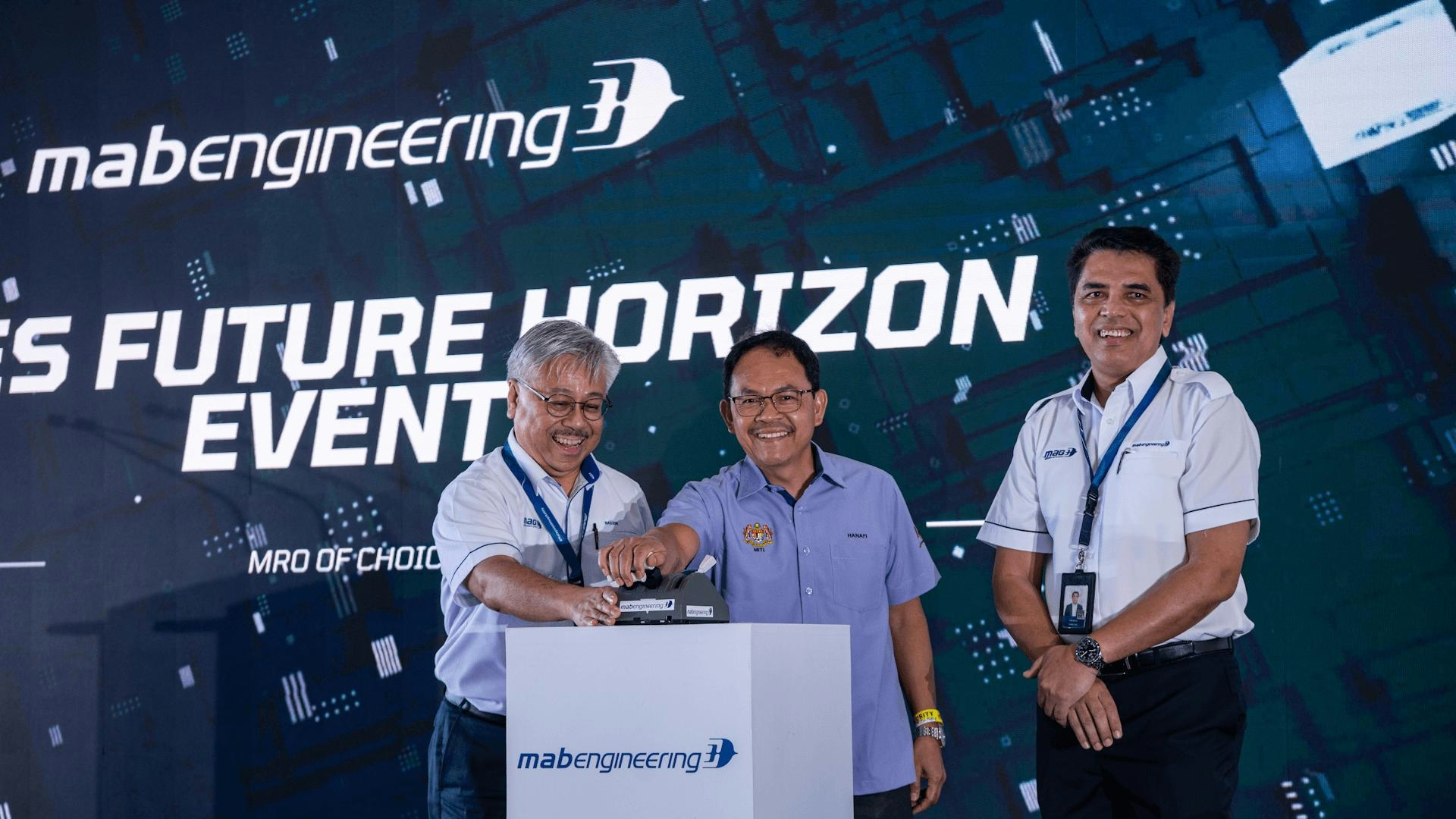
MAB Engineering Services to Provide MRO Solutions for Regional Aviation

India Plans Rooftop Vertiports for Electric Air Taxis

Comparing the Size of the Boeing 777X and the 777

ALTEA Marks Delivery of New Falcon 6X Aircraft

Concerns Rise for Regional Airlines Following Recent Failures

Ethiopian Airlines Advances Digital Transformation in African Aviation
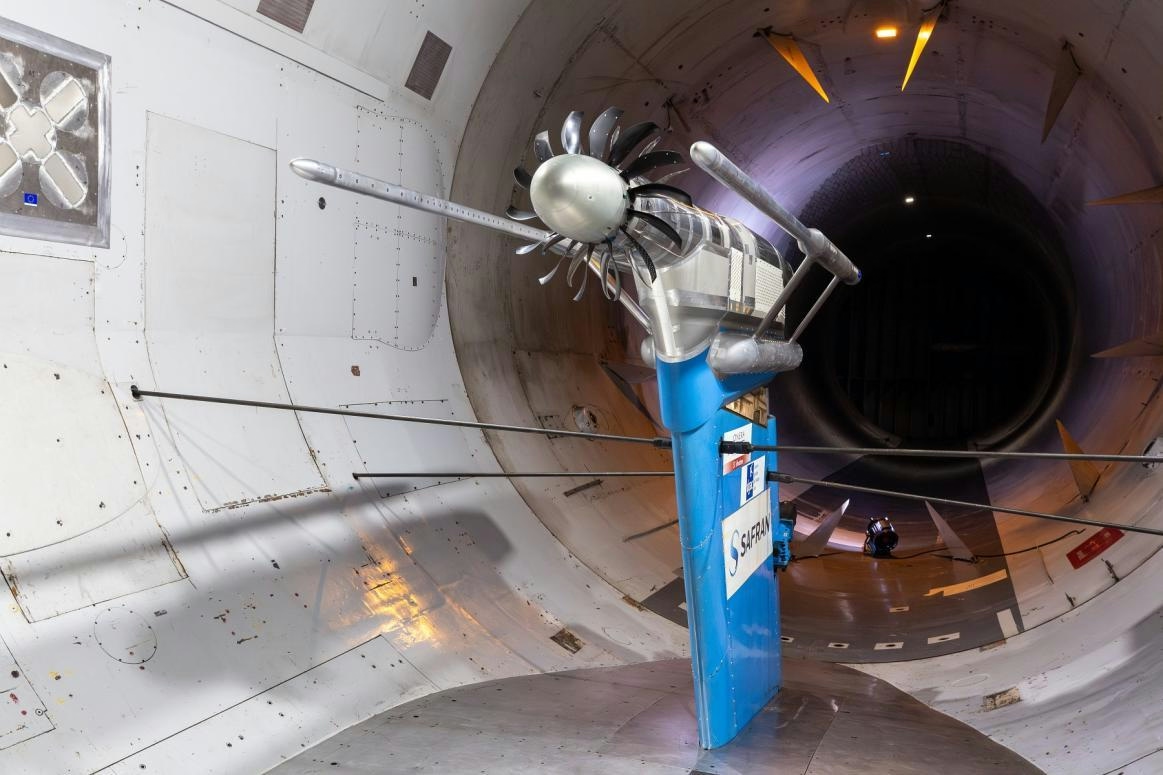
Lufthansa, Air France, and Singapore Airlines Collaborate to Test CFM Open Fan Engines
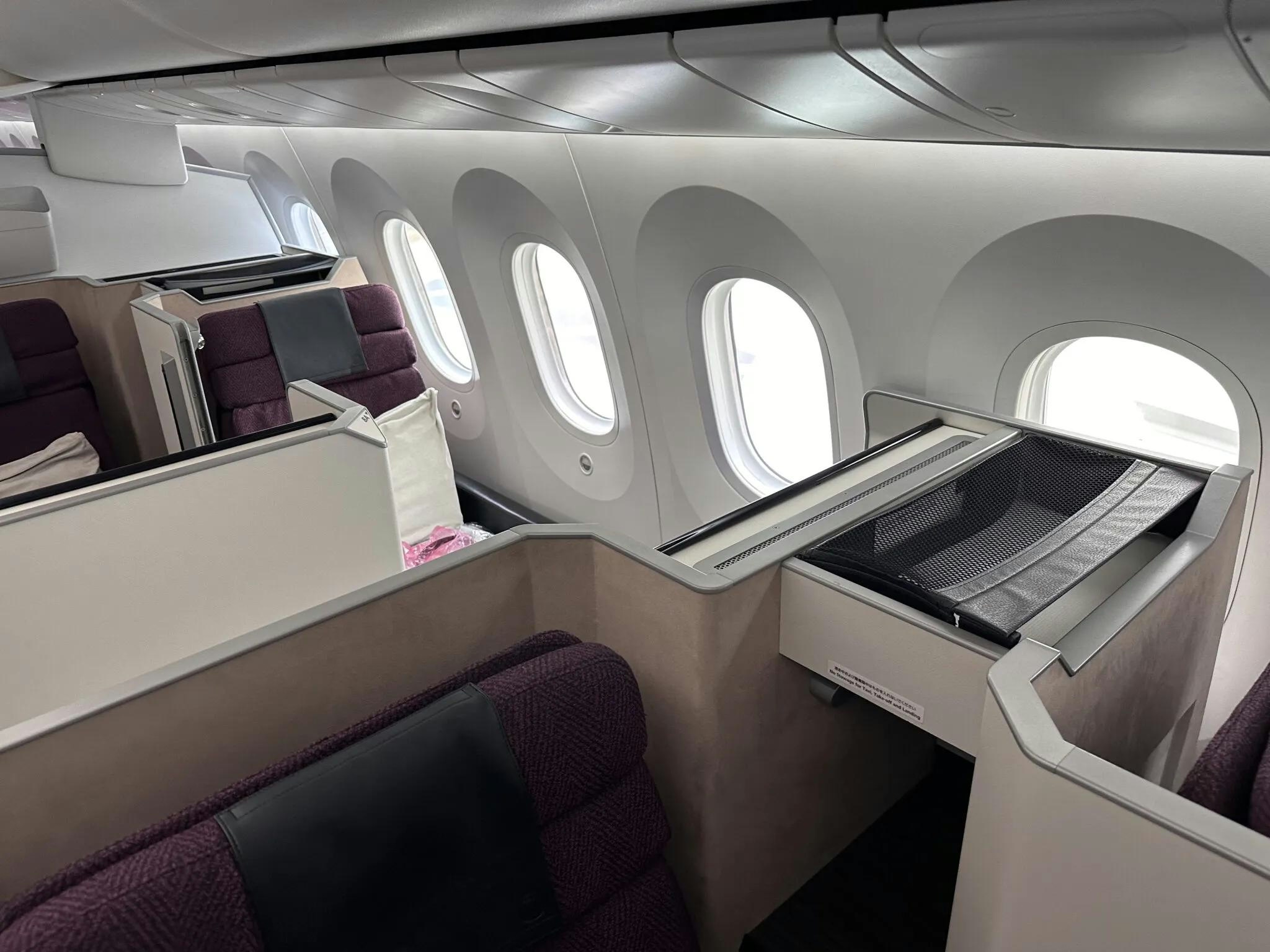
Japan Airlines to Upgrade Business Class on Boeing 787-9
