
Превращайте аналитические выводы ИИ в реальные действия

В тренде
Categories
Comparing the Engines of the Boeing 747-8 and 787
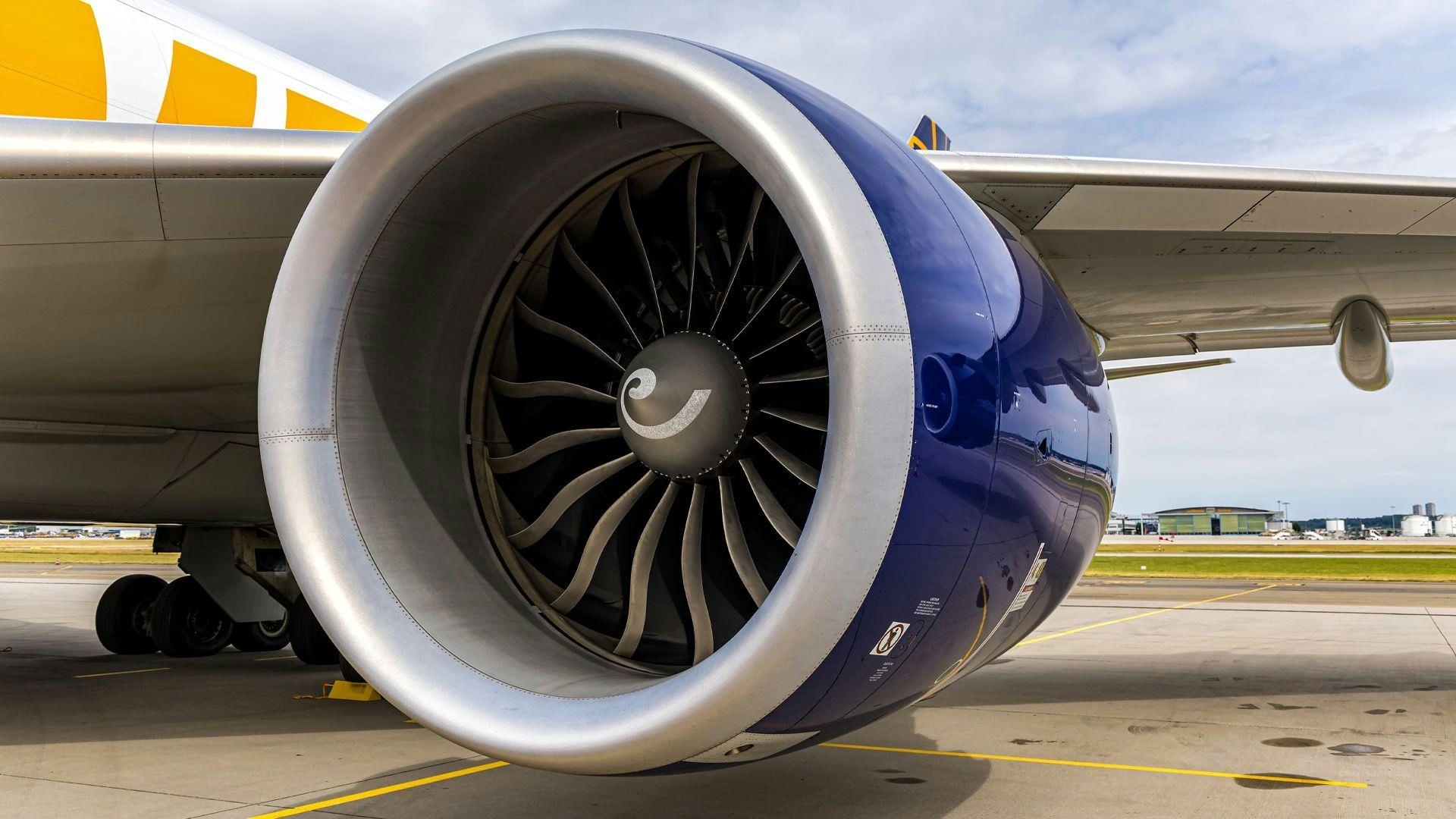
Comparing the Engines of the Boeing 747-8 and 787
Aviation enthusiasts often fall into three categories: those who can identify different aircraft types, those who recognize the engines powering them—whether General Electric or Rolls-Royce—and those who discern the subtle distinctions between engine variants that appear nearly identical. A prime example lies in the General Electric GEnx family, specifically the GEnx-1B engine on the Boeing 787 Dreamliner and the GEnx-2B on the Boeing 747-8.
At first glance, the engines mounted on the wings of the Boeing 747-8 and 787 Dreamliner seem almost indistinguishable. Both belong to GE’s advanced GEnx turbofan series, celebrated for their high thrust and fuel efficiency. However, beneath this superficial similarity lie two fundamentally different design philosophies that have influenced technological development and market demand in the aviation industry.
Engineering Philosophies: Bleed Air Versus Electrical Systems
The most notable engineering divergence between the 747-8 and 787 engines is not their size or thrust capacity but the manner in which each aircraft harnesses the engine’s energy. Traditionally, commercial airliners have relied on bleed air systems, which extract high-pressure air from the engine’s compressor to power essential onboard functions. These include engine starting, cabin air conditioning, wing and engine anti-icing, cabin pressurization, hydraulic pumps, and thrust reversers.
The Boeing 747-8’s GEnx-2B engine adheres to this conventional approach, utilizing bleed air to support these critical systems. In contrast, the Boeing 787 Dreamliner introduces a paradigm shift with its GEnx-1B engine, often described as “bleedless.” Rather than extracting high-pressure air, the 787 employs two Variable Frequency Starter Generators (VFSG) per engine to produce substantial electrical power. This electrical generation enables the aircraft to operate most onboard systems electrically, enhancing overall efficiency and mitigating the performance penalties associated with bleed air extraction.
This fundamental difference manifests in how key systems are powered: the 747-8 relies on bleed air for cabin pressurization, anti-icing, and hydraulic systems, whereas the 787 operates these systems electrically.
Enhancing Passenger Comfort and Operational Efficiency
The 787’s bleedless design offers significant advantages in both passenger experience and operational performance. By powering environmental control systems electrically, the aircraft achieves more precise cabin management, resulting in higher humidity levels and more stable temperatures. These improvements contribute to enhanced passenger comfort, particularly on long-haul flights. From an operational standpoint, the electrical systems increase engine efficiency and reduce maintenance complexity, offering tangible benefits to pilots and airline operators alike.
Market Dynamics and Industry Response
The distinct engineering choices embodied in the 747-8 and 787 engines have shaped market dynamics within the commercial aviation sector. Airlines have demonstrated strong demand for both aircraft, drawn by the fuel efficiency and reduced operating costs associated with their respective engines. The 747-8’s GEnx engines are lauded for their high thrust and reliability, while the 787’s advanced electrical systems, combined with its extensive use of lightweight composite materials, deliver further fuel savings and operational advantages.
In response to these developments, competitors have adapted their strategies. Rolls-Royce, for instance, developed the Trent 1000 engine for the 787, aligning with GE’s emphasis on efficiency and cutting-edge technology. Both General Electric and Rolls-Royce continue to drive innovation in engine design to maintain their competitive positions in the market.
While the Boeing 747-8 and 787 may appear similar at a glance, their engines represent divergent approaches to aircraft design, each with distinct technical, operational, and market implications.

Etihad Airways Suspends Airbus A380 Flights on Key Route

Aditya Birla Group Seeks Approval for Aircraft Leasing in GIFT City

Qatar Airways Highlights Innovation and Connectivity at Arabian Travel Market 2026

Hong Kong's Five-Year Plan Includes Andrew Fan's Aircraft Parts Processing Hub Proposal

ACIA Aero Leasing Delivers ATR72-600 to Air Nostrum

RTX Appoints Jill Albertelli as Head of Pratt & Whitney

TAT Technologies Joins Beyond Aero Hydrogen Aircraft Program

AURAK Study Highlights Barriers to Air Taxi Adoption in Emerging Economies

Xiamen Air Selects Altitude for 787 Maintenance at Heathrow

Etihad and Swissport Extend Global Partnership
