Изображение

AeroGenie — Ваш интеллектуальный второй пилот.

Спрашивайте что угодно. Анализируйте все. Действуйте незамедлительно.

В тренде

Categories

Comparing the Staircases of the Airbus A380 and Boeing 747
April 17, 2026By ePlane AI
Comparing the Staircases of the Airbus A380 and Boeing 747
0
0
Airbus A380
Boeing 747
Cabin Interior Design

Comparing the Staircases of the Airbus A380 and Boeing 747

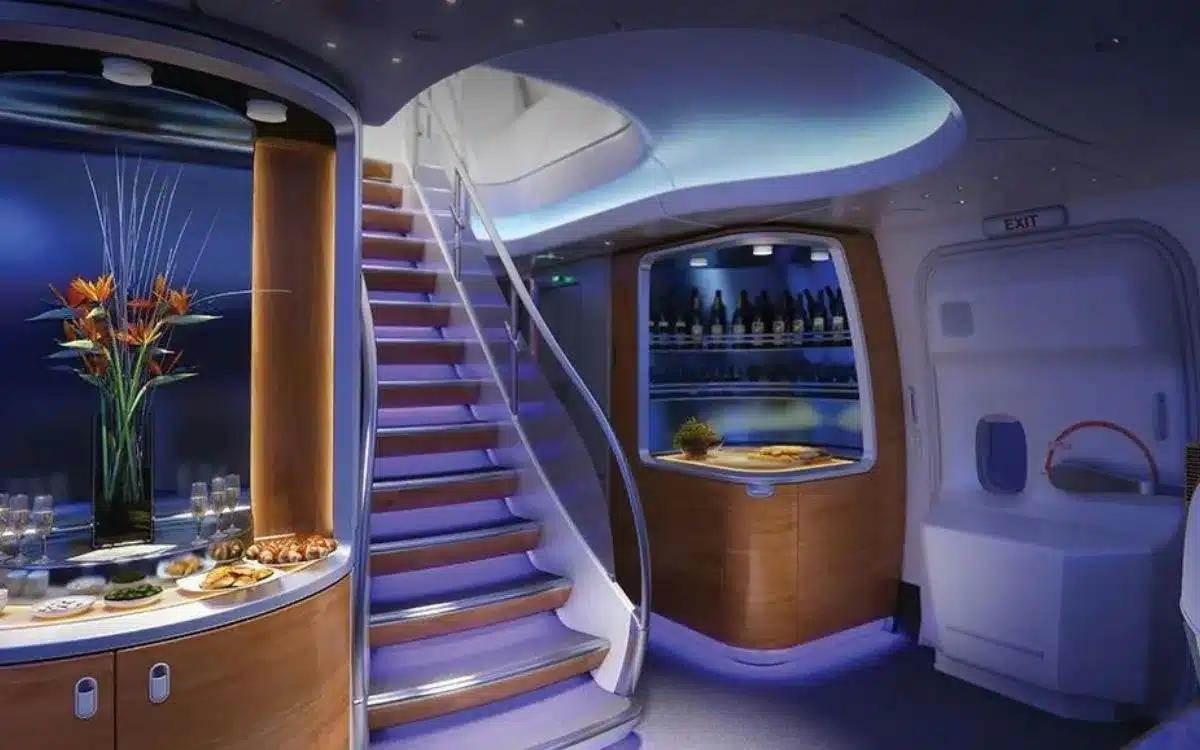
The Boeing 747 and Airbus A380 are emblematic double-deck aircraft, each reflecting distinct design philosophies that extend even to their staircases. These differences are shaped by a combination of engineering challenges, regulatory requirements, and market demands, revealing broader trends in the evolution of commercial aviation.

Design Evolution and Engineering Challenges

The original Boeing 747 featured a signature spiral staircase that was more than a mere functional element; it symbolized exclusivity and luxury. This staircase led to a premium upper-deck lounge designed to evoke the ambiance of a high-end hotel. Pan Am, the launch customer for the 747, championed this design to enhance the aircraft’s glamorous appeal. Over time, as the 747 evolved, so did its staircase. The introduction of the 747-300 replaced the spiral with a straight, wider staircase, reflecting a shift toward accommodating more passengers and improving crew efficiency. Despite this change, the 747’s staircase remained relatively compact, consistent with its partial upper deck and lower passenger capacity compared to the A380.

In contrast, the Airbus A380 was conceived from the outset to efficiently transport large numbers of passengers across two full-length decks. This scale allowed Airbus to incorporate two wide staircases—one at the front and one at the rear—each spacious enough to allow two passengers to pass comfortably side by side. The unprecedented size of these staircases required special regulatory considerations; the Federal Aviation Administration (FAA) issued unique conditions because existing rules were inadequate for an aircraft of the A380’s magnitude. These engineering and regulatory challenges underscore the complexity involved in designing safe and efficient staircases for modern superjumbo aircraft.

Reflecting Broader Industry Trends

The contrasting staircase designs also mirror broader shifts within the aviation industry. The 747’s upper deck was historically a symbol of exclusivity, catering to a premium passenger experience. By contrast, the A380 democratized this space, integrating the upper deck as a seamless part of the overall passenger environment. This is further reflected in the A380’s emphasis on comfort, with its upper deck noted for exceptional quietness—noise levels can be as low as 68 decibels—and stability, achieved through advanced insulation, strategic engine placement, and massive wings that reduce turbulence.

Market dynamics continue to influence the competitive landscape for these aircraft. Airbus recently reported a decline in first-quarter deliveries for 2026, while Boeing achieved a nine-year high in February deliveries, signaling shifting demand and operational performance. These trends are shaped not only by passenger preferences but also by broader geopolitical and economic factors. For example, Boeing’s sales to China remain complicated by ongoing trade negotiations, affecting its competitive position in the global market.

The global aircraft floor panels market further illustrates the bifurcated environment facing manufacturers. Intense cost competition characterizes the narrowbody fleet segment, while widebody and VIP completions offer higher profit margins. Although staircase design represents a small component of the overall aircraft, it exemplifies the engineering, regulatory, and market pressures that continue to shape the future of commercial aviation.

The staircases of the Boeing 747 and Airbus A380 thus serve as more than architectural features; they encapsulate decades of evolving design priorities, regulatory adaptation, and market realities, providing a unique perspective on the changing nature of long-haul air travel.

More news
Aviation Capital Group CFO to Depart

Aviation Capital Group CFO to Depart

Aviation Capital Group CFO to Depart Amid Industry Leadership Changes Aviation Capital Group LLC (ACG) has announced that Craig Segor, its Executive Vice President and Chief Financial Officer, will step down from his position effective May 31, 2026. The company has initiated a search for his successor and will provide updates as the process advances. Thomas Baker, Chief Executive Officer and President of ACG, expressed gratitude for Segor’s leadership, highlighting his significant contributions over the past four years. Baker noted that Segor played a key role in enhancing the company’s financial and operational discipline, helping to build a more dynamic business and supporting ACG’s ongoing success and growth. In his departure statement, Segor reflected positively on his tenure at ACG, praising the company and its team. He expressed pride in their collective achievements and conveyed best wishes for the company’s future, while also indicating his readiness to pursue new opportunities. Industry Context and Implications Segor’s departure occurs amid a period of notable leadership transitions within the aviation finance sector. Recent CFO changes at other major players, including Embraer, have drawn attention to the potential effects such shifts can have on market sentiment and corporate strategy. Observers suggest that Segor’s exit may raise questions regarding leadership stability and financial management at ACG, with possible repercussions for investor confidence and the company’s market valuation. Such executive changes often contribute to increased volatility in stock prices as investors reassess the implications for a company’s direction. Competitors may also view this transition as an opportunity to strengthen their own financial positions or negotiate more advantageous terms within the aviation finance market. Consequently, ACG’s forthcoming appointment of a new CFO is expected to be closely monitored by investors and industry peers alike. About Aviation Capital Group Founded in 1989, Aviation Capital Group is a leading global aircraft asset manager, overseeing approximately 450 owned, managed, and committed aircraft as of December 31, 2025. The company leases aircraft to around 85 airlines across approximately 50 countries, offering commercial aircraft leasing, asset management services, and aircraft financing solutions. ACG operates as a wholly owned subsidiary of Tokyo Century Corporation. For further information, visit aviationcapitalgroup.com.
Why Howmet Aerospace’s Engine Leadership Is Increasingly Important

Why Howmet Aerospace’s Engine Leadership Is Increasingly Important

Why Howmet Aerospace’s Engine Leadership Is Increasingly Important As the aviation industry experiences a robust recovery fueled by accelerating airline orders and rising defense expenditures, Howmet Aerospace has emerged as a pivotal player. The company’s critical components place it at the heart of this resurgence, offering U.S. investors targeted exposure to the industrial sector’s rebound and the long-term expansion of global air travel. Howmet distinguishes itself within the industrials sector by supplying essential engineered products for jet engines and fastening systems, which are vital to both commercial and defense aviation. Its strategic focus on high-margin, specialized components that aircraft manufacturers cannot easily source elsewhere positions the company as a reliable beneficiary of aviation’s structural growth, particularly as global air traffic is expected to double by 2040. Core Business Model and Product Portfolio Howmet Aerospace’s expertise lies in the production of complex metal components critical to aircraft engines, airframes, and fastening systems. Its product range includes nickel-based superalloys used in turbine blades, titanium structural parts, and precision fasteners engineered to endure extreme operational conditions. The advanced metallurgy and engineering required to manufacture these components create significant barriers to entry, limiting competition. The company’s business model is underpinned by long-term contracts with leading original equipment manufacturers (OEMs) such as GE Aviation, Pratt & Whitney, and Rolls-Royce, which provide stable and recurring revenue streams. Additionally, Howmet’s aftermarket services, which involve supplying replacement parts throughout the lifecycle of engines, contribute to enhanced margins and predictable cash flows, even amid the cyclical nature of aviation demand. Beyond its strong presence in commercial aviation, Howmet also serves the defense sector by supplying components for military jets and missile systems, thereby diversifying its revenue base. The company’s business mix comprises approximately 70% commercial aerospace, 20% defense, and 10% industrial gas turbines, striking a balance between growth potential and stability. Investments in digitally engineered manufacturing processes have further improved operational efficiency and product quality, supporting margin expansion as production volumes recover in the post-pandemic environment. Industry Drivers and Emerging Challenges The primary driver of Howmet’s growth is the ongoing rebound in commercial aviation, with passenger traffic approaching pre-pandemic levels and airlines placing record orders for new aircraft. Engine manufacturers are increasing production of fuel-efficient models such as the LEAP and GEnx, which in turn boosts demand for Howmet’s forgings and castings as fleets modernize to comply with stricter emissions regulations. In parallel, rising defense spending, particularly in the United States, provides an additional growth impetus. Howmet benefits from multi-year contracts supplying critical components for programs like the F-35, which offer a degree of insulation from budgetary fluctuations. Heightened geopolitical tensions and shifting military procurement priorities further enhance revenue visibility for the company. However, Howmet’s leadership in engine components faces emerging challenges due to a surge in demand for aero-derivative gas turbines, driven by the rapid expansion of artificial intelligence data centers. This trend is placing considerable strain on manufacturing capacity across the industry, as technology firms and aviation customers compete for similar high-performance components. Supply-chain constraints have prompted competitors to prioritize production of high-margin aero-derivative gas turbines, which share production lines and raw materials with flight-ready jet engines. Despite these pressures, Howmet remains well-positioned to capitalize on immediate demand and maintain robust margins, as reflected in significant secondary market growth within the Aerospace & Defence sector. Broader industry trends, including supply chain reshoring, also favor U.S.-based manufacturers like Howmet by reducing dependence on overseas suppliers and enhancing operational resilience. Outlook Howmet Aerospace’s specialized focus, diversified product portfolio, and operational efficiencies contribute to resilient profitability for its shareholders. As the aviation and technology sectors continue to drive unprecedented demand for advanced engine components, Howmet’s leadership and adaptability will play an increasingly critical role in shaping the future landscape of aerospace and defense manufacturing.
Virgin Atlantic and Boeing to Revamp 787-9 Cabins, Phasing Out Herringbone Seating

Virgin Atlantic and Boeing to Revamp 787-9 Cabins, Phasing Out Herringbone Seating

Virgin Atlantic and Boeing to Revamp 787-9 Cabins, Phasing Out Herringbone Seating Virgin Atlantic is embarking on a comprehensive modernization of its Boeing 787-9 Dreamliner cabins, marking a significant shift in its premium travel offering. As part of a $17 billion fleet transformation scheduled for completion by 2028, the airline will retire the long-criticized herringbone seating layout in Upper Class. This initiative, developed in collaboration with Boeing, will redesign all three cabin classes to enhance privacy and comfort for premium passengers. Redesigning the Upper Class Experience The current Upper Class configuration on Virgin Atlantic’s 17 Boeing 787-9 aircraft features a herringbone layout, where seats face away from the windows toward the aisle. This design has faced considerable criticism for its limited privacy and lack of sliding doors, falling short of evolving passenger expectations and industry standards. Competitors such as United Airlines and El Al have invested in more advanced premium cabins, highlighting the need for Virgin Atlantic to update its product. Under the new agreement, Virgin Atlantic will introduce forward-facing Upper Class seats inspired by those on its Airbus A330neo fleet. These seats are designed to offer greater privacy, improved window access, and a more contemporary aesthetic. A notable addition will be the debut of the Retreat Suite on the 787-9, providing eight exclusive seats in every Upper Class cabin. Matt Sharp, Virgin Atlantic’s Vice President of Engineering & Maintenance, emphasized the airline’s response to growing demand for premium travel, stating, “By increasing the number of Upper Class and Premium seats and introducing our Retreat Suite for the first time on the 787-9, we’re responding to growing demand for premium travel.” Expanding Premium Capacity Amid Trade-offs The cabin overhaul will substantially increase premium seating capacity. Upper Class seats will rise from 31 to 44 per aircraft, a 42% increase, while premium economy seats will grow from 35 to 56, representing a 60% jump. These adjustments align the 787-9’s cabin layout more closely with Virgin Atlantic’s Airbus A350-1000s, reflecting the airline’s strategic focus on affluent travelers. However, this premium expansion comes at the expense of economy class capacity, which will decrease from 192 to 127 seats on the 787-9. This reduction may affect the airline’s revenue mix and market positioning, particularly as competitors continue to enhance their premium offerings. The move underscores a broader industry trend where airlines are intensifying competition for high-yield passengers by prioritizing comfort and exclusivity. Market observers anticipate that Virgin Atlantic’s strategy will prompt rivals to further upgrade their cabins, intensifying the battle for premium travelers. While the airline aims to set a new standard for its 787-9 fleet, it faces the challenge of balancing exclusivity with overall capacity in a rapidly evolving and highly competitive market.
Anuvu and VidComply Partner to Enhance Global Content Compliance and Delivery

Anuvu and VidComply Partner to Enhance Global Content Compliance and Delivery

Anuvu and VidComply Partner to Enhance Global Content Compliance and Delivery At the Aircraft Interiors Expo (AIX) 2026, Anuvu announced an exclusive partnership with VidComply aimed at revolutionizing the screening, localization, and delivery of in-flight entertainment (IFE) content on a global scale. This collaboration integrates VidComply’s AI-driven automation into Anuvu’s content workflow, addressing one of the most complex challenges in IFE operations and promising to streamline content compliance processes. AI-Driven Compliance for a Global Audience The core of this partnership lies in VidComply’s sophisticated screening platform, which automates traditionally labor-intensive compliance tasks such as privacy redaction, brand edits, subtitle verification, and localization reviews. By embedding this technology into its operations, Anuvu intends to accelerate content processing while upholding stringent quality standards. This development is particularly timely as airlines expand their entertainment offerings and cater to increasingly diverse passenger demographics, resulting in a higher volume and complexity of content requiring regulatory approval. Historically, preparing media for international distribution has involved extensive manual reviews to ensure adherence to regional regulations and airline-specific requirements. VidComply’s platform addresses these non-creative workflows by combining automation with expert human oversight. This hybrid model not only expedites the approval process but also minimizes costly revisions and delays caused by rejected or incomplete submissions. Kosh Hussain, Anuvu’s Vice President of Global Operations and Technology, highlighted the significance of this collaboration in managing the growing complexity of global content distribution. He noted the support of expert teams based in Los Angeles, Dubai, Mumbai, Hong Kong, and Beijing, all leveraging VidComply’s AI technology to enhance operational efficiency and content quality. Competitive Landscape and Market Implications The alliance between Anuvu and VidComply emerges at a time when content providers are increasingly judged not only on the size of their libraries but also on their ability to deliver compliant, market-ready content efficiently across diverse fleets and regions. This partnership positions Anuvu to better serve global airlines by enabling faster updates to entertainment libraries and more agile responses to evolving passenger preferences. At the same time, the collaboration intensifies competition within the content compliance sector. Established players such as Thomson Reuters, known for providing validated global trade content for Oracle users, may respond by accelerating their own adoption of advanced compliance technologies and regulatory intelligence. As the market evolves, airlines and content providers are expected to scrutinize compliance solutions more rigorously, demanding robust and scalable platforms capable of keeping pace with changing regulations and passenger expectations. Competitors are likely to leverage existing partnerships and technological advancements to counter this new collaboration, potentially driving further innovation and elevating compliance standards across the industry. Toward Faster, Smarter Content Delivery For airlines, the benefits of the Anuvu-VidComply partnership extend beyond operational efficiencies. Accelerated content preparation enables more frequent updates, quicker launches of region-specific media, and an enhanced ability to meet the diverse needs of passengers. By combining VidComply’s automation capabilities with Anuvu’s global operations teams, the partnership sets a new benchmark for content compliance and delivery in the aviation sector. This approach could fundamentally reshape how airlines manage in-flight entertainment amid an increasingly complex regulatory landscape.
Hotels, Airlines, NerdWallet, and Reddit: A Battle for AI Influence

Hotels, Airlines, NerdWallet, and Reddit: A Battle for AI Influence

Hotels, Airlines, NerdWallet, and Reddit: A Battle for AI Influence The Changing Landscape of AI Citations in Travel In the evolving world of artificial intelligence, the sources that AI agents rely on to answer travel-related queries are shifting in unexpected ways. When asked about a Hyatt hotel, for example, AI systems are more likely to cite third-party platforms than the hotel’s own official website. Data from Limy, an AI visibility firm backed by a16z, reveals that NerdWallet accounts for 13.6% of citations in such queries, surpassing Hyatt’s own site, which stands at 10.3%. This trend highlights a growing preference among AI models for content that facilitates value comparison, particularly regarding points, pricing, and tradeoffs, rather than prioritizing supplier or booking platforms. This shift presents a significant challenge for hotels and airlines, whose websites have traditionally been designed to sell rooms and tickets rather than to address the nuanced questions travelers now pose. Aviv Shamny, CEO of Limy, explained to Skift that this approach renders these brands effectively invisible at the critical moment when travelers are making decisions. Limy’s research, which tracks how AI tools cite websites in travel-related answers, underscores the increasing reliance on third-party content that emphasizes user experience and comparative insights. Fragmentation and Its Impact on Travel Brands The growing dominance of platforms like NerdWallet and Reddit in AI citations is fragmenting the information landscape and diminishing the direct influence that hotels and airlines have over potential customers. These third-party sources often provide community-driven insights and detailed value comparisons, which AI agents favor when presenting information to users. As a result, travel brands risk losing control over how their offerings are portrayed, complicating efforts to shape consumer perceptions and decisions. Adding to the complexity is the fragmentation within the AI ecosystem itself. Major technology companies such as Amazon, Meta, and Google are each developing proprietary AI systems with distinct methods for sourcing and integrating travel information. This diversity of approaches further challenges travel brands seeking to maintain consistent visibility and messaging across multiple platforms. Opportunities for Independent Providers While large hotel chains and airlines face these mounting challenges, some independent accommodation providers, particularly in the United Kingdom, are viewing AI as an opportunity rather than a threat. Confronted with rising operational costs and shifting guest expectations, these smaller businesses are adopting AI-driven tools to streamline operations, enhance efficiency, and improve the overall guest experience. By embracing AI solutions, they aim to remain competitive in an increasingly digital and AI-influenced marketplace. As artificial intelligence continues to transform how travelers access and evaluate information, the competition for influence among travel brands and third-party platforms is intensifying. For hotels and airlines, navigating this new environment will require not only investment in technology but also a strategic reevaluation of how they engage with AI platforms and the travelers who depend on them.
Joby Aviation's Hybrid eVTOL Completes First Uncrewed Transition to Forward Flight

Joby Aviation's Hybrid eVTOL Completes First Uncrewed Transition to Forward Flight

Joby Aviation's Hybrid eVTOL Achieves First Uncrewed Transition to Forward Flight Joby Aviation has reached a pivotal milestone in the development of next-generation air taxis by successfully completing the first uncrewed transition to forward flight with its S4-T hybrid electric vertical takeoff and landing (eVTOL) aircraft. Recent footage reveals the S4-T prototype lifting off vertically on its rotors before smoothly transitioning to wing-borne flight, a critical and technically demanding phase for eVTOL designs. Hybrid Powertrain and Design Commonality The S4-T is an unmanned test vehicle that shares its airframe and avionics with Joby’s piloted electric air taxi. Unlike purely battery-powered models, it incorporates a turbine engine alongside electric motors, creating a hybrid powertrain that aims to extend range and enhance operational flexibility. This hybrid approach addresses a key limitation of current eVTOLs: the endurance constraints imposed by battery technology, particularly on longer routes. A notable aspect of Joby’s development strategy is the high degree of commonality between its hybrid and all-electric models. The consistent use of airframe, flight controls, and avionics across both variants allows data gathered from uncrewed test flights to be directly applied to the passenger-carrying versions. This shared architecture not only accelerates development but also streamlines the certification process. Efficiency and Flight Performance Efficiency remains a central focus for the S4-T. While traditional helicopters are known for their high fuel consumption during cruise, the S4-T’s wing-borne flight mode is expected to deliver substantial improvements in both fuel efficiency and speed. This advancement could lead to quieter, faster, and more sustainable urban air mobility solutions, reducing noise pollution and shortening travel times between city centers. The recent test specifically targeted the transition from vertical lift to forward flight, a maneuver that has historically posed significant challenges for eVTOL aircraft. Joby’s successful demonstration represents a marked improvement over earlier flights, which were limited to hovering or brief forward movement. The company has indicated that this achievement initiates a new phase of focused testing aimed at refining the transition process further. Challenges and Industry Context Despite this progress, Joby faces considerable challenges on the road to commercial deployment. Regulatory approval remains a major obstacle, as the Federal Aviation Administration (FAA) and other authorities continue to develop certification standards for hybrid and electric aircraft. Additionally, the eVTOL market is still nascent, with consumer acceptance and infrastructure development yet to reach maturity. Competition within the advanced air mobility sector is intensifying. UK-based Vertical Aerospace recently completed its own piloted transition flight, highlighting the rapid pace of innovation and the competitive stakes involved. Both companies are competing for leadership in a market that has attracted significant investor interest, with Joby’s latest milestone eliciting positive responses from the financial community. Looking forward, Joby plans to conduct piloted flights with its all-electric prototypes, including tests involving FAA pilots in the coming weeks. As the company advances both its hybrid and electric models, the broader eVTOL industry will be closely observing which technologies and business models ultimately prevail.
AI Technology Aims to Curb Illegal and Unsafe Charter Flights

AI Technology Aims to Curb Illegal and Unsafe Charter Flights

AI Technology Aims to Curb Illegal and Unsafe Charter Flights As illegal aircraft charter operations grow increasingly sophisticated through digital platforms, artificial intelligence (AI) is emerging as a vital tool to ensure that charter flights remain both legal and safe. The aviation sector faces a rising challenge as some operators exploit messaging apps to solicit private groups and sell seats on flights without the necessary safety certifications, posing significant risks to public safety. The Growing Threat of Illegal Charter Operations Recent investigations reveal a disturbing trend in the charter flight industry. Operators are leveraging encrypted messaging applications to discreetly connect with potential customers, bypassing regulatory oversight. The Federal Aviation Administration (FAA) has emphasized the dangers these illegal charters present, urging passengers to verify the legitimacy of their charter providers before booking. Legitimate charter services are subject to stringent requirements, including rigorous pilot training, meticulous aircraft maintenance, and strict adherence to operational safety protocols—standards frequently neglected by illicit operators. Ben van Niekerk, vice chair of the National Business Aviation Association’s (NBAA) Domestic Operations Committee, highlights how digital communication has revolutionized the charter business. He notes that, unlike the past when personal networks dominated, modern apps enable rapid, secretive connections between users and providers across vast distances, facilitating the rapid spread of illegal charter activity. Jacob Baumler, founder and CEO of CoachAir Aviation Intelligence, further underscores the risks posed by these operators, citing unsafe flights, increased liability exposure, and reputational harm to the industry. Baumler points out that illegal operators often compromise on critical safety elements such as maintenance, pilot duty limits, and insurance coverage, thereby endangering passengers and complicating regulatory oversight. Leveraging AI for Enhanced Oversight and Compliance In response to these challenges, AI-driven platforms are being developed to enhance transparency and enforcement in the charter flight sector. CoachAir’s system exemplifies this approach by integrating data from the FAA, Department of Transportation, insurance providers, maintenance records, and operator databases to verify each flight’s compliance in real time. This technology generates regulator-ready audit trails by cross-referencing authoritative data sources, while financial safeguards like escrow-backed payments ensure funds are only released upon confirmed compliance. Such measures aim to reduce fraud and significantly shorten dispatch times from hours to minutes. Despite these advancements, the deployment of AI in this domain faces notable obstacles. Comprehensive data coverage remains a challenge, as does the need for real-time processing capabilities to promptly identify suspicious activities. Additionally, resistance from some operators hesitant to embrace new regulations or technologies may hinder widespread adoption across the industry. The market is already adapting to these developments. Charter companies are likely to encounter increased regulatory scrutiny and higher compliance costs, while competitors are expected to invest in proprietary AI solutions and bolster security measures to maintain their competitive advantage. Baumler acknowledges that while AI cannot eliminate all noncompliant operators, it substantially reduces the opportunities for fraud and makes regulatory compliance more automatic. He characterizes illegal charter operations as a problem of “epic proportion,” costing the industry billions and endangering lives. As AI technology continues to evolve, it offers a promising avenue toward safer skies, contingent on the industry’s ability to overcome the technical and regulatory challenges ahead.
Archer Aviation Stock Just Spiked 12% — Is This the Beginning of the Flying Taxi Era, or Another False Dawn?

Archer Aviation Stock Just Spiked 12% — Is This the Beginning of the Flying Taxi Era, or Another False Dawn?

Archer Aviation Stock Surges 12% Amid Regulatory Advances and Institutional Backing Archer Aviation’s stock has experienced significant volatility, reflecting the broader uncertainties of the emerging flying taxi industry. After fluctuating dramatically between $4.80 and $14.62 in recent months, the shares rebounded to $6.08 this week, marking a 12% increase over five days. This surge was propelled by a major investment from a Japanese institutional investor and a pivotal regulatory milestone, underscoring both the promise and the risks inherent in Archer’s ambitious plans. Notably, the stock had declined nearly 30% year-to-date just last month, highlighting the sector’s unpredictable nature. Regulatory Milestone and Government Support The recent rally was largely driven by the Federal Aviation Administration’s (FAA) approval of all Means of Compliance documentation for Archer’s Midnight aircraft. While this does not constitute full certification, it represents a crucial regulatory step that enables Archer to proceed with testing and validation activities. This development lends structural credibility to the company’s goal of launching passenger flights by late 2026, transforming what was previously speculative into a tangible possibility. Further bolstering Archer’s prospects is its anticipated inclusion in the White House’s electric vertical takeoff and landing (eVTOL) pilot program. This federal initiative aims to accelerate the commercialization of air taxis and signals a notable shift in government attitude. The FAA, once skeptical about eVTOL certification, has adopted a more supportive stance under the current administration. Archer’s founder, Brett Adcock, has actively lobbied in Washington for years, and these efforts appear to be yielding results. Growing Institutional Interest Amid Financial and Legal Challenges Institutional investors have responded positively to Archer’s progress. Japan’s Sumitomo Mitsui Trust Group recently acquired over 1.4 million shares, pushing institutional ownership above 50% for the first time. Given the typically cautious approach of Japanese investors toward speculative growth stocks, this move suggests a long-term commitment. Around the same period, Polish pension fund manager Generali Powszechne added a million-share position. Such patient international capital is vital for Archer as it anticipates several years of operating losses before achieving profitability. Despite these encouraging signs, Archer faces significant challenges. The company reported just $300,000 in fourth-quarter revenue, falling short of analyst expectations of $1.4 million. Although the year-over-year growth rate appears impressive, it is measured against a near-zero baseline, underscoring the nascent stage of Archer’s commercial operations. The path to profitability remains distant and fraught with uncertainty. Compounding these difficulties is an ongoing legal dispute with rival Joby Aviation. Joby has accused Archer of misrepresenting its operations and business relationships in China, while Archer counters that Joby has falsely portrayed itself as a domestically rooted U.S. company despite relying on a Chinese subsidiary for critical components. This conflict has prompted an investigation by the U.S. International Trade Commission into potential import violations, casting a shadow over both companies. The dispute raises broader concerns about transparency and supply chain integrity within the fledgling eVTOL industry. Archer Aviation stands at a critical juncture, balancing technological innovation, evolving regulatory frameworks, and complex legal challenges. Whether the recent stock surge signals the beginning of the flying taxi era or merely another transient rally will depend on the company’s ability to navigate these obstacles and realize its ambitious vision.
AMCOM Commander Emphasizes Sustainment and Innovation at Army Aviation Summit

AMCOM Commander Emphasizes Sustainment and Innovation at Army Aviation Summit

AMCOM Commander Highlights Sustainment and Innovation Amid Budget Constraints at Army Aviation Summit At the 2026 Army Aviation Association of America Warfighting Summit, Maj. Gen. Lori Robinson, commanding general of the U.S. Army Aviation and Missile Command (AMCOM), emphasized the critical importance of sustainment, data analytics, and advanced manufacturing in maintaining warfighter readiness. Addressing a diverse audience of Army leaders, industry partners, and international representatives, Robinson underscored that maintenance and sustainment form the foundation of mission success. Sustaining Readiness in a Challenging Fiscal Environment Robinson stressed that sustainment and maintenance are fundamental to all Army Aviation operations. She noted that many units identify themselves primarily as maintenance organizations, highlighting the centrality of this role. Acknowledging the collaborative nature of readiness, she expressed gratitude to government and industry partners, stating, “It takes a village.” This collective effort, she explained, is evident not only at summits but daily in the field, where capabilities are delivered to warfighters. Her remarks come amid significant fiscal pressures facing Army Aviation. Procurement funding is expected to decline sharply in fiscal year 2027, dropping to $1.93 billion from $4.065 billion, marking the third consecutive year of budget reductions. This tightening budget environment is prompting closer examination of spending priorities, particularly concerning the Bell MV-75 “Cheyenne II” program, the Army’s largest aviation investment. The constrained funding landscape is also likely to intensify competition, encouraging rivals to accelerate development in emerging technologies such as drone recovery systems. Despite these challenges, Robinson highlighted AMCOM’s commitment to supporting global operations. She noted that forces continue to deploy with existing equipment while integrating new capabilities as swiftly as possible. “We go to war with what we have, while continuously working to infuse new capabilities,” she said, emphasizing the daily efforts that enable warfighters to respond whenever called upon. Innovation Through Data, AI, and Advanced Manufacturing Robinson reaffirmed AMCOM’s mission to provide continuous and responsive aviation and missile sustainment. She praised the civilian workforce as “the heart of what we do,” underscoring the importance of investing in workforce development and technical expertise to sustain operational excellence. A key focus of AMCOM’s modernization efforts is the use of data analytics to anticipate and mitigate readiness challenges. Robinson described a comprehensive analytics initiative that enhances visibility across supply chains and maintenance operations, enabling the command to predict and address issues proactively. Artificial intelligence plays an increasingly vital role in these efforts, with AI-enabled tools now supporting oil analysis, back-order management, environmental compliance, and inventory tracking. Collaboration with other Army Materiel Command organizations is advancing AI-assisted maintenance tools, allowing soldiers and maintainers to interact more intuitively with technical manuals. Advanced manufacturing, particularly additive manufacturing, is another area of growth. AMCOM’s repository of additively manufactured parts has expanded significantly, from 20 parts in September 2025 to over 160 currently. Robinson emphasized that regardless of manufacturing method, all parts must meet stringent safety and airworthiness standards, which remain non-negotiable. Finally, Robinson addressed the integration of unmanned aircraft systems alongside traditional aviation platforms. She highlighted the increasing complexity of airspace management and the need for clear protocols to ensure safe and effective operations as these technologies become more prevalent.
US Aviation Capital Group Names Rob Downes Chief OEM Officer

US Aviation Capital Group Names Rob Downes Chief OEM Officer

US Aviation Capital Group Appoints Rob Downes as Chief OEM Officer Aviation Capital Group (ACG), a prominent global aircraft leasing and asset management firm, has announced the appointment of Rob Downes as its inaugural Chief Original Equipment Manufacturer (OEM) Officer. This newly established executive position reflects ACG’s strategic intent to deepen its partnerships with OEMs and to advance its long-term aircraft leasing objectives. Strengthening OEM Partnerships and Strategic Focus Rob Downes brings extensive expertise in aircraft operations, strategic alliances, and supplier relations to his new role. He will be responsible for managing ACG’s interactions with leading aircraft and engine manufacturers, ensuring the company remains closely aligned with evolving industry trends. His leadership is expected to enhance ACG’s access to the latest fleets and technological innovations, thereby expanding the company’s aircraft offerings and improving service delivery to its diverse global clientele, which includes both airlines and cargo operators. The creation of the Chief OEM Officer role comes amid intensifying competition and shifting market dynamics within the aviation sector. Strong OEM relationships have become increasingly critical for leasing companies aiming to secure advantageous terms, tailor lease agreements, and obtain comprehensive maintenance support. Downes will collaborate closely with manufacturers to facilitate new aircraft deliveries and support ACG’s broader growth ambitions. Industry Context and Market Implications This strategic appointment occurs against a backdrop of broader industry developments. Competitors such as Archer Aviation have recently taken assertive measures to protect their market positions, exemplified by Archer’s complaint to the US International Trade Commission alleging import and tariff violations by rival Joby Aviation. Such disputes underscore the competitive pressures confronting aircraft lessors and manufacturers alike. Leadership changes like Downes’ appointment often elicit varied market responses; while some investors perceive them as positive initiatives to bolster market standing, others express caution regarding potential shifts in competitive dynamics. Rival firms may respond with their own strategic maneuvers or public affirmations of their strengths. ACG’s decision to establish a dedicated Chief OEM Officer role signals a clear focus on sustainable growth as the aviation industry continues its recovery from the pandemic. Rising demand for new aircraft, driven by the resurgence of global travel, fleet modernization efforts, and airlines’ commitments to sustainability, underscores the importance of robust OEM partnerships. By strengthening these relationships, ACG aims to secure access to cutting-edge aircraft and position itself advantageously within a rapidly evolving market. With Rob Downes leading its OEM engagement, Aviation Capital Group is well-positioned to reinforce its leadership in the aircraft leasing sector and to deliver enhanced value to customers worldwide.
line










