Изображение

Превращайте аналитические выводы ИИ в реальные действия

Присоединяйтесь к списку ожидания AeroGenie уже сегодня!

В тренде

Categories

Concord Airport May Launch First Phase of North Carolina’s Electric Air Taxi Network
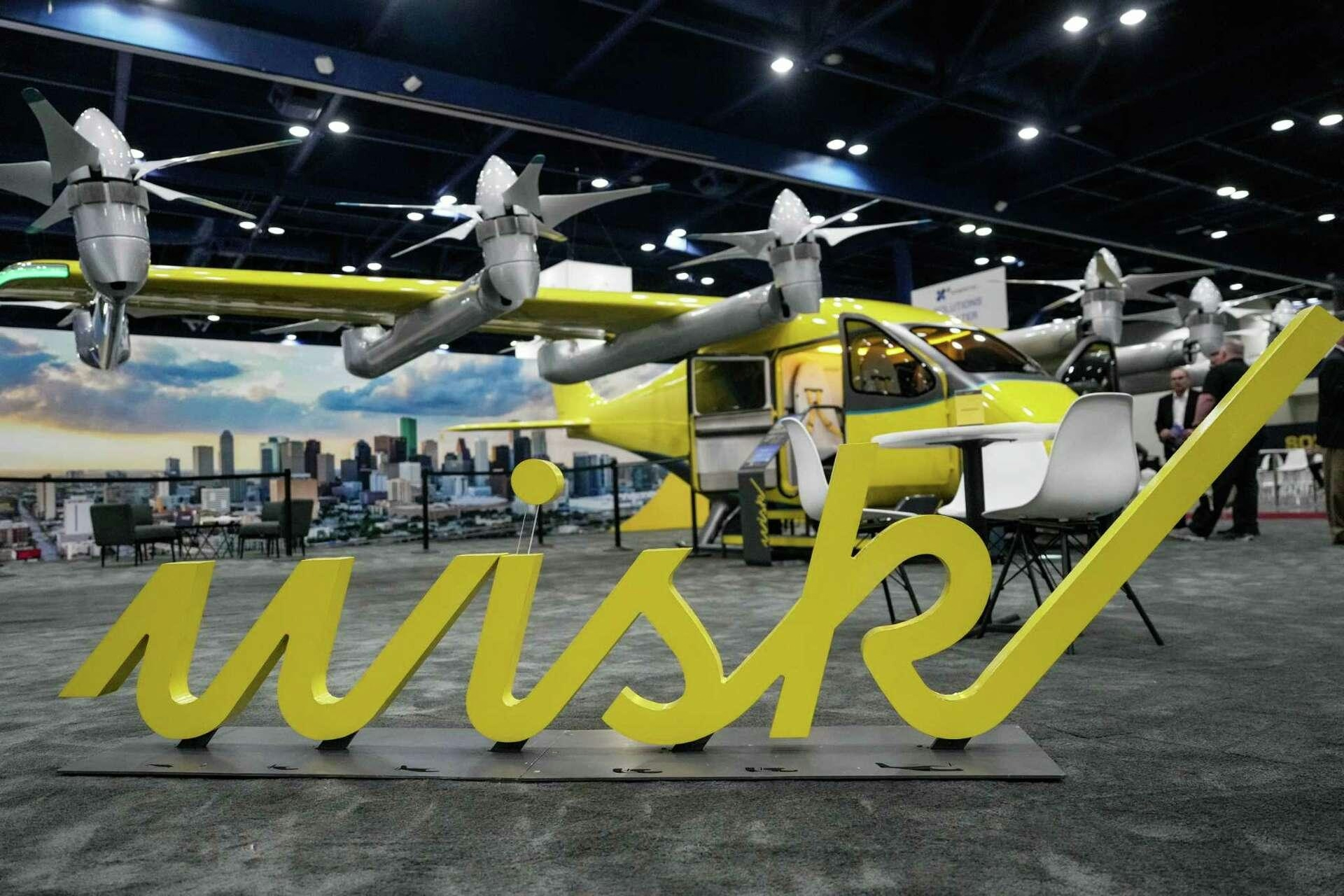
March 13, 2026By ePlane AI
Concord Airport May Launch First Phase of North Carolina’s Electric Air Taxi Network
0
0
Electric Air Taxis
eVTOL Integration
Concord-Padgett Regional Airport

Concord Airport to Pioneer North Carolina’s Electric Air Taxi Network

North Carolina is positioning itself at the forefront of electric air mobility with plans to launch the first phase of an innovative electric air taxi network from Concord-Padgett Regional Airport. The North Carolina Department of Transportation (NCDOT) has confirmed the state’s participation in the Federal Aviation Administration’s (FAA) Advanced Air Mobility and Electric Vertical Takeoff and Landing (eVTOL) Integration Pilot Program, marking a significant step toward the future of sustainable regional transportation.

The eLIFT-NC Initiative and Its Objectives

The initiative, named Electric Logistics and Integrated Flight Testing-North Carolina (eLIFT-NC), seeks to establish a statewide network of electric air taxis designed to connect hospitals, airports, and rural communities. These aircraft, capable of vertical takeoff and landing and often autonomous, aim to enhance healthcare access and improve the quality of care while meeting stringent safety and infrastructure requirements.

Phase one of the program is set to commence at Concord-Padgett Regional Airport, with initial routes planned to Piedmont Triad International Airport. A subsequent phase would extend services to Richmond, broadening the network’s reach. NCDOT officials have indicated that the initial phase will prioritize establishing daily operations along core routes, expanding to additional airports, and conducting rigorous safety testing under diverse conditions. Coordination with the FAA is anticipated to begin shortly, although an exact launch date has yet to be announced.

Challenges and Industry Context

Despite the promise of cleaner and more efficient air travel, the project faces considerable challenges. Regulatory complexities and technological uncertainties persist as the industry strives to validate the reliability and safety of electric air taxis. Investor sentiment remains divided; while some express optimism about the potential for sustainable aviation, others question the commercial viability of these emerging services.

The competitive landscape is intensifying, with established companies such as Joby Aviation and Archer Aviation advancing their own electric air taxi programs. Meanwhile, Eve Air Mobility is accelerating flight testing and expanding internationally. However, recent layoffs at Supernal highlight the difficulties companies encounter in bringing this technology to market.

As North Carolina advances with eLIFT-NC, the state must navigate these obstacles while demonstrating the tangible benefits of electric air taxis. Should the initiative succeed, Concord-Padgett Regional Airport could emerge as a pivotal hub in a new era of regional air mobility, connecting communities and setting a national precedent for sustainable aviation.

More news
Amprius Technologies’ Role in Electric Aviation Supply Chains Examined at Industry Conferences

Amprius Technologies’ Role in Electric Aviation Supply Chains Examined at Industry Conferences

Amprius Technologies’ Role in Electric Aviation Supply Chains Examined at Industry Conferences In June 2026, Amprius Technologies emerged as a focal point at two prominent industry events: the 46th Annual William Blair Growth Stock Conference and the Jefferies Innovative Aerospace Virtual Summit. Senior executives detailed the company’s advancements in silicon anode battery technology, underscoring its critical applications within aerospace and next-generation mobility sectors. These high-profile presentations, alongside stronger-than-anticipated financial results and growing demand for high-energy-density batteries in drones and electric vertical takeoff and landing vehicles (eVTOLs), have intensified industry attention on Amprius’ potential influence in shaping the future of electric aviation supply chains. Strategic Partnerships and Market Expansion Amprius’ conference engagements highlighted not only its technological progress but also its expanding network of strategic collaborations. The company has partnered with Matternet to enhance drone delivery capabilities, focusing on improving fleet performance while reducing operational costs. Furthermore, a collaboration with Intralink is facilitating Amprius’ entry into the South Korean market for advanced battery solutions, thereby broadening its international footprint. These partnerships reflect Amprius’ ambition to establish itself as a pivotal supplier within the rapidly evolving electric aviation ecosystem. Nonetheless, the sector faces considerable challenges, including the complexities of scaling new battery technologies and contending with intense global competition. Europe, for instance, is positioning itself to lead in next-generation flight technologies, contingent upon securing adequate legislative backing and funding amid mounting rivalry from China and the United States. Investment Narrative and Financial Outlook From an investment perspective, Amprius’ core proposition lies in its capacity to translate early traction in drones, eVTOLs, and light electric vehicles into sustained and profitable demand. The immediate catalyst for growth is the successful scale-up and qualification of its SiCore battery products with key anchor customers. However, execution risks remain, particularly in manufacturing and supply chain management. Recent financial disclosures have reinforced the company’s growth narrative. Amprius reported robust first-quarter results for 2026 and subsequently raised its full-year revenue guidance to a minimum of $130 million. This momentum supports the company’s scale-up ambitions but also highlights the volatility inherent in expectations for a firm characterized by a high price-to-sales ratio and concentrated end markets. Projections indicate revenue could reach $306.6 million with earnings of $13.4 million by 2028, necessitating nearly 90 percent annual revenue growth and a significant turnaround from current losses. Balancing Optimism with Caution Despite the optimism generated by recent presentations, some analysts urge caution. Forecasts for 2029 suggest Amprius could achieve $357 million in revenue and $38.9 million in earnings, yet these targets underscore a challenging and uncertain trajectory. The company must navigate a competitive landscape while rapidly scaling its technology to meet market demands. Amprius Technologies’ recent industry engagements and strategic partnerships have undeniably strengthened its position within the electric aviation supply chain. However, its future success will depend on effective execution at scale, adept management of supply chain complexities, and the ability to outpace global competitors. As the electric aviation sector continues to evolve, Amprius’ progress will remain under close scrutiny by industry stakeholders and investors alike.
American Airlines Negotiates with Airbus and Boeing to Replace Aging 777-200ER Fleet

American Airlines Negotiates with Airbus and Boeing to Replace Aging 777-200ER Fleet

American Airlines Engages Airbus and Boeing to Replace Aging 777-200ER Fleet American Airlines has commenced negotiations with both Boeing and Airbus as part of a strategic initiative to replace its aging fleet of Boeing 777-200ER aircraft. This move aims to reinforce the airline’s international network and sustain its competitive position against major rivals such as Delta Air Lines and United Airlines. At the company’s shareholders’ meeting on June 10, CEO Robert Isom confirmed that requests for proposals have been issued to both manufacturers. The objective is to prepare for the eventual retirement of 47 long-haul jets, many of which are approaching 25 years in service. Fleet Modernization and Strategic Considerations The Boeing 777-200ER has long served as a cornerstone of American’s long-haul operations. However, with new aircraft deliveries often subject to extended lead times, the airline is proactively planning its next phase of fleet modernization. Isom underscored the importance of defining this strategy now, anticipating the 777s’ retirement in the 2030s. In the meantime, the existing fleet will undergo a final series of upgrades to ensure continued operational reliability until their phase-out. American’s decision aligns with a broader industry trend toward fleet renewal, as competitors like Delta and United are also expected to accelerate modernization efforts to maintain market share. The airline is currently evaluating options that include the Boeing 787 Dreamliner—of which it already operates 70 aircraft—and the Airbus A350 Xtra Wide Body. Although American inherited an A350 order through its 2013 merger with US Airways, that order was canceled in 2018 amid increasing Dreamliner deliveries. The 787-9 model, with a seating capacity of approximately 280, closely matches the 777-200ER’s 273 seats, while larger variants such as the 787-10 and A350-900 would provide a capacity increase exceeding 10 percent. Larger aircraft like the A350-1000 and Boeing 777X are considered less likely candidates due to their significantly higher seating capacities. Operational Efficiency and Challenges Ahead A notable advantage of expanding the Dreamliner fleet lies in operational commonality. Pilots benefit from easier transitions between 787 variants, while maintenance and ground operations gain efficiencies through overlapping training programs and streamlined supply chains. Recent enhancements to the 787, including increased maximum takeoff weight options, have improved its payload and range capabilities, further strengthening its appeal for American’s future requirements. Nonetheless, the transition presents several challenges. The substantial cost of acquiring new aircraft, the need for significant investment in retrofitting and maintenance infrastructure, and potential supply chain disruptions represent considerable risks. Market responses to American’s fleet renewal strategy may be mixed; some investors may regard it as a prudent, forward-looking initiative, while others could express concern over the considerable capital expenditures involved. The competitive environment is also evolving, with reports indicating that Singapore Airlines is in discussions to order at least 50 large jets. This development could influence manufacturer strategies and reshape market dynamics. As American Airlines advances its fleet renewal plans, its decisions are poised to have a significant impact on the trajectory of long-haul air travel over the coming decade.
Airbus A320 Family Surpasses 20,000 Orders

Airbus A320 Family Surpasses 20,000 Orders

Airbus A320 Family Surpasses 20,000 Orders Airbus has achieved a significant milestone in commercial aviation, announcing that cumulative orders for its A320 family have now surpassed 20,000. This landmark, revealed in the company’s May 2026 orders and deliveries update, reinforces the A320 family’s position as the world’s best-selling commercial aircraft series and highlights the sustained success of Airbus’ narrowbody aircraft strategy. Record-Breaking Orders in May 2026 The milestone was reached in May when Airbus secured 207 gross orders for A320-family aircraft. A major portion of these came from China Southern Airlines, which committed to purchasing 102 aircraft, including 79 A321neos. This order underscores Airbus’ strong foothold in the Chinese market and the increasing preference among airlines for the larger A321neo, which offers greater capacity without the need to transition to widebody aircraft. Xiamen Airlines, traditionally a significant Boeing 737 operator, placed an order for 35 A321neos, signaling a notable shift towards Airbus. Additionally, an undisclosed customer accounted for 70 aircraft, likely representing a major leasing company securing future delivery slots. These A320-family orders formed the core of Airbus’ total 379 gross orders in May, which also featured AirAsia’s acquisition of 150 A220s, further demonstrating robust demand for Airbus narrowbody jets. Production Challenges Amidst Intensifying Competition While the expanding order book attests to the global appeal of the A320 family, it also presents operational challenges. Airbus CEO Guillaume Faury has acknowledged the complexities involved in scaling up production to meet this unprecedented demand. The surge in orders intensifies competition with Boeing, which remains a formidable rival in securing major airline contracts. Notably, American Airlines is currently evaluating a widebody aircraft order from either Airbus or Boeing as it seeks to maintain competitive parity with Delta and United. Despite the strong demand for new aircraft, the secondhand market is not expected to experience a significant increase in availability from the return of A320-family jets by Spirit Airlines. Ryanair Group CEO Michael O’Leary recently stated that these returns are unlikely to have a material impact on the supply of used narrowbody aircraft. The Cornerstone of Airbus’ Success The A320 family’s contribution to Airbus’ growth is unparalleled. No other Airbus program approaches its volume of orders or deliveries. The customer base is extensive and diverse, led by IndiGo, which placed a record-breaking order for 500 aircraft in 2023. The ongoing success of the A320 family not only solidifies Airbus’ leadership in the narrowbody segment but also continues to shape the competitive dynamics of the global aviation industry for the foreseeable future.
GIFT City Aims to Expand Role in Aircraft Leasing

GIFT City Aims to Expand Role in Aircraft Leasing

GIFT City Seeks to Expand Its Footprint in Global Aircraft Leasing Gujarat International Finance Tec-City (GIFT City) is actively positioning itself to capture a larger share of the global aircraft leasing market, a sector traditionally dominated by established hubs such as Dublin. At present, GIFT City hosts approximately 40 lessors managing over 220 aircraft and engines. The global aircraft leasing market, valued at $187 billion in 2025, remains intensely competitive, with both entrenched players and emerging entrants striving to increase their influence. Strategic Drivers and Regulatory Enhancements Sanjay Kaul, Group CEO and Managing Director of GIFT City, identified India’s rapid aviation growth as a critical factor underpinning the city’s expansion ambitions. He noted that around 800 to 900 aircraft are currently operating within India, while the country’s three major airlines have nearly 2,200 aircraft on order. Kaul questioned the prevailing practice of financing aircraft outside India, stating, “Aircraft are flying in one place, while financing is happening elsewhere. Why shouldn’t that financing happen in India? As a first step, we want to bring that business to India through GIFT City.” The recent formalization of the international Cape Town Convention through India’s Protection of Interests in Aircraft Objects Act has provided a significant boost to the sector. This legislation enhances lessors’ ability to reclaim their assets efficiently, thereby increasing India’s attractiveness as a leasing destination. Complementing this, the International Financial Services Centres Authority (IFSCA) has introduced a regulatory framework that distinctly separates lessors from lenders by employing Special Purpose Vehicle (SPV) structures as intermediaries. Recent amendments now permit Trust and Company Service Providers (TCSPs) to establish these SPVs for aircraft leasing within the GIFT International Financial Services Centre (IFSC), further streamlining leasing operations. Competitive Challenges and Market Outlook Despite these regulatory advances, GIFT City faces considerable challenges in securing a significant foothold in the global leasing market. The landscape is evolving with new entrants such as the Nigeria Aircraft Leasing Company targeting domestic carriers by offering lower interest rates, thereby aiming to reduce costs and divert business from established leasing centers. This intensifying competition has led some market observers to express skepticism regarding GIFT City’s ability to attract substantial leasing deals. Established leasing hubs in Ireland, the United Arab Emirates, and Singapore are anticipated to respond with aggressive pricing strategies and enhanced service offerings to protect their market shares. Nonetheless, GIFT City’s leadership remains optimistic that India’s expanding aviation sector, coupled with recent regulatory reforms, will enable it to emerge as a key player in the global aircraft leasing industry. Kaul concluded by expressing confidence in the city’s potential to repatriate leasing activities currently conducted in countries such as Ireland, the UAE, and Singapore. He stated, “Gradually, leasing activities currently undertaken in countries such as Ireland, the UAE, and Singapore will also be carried out from India.” The coming years will be critical in determining whether GIFT City can convert its regulatory progress and market potential into tangible gains within this fiercely competitive sector.
Pilots' Union Calls for Judicial Review of AI-171 Crash, Opposes Interim Report Release

Pilots' Union Calls for Judicial Review of AI-171 Crash, Opposes Interim Report Release

Pilots' Union Demands Judicial Review of AI-171 Crash, Opposes Interim Report Release The Federation of Indian Pilots (FIP) has reiterated its demand for a judicial probe into the Air India AI-171 crash, urging authorities to withhold the release of any interim investigation report. The union cautioned that disclosing preliminary findings could lead to confusion and unfounded speculation surrounding the tragic incident. The AI-171 flight, a Boeing 787 Dreamliner bound for London, crashed into the BJ Medical College hostel in Ahmedabad’s Meghaninagar area shortly after takeoff on June 12 of the previous year. The disaster claimed 260 lives, marking one of the deadliest aviation accidents in recent Indian history. Concerns Over Investigation Transparency and Safety Standards The FIP’s position emerges amid intensified scrutiny of Air India’s operational and safety standards. The airline has been under pressure following a series of operational lapses and safety violations in recent years, with the AI-171 tragedy further amplifying concerns about its safety protocols. The pilots’ union insists that only a comprehensive judicial review can guarantee transparency and help restore public trust in the investigation process. Industry analysts have noted that the union’s opposition to releasing an interim report may delay the publication of the final investigation findings. Such a delay risks exacerbating damage to Air India’s already fragile reputation and could have wider repercussions for the aviation sector. The controversy surrounding the cause of the crash has attracted international attention, particularly given the involvement of a Boeing 787 Dreamliner. Questions about the investigation’s integrity may undermine investor confidence not only in Air India but also in Boeing, as the global aviation industry confronts renewed safety concerns. Calls for an Independent and Credible Inquiry The FIP emphasized the necessity of a credible and independent inquiry, warning that premature disclosure of incomplete findings could compromise the investigation’s integrity. As the debate over the investigation’s direction continues, stakeholders across the aviation industry remain vigilant, recognizing that the outcome may establish significant precedents for future accident investigations in India and beyond.
OlivePoint Capital Acquires Aviation R&D Facility Near Hawthorne Airport

OlivePoint Capital Acquires Aviation R&D Facility Near Hawthorne Airport

OlivePoint Capital Acquires Aviation R&D Facility Near Hawthorne Airport OlivePoint Capital has completed the acquisition of 3507 Jack Northrop Avenue, a 40,553-square-foot research and development and advanced manufacturing campus located adjacent to Hawthorne Municipal Airport in Los Angeles. This transaction, executed in partnership with a global alternative asset management firm, represents a strategic entry into Southern California’s aerospace and advanced manufacturing corridor, a region known for its concentration of high-technology industries. A Unique and Specialized Facility The property is fully leased under a long-term agreement to an investment-grade electric vehicle and advanced manufacturing company. Central to the campus is a rare fee-simple hangar structure, a form of ownership that accounts for less than 1% of comparable aviation hangar inventory nationwide, according to OlivePoint. The facility offers direct runway access and aviation zoning, complemented by a fully improved campus featuring specialized infrastructure. This includes a column-free airplane hangar with 40-foot clear heights, industrial R&D space, flexible office areas, and tenant improvements designed to support engineering, testing, and research activities. Adrian Bejarano, Managing Partner and Co-Founder of OlivePoint Capital, emphasized that the acquisition aligns with the firm’s strategy of investing in mission-critical properties characterized by strong tenant credit, functional scarcity, and enduring demand. He noted, “3507 Jack Northrop is exactly the type of differentiated real estate we seek to own, a highly specialized facility, in a supply-constrained market, leased to high-quality credit and deeply embedded in the tenant’s operations.” Bejarano further highlighted the potential for specialized R&D and advanced manufacturing facilities with long-duration cash flow to provide a compelling balance of downside protection and long-term value creation, particularly in markets with robust innovation ecosystems and limited competitive supply. Strategic Location and Market Context Situated near major technology and aerospace companies such as SpaceX, Tesla, and The Boring Company, the property benefits from its position within the South Bay region, which has emerged as a significant hub for advanced manufacturing, defense technology, and aerospace engineering. This area is supported by a skilled labor force and strong transportation infrastructure, factors that contribute to its appeal for high-tech industries. OlivePoint underscored the durability of the property’s income profile, citing its long-term lease structure, contractual rent escalations, mission-critical nature, and fee-simple ownership as key attributes that provide stable cash flow and long-term optionality. The acquisition also reflects OlivePoint’s broader investment focus on middle-market opportunities across industrial, retail, multifamily, credit-oriented, and special situations sectors, with an emphasis on assets offering durable cash flow and downside protection. Competitive Dynamics in California’s Aerospace Sector The acquisition occurs amid intense competition within California’s aerospace industry, dominated by major players such as SpaceX, Boeing, and Lockheed Martin. Market analysts suggest that OlivePoint’s entry into this specialized segment may stimulate further investment and interest in aviation R&D facilities. Competitors are likely to respond by intensifying their own research and development efforts, pursuing similar technological advancements, or forming strategic partnerships to leverage innovation opportunities and meet the growing demand for specialized infrastructure. As the aerospace and advanced manufacturing sectors continue to evolve rapidly, OlivePoint’s acquisition positions the firm to capitalize on long-term industry trends while navigating the complexities of a dynamic and competitive market environment.
CubCrafters Upgrades Rotax 916 iS Engine with FADEC System

CubCrafters Upgrades Rotax 916 iS Engine with FADEC System

CubCrafters Introduces FADEC Software Upgrade for Rotax 916 iS Engine CubCrafters has announced a significant enhancement to its aircraft powered by the Rotax 916 iS engine through the introduction of a Full Authority Digital Engine Control (FADEC) software upgrade. Developed in collaboration with Red Bull Air Race and STOL pilot Luke Czepiela, alongside RS Flight Systems, the upgrade aims to improve engine performance while maintaining the simplicity and reliability that the Rotax 916 iS is known for. The new software promises noticeable gains in acceleration, climb rates, and cruise efficiency without requiring any hardware modifications. Development and Performance Enhancements Luke Czepiela, recognized for his daring aviation exploits—including the notable Bullseye Landing on Dubai’s Burj Al Arab helipad in a customized Carbon Cub—leveraged his extensive experience flying Carbon Cubs in demanding conditions to help fine-tune the engine management software. CubCrafters reports that the upgrade results in a more responsive and enjoyable flying experience across the entire flight envelope. Pilots can expect faster acceleration during takeoff and go-arounds, improved climb performance, higher cruise speeds, as well as enhanced deceleration and energy management. Unlike conventional performance upgrades that often necessitate physical alterations to the engine or aircraft, this FADEC enhancement is delivered entirely through software. This approach simplifies installation, reduces aircraft downtime, and has been successfully tested on CubCrafters models equipped with both Hartzell and MT propellers. The upgrade is now available for eligible Rotax 916 iS-powered aircraft at a cost of $1,500. Brad Damm, Vice President of CubCrafters, emphasized the value of Czepiela’s input, stating, “Luke has accumulated thousands of hours operating Carbon Cub aircraft in some of the most demanding flying environments imaginable. His deep understanding of the aircraft, combined with the engineering expertise of RS Flight Systems, has resulted in a software enhancement that makes an already remarkable airplane even more responsive and capable. Pilots will notice the difference from the moment they advance the throttle.” Czepiela added, “The Rotax 916 iS is already an incredible engine, but we saw opportunities to further optimize how it delivers power throughout the flight envelope. The goal wasn’t simply to increase performance on paper. We wanted to make the aircraft feel more responsive and enjoyable to fly.” Industry Implications and Market Reception The integration of a FADEC system into the Rotax 916 iS platform represents a notable advancement for CubCrafters, reflecting broader trends toward digital engine management in light aircraft. Achieving seamless integration and ensuring reliability required extensive testing and validation. Early responses from the market indicate strong interest among buyers seeking advanced and efficient engine technologies, which may bolster CubCrafters’ sales prospects. This development could also prompt competitors such as Lycoming and Continental to accelerate their own efforts in digital engine control systems, potentially intensifying competition within the light aircraft engine sector. As manufacturers strive to deliver more sophisticated and efficient propulsion solutions, pilots and operators stand to benefit from continued innovation. The Rotax 916 iS Performance Software Upgrade is available immediately. Further details can be found at CubCrafters.com.
GIFT City Seeks to Develop Aircraft Leasing and Global Treasury Hubs with Tamil Nadu Firms

GIFT City Seeks to Develop Aircraft Leasing and Global Treasury Hubs with Tamil Nadu Firms

GIFT City Pursues Aircraft Leasing and Global Treasury Hubs in Partnership with Tamil Nadu Firms India’s aviation sector is on the cusp of significant growth, with approximately 800 to 900 aircraft currently in operation and airlines having placed orders for nearly 2,200 additional planes. Despite this rapid expansion, the majority of aircraft financing and leasing activities continue to be conducted through established global hubs such as Dublin, Singapore, and Dubai. Officials at Gujarat International Finance Tec-City (GIFT City) are now aiming to shift this paradigm by promoting the financing of aircraft operating within India to be managed domestically. Regulatory Reforms and Strategic Initiatives A senior official at GIFT City emphasized the ambition to localize aircraft financing, describing India’s burgeoning aviation market as a once-in-a-generation opportunity for the International Financial Services Centre (IFSC) at GIFT City. This vision has gained momentum following recent regulatory reforms. The implementation of the Cape Town Convention framework earlier this year has enhanced lenders’ rights over aviation assets, providing stronger legal protections. Additionally, the International Financial Services Centres Authority (IFSCA) introduced a special purpose vehicle (SPV) framework in May 2026, which separates lenders and lessors. This structural innovation offers greater assurance to financiers and could position India as a more attractive destination for aviation finance. In pursuit of this goal, GIFT City is actively seeking collaboration with firms in Tamil Nadu to develop hubs focused on aircraft leasing and global treasury operations. This partnership aims to leverage regional expertise and resources to build a competitive financial ecosystem. Challenges and Competitive Landscape Despite these promising developments, the initiative faces considerable challenges. Regulatory complexities persist, and India must contend with well-established financial centers such as Singapore and Hong Kong, which benefit from mature infrastructure and regulatory certainty. Developing comparable infrastructure at GIFT City will require substantial investment and coordinated efforts. Market responses to GIFT City’s ambitions have been mixed. While the recent regulatory changes are viewed positively, skepticism remains regarding India’s capacity to attract significant foreign investment. Concerns about political stability and the consistency of regulatory policies continue to weigh on investor confidence. This is reflected in the recent trend of declining net foreign direct investment (FDI) in India, despite strong gross inflows, underscoring the ongoing challenge of sustaining investor trust. Furthermore, established hubs like Singapore and Hong Kong are expected to respond competitively, potentially enhancing incentives to retain their positions as preferred destinations for global investors and lessors. As India’s aviation market expands, the success of GIFT City’s efforts to establish itself as a center for aircraft leasing and global treasury operations will hinge on its ability to overcome regulatory and infrastructural obstacles, build investor confidence, and effectively compete with entrenched international financial centers.
Why First Class Is Disappearing on Major Airlines

Why First Class Is Disappearing on Major Airlines

The Decline of First Class on Major Airlines The airline industry is experiencing a profound transformation, most notably reflected in the steady disappearance of traditional first class cabins. Over recent years, global first class capacity has diminished by more than 40%, driven by evolving market dynamics, technological progress, and increasing financial pressures. What was once the epitome of luxury travel—characterized by lavish service and generous personal space—is now being systematically phased out by legacy carriers. Instead, airlines are reconfiguring their long-haul fleets with denser, revenue-optimized layouts that prioritize business travelers and corporate contracts, signaling a shift in focus from exclusivity to profitability. The Evolution of Premium Travel This change does not indicate a decline in demand for premium travel but rather its transformation. The distinction between business class and first class has become increasingly blurred as airlines enhance business class offerings to meet modern travelers’ expectations for privacy and comfort. A decade ago, business class typically featured lie-flat seats with limited privacy. Today, it boasts fully enclosed suites, wireless charging, advanced climate controls, and custom mattresses—amenities that rival or even surpass the standards of first class in the past. Consequently, the rationale for paying a premium of three to four times the business class fare for first class has largely eroded. Airlines have developed business class products so competitive that maintaining a separate, low-density luxury tier is often commercially unjustifiable on most routes. Economic factors further reinforce this trend. Industry profits are projected to halve this year amid surging fuel costs and geopolitical disruptions, including the ongoing Middle East conflict, which has driven up prices and disrupted critical air corridors. In response, airlines are cutting unprofitable routes and concentrating on premium seating to safeguard margins. The emphasis is firmly on high-yield business travelers, often at the expense of both economy and first class cabins. Even budget carriers such as Frontier are grappling with these pressures, managing the fallout from Spirit Airlines’ collapse while striving to enhance customer service amid rising operational costs. A Global Shift in Premium Offerings A clear polarization is emerging worldwide. While many U.S. and European airlines lead the retreat from first class, some East Asian and Middle Eastern carriers continue to offer ultra-luxury suites as a brand differentiator, though these remain confined to select flagship routes. For the majority of flights, business class now delivers the privacy, comfort, and amenities that once defined first class, rendering a separate luxury cabin increasingly unnecessary. Ultimately, the disappearance of first class reflects not a decline in premium travel but its ongoing evolution. As business class absorbs the finest elements of first class, airlines are adapting to a new landscape where luxury is being redefined and profitability remains paramount.
SimpliFlying’s Shashank Nigam on How Agentic AI Will Shape the Future of Airline Travel

SimpliFlying’s Shashank Nigam on How Agentic AI Will Shape the Future of Airline Travel

SimpliFlying’s Shashank Nigam on How Agentic AI Will Shape the Future of Airline Travel The Transformative Role of Agentic AI in Airline Retailing At the recent APEX FTE EMEA and Ancillary & Retailing event, Shashank Nigam, Founder and CEO of SimpliFlying, delivered a keynote address emphasizing the profound impact that artificial intelligence—specifically agentic AI—will have on the future of airline travel. Nigam cautioned that AI will not merely enhance existing airline retailing practices but will fundamentally determine which carriers succeed in engaging tomorrow’s travelers. Nigam detailed how airlines generate revenue through passenger services, cargo, and ancillary products, highlighting the urgent need for smarter, AI-driven retail strategies. He positioned agentic AI as the next pivotal evolution in airline distribution, following the transformative web and mobile revolutions. Unlike previous digital channels, these AI agents will act autonomously on behalf of travelers, performing tasks such as searching, comparing, recommending, and even completing transactions without direct human involvement. Reflecting on the industry’s progress, Nigam remarked, “Ten years ago, we thought transforming airlines into retailers was the destination. But that was just preparation for the age of AI.” He stressed that as AI agents become the primary interface between travelers and airlines, carriers with clear, structured, and easily comparable offers will be best positioned to thrive. Conversely, complex fare rules, fragmented ancillary services, and opaque bundles will become significant commercial liabilities in an AI-driven marketplace. Industry Perspectives and Emerging Challenges Dr. Joe Leader, CEO of the APEX Group, reinforced Nigam’s message by noting that agentic AI will not reward airlines that have simply digitized existing complexities. Instead, success will favor those that have made travel easier to understand, compare, and ultimately appreciate. This shift underscores the necessity for airlines to simplify and clarify their offerings to remain competitive. However, the integration of agentic AI introduces new challenges. As airlines accelerate efforts to embed AI into their retail and distribution frameworks, concerns around governance, security, and data quality are intensifying—particularly in high-value segments such as luxury travel. The industry faces the delicate task of harnessing AI’s potential to personalize and enhance customer relationships while safeguarding control over customer data and direct interactions. Market reactions to agentic AI remain varied. Some stakeholders view AI as a transformative opportunity to streamline operations and elevate the customer experience. Others perceive it as a threat that could undermine brand differentiation and erode customer loyalty. In response, competitors are investing in proprietary AI models and deploying agentic AI for specialized functions, with a strong emphasis on reliability, data integrity, and privacy to maintain a competitive advantage. Navigating the AI-Driven Future of Airline Travel Nigam emphasized that thriving in the AI era will require more than competitive pricing. Airlines must clearly communicate the value of their fares and ancillary products, as AI agents will interpret traveler intent—whether seeking the least stressful family trip or the optimal loyalty redemption—and translate these preferences into actionable options. In this evolving landscape, carriers offering transparent, structured, and easily comprehensible products will be favored by both AI agents and travelers alike. As the airline industry stands on the cusp of this technological transformation, Nigam’s message is unequivocal: airlines must adapt their retail strategies for an AI-first world or risk being left behind as agentic AI reshapes how travelers select and experience air travel.
line









