Изображение

AeroGenie — Ваш интеллектуальный второй пилот.

Спрашивайте что угодно. Анализируйте все. Действуйте незамедлительно.

В тренде

Categories

Conversion of Passenger Plane to Cargo Aircraft Underway
March 15, 2026By ePlane AI
Conversion of Passenger Plane to Cargo Aircraft Underway
0
0
Boeing B777-300ER
Passenger To Freighter Conversion
Israel Aerospace Industries

Conversion of Passenger Plane to Cargo Aircraft Underway at Incheon

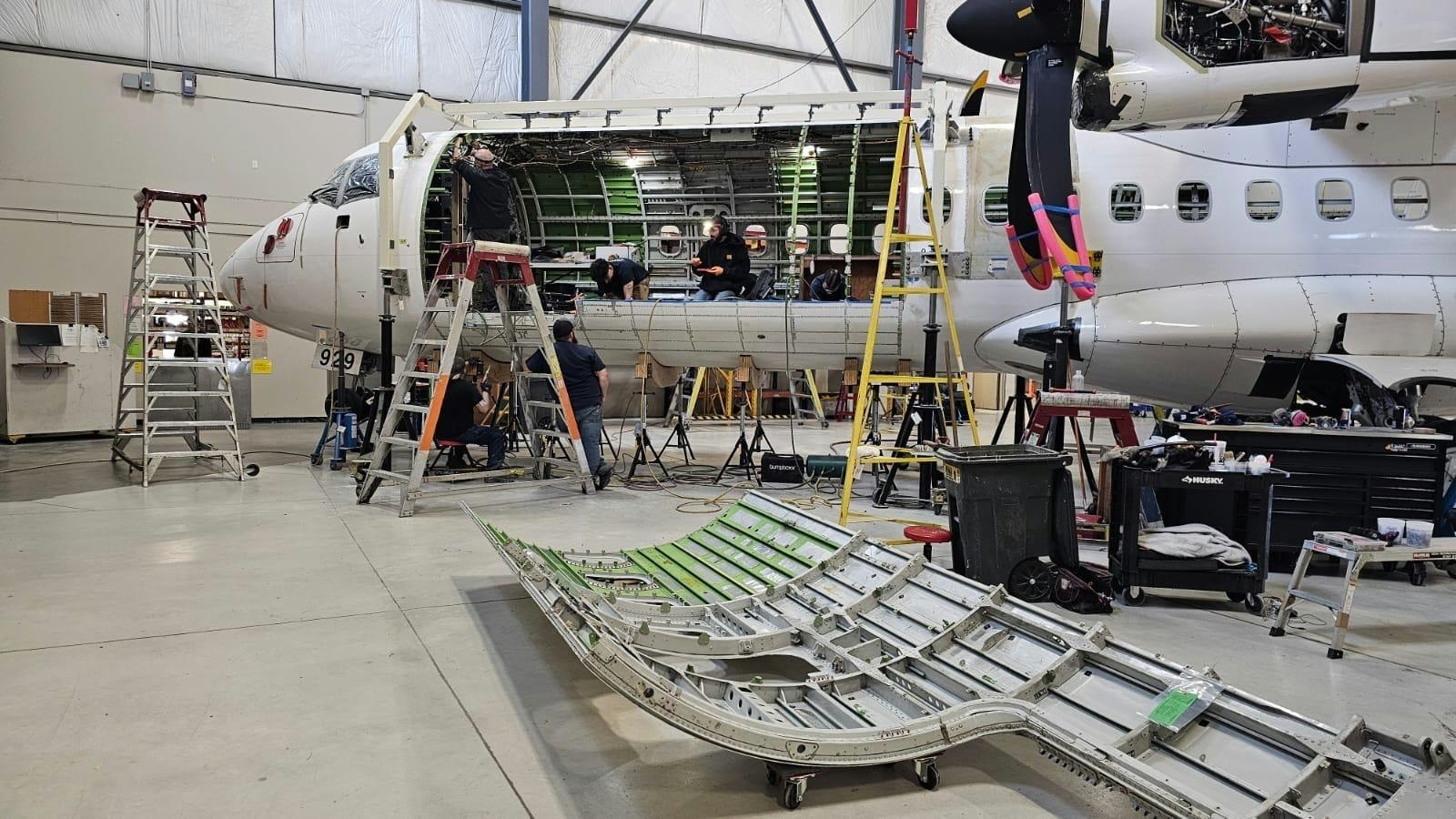
A significant initiative to transform aging passenger aircraft into cargo freighters is currently in progress at a state-of-the-art facility located behind Incheon International Airport. This development marks a pivotal shift in South Korea’s aviation sector, as the country accelerates the transfer of advanced aircraft remodeling technology from Israel Aerospace Industries (IAI). The first converted aircraft is anticipated to be completed within the year, underscoring the growing emphasis on cargo operations amid evolving market demands.

Advanced Facility and Strategic Partnerships

The conversion project centers on a Boeing B777-300ER, the first passenger plane scheduled for modification, which is expected to arrive at the dedicated facility northwest of Passenger Terminal 2 in June. This effort follows a 2021 memorandum of agreement between IAI, Sharp Technics K (STK), and the Incheon International Airport Corporation to establish a specialized cargo conversion center. The facility, completed in October last year, covers more than 69,000 square meters and comprises two hangars alongside auxiliary buildings. Currently, one hangar is utilized by STK for aircraft maintenance, while the second is slated to commence cargo conversion operations next year.

IKCS, the sole company worldwide certified to convert Boeing cargo aircraft, secured the contract for the project, with STK responsible for the hands-on renovation work. This collaboration is expected to enhance South Korea’s aviation parts industry by enabling local companies to directly manage parts specifications and supply chains, thereby fostering greater domestic expertise and economic activity.

Industry Outlook and Challenges

IKCS plans to convert two B777-300ERs in the first half of this year, with a third aircraft scheduled for conversion by the end of 2024. The company aims to increase its capacity to four aircraft annually starting next year and to secure six orders per year by 2028. Despite these ambitious targets, the project faces significant challenges. The International Air Transport Association (IATA) has highlighted concerns regarding supply chain disruptions and manufacturing delays, particularly linked to performance issues among original equipment manufacturers (OEMs) and a growing backlog of aircraft orders. These factors could potentially affect the timely delivery of converted freighters.

Nevertheless, demand for converted cargo aircraft remains robust. Recent agreements, such as the deal between EFW and Asia Pacific Aviation Leasing Group, demonstrate the strong market appetite for freighter conversions as a solution to cargo capacity constraints. Competitors are also adapting to these market dynamics; for instance, LATAM Cargo has issued warnings about potential capacity shortages due to slower deliveries of new aircraft, prompting airlines to increasingly consider fleet modernization and conversion projects.

Economic Impact and Future Prospects

The partnership with IAI represents a transformative opportunity for domestic maintenance, repair, and overhaul (MRO) providers, allowing them to expand beyond traditional maintenance services into high-value aircraft renovation. Incheon International Airport has set an ambitious target to convert 92 aging aircraft by 2040, with each conversion requiring an investment of approximately 11 billion won. The initiative aims to generate cumulative exports valued at 1 trillion won and create around 2,100 new jobs in the sector.

An official from Incheon International Airport emphasized the strategic importance of the project, stating, “If the renovation project begins in earnest, it will be of great help in securing national competitiveness through technological advancement.” This statement reflects the broader national aspirations tied to the development of advanced aviation capabilities and the strengthening of South Korea’s position in the global aerospace industry.

More news
Number of Airbus A380 Flights Scheduled for March

Number of Airbus A380 Flights Scheduled for March

Number of Airbus A380 Flights Scheduled for March Despite Airbus ceasing production of the A380 in 2021, the world’s largest passenger aircraft continues to hold a significant position in global long-haul travel. Although now operated by a limited number of airlines, the superjumbo remains essential on routes characterized by high passenger demand, premium cabin services, and airport slot restrictions, where its vast capacity proves economically advantageous. The flight schedule for March illustrates the concentrated nature of the A380 market, with a small group of carriers responsible for all scheduled operations, and Emirates overwhelmingly dominating the sector. The Enduring Role and Current Operations of the A380 Introduced in 2007, the Airbus A380 was designed to alleviate congestion at major international hubs through its full-length double-deck design and four-engine configuration. Its ability to transport hundreds of passengers, complemented by spacious premium cabins featuring onboard lounges and shower suites, established it as a flagship aircraft for several global airlines. However, the aviation industry’s shift toward more fuel-efficient twin-engine widebodies such as the Boeing 787 and Airbus A350 has narrowed the A380’s future prospects. While production has ended, the aircraft remains a specialized asset on select high-demand routes. Data from March 2026 reveals that the A380 is scheduled to operate 7,701 flights worldwide, offering nearly 3.9 million seats and generating approximately 15.7 billion available seat miles (ASMs). These figures highlight the aircraft’s sustained relevance on routes where airlines can reliably fill its large capacity, despite the reduction in the number of operators. Emirates emerges as the dominant operator, maintaining a substantial share of global A380 flights. Meanwhile, Qantas is planning to increase its A380 services in response to evolving market conditions. Other carriers have scaled back or retired their A380 fleets entirely; Lufthansa, for instance, has withdrawn its A380s from service and repurposed them as parts donors rather than returning them to active flight. Market Challenges and Strategic Adjustments The operation of A380 flights in March faces several challenges. Geopolitical tensions, particularly the ongoing U.S.-Israeli conflict involving Iran, have resulted in widespread airspace closures and the cancellation of over 37,000 flights to and from the Middle East. These disruptions have contributed to rising oil prices and heightened concerns over a potential downturn in global travel, complicating long-haul scheduling and capacity planning. Despite these obstacles, Emirates continues to maintain a robust A380 schedule, while other airlines adapt their strategies in response to fluctuating market demand and operational constraints. Although the superjumbo’s presence has diminished from its peak, it remains a key indicator of where high-capacity, premium-focused long-haul travel continues to be viable.
Why Airbus Added Extra Wheels to the A350-1000

Why Airbus Added Extra Wheels to the A350-1000

Why Airbus Added Extra Wheels to the A350-1000 The Airbus A350-1000 distinguishes itself on airport ramps with six wheels on each main landing gear, totaling twelve main wheels—four more than its smaller sibling, the A350-900. This modification is not merely aesthetic but a strategic engineering response to the A350-1000’s significantly higher maximum takeoff weight, which exceeds 700,000 pounds (320,000 kilograms). The additional wheels enable Airbus’s largest twin-engine jet to distribute its weight more evenly, reduce runway pressure, and enhance braking capacity during landings. Engineering for Heavier Loads Landing gear plays a vital role in aircraft safety and performance, supporting the plane on the ground, absorbing landing impacts, and facilitating taxiing and takeoff. For widebody aircraft such as the A350-1000, the landing gear must endure substantial forces. Upon landing, the gear absorbs both the aircraft’s vertical weight and the dynamic forces generated by descent. To manage these stresses, landing gear systems incorporate shock-absorbing struts filled with hydraulic fluid and compressed nitrogen, which dissipate energy and protect the airframe. A fundamental principle in landing gear design is the distribution of weight. Each tire has a maximum load capacity, and by increasing the number of wheels, Airbus ensures the A350-1000’s weight is spread across more tires. This reduces the load borne by each tire and minimizes wear on runways. This consideration is particularly important for airports worldwide, which use a pavement classification number (PCN) to indicate the maximum force their runways can sustain. By reducing pressure per tire, the A350-1000 can operate at a broader range of airports without necessitating costly runway reinforcements. Operational and Market Impacts The addition of extra wheels to the A350-1000 required significant engineering adjustments to maintain structural integrity and aerodynamic efficiency. The redesign demanded careful balancing to ensure that the aircraft’s overall performance was not compromised by the increased complexity and weight of the new landing gear system. Market responses to the A350-1000’s design have been varied. Air Canada has praised the aircraft’s operational flexibility and long-range capabilities, viewing the additional wheels as a practical solution for global operations. Conversely, United Airlines’ commitment to the A350-1000 remains uncertain, influenced in part by ongoing disputes with Rolls-Royce over engine deliveries. Meanwhile, competitors are pursuing alternative strategies: All Nippon Airways is focusing on cabin enhancements, and Starlux Airlines is expanding its fleet with leased A321neos, underscoring the competitive and evolving nature of the long-haul aircraft market. A Small Change with Significant Impact As the A350-1000 becomes increasingly common at major airports in cities such as New York, Los Angeles, and Chicago, its distinctive landing gear serves as a visible reminder of how seemingly minor design changes can yield substantial operational benefits. By distributing its weight across additional wheels, Airbus has equipped its flagship twinjet to meet the complex demands of modern air travel, effectively balancing engineering innovation, airport infrastructure constraints, and market expectations in a single, tangible advancement.
Boeing Faces Risk to 14% of Widebody Aircraft Backlog

Boeing Faces Risk to 14% of Widebody Aircraft Backlog

Boeing Faces Heightened Risk to Widebody Aircraft Backlog Amid Middle East Instability Boeing’s growing dependence on the Middle East market has shifted from a narrative of robust regional demand to one of concentrated vulnerability, particularly within its widebody aircraft segment. Middle Eastern airlines and lessors now represent 14% of Boeing’s total aircraft backlog, a significantly higher proportion compared to Airbus, which has just 9% exposure in the region. This concentration is most pronounced in the Boeing 777X program, where Gulf carriers—especially Emirates—play a pivotal role. Emirates alone has placed orders for 270 777X aircraft, underscoring its critical influence on the program’s commercial viability, reminiscent of its previous role as the anchor customer for the Airbus A350. Geopolitical Tensions Amplify Commercial Risks The ongoing geopolitical crisis in the Middle East has intensified the risks facing Boeing’s backlog quality. According to Leeham News, the region currently holds orders for 1,710 aircraft, with Boeing accounting for 57% of these commitments. Gulf carriers, whose business models rely heavily on stable hub operations, strong premium demand, and uninterrupted airspace access, are particularly susceptible to disruptions caused by the conflict. The fallout has already manifested in increased fuel costs, altered flight routes, and widespread cancellations. For instance, KLM has suspended flights to Dubai International Airport through late March due to complications in regional airspace. These geopolitical shocks translate into a concentrated commercial risk for Boeing, potentially resulting in order deferrals, financing difficulties, and slower cash flow—challenges that come at a time when financial stability is crucial. The immediate threat is less about outright cancellations and more about delayed deliveries, compressed profit margins, and postponed revenue recognition. Since aircraft backlogs only generate cash upon delivery and payment completion, any wave of deferrals from Middle Eastern customers could significantly slow Boeing’s revenue stream and cash conversion, particularly for widebody jets that are vital to the company’s profitability. Supply Chain Disruptions Compound Challenges Adding to these concerns are persistent supply chain disruptions and manufacturing delays. Willie Walsh, director general of the International Air Transport Association (IATA), recently emphasized ongoing difficulties in the supply chains for widebody freighters, noting that the industry is still recovering from the impacts of the Covid-19 pandemic. Julia Seiermann of IATA further highlighted that widebody airfreight capacity is expected to remain constrained through 2026 and beyond due to elevated backlog levels. Meanwhile, Boeing’s 737 Max program is also experiencing setbacks, currently facing delays caused by a wiring issue. Despite this, the company remains confident in meeting its 2026 sales target of approximately 500 Max jets. Backlog Growth Amid Persistent Risks Despite these headwinds, Boeing continues to secure new orders, including a recent deal with Sun PhuQuoc Airways for up to 40 787 Dreamliner jets. The company’s overall backlog reached a record $682 billion at the end of 2025, encompassing more than 6,100 commercial aircraft on order. However, the sheer size of the backlog does not mitigate the risk posed by over-concentration, especially if key customers in the Middle East delay or defer deliveries. As instability in the Middle East endures and supply chain challenges persist, Boeing’s reliance on the region for widebody aircraft sales exposes the company to significant geopolitical and operational risks at a critical juncture for its commercial aviation business.
Safran Shares Decline Amid Aviation Sector Slowdown

Safran Shares Decline Amid Aviation Sector Slowdown

Safran Shares Decline Amid Aviation Sector Slowdown Safran S.A. (ISIN: FR0000130809), a prominent French aerospace group, is experiencing renewed investor caution as ongoing supply chain disruptions and a deceleration in the aviation sector weigh heavily on its outlook. As of March 15, 2026, Safran’s shares have declined across major European exchanges, including Xetra and Euronext Paris, reflecting broader concerns about the aerospace industry's current health and future trajectory. Market Challenges and Investor Sentiment As a key player in Europe’s aerospace industry, Safran is grappling with persistent supply chain bottlenecks and a slowdown in airline ordering activity. Rising input costs and delivery delays are exerting pressure on margins within its core aircraft engines and equipment divisions. These challenges have prompted investors to reassess the balance between near-term risks and the long-term recovery potential of the aviation market. Despite sector-wide volatility, Safran’s shares have shown relative resilience, maintaining steady trading volumes and liquidity, particularly on Xetra, a principal trading venue for portfolios in Germany, Austria, and Switzerland. Investors are closely watching the performance of Safran’s engine aftermarket business, which serves as a vital buffer during periods of softer demand. Aftermarket services, especially for LEAP engines powering Boeing 737 MAX and Airbus A320neo aircraft, represent over half of the company’s aircraft engine revenues, providing a stable and recurring income stream. However, the broader aviation slowdown presents significant challenges. While airline fleet utilization has stabilized, supporting aftermarket demand, new aircraft orders have softened amid elevated interest rates and concerns over industry overcapacity. This has contributed to a deceleration in Safran’s propulsion order backlog, raising questions about the pace of future growth. End-Market Dynamics and Competitive Positioning Safran’s diversified business model, encompassing both civil aviation and defence sectors, offers some insulation from the prevailing headwinds. Defence programs, including the M88 engines for Rafale fighter jets and helicopter systems, have benefited from heightened geopolitical tensions in Europe. These developments have bolstered the company’s order book and aligned with regional security priorities, particularly in Germany and Switzerland. Segments such as landing systems and electrical power are experiencing similar dynamics: steady aftermarket growth is being offset by delays in original equipment manufacturer (OEM) deliveries. Safran’s joint ventures, notably CFM International with General Electric, provide scale advantages but also introduce partner-specific risks. Meanwhile, competitors are responding to the sector’s challenges by adjusting market strategies and intensifying cost-control measures. Margins, Cash Flow, and Strategic Outlook Safran continues to deliver industry-leading operating margins, supported by strong aftermarket pricing and disciplined cost management. Nonetheless, inflationary pressures—particularly on titanium and skilled labor—are eroding some of the gains achieved through volume recovery. The company’s management is investing in digital technologies, including digital twins and predictive maintenance, with the aim of enhancing utilization rates and potentially adding up to 200 basis points to margins over the business cycle. Free cash flow generation remains a critical focus, with working capital efficiency essential to sustaining dividend payments amid ongoing supplier delays. European investors particularly value Safran’s cash conversion discipline, especially when compared to US peers facing higher capital expenditure demands. Despite near-term headwinds and the recent decline in share price, Safran’s upgraded financial targets and forecasts for 2026 and beyond reflect management’s confidence in the company’s long-term prospects. For investors, the current environment presents a complex trade-off between short-term execution risks and the potential for sustained recovery as the aviation sector stabilizes.
Projected Salaries for Narrowbody Pilots in 2026

Projected Salaries for Narrowbody Pilots in 2026

Projected Salaries for Narrowbody Pilots in 2026 Pilot compensation is influenced by a multifaceted array of factors, including the employing airline, years of experience, geographic location, bonuses, and the specific aircraft type flown. Although widebody pilots generally receive higher salaries than their narrowbody or regional counterparts, the distinctions are nuanced and not always clear-cut. This analysis concentrates on the impact of seniority and aircraft type on pilot pay, excluding considerations such as retirement plans, allowances, and retention bonuses. Career Progression and Salary Variability Pilots typically begin their careers at regional airlines, gradually advancing to low-cost or major carriers, and eventually transitioning to widebody aircraft after accumulating extensive experience, often spanning two decades. Some pilots later choose private aviation roles, prioritizing lifestyle over higher earnings. Determining precise salary figures by aircraft type remains challenging. The U.S. Bureau of Labor Statistics offers general estimates for commercial pilots but does not provide detailed breakdowns by aircraft category. Industry sources such as Thrust and ATP indicate that commercial pilot salaries in the United States in 2024 range broadly from $90,000 to over $600,000 annually. Entry-level regional first officers may earn between $70,000 and $90,000, whereas senior widebody captains at major airlines or cargo carriers can command salaries exceeding $350,000. For pilots operating regional jets like the Embraer 175 or CRJ900, typical earnings fall between $90,000 and $150,000. Narrowbody pilots, flying aircraft such as the Boeing 737 or Airbus A320, generally receive salaries ranging from $250,000 to $350,000. Widebody pilots can expect compensation between $350,000 and upwards of $475,000, with U.S. pilots ranking among the highest paid globally. According to ATP, major airline pilots earn between $98,680 and $450,000, while regional airline pilots earn from $85,000 to $217,530. These salary ranges overlap, reflecting that many major airline pilots operate narrowbody aircraft. Regional airlines, which operate smaller jets with fewer seats, typically offer lower pay than major carriers due to their more limited revenue streams. The U.S. airline industry has long followed a career progression model where pilots start at regional airlines before advancing to larger carriers and aircraft types. Outlook for Narrowbody Pilot Salaries in 2026 Looking ahead to 2026, salaries for narrowbody pilots are expected to remain highly competitive, buoyed by recent industry-wide pay increases. Alaska Airlines has notably set a new standard through recent contract negotiations, with first officers starting at approximately $119.92 per hour and captains earning $361.29 per hour. These rates place Alaska Airlines pilots among the best compensated in the sector and exemplify a broader industry trend toward enhanced pilot protections and benefits. This development is likely to prompt other airlines to reevaluate and potentially increase their compensation packages to attract and retain skilled pilots. Consequently, narrowbody pilot pay across the industry may experience further upward pressure in the coming years. While pilot compensation remains complex and variable, the forecast for narrowbody pilots in 2026 is positive, with rising salaries and improved working conditions expected to influence the aviation landscape significantly.
Embraer Delivers KC-390 Millennium to WZL-2, Strengthening MRO Partnership in Poland

Embraer Delivers KC-390 Millennium to WZL-2, Strengthening MRO Partnership in Poland

Embraer Delivers KC-390 Millennium to WZL-2, Strengthening MRO Partnership in Poland Bydgoszcz, Poland, March 13, 2026 – Embraer has officially delivered its KC-390 Millennium multi-mission military transport aircraft to Wojskowe Zakłady Lotnicze Nr 2 S.A. (WZL-2) in Bydgoszcz, marking a significant milestone in the strategic partnership between the Brazilian aerospace company and the Polish defense sector. This delivery follows the Memorandum of Understanding signed in December 2025 in Warsaw, which established the framework for enhanced industrial and technological collaboration. Advancing Maintenance and Operational Capabilities in Poland The KC-390 Millennium is renowned for its versatility, advanced technology, and high operational availability, designed to undertake demanding airlift and aerial refueling missions. Its arrival at WZL-2 underscores Embraer’s commitment to developing comprehensive maintenance, repair, and overhaul (MRO) capabilities within Poland. This initiative is intended to improve operational readiness, cultivate local expertise, and stimulate growth in the Polish defense industry. Douglas Lobo, Vice President of Customer Support & Aftermarket Sales at Embraer Services & Support, highlighted the significance of the delivery, stating, “Today’s event materializes Embraer’s and WZL-2’s shared vision for innovation and collaboration in the defense industry. By working closely with the Polish defense industry, we aim to create robust cooperation, fostering long-term value for the country while contributing to the European defense community.” Jakub Gazda, CEO of WZL-2, emphasized the partnership’s importance, noting, “The KC-390 combines innovative technical solutions, reliability, and enormous operational potential. Cooperation with Embraer opens new opportunities, allowing us to exchange knowledge and develop our competencies. I believe our cooperation will be an important chapter in the history of aviation innovation.” Strategic Positioning Amid Regional Competition Embraer’s efforts to expand its MRO presence in Poland come amid competition from established aerospace players such as Lockheed Martin and Airbus Defence & Space, whose C-130J and A400M platforms already have industrial involvement in the country. By building local MRO capabilities, Embraer aims to secure a foothold in the region and offer a competitive alternative for military transport solutions. On a global scale, Embraer is pursuing similar strategies. Its partnership with Northrop Grumman to develop an in-flight refueling boom for the KC-390 is expected to enhance the aircraft’s international appeal, although interest from the US Air Force remains uncertain. Additionally, Embraer’s collaboration with the Mahindra Group to establish an MRO facility in India—contingent on winning the Medium Transport Aircraft requirement—reflects the company’s broader ambition to penetrate key markets despite competition from established regional players. Performance and Operational Capabilities of the KC-390 Millennium Since entering service with the Brazilian Air Force in 2019, followed by the Portuguese Air Force in 2023 and the Hungarian Air Force in 2024, the KC-390 Millennium has demonstrated a mission capability rate of 93% and mission completion rates exceeding 99%. The aircraft can carry payloads of up to 26 tons, outperforming other medium-sized military transports in terms of payload, speed (470 knots), and range. Its versatility enables it to perform a wide array of missions, including cargo and troop transport, medical evacuation, search and rescue, firefighting, and humanitarian operations, even from temporary or unpaved runways. The KC-390’s aerial refueling capability, both as a tanker and receiver, further enhances its operational flexibility.
Boeing 747s Repurposed as Homes, Hotels, and Buildings

Boeing 747s Repurposed as Homes, Hotels, and Buildings

Boeing 747s Repurposed as Homes, Hotels, and Architectural Landmarks The retirement of the Boeing 747 from most commercial airline fleets has ushered in an unexpected chapter for the iconic jumbo jet. While many of these aircraft are dismantled in desert storage facilities, a select number have been creatively transformed into distinctive architectural features. These repurposed jets now serve as office spaces, hotels, restaurants, and event venues, blending aviation history with innovative design. The WB1200 Project in Seattle One of the most ambitious examples of this trend is unfolding in downtown Seattle, a city deeply connected to Boeing’s legacy as the birthplace of the company. The WB1200 complex, also known as 1200 Stewart, is a twin-tower residential development featuring two 48-story buildings with over 1,000 apartments. These towers rise above an eight-story podium that houses retail and entertainment spaces, with a striking centerpiece: a retired Boeing 747-400 fuselage suspended within a three-story indoor galleria. The aircraft, which flew for United Airlines from 1990 to 2017, was acquired from a California scrapyard. It was carefully cut into 39 sections and transported by truck before being reassembled inside the building’s frame. Suspended approximately 14 feet above a pedestrian walkway connecting Denny Way and Stewart Street, the fuselage will be repurposed as functional office space, integrating a tangible piece of aviation history into the urban fabric. Designed by Henriquez Partners Architects, the WB1200 complex is distinguished by its wave-like balconies, rooftop terraces, gardens, a pool, and a dog park, alongside extensive retail offerings. However, the project has encountered significant challenges, including financial disputes, contractor changes, and delays related to the COVID-19 pandemic. Construction began in 2018, with completion now anticipated in 2026. Challenges and Global Context of Repurposing Boeing 747s Transforming Boeing 747s into new uses presents considerable obstacles. Developers must navigate complex regulatory frameworks, undertake extensive structural modifications, and address market acceptance for such unconventional spaces. Compliance with both aviation and construction regulations is critical, and the market response can vary significantly depending on location and demand for unique accommodations. Additionally, competition may intensify as other developers pursue similar projects or enhance their facilities to attract attention. Globally, over 1,500 Boeing 747s were produced between the late 1960s and 2023, making it one of the most recognizable airliners in history. As airlines retire the four-engine “Queen of the Skies” in favor of more fuel-efficient twin-engine models, creative preservation efforts have emerged. These efforts have given the 747 a second life, no longer as a vehicle traversing continents but as an integral part of the built environment. A notable example of this adaptive reuse is the 747 Wing House in Malibu, California, designed by architect David Randall Hertz. This residence incorporates the wings and structural elements of a retired Trans World Airlines 747, with the aircraft’s wings forming the roof and other sections repurposed as an art studio, guest buildings, and a barn. The growing trend of converting retired jumbo jets into architectural landmarks underscores both the challenges and opportunities inherent in adaptive reuse. It reflects a unique fusion of aviation heritage and innovative design, creating spaces that are as functional as they are emblematic.
Rising Jet Fuel Prices Strain Aviation Industry and Markets

Rising Jet Fuel Prices Strain Aviation Industry and Markets

Rising Jet Fuel Prices Strain Aviation Industry and Markets The aviation sector is currently facing significant challenges as jet fuel prices escalate to unprecedented levels, fundamentally altering cost structures and revealing vulnerabilities within global markets. This surge in jet fuel costs, largely attributed to ongoing conflict in the Middle East, has sent reverberations through airlines, consumers, and energy security frameworks worldwide. Supply Chain Vulnerabilities and Market Disruptions Fuel distribution networks today are heavily reliant on specialized chokepoints, where geographic constraints intensify market volatility well beyond fluctuations in crude oil prices alone. The concentration of critical energy infrastructure, particularly in the Middle East, has exposed systemic fragilities that affect multiple refined product categories simultaneously. For instance, jet fuel prices in Singapore surged by 140% to approximately $230 per barrel in the week following February 28, 2026, a spike that far exceeds the volatility observed in crude oil markets. In Europe, northwest jet fuel traded at unprecedented premiums of $88 to $91 per barrel above North Sea Dated and ICE Brent futures, with jet fuel prices nearly doubling those of crude oil. Such extreme market conditions have historically been seen only during the most severe supply disruptions. A significant point of vulnerability is the Strait of Hormuz, a critical maritime passage through which roughly 20% of global jet fuel exports transit. This geographic concentration effectively doubles the exposure risk compared to diesel shipments through the same route, creating an asymmetric risk profile for aviation fuel supplies. Technical and Geographic Constraints on Jet Fuel Production The refining characteristics of crude oil from Gulf producers further complicate the situation. Medium sour crude barrels from this region yield higher proportions of middle distillates, including jet fuel. When supplies from these sources are disrupted due to conflict or other factors, alternative crude oils from Africa and South America—typically lighter grades favoring gasoline and naphtha production—cannot easily substitute to maintain jet fuel output. This technical incompatibility limits the ability of global refining capacity to adjust quickly. Unlike diesel and gasoline, which benefit from blending flexibility and multiple production pathways, jet fuel requires specific refinery configurations optimized for kerosene-range hydrocarbons. Additionally, jet fuel storage infrastructure demands specialized tanks with enhanced safety protocols, further restricting global inventory buffers during periods of disruption. Market Impact and Industry Response The jet fuel market’s acute price sensitivity is driven by stringent international standards, such as ASTM D1655 and DEF STAN 91-91, which mandate precise molecular characteristics for jet fuel and preclude substitution with alternative fuels. Consequently, refining margins have expanded dramatically, with jet fuel crack spreads increasing by 350% year-over-year. Current premiums of $88 to $91 per barrel far exceed the historical norm of $10 to $25. These soaring fuel costs are already being reflected in higher airfares. Airlines, particularly across the Asia-Pacific region, have responded by raising base fares or implementing fuel surcharges. United Airlines CEO Scott Kirby has cautioned that rapid fare increases are imminent as carriers adjust to the surge in fuel expenses. Analysts anticipate that the financial strain on airlines will be most pronounced over the next 30 to 90 days as they recalibrate operations in response to elevated jet fuel prices. With the Middle East conflict continuing to disrupt global oil supplies, jet fuel prices are expected to remain volatile. Should these high prices persist, further fare increases and operational adjustments across the aviation sector are likely, underscoring the industry’s acute vulnerability to energy market shocks.
The Widebody Jet That Once Dominated Transatlantic Travel Now Serves as a Cargo Workhorse

The Widebody Jet That Once Dominated Transatlantic Travel Now Serves as a Cargo Workhorse

The Widebody Jet That Once Dominated Transatlantic Travel Now Serves as a Cargo Workhorse The Boeing 747 continues to play a pivotal role in global cargo aviation in 2026, despite its diminished presence as a passenger aircraft. Over 300 Boeing 747 freighters, including the technologically advanced 747-8F model introduced in 2011, remain active across major long-haul trade routes. This enduring relevance is largely attributed to the aircraft’s distinctive design, notably its hinged nose door. Positioned above the main deck, the cockpit allows the nose to swing open, facilitating the loading of oversized freight that conventional cargo planes cannot accommodate. This innovative feature was a cornerstone of the 747’s original design in the late 1960s. Boeing engineers crafted the jet’s iconic upper-deck “hump” specifically to enable the nose to open, a design choice that later proved invaluable for cargo operations. The evolution of the 747 can be traced through three significant phases: its initial dominance in long-haul passenger travel following its 1970 debut, the introduction of specialized freighter variants such as the 747-200F and 747-400F, and the current role of the 747-8F as a critical component of global logistics networks operated by carriers including Atlas Air and Cargolux. From Passenger Icon to Cargo Mainstay At its inception, the Boeing 747 was developed to meet airlines’ growing demand for higher passenger capacity over longer distances while reducing operational costs. As the world’s first widebody commercial airliner, it featured a double-aisle cabin capable of seating more than 350 passengers, significantly surpassing earlier jets like the Boeing 707. The 747’s entry into service with Pan Am on the New York–London route in 1970 revolutionized international air travel, making long-haul flights more accessible and affordable to a broader audience. Throughout the 1970s and 1980s, the 747 became the flagship aircraft for many global airlines, dominating transatlantic and transpacific routes. Its expansive fuselage not only transformed passenger travel but also laid the foundation for its future as a high-capacity freighter. Even during its peak years as a passenger jet, airlines and logistics companies recognized the jumbo jet’s potential for cargo transport. Evolving Roles Amid Industry Challenges Over the past five decades, the 747 has undergone multiple iterations, each enhancing its performance, efficiency, or capacity. The original 747-100 established the fundamental design, while subsequent models, culminating in the 747-8F, solidified its reputation as a cargo workhorse. Today, the 747 remains indispensable to international freight operations, particularly for U.S.-based carriers and manufacturers. Nevertheless, the aircraft’s continued prominence in global logistics faces new challenges. The International Air Transport Association (IATA) has highlighted ongoing difficulties in freighter manufacturing supply chains, which threaten the timely delivery and maintenance of large cargo aircraft like the 747. Concurrently, the transatlantic market is undergoing shifts. JetBlue’s expansion has slowed due to fleet limitations, airport slot constraints, and intensifying competition from airlines deploying premium narrowbody jets on routes traditionally served by widebodies. In emerging markets, structural obstacles persist. For instance, Azul’s CEO in Brazil has pointed to disproportionate global passenger lawsuits and underdeveloped aviation infrastructure as significant barriers, despite the country’s considerable growth potential. As the aviation industry navigates these evolving dynamics, the Boeing 747’s legacy endures—not as the queen of the passenger skies, but as an indispensable workhorse within the world’s cargo networks.
Aerospace Materials and Structural Components Market Expected to Grow Through 2035 Amid Sustainable Aviation Efforts

Aerospace Materials and Structural Components Market Expected to Grow Through 2035 Amid Sustainable Aviation Efforts

Aerospace Materials and Structural Components Market Set for Growth Through 2035 Amid Sustainable Aviation Efforts The global Aerospace Materials and Structural Components market is entering a period of transformation and steady growth, according to the latest IndexBox report. As the sector moves into 2026, it is marked by stronger demand fundamentals, disciplined procurement practices, and a more regionally diversified supply chain. This market, which provides advanced alloys, composites, and fabricated structures essential to modern aircraft and spacecraft, is evolving to address the dual imperatives of commercial aerospace recovery alongside increasing demands from the defense and space sectors. Key Drivers of Market Expansion The market’s growth is closely linked to production rates of next-generation aircraft such as the Airbus A320neo and Boeing 737 MAX, which increasingly incorporate carbon fiber composites and advanced aluminum-lithium alloys. Airlines aiming to renew their fleets and satisfy pent-up demand for fuel-efficient aircraft are expected to drive commercial production rates upward, thereby boosting the demand for primary airframe materials. Defense modernization also plays a critical role in market dynamics. Heightened geopolitical tensions have sustained investment in military platforms, including next-generation fighters and unmanned systems, each requiring materials that meet stringent standards for stealth, durability, and performance. Defense spending is projected to remain robust, particularly across North America, Europe, and the Asia-Pacific region. Sustainability and Innovation Challenges A defining megatrend influencing the sector is the push toward sustainable aviation. Regulatory pressures to reduce emissions are compelling the industry to develop lighter, more durable materials compatible with emerging hybrid-electric and hydrogen propulsion systems. However, the high costs associated with developing and implementing these advanced materials—especially those needed for hydrogen propulsion and sustainable aviation fuels—pose significant challenges. The extensive testing, certification processes, and regulatory hurdles further complicate the adoption of new technologies. In response, industry participants are increasing investments in research and development. Competitors are forging strategic partnerships with technology providers and suppliers to share the financial and technical burdens of innovation. These collaborations aim to accelerate the introduction of sustainable solutions while managing associated costs and risks. Technological Evolution and Supply Chain Dynamics Technological adoption within the sector is expected to be evolutionary rather than revolutionary. Carbon fiber composites will continue to gain market share, particularly in wings and fuselages, though their broader adoption will be constrained by cost and manufacturing cycle times. Aluminum and titanium alloys are projected to maintain significant volumes due to their proven performance and cost-effectiveness. Digital manufacturing technologies, such as additive manufacturing for complex titanium components, are maturing and beginning to reshape supply chains and cost structures. While supply chains are stabilizing following recent disruptions, they remain vulnerable to geopolitical realignments and challenges in sourcing critical raw materials. Market Outlook Through 2035 The baseline forecast anticipates steady expansion of the Aerospace Materials and Structural Components market from 2026 through 2035, driven by commercial aerospace recovery, stable defense budgets, and incremental technological adoption. The Maintenance, Repair, and Overhaul (MRO) sector will provide a consistent demand base as the global fleet ages, necessitating advanced repair materials and replacement components. Growth is expected to moderate in the latter part of the forecast period, assuming no major global economic downturns or widespread aircraft groundings. The market’s trajectory will be shaped by its capacity to balance innovation, regulatory compliance, and cost management amid ongoing shifts in demand and supply dynamics.
line










