
Превращайте аналитические выводы ИИ в реальные действия

В тренде
Categories
Could AI Replace Air Traffic Controllers to Improve Aviation Safety?
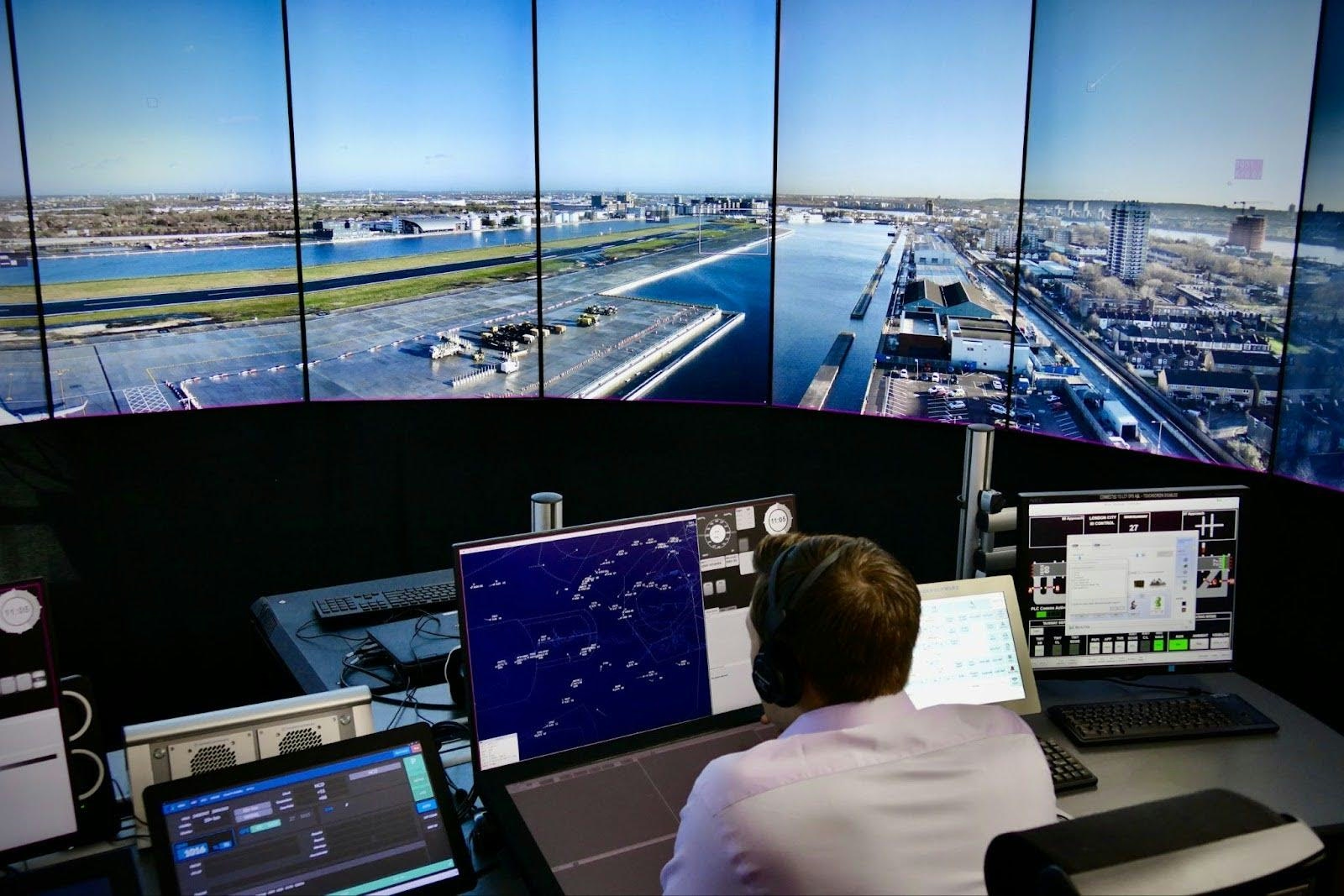
Could AI Replace Air Traffic Controllers to Improve Aviation Safety?
The Wake of a Tragedy and Growing Concerns
On January 29, a midair collision between a U.S. Army Black Hawk helicopter and an American Airlines passenger jet near Ronald Reagan Washington National Airport resulted in 67 fatalities. Despite air traffic controllers detecting warning signals at least 20 seconds before the crash and attempting to alert both aircraft, the disaster was unavoidable. Investigations are ongoing, but aviation experts broadly agree that human error—whether in the cockpit or the control tower—contributed to the incident. This tragedy, alongside other recent high-profile aviation accidents, has intensified scrutiny of air traffic control (ATC) systems worldwide.
The aviation industry is increasingly concerned about the pressures faced by air traffic controllers, who are often overworked and operating in understaffed environments. These challenges have prompted a growing debate over whether artificial intelligence could play a more significant role in reducing errors and enhancing safety. Researchers are actively exploring AI-driven ATC systems to evaluate their potential benefits and limitations.
Current Limitations and the Promise of AI
Many air traffic control processes still depend on technology that dates back several decades. For instance, runway lighting systems often rely on infrastructure from the 1980s, and some control towers continue to use paper-based methods to track aircraft movements. The most critical and analog element remains the reliance on human controllers to guide pilots through every phase of flight. As global air traffic continues to increase and staffing shortages persist, the industry is considering whether AI could assume greater responsibility in ATC operations.
Advocates for AI integration argue that automation could reduce human error and improve operational efficiency, especially given the immense workload controllers face managing thousands of flights daily. Several key ATC functions are already automated: live weather and traffic data assist both controllers and pilots in flight planning, while aircraft are equipped with collision avoidance and altitude management systems. Remote sensors and digital weather data complement advanced radar technologies, contributing to a decline in midair collisions over recent decades. Nevertheless, accidents—particularly during critical phases such as taxiing, takeoff, and landing—continue to occur, underscoring the need for further innovation.
Challenges and the Path Forward
Despite its promise, replacing human controllers with AI presents formidable challenges. Regulatory approval processes for AI-driven ATC systems would be rigorous, and ensuring the reliability and safety of such technology remains a significant obstacle. Additionally, concerns about workforce displacement loom large, as automation could affect thousands of skilled air traffic controllers. Recent strikes by French controllers highlight the indispensable value of human expertise, particularly in managing unexpected or complex situations that AI may not yet be capable of handling.
Reactions within the aviation sector to AI-driven ATC have been mixed. While some stakeholders remain skeptical about the readiness of AI for such critical roles, others are investing heavily in AI technologies to enhance safety and efficiency. Projections indicate that demand for aviation professionals will rise substantially by 2034, suggesting that human controllers will continue to play a vital role even as automation advances.
Trials of AI-assisted ATC are currently underway at major airports, shifting the debate from whether AI will be integrated to how much responsibility it should assume. Experts caution that while AI has the potential to transform air traffic management, it is unlikely to fully replace human controllers in the near future. Instead, a hybrid approach that combines human judgment with AI-driven support may offer the most effective path forward for improving aviation safety.

Etihad Airways Suspends Airbus A380 Flights on Key Route

Aditya Birla Group Seeks Approval for Aircraft Leasing in GIFT City

Qatar Airways Highlights Innovation and Connectivity at Arabian Travel Market 2026

Hong Kong's Five-Year Plan Includes Andrew Fan's Aircraft Parts Processing Hub Proposal

ACIA Aero Leasing Delivers ATR72-600 to Air Nostrum

RTX Appoints Jill Albertelli as Head of Pratt & Whitney

TAT Technologies Joins Beyond Aero Hydrogen Aircraft Program

AURAK Study Highlights Barriers to Air Taxi Adoption in Emerging Economies

Xiamen Air Selects Altitude for 787 Maintenance at Heathrow

Etihad and Swissport Extend Global Partnership
