image

AeroGenie — ваш интеллектуальный второй пилот.

Спрашивайте о чём угодно. Анализируйте всё. Действуйте мгновенно.

В тренде

Categories

Data Centers Adopt Aviation Engines for Power Generation
October 20, 2025By ePlane AI
Data Centers Adopt Aviation Engines for Power Generation
0
0
Aeroderivative Turbines
ProEnergy
Power Generation

Data Centers Turn to Aviation Engines to Address Power Shortages

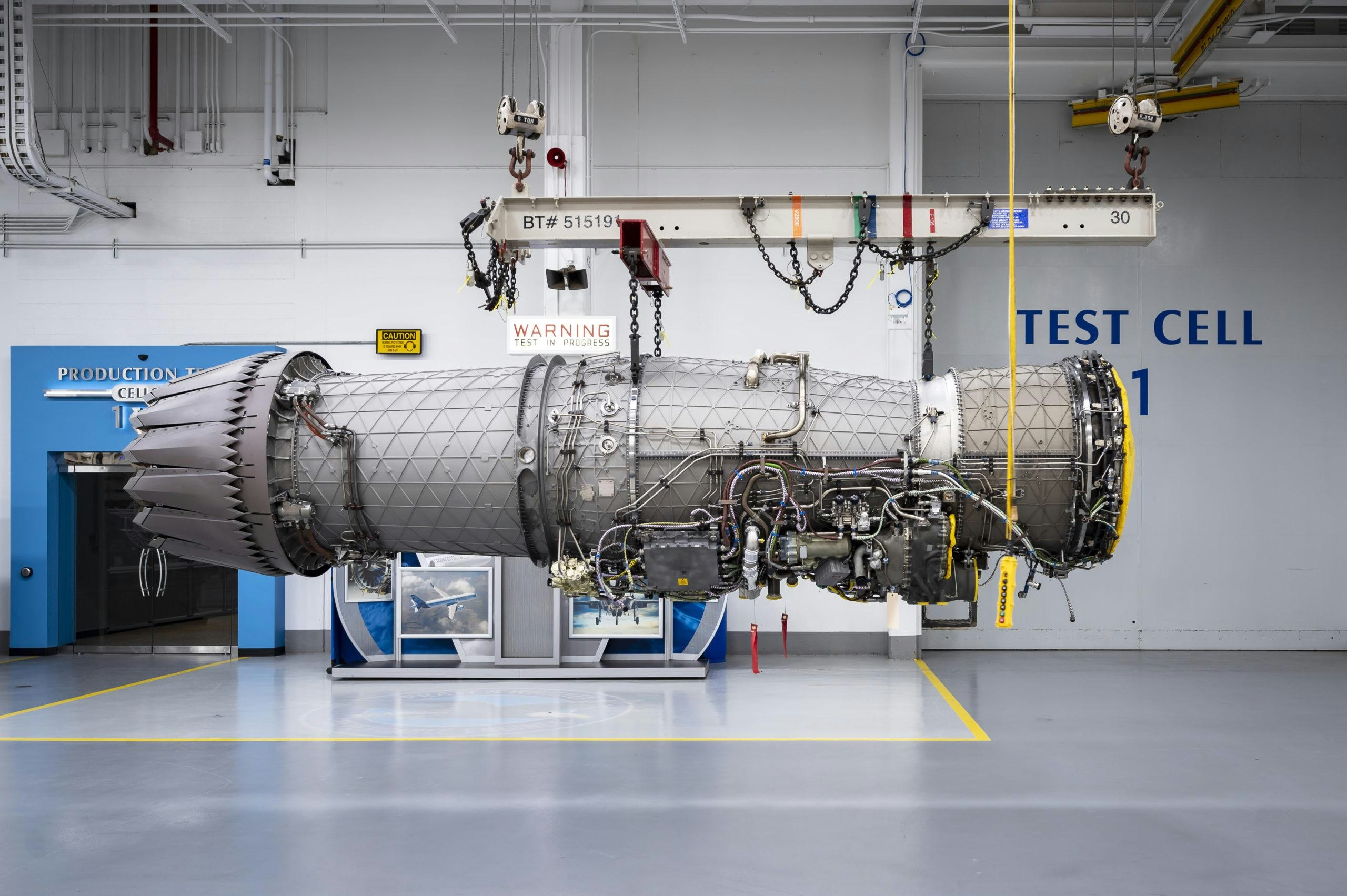
As the demand for larger data centers escalates amid the generative AI boom, developers are encountering a significant power supply challenge. Traditional approaches, such as connecting to the electrical grid or building onsite power plants, are increasingly hindered by prolonged delays in acquiring gas turbines or securing grid access. In response, some operators have turned to an unconventional alternative: repurposed aviation engines.

Aeroderivative Turbines as a Temporary Solution

At the Data Center World Power show in San Antonio this October, ProEnergy, a natural-gas power provider, presented its PE6000 gas turbines, which are derived from aircraft engines, as a temporary solution for data centers struggling to obtain reliable power. Landon Tessmer, Vice President of Commercial Operations at ProEnergy, explained that these aeroderivative turbines are being deployed to supply electricity during both the construction phase and the initial years of operation. Once grid power becomes accessible, the turbines can be reassigned to backup roles, supplement the grid, or be sold to local utilities.

Tessmer noted, “We have sold 21 gas turbines for two data-center projects amounting to more than 1 gigawatt (GW). Both projects are expected to provide bridging power for five to seven years, which is when they expect to have grid interconnection and no longer need permanent behind-the-meter generation.”

Aeroderivative gas turbines, adapted from proven aircraft engines by manufacturers such as GE Vernova and Siemens Energy, offer advantages over traditional heavy-frame turbines. They are lighter, more compact, and easier to maintain. For instance, GE Vernova’s LM6000, based on the CF6-80C2 jet engine, underwent extensive modifications for stationary power generation, including expanded turbine sections, new mounting structures, and controls optimized for natural gas use and reduced emissions.

Supply Constraints and Industry Challenges

Despite their benefits, the surge in demand for these turbines has created significant supply constraints. Paul Browning, CEO of Generative Power Solutions and former head of GE Power & Water, warned, “There just aren’t enough gas turbines to go around and the problem is probably going to get worse.” Current wait times for popular models like the LM6000 or Siemens Energy’s SGT-A35 range from three to five years, with some facing even longer backlogs. In contrast, ProEnergy claims its PE6000 units can be delivered as early as 2027.

Adopting aviation engines for data center power generation also presents notable challenges. The initial capital investment is substantial, and these turbines require specialized maintenance. Regulatory hurdles may further complicate deployment, potentially increasing operational costs for data center operators and, consequently, electricity prices. These factors could encourage competitors to explore alternative, more cost-effective power solutions or invest in research aimed at improving the efficiency and affordability of aviation engine technology.

The broader data center market is also grappling with concerns about a potential AI bubble, which could reduce future power demand and affect the long-term viability of aviation engine adoption. As the industry navigates these uncertainties, the use of repurposed aviation engines stands as both an innovative interim measure and a complex risk in the evolving landscape of data center power generation.

More news
Certified Aviation Services Appoints Richard Morris as Director of Quality Training and Safety

Certified Aviation Services Appoints Richard Morris as Director of Quality Training and Safety

Certified Aviation Services Appoints Richard Morris as Director of Quality Training and Safety Certified Aviation Services (CAS), a prominent provider of aircraft line maintenance, AOG support, and narrow-body MRO services, has announced the appointment of Richard Morris as its new Director of Quality Training and Safety. This strategic leadership addition arrives amid heightened industry scrutiny over safety standards, with 2025 being characterized by Aviation International News as a "Reckoning Year for Air Safety." Reinforcing Quality and Safety Amid Industry Pressures Richard Morris’s appointment is intended to strengthen CAS’s dedication to stringent quality controls, advanced safety protocols, and comprehensive technician training programs. In his new role, Morris will oversee the company’s Quality Management System (QMS) and Safety Management System (SMS), while also leading the development and implementation of training initiatives across all CAS locations. The overarching objective is to ensure “right-first-time” service delivery, proactive risk mitigation, and ongoing operational improvement. Brad Caban, President and CEO of CAS, emphasized the significance of this appointment, stating, “Richard’s combination of regulatory expertise, frontline maintenance leadership, and training program design is exactly what CAS needs as we scale. He will tighten our quality controls, elevate our safety practices, and expand our technician training pathways, so our teams can consistently deliver the speed, transparency, and reliability our customers expect.” This leadership change comes at a time when the aviation sector is under increased pressure to uphold safety and quality standards, following recent incidents such as Airbus’s A320 software recall and confirmed quality issues involving metal panels. These developments have intensified competition within the industry, prompting companies like CAS to deepen their investments in safety and training. Competitors, including Daher Aircraft and AAR, have similarly responded with enhanced safety initiatives and sustainability commitments, as detailed in AAR’s 2025 Sustainability Report. Richard Morris: Extensive Expertise in Aviation Safety Richard Morris brings over two decades of experience spanning military, commercial, and aerospace sectors, including significant roles with the Federal Aviation Administration (FAA) and major aviation corporations. His expertise encompasses the development of ISO and AS-aligned quality systems and audit programs, the design and implementation of SMS frameworks supported by data-driven performance metrics, and supplier quality management with a focus on root-cause analysis and corrective action. Additionally, Morris has a proven track record in ensuring compliance with software and hardware standards such as DO-178, alongside the creation of competency-based training and recurrent curricula tailored for both technicians and leadership personnel. His comprehensive understanding of regulatory requirements, combined with hands-on leadership in maintenance and training, positions him well to guide CAS through the evolving landscape of industry standards. Addressing Market Expectations and Regulatory Challenges The appointment of Richard Morris reflects a broader industry trend toward reinforcing safety and training infrastructures in response to escalating regulatory demands and recent quality concerns. While such leadership changes are generally welcomed, they also present challenges, including the necessity to align with increasingly stringent regulations and to adapt swiftly to evolving training standards. As the aviation industry approaches a critical juncture in safety oversight, CAS’s investment in experienced leadership and quality assurance underscores its commitment to maintaining rigorous standards and fulfilling customer expectations within a competitive and closely monitored market.

CAAC Advances Integration of AI in Civil Aviation

CAAC Advances Integration of AI in Civil Aviation The Civil Aviation Administration of China (CAAC) has introduced new guidelines designed to accelerate the adoption of artificial intelligence (AI) within the country’s civil aviation sector. The recently published document, titled "Implementation Opinions on Promoting High-Quality Development of 'AI + Civil Aviation'," sets forth a strategic framework aimed at harnessing AI to improve operational efficiency, safety, and innovation throughout the industry. Strategic Focus and Industry Collaboration The CAAC’s initiative emphasizes fostering close collaboration between AI technology providers and aviation enterprises. Key focus areas include intelligent flight operations, predictive maintenance, passenger services, and air traffic management. By integrating AI-driven solutions, the administration anticipates streamlined workflows, cost reductions, and enhanced passenger experiences. This approach reflects a broader commitment to leveraging cutting-edge technology to modernize and optimize civil aviation operations. Challenges and Regulatory Considerations Despite the promising outlook, the widespread implementation of AI in civil aviation presents significant challenges. Industry experts have raised concerns regarding data privacy and security, especially as airlines and service providers manage increasing volumes of sensitive information. The technical complexity involved in integrating advanced AI systems with existing aviation infrastructure demands robust oversight and specialized expertise. Furthermore, regulatory compliance remains a critical priority, with authorities working to establish clear standards and guidelines to ensure the safe and ethical deployment of AI technologies. Market Response and Competitive Dynamics Following the CAAC’s announcement, the aviation market has responded with increased investment in AI-driven platforms. This surge is expected to intensify competition, potentially driving down prices for AI-enhanced services and fostering greater innovation in customer offerings. In turn, industry players are accelerating their own AI initiatives, forming strategic partnerships to enhance workforce planning and operational efficiency. These developments underscore the rapidly evolving landscape of civil aviation, where technological advancement is becoming a key differentiator. As the CAAC continues to promote AI integration, it stresses the importance of balancing technological progress with stringent safety standards and regulatory oversight. Observers note that the initiative’s success will hinge on the sector’s ability to navigate emerging challenges while fully realizing AI’s transformative potential.
FACTS Summit 2025 in Sydney Highlights Innovation and Sustainability in Asia-Pacific Corporate Travel and Aviation

FACTS Summit 2025 in Sydney Highlights Innovation and Sustainability in Asia-Pacific Corporate Travel and Aviation

FACTS Summit 2025 in Sydney Highlights Innovation and Sustainability in Asia-Pacific Corporate Travel and Aviation The inaugural FACTS Summit & Expo 2025, held at ICC Sydney on November 25–26, represented a significant milestone for the Asia-Pacific corporate travel and aviation sectors. Bringing together over 1,500 delegates from around the world, alongside more than 160 speakers and 100 exhibitors, the event transformed 2,500 square meters of exhibition space into a vibrant forum for exchanging ideas and advancing solutions in business mobility, sustainability, and innovation. A Unified Platform Addressing Industry Transformation FACTS Summit 2025 distinguished itself by integrating four previously separate verticals—corporate travel, business events, aviation futures, and travel payments—into a single comprehensive event. This consolidation reflects a broader industry shift away from fragmented operations toward a cohesive mobility ecosystem, emphasizing cross-sector collaboration as essential for future growth. The summit featured dedicated tracks focusing on key areas: the Corporate Travel Summit addressed the increasing demand for agile and resilient business mobility; the Business Events & M&E Summit underscored the ongoing significance of meetings and incentives; the Aviation Futures Summit concentrated on capacity challenges, retail innovation, and the urgent imperative of sustainable aviation; and the Travel Payments Summit explored fintech disruption alongside the evolving landscape of travel expense management. Emphasis on Innovation and Sustainability Prominent industry leaders from airlines, travel management companies, fintech innovators, and technology providers engaged in discussions on critical topics such as AI-driven automation, sustainable aviation practices, and the transformation of travel payments. Sustainability emerged as a central theme, driven by mounting regulatory and corporate pressures to reduce carbon emissions. Qantas and Virgin Australia, two of the region’s leading carriers, attracted particular attention for their sustainability initiatives. Qantas showcased its fleet renewal program and comprehensive sustainability roadmap, while Virgin Australia highlighted value-driven strategies and a robust focus on the corporate travel segment. These initiatives reflect a wider industry trend toward sustainable procurement and carbon management, paralleling efforts like the GBTA Foundation’s Sustainability Acceleration Challenge. Addressing Challenges Amid Market Uncertainties While the summit maintained an optimistic outlook, industry leaders acknowledged persistent challenges. The business travel sector continues to grapple with uncertainties arising from global supply chain disruptions and the complex task of balancing rapid technological innovation with meaningful sustainability progress. The event’s integrated format and emphasis on actionable solutions sought to foster dialogue on accelerating recovery and building a more resilient, responsible industry. A Dynamic Marketplace of Ideas and Technology The expo floor featured over 100 exhibitors, including airlines, accommodation providers, fintech firms, and travel technology startups. Attendees engaged with cutting-edge advancements in artificial intelligence, event technology, and traveller-centric airline retailing models, all aimed at enhancing operational efficiency, personalization, and traveller wellbeing. FACTS Summit 2025 has established a new standard for collaboration and forward-thinking within Asia-Pacific corporate travel and aviation. The event’s unified platform and strong focus on sustainability underscore a clear trajectory for the industry, where innovation, partnership, and responsible growth will define the future of business mobility.
IndiGo to Deploy Wide-Body Aircraft on Vijayawada-Hyderabad Route, Says MP

IndiGo to Deploy Wide-Body Aircraft on Vijayawada-Hyderabad Route, Says MP

IndiGo to Introduce Wide-Body Aircraft on Vijayawada–Hyderabad Route IndiGo is preparing to deploy wide-body aircraft on the Vijayawada–Hyderabad route within the next ten days, according to Vijayawada Member of Parliament Kesineni Sivanath (Chinni). This development follows discussions held at the office of Union Minister of Civil Aviation K. Ram Mohan Naidu, where Mr. Sivanath and MP G.M. Harish met with IndiGo’s Flight Special Director A.K. Singh to address ongoing concerns related to the route. Addressing Passenger Concerns and Expanding Connectivity Mr. Sivanath emphasized that the introduction of wide-body aircraft is a direct response to persistent challenges faced by passengers on the current ATR-operated flights. These issues include high ticket prices, limited seat availability, and restrictive baggage policies. Mr. Singh confirmed that the new aircraft deployment would increase seating capacity, lower fares, and ease luggage restrictions, thereby improving the overall travel experience. In addition to the Vijayawada–Hyderabad route, IndiGo is reportedly planning to launch direct flights from Vijayawada to several key cities, including Varanasi, Ahmedabad, Pune, Kochi, and Goa. These expansions are contingent upon the completion of route mapping and regulatory approvals. Union Minister Ram Mohan Naidu highlighted the strategic importance of enhancing air connectivity to major pilgrimage destinations such as Varanasi and Kochi. He also noted that Vijayawada airport serves a broad catchment area beyond the capital region of Amaravati, including passengers from Eluru, Guntur, Narasaraopet, and Machilipatnam. This underscores the critical need for improved air services to meet growing regional demand. Operational and Market Considerations While the introduction of wide-body aircraft is expected to benefit travelers, industry experts caution that operating such aircraft on regional routes like Vijayawada–Hyderabad may present logistical and operational challenges. IndiGo and other carriers have previously encountered disruptions caused by unforeseen operational issues, adverse weather conditions, and regulatory investigations, all of which could affect the smooth implementation of the new service. The aviation sector will also be closely monitoring market reactions to these changes. Regulatory scrutiny and investor sentiment, including potential fluctuations in IndiGo’s share price, may follow the airline’s operational adjustments. Competitors might respond strategically by modifying their own route networks or service offerings to capitalize on any shifts in passenger demand or market dynamics. Despite these challenges, IndiGo’s decision represents a significant advancement in enhancing air travel options for the region. The airline’s expansion aligns with government initiatives aimed at improving infrastructure and accessibility for passengers throughout Andhra Pradesh.
Europe Unveils New Aviation Strategy to Promote Cleaner, Faster Flights

Europe Unveils New Aviation Strategy to Promote Cleaner, Faster Flights

Europe Unveils New Aviation Strategy to Promote Cleaner, Faster Flights The European Commission has introduced an ambitious European Aviation Strategy aimed at transforming air travel across the continent. This comprehensive initiative seeks to modernize the aviation sector by fostering sustainable technologies and enhancing the overall passenger experience. While the strategy emphasizes industry innovation, travelers can anticipate safer, faster, and more environmentally friendly flights connecting Europe’s major cities. Streamlining Travel and Advancing Sustainability A key objective of the strategy is to simplify air travel regulations, thereby facilitating smoother airport procedures and improving air traffic coordination. Current EU programs are focused on modernizing aircraft and automating operations, which are expected to reduce delays and waiting times. Passengers traveling between hubs such as Paris, Rome, and Amsterdam may soon benefit from a more seamless airport experience. However, the effort to simplify regulations faces challenges due to the complexity of European legal frameworks and competition for funding with established initiatives like Horizon Europe, which could influence the pace of implementation. At the forefront of the strategy is Europe’s commitment to sustainable aviation. The plan prioritizes the development and adoption of green technologies, including hydrogen-powered aircraft, sustainable aviation fuels, and next-generation energy-efficient planes. These advancements promise to reduce the carbon footprint of flights, offering environmentally conscious travelers more sustainable options for exploring the continent. Sustainable aviation fuels, derived from renewable resources or waste materials, are central to this vision. Although still in the developmental stage, increased government support aims to expand their availability, enabling tourists to minimize their environmental impact while traveling. Innovation, Safety, and Competitive Challenges The strategy also directs significant investment toward aviation research and the enhancement of air traffic management systems. Funding is intended to drive aircraft innovation, improve flight safety, and streamline processes such as boarding and baggage handling. Future airports may incorporate AI-driven systems to optimize scheduling, maintenance, and passenger convenience, contributing to a smoother and less stressful travel experience. Nonetheless, competition for funding with existing research partnerships may affect the scale and speed of these technological advancements. Market observers are likely to monitor how these investments influence airlines’ operational costs and efficiency. Technological progress is expected to enhance both safety and logistics within the sector. Innovations such as drones, automated surveillance, and AI-powered air traffic management systems are anticipated to benefit civil aviation and defense operations alike. Passengers can look forward to safer flights, faster baggage delivery, and more organized airport environments. As Europe advances its aviation agenda, it faces a competitive landscape where airlines and aerospace companies outside the region, including Aeromexico and Collins Aerospace, are leveraging existing technologies and partnerships to maintain their market positions. The ultimate success of Europe’s strategy will depend on the ability of its industries to innovate effectively and secure the necessary funding amid this competition. For travelers, the European Aviation Strategy heralds a new era of air travel characterized by more efficient airports, advanced aircraft, and sustainable flight options. Airlines may introduce programs that reward eco-conscious travel, providing additional incentives for passengers to choose greener flights. Through its investments in technology, sustainability, and safety, Europe aims to deliver a modernized, efficient, and environmentally responsible travel experience, ensuring journeys across the continent become smoother, faster, and greener for all.
Spirit Signs Agreement with Pratt & Whitney Units on Aircraft Engines

Spirit Signs Agreement with Pratt & Whitney Units on Aircraft Engines

Spirit Signs $140 Million Settlement with Pratt & Whitney Affiliates Amid Industry Challenges Spirit Aviation Holdings Inc. has reached a settlement valued at up to $140 million with two affiliates of Pratt & Whitney concerning engine-related issues that have led to the grounding of parts of its fleet. The agreement, disclosed in a filing on Wednesday with the U.S. Bankruptcy Court for the Southern District of New York, involves International Aero Engines LLC and IAE International Aero Engines AG. Negotiated prior to Spirit’s Chapter 11 bankruptcy filing, the settlement provides the airline with monthly credits through 2025 to mitigate the operational impact caused by grounded aircraft. Terms and Implications of the Settlement Pending court approval, the settlement is expected to establish a sustainable, long-term framework for servicing the aircraft engines essential to Spirit’s post-reorganization optimized fleet. The credits included in the agreement aim to alleviate the financial strain resulting from ongoing engine repairs and maintenance delays, which have disrupted Spirit’s operations. This arrangement offers the airline a measure of financial relief and operational stability as it proceeds through bankruptcy restructuring. Broader Industry Context and Challenges Despite the settlement, Spirit continues to face significant challenges amid a turbulent aviation sector. The industry is currently contending with widespread supply chain disruptions, particularly delays in engine repairs that have grounded hundreds of Pratt & Whitney-powered Airbus aircraft worldwide. These disruptions have complicated airlines’ efforts to maintain flight schedules and meet the rising demand for air travel. Competitive dynamics within the engine manufacturing market are also evolving. Pratt & Whitney’s difficulties have created opportunities for GE Aerospace and Safran’s joint venture, CFM International, which supplies competing engines for Airbus’s A320neo model. As Airbus plans to increase production of the A320neo, CFM International may adjust its supply strategies to protect market share, potentially affecting pricing and availability across the sector. Spirit’s challenges are further compounded by pressures on its key supplier, Spirit AeroSystems, which continues to report elevated production costs and posted a $724 million loss in the third quarter. Additionally, regulatory scrutiny remains intense. The U.S. Federal Trade Commission has mandated that Boeing divest certain Spirit AeroSystems assets as a condition for their proposed merger, citing concerns over competition. The settlement with Pratt & Whitney’s affiliates provides Spirit with some financial and operational certainty amid these complexities. However, the airline’s future will depend on its capacity to navigate ongoing supply chain disruptions, respond to intensifying competitive pressures, and comply with evolving regulatory demands in a rapidly shifting aviation environment.
ADB SAFEGATE Receives Industry Awards for Marketing, R&D, and Social Impact

ADB SAFEGATE Receives Industry Awards for Marketing, R&D, and Social Impact

ADB SAFEGATE Honored with Three Awards at 2025 Airport Technology Excellence Awards ADB SAFEGATE, a global leader in airside solutions, has been distinguished with three prestigious awards at the 2025 Airport Technology Excellence Awards. Presented by GlobalData, the accolades recognize the company’s outstanding achievements in Marketing, Research and Development (R&D), and Social Impact. These honors underscore ADB SAFEGATE’s influential role in shaping the future of aviation through innovation, effective communication, and community engagement. The awards highlight the company’s dedication to advancing airport operations and its progressive approach to technological development. Industry analysts observe that while ADB SAFEGATE’s success is notable, sustaining this competitive advantage will be increasingly demanding. With other aviation technology firms also gaining recognition for innovative marketing and impactful initiatives, ADB SAFEGATE faces heightened expectations to maintain its leadership. This environment may prompt closer scrutiny of the company’s forthcoming projects, while competitors are likely to intensify efforts to emulate or exceed its strategies across marketing, R&D, and social responsibility. Recognitions in Marketing, R&D, and Social Impact Marketing Excellence through Strategic Storytelling ADB SAFEGATE’s marketing campaign for Airside 4.0® earned the award in the Strategic Storytelling category. The campaign’s centerpiece, the “Harmony” video, effectively translated complex digital transformation concepts into a clear and engaging narrative. It illustrated how Airside 4.0® seamlessly integrates operations across the airfield, gate, tower, terminal, and weather systems. Utilizing LinkedIn as the primary platform, the campaign garnered over 13,000 video impressions—surpassing the industry benchmark by eightfold—and achieved engagement levels well above standard aviation marketing metrics. This campaign set a new standard for communicating sophisticated airport technologies to a global audience. R&D Innovation with Intelligent Infrastructure In the R&D category, ADB SAFEGATE was recognized for its pioneering deployment of 5G-enabled elevated runway lights at Antwerp Airport. This system incorporates edge computing, AI-driven analytics, and machine learning to facilitate real-time monitoring and predictive maintenance of critical airside infrastructure. Equipped with high-resolution cameras and advanced sensors, the technology detects hazards, foreign objects, and adverse weather conditions, thereby enhancing safety and operational efficiency. This breakthrough establishes a new benchmark for intelligent runway monitoring and supports airports in adapting to evolving operational requirements. Commitment to Social Impact and Sustainability ADB SAFEGATE also received the Social Impact award for its sponsorship of the Innoptus Solar Team, a group of Belgian engineering students and world champions in solar car racing. The partnership extends beyond sponsorship to include educational outreach programs that promote climate-conscious innovation and encourage the development of future engineers. This recognition reflects the company’s ongoing commitment to sustainability and STEM education, reinforcing its role in fostering community engagement and environmental responsibility. Regardt Willer, Chief Marketing Officer and Vice President of Business Development at ADB SAFEGATE, stated, “At ADB SAFEGATE, we believe innovation is about making a meaningful impact. These awards celebrate the collaboration, ingenuity, and dedication that drive us to create safer, smarter, and more sustainable solutions for the aviation industry.” As the aviation sector continues to evolve, ADB SAFEGATE’s triple recognition marks a significant milestone and signals an era of intensified competition and innovation within the industry.
GA Telesis Secures Five-Year Landing Gear Overhaul Agreement with Major U.S. Carrier

GA Telesis Secures Five-Year Landing Gear Overhaul Agreement with Major U.S. Carrier

GA Telesis Secures Five-Year Landing Gear Overhaul Agreement with Major U.S. Carrier GA Telesis, LLC, a global leader in integrated aviation services, has entered into a five-year agreement to provide landing gear maintenance, repair, and overhaul (MRO) services for a major U.S. airline operating Airbus and Boeing narrowbody fleets. The contract specifically covers the carrier’s A320-family landing gear assemblies, reinforcing GA Telesis’s role as a trusted partner to leading airlines worldwide. Strengthening MRO Capabilities and Industry Position The agreement underscores the capabilities of GA Telesis’ MRO Services Landing Gear facility in Medley, Florida, which is recognized as the largest FAA/EASA-certified landing gear MRO provider in the Americas. Known for its technical expertise, stringent quality standards, and industry-leading turnaround times, the facility is central to the company’s service offering. Pastor Lopez, President of GA Telesis MRO Services, emphasized the company’s commitment to delivering dependable and high-quality maintenance solutions that ensure airlines operate safely and efficiently. He expressed pride in supporting the airline’s A320 fleet and anticipated a strong, enduring partnership. The airline involved is a prominent U.S. carrier with an extensive domestic network, focused on maintaining reliability and operational excellence as it expands into new strategic markets. This collaboration leverages GA Telesis’s advanced technical capabilities and global MRO infrastructure to support the airline’s growth objectives and maintain uninterrupted fleet readiness. Market Context and Competitive Landscape While the agreement represents a significant achievement for GA Telesis, it also presents challenges, including the need to uphold consistently high-quality standards and manage the logistical complexities of a large-scale, long-term overhaul program. Industry analysts suggest that market attention will focus on GA Telesis’s ability to deliver reliable services amid increasing competition, as airlines prioritize operational efficiency and minimal downtime. The aviation maintenance sector is witnessing intensified competition, exemplified by Lufthansa Technik’s recent landing gear overhaul contract with Etihad Airways. Such developments are likely to drive MRO providers to enhance their service offerings or secure comparable long-term agreements to sustain market share. GA Telesis MRO Services operates exclusively with original equipment manufacturers (OEMs) to ensure genuine parts in all component repairs. Serving over 1,000 customers globally, the company offers integrated solutions encompassing component services, leasing, logistics, and engine overhaul. Its operations span 54 locations across 30 countries, with a strategic focus on sustainability, digital transformation, and advanced materials to improve efficiency and performance. As the aviation industry continues its recovery and expansion, the ability of MRO providers like GA Telesis to deliver reliable, high-quality, and timely services will remain a critical factor in maintaining competitive advantage.
Government Strengthens Aviation Safety Framework Amid AI-171 Investigation

Government Strengthens Aviation Safety Framework Amid AI-171 Investigation

Government Strengthens Aviation Safety Framework Amid AI-171 Investigation Ongoing Investigation into AI-171 Crash The Ministry of Civil Aviation provided an update to Parliament on Thursday regarding the investigation into the Air India Flight AI-171 crash in Ahmedabad. Minister of State for Civil Aviation Murlidhar Mohol confirmed that the cause of the accident has yet to be determined. The Aircraft Accident Investigation Bureau (AAIB) is conducting a thorough inquiry under the recently enacted Aircraft (Investigations of Accidents and Incidents) Rules, 2025. The investigation is being carried out with full technical rigor and in accordance with international standards. The AAIB published a preliminary report on July 12, 2025, which is accessible to the public on the bureau’s website. This initial report compiles factual information derived from flight data, technical documentation, and witness testimonies. However, Minister Mohol clarified that the precise cause of the crash remains undetermined, with all potential contributing factors—including technical, human, operational, and environmental elements—still under detailed examination. The final report will be released only after a comprehensive and conclusive evaluation. Enhanced Safety Measures and Regulatory Response In response to the incident, the Directorate General of Civil Aviation (DGCA) has intensified its safety oversight across the country to mitigate the risk of similar accidents. The DGCA is now conducting both routine and surprise inspections of airlines, aircraft, and airport operators to ensure strict adherence to safety regulations and maintenance standards. Special audits are initiated when risk indicators are detected. To promote transparency, the DGCA’s Annual Surveillance Plan (ASP), which outlines the scope of technical and operational oversight activities, is now publicly available online. Operators found in violation of safety protocols face enforcement actions, including fines and other regulatory penalties. Additionally, in early 2025, the DGCA issued Circular 01/2025, mandating comprehensive audits of airline operations and aviation infrastructure to identify systemic vulnerabilities and reinforce the national safety framework. While these measures are designed to strengthen aviation safety, they also pose challenges for the industry. Airlines may encounter increased regulatory scrutiny and higher operational costs to comply with the enhanced safety framework. Compliance requirements could lead to delays in aircraft delivery schedules. These factors may temporarily affect the stock prices of impacted airlines, while competitors might respond by either upgrading their own safety protocols or lobbying against the stricter regulations. The regulatory environment is also being shaped by international developments, notably the recent release of aircraft automation framework principles by the U.S. Federal Aviation Administration. This initiative is expected to drive industry-wide adjustments in safety practices and operational strategies, as Indian regulators and operators seek alignment with global best practices. Minister Mohol assured Parliament of the government’s unwavering commitment to upholding the highest standards of civil aviation safety. He emphasized that the findings and recommendations from the AAIB’s final report will be implemented across the sector to enhance accident prevention, improve operational compliance, and strengthen risk mitigation protocols. The Ministry reiterated that passenger safety remains the paramount priority, and the investigation’s outcomes will be leveraged to benefit the entire aviation ecosystem, including airlines, maintenance organizations, airports, and regulatory authorities.
NASA Software Raises Bar for Aircraft Icing Research

NASA Software Raises Bar for Aircraft Icing Research

NASA Software Raises Bar for Aircraft Icing Research Advancing Computational Modeling for Aircraft Safety Researchers at NASA’s Glenn Research Center in Cleveland have developed the Glenn Icing Computational Environment (GlennICE), a sophisticated software tool that is redefining standards in aircraft safety by enabling detailed three-dimensional computational modeling of ice formation. This innovation is particularly significant for next-generation aircraft, including advanced air mobility rotors and unconventional wing configurations, where traditional icing prediction methods fall short. In 2023, NASA conducted physical testing of an advanced rotor model within its Icing Research Tunnel to validate GlennICE’s computational forecasts. This validation is critical, as ice accumulation from freezing airborne water droplets continues to pose a serious hazard to aircraft operating in adverse weather conditions. GlennICE’s ability to accurately simulate these phenomena marks a substantial improvement over legacy software. From Legacy Systems to Cutting-Edge Solutions GlennICE builds upon decades of NASA research and represents a major advancement beyond earlier tools such as LEWICE 3D. While legacy codes were primarily designed for conventional tube-and-wing aircraft, GlennICE addresses the complexities introduced by modern aviation technologies. These include supersonic aircraft, unmanned drones, open-rotor turbofans, and aircraft with unconventional shapes. The software’s advanced digital modeling capabilities allow researchers to simulate the behavior of water and ice particles across a wide range of atmospheric conditions, providing unprecedented flexibility and precision. Christopher Porter, the lead developer of GlennICE, emphasized the necessity of this evolution: “The legacy codes are well formulated to handle simulations of traditional tube-and-wing shaped aircraft. But now, we have new vehicles with new designs that present icing research challenges. This requires a more advanced tool, and that’s where GlennICE comes in.” Industry Adoption and Future Challenges GlennICE’s configurability and seamless integration with other software tools have streamlined the research process, reducing time requirements and enhancing adaptability to unique scenarios. This efficiency has garnered significant interest from the aviation sector, with numerous industry partners and government agencies adopting the software through NASA’s software catalog. Despite its promise, the development and deployment of GlennICE face ongoing challenges. Ensuring robust performance across diverse conditions, integrating the software with existing aviation systems, and securing sustained funding remain critical hurdles. The growing engagement from the aviation industry may foster new partnerships and collaborations, potentially accelerating progress in aircraft safety research. NASA’s advancements with GlennICE have also stimulated competitive responses within the aerospace sector, prompting other companies to explore their own software solutions for aircraft icing. As NASA continues to refine GlennICE, the software is positioned to play a pivotal role in the future of aircraft design, helping engineers mitigate ice-related risks and enhance safety for passengers and pilots worldwide.
Ask AeroGenie










