Изображение

AeroGenie — Ваш интеллектуальный второй пилот.

Спрашивайте что угодно. Анализируйте все. Действуйте незамедлительно.

В тренде

Categories

Delivery of U.S.-Built P-8 Surveillance Aircraft to Canada Delayed Again
April 21, 2026By ePlane AI
Delivery of U.S.-Built P-8 Surveillance Aircraft to Canada Delayed Again
0
0
P-8 Surveillance Aircraft
Royal Canadian Air Force
Aircraft Delivery Delay

Delivery of U.S.-Built P-8 Surveillance Aircraft to Canada Delayed Again

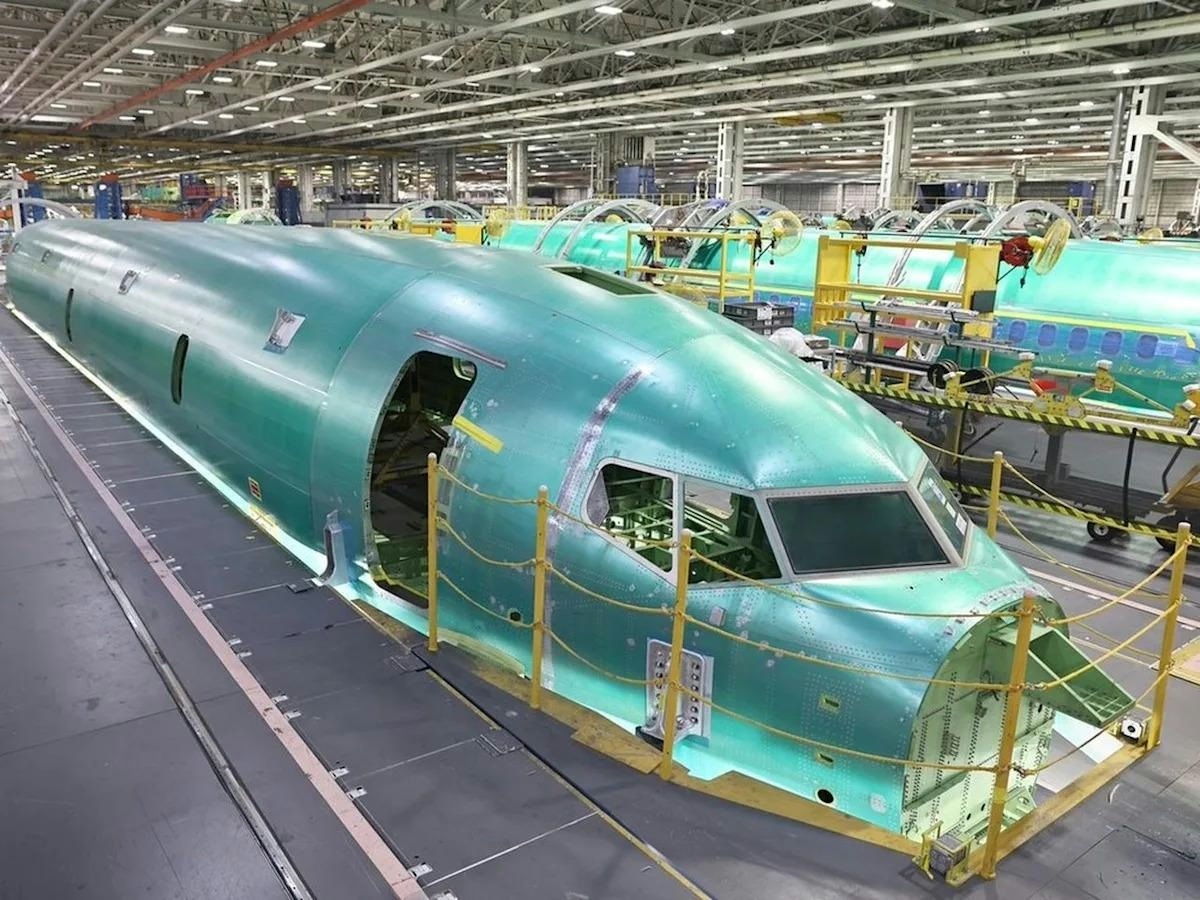
The delivery of the U.S.-built P-8 surveillance aircraft to Canada has been postponed once more, raising concerns about the potential implications for the country’s maritime surveillance capabilities. The Royal Canadian Air Force (RCAF) had been actively preparing for the arrival of its first CP-8A, including upgrades to infrastructure such as hangars to accommodate the new fleet. Despite these efforts, the latest delay adds to a growing list of setbacks affecting the program’s timeline.

Operational Preparations Amid Delays

In response to the postponement, the RCAF has emphasized its proactive measures to mitigate the impact. Canadian personnel have been embedded with allied air forces—including the Royal Air Force, the Royal Australian Air Force, the Royal New Zealand Air Force, and the United States Navy—to gain operational experience with the P-8A platform ahead of its deployment in Canada. A spokesperson for the RCAF, Drescher Brown, highlighted that this approach helps to offset many of the challenges posed by the delivery delays, ensuring that Canadian crews remain well-prepared despite the uncertainty surrounding the aircraft’s arrival.

Broader Context and Industry Challenges

The delay occurs against a backdrop of contrasting developments for Boeing, the manufacturer of the P-8. The company reported a robust first-quarter delivery performance in 2026, achieving its highest commercial aircraft deliveries in a first quarter since 2019. However, Boeing’s overall delivery schedule continues to face pressure from ongoing geopolitical tensions between the United States and China. These tensions have the potential to disrupt Boeing’s long-term order book in the Asia-Pacific region, as the ability to sell aircraft to China remains a significant factor in broader trade negotiations. Consequently, Boeing’s financial outlook remains closely intertwined with shifts in U.S. foreign policy.

For Canada, the repeated delays in receiving the P-8 aircraft highlight the complexities involved in modernizing its surveillance fleet amid evolving global dynamics and persistent supply chain uncertainties. While the RCAF’s strategy of training personnel abroad aims to alleviate operational disruptions, the precise timeline for the aircraft’s delivery remains uncertain.

More news
ICAN Chief Highlights Digital Adoption as Crucial for Aviation Efficiency

ICAN Chief Highlights Digital Adoption as Crucial for Aviation Efficiency

ICAN Chief Highlights Digital Adoption as Crucial for Aviation Efficiency Digital Transformation as a Catalyst for Reform Sakiru Balogun, Director of Membership Affairs at the Institute of Chartered Accountants of Nigeria (ICAN), has underscored the imperative of accelerated digital adoption to enhance efficiency, reduce corruption, and strengthen financial governance within Nigeria’s aviation sector. Speaking at the first anniversary of ICAN Aviation in Lagos, under the theme “Digital Transformation, Professional Excellence and Financial Governance within Nigeria’s Aviation Industry,” Balogun emphasized the urgent need to shift from manual, cash-based operations to fully digital systems. Balogun pointed out that the sector’s dependence on manual processes has historically constrained operational efficiency and created vulnerabilities to malpractice. He argued that reducing human intervention through digitalisation would not only improve service delivery but also close systemic loopholes that facilitate corruption. Addressing concerns about potential job losses due to automation and artificial intelligence, Balogun contended that digital transformation would instead generate new opportunities for those prepared to adapt. Drawing on international precedents, he stated, “We need to go digital to achieve overall efficiency. Anything involving human beings can lead to issues, including corruption. Digitalising all activities in the aviation sector is crucial for effectiveness.” Despite some advancements, such as the introduction of electronic toll payments and online transaction platforms, Balogun assessed Nigeria’s aviation efficiency at approximately 40 percent, highlighting the significant work that remains. He identified low digital literacy among many Nigerians as a major obstacle to wider adoption of digital technologies. Industry Perspectives on Digitalisation and Its Challenges Ayodele Olatiregun, Chairman of the ICAN Aviation Chapter, reinforced the importance of digitalisation in transforming financial operations within the aviation ecosystem. He noted that most transactions in the sector are now automated, marking the end of the era of physical ticketing. Olatiregun stressed that robust automated systems are essential for accurate revenue tracking and accountability, asserting that digital platforms enhance transparency and operational efficiency. Dr. Comfort Eyitayo, former ICAN President and chair of the event, emphasized that digitalisation has become indispensable in modern aviation. She highlighted the sector’s demand for precision, accountability, and rigorous risk management—qualities that are best supported by digital tools. Nevertheless, the journey toward comprehensive digital transformation faces significant challenges. Industry experts point to the need for effective data coordination and integration across airlines, airports, and other stakeholders. While data-driven decision-making is increasingly central to improving operational resilience and managing disruptions, fragmented data flows between disparate systems continue to impede the full realization of technology investments. Market Trends and Future Outlook Despite these challenges, market responses to digital adoption in aviation remain optimistic. The in-flight payment solutions market, for instance, is projected to expand from $1.42 billion in 2024 to $3.09 billion by 2033. This growth is driven by the rise of cashless payment technologies and increasing passenger demand for onboard convenience. Competitors are responding by incorporating advanced solutions such as contactless payments, e-wallets, and mobile platforms to meet evolving traveler expectations and enhance ancillary revenue streams. ICAN leadership maintains that embracing digital transformation is essential for Nigeria’s aviation sector to meet global standards of efficiency, transparency, and financial governance.
GE Aerospace Explores Aviation and Defense Partnerships in Korea

GE Aerospace Explores Aviation and Defense Partnerships in Korea

GE Aerospace Pursues Strategic Partnerships in Korea’s Aviation and Defense Sectors GE Aerospace recently engaged with Korean aerospace parts manufacturers during the "KOTRA x GE Aerospace Day" event held at the JW Marriott Hotel in Seoul on June 21. Hosted by the Korea Trade-Investment Promotion Agency (KOTRA), the event aimed to strengthen supply chain collaboration between GE Aerospace, a global leader in aircraft engine manufacturing, and Korea’s expanding aviation and defense industries. Fostering Collaboration Amid Industry Transformation The event brought together 23 domestic aviation and defense companies, featuring a detailed briefing led by GE Aerospace on emerging development trends and partnership opportunities. Key focus areas included avionics systems, power systems, engines, additive manufacturing, and aerospace time-sensitive networking (TSN). Following technical evaluations, nine Korean firms engaged in targeted one-on-one consultations with GE Aerospace representatives to explore potential collaborations. This initiative comes at a critical juncture for the global aviation and defense sectors, which are undergoing significant shifts due to evolving supply chains and the rise of next-generation technologies. The industry is increasingly prioritizing software and systems capabilities, such as unmanned aerial vehicles, AI-driven mission systems, modular open architectures, and advanced data-sharing platforms. Korea, now recognized as the world’s fourth-largest defense exporter, is leveraging its strengths in high-quality manufacturing, reliable delivery schedules, and competitive pricing to expand its influence in the global market. Challenges and Strategic Positioning Despite these opportunities, GE Aerospace faces considerable challenges in deepening its presence in Korea. The company must contend with a competitive environment dominated by established rivals like Pratt & Whitney and Rolls-Royce, both of which are expected to intensify their marketing efforts and technological innovations to maintain market share. Additionally, GE Aerospace continues to address durability concerns related to its Leap engines, an issue that has elicited mixed market responses and could affect its reputation and regional market penetration. Broader economic factors also complicate the landscape. Rising oil prices and slower global economic growth are dampening aviation demand and maintenance activities, adding further complexity to GE Aerospace’s efforts to secure new partnerships and expand its supply chain footprint in Korea. Strengthening Long-Term Partnerships and Support Frameworks Despite these headwinds, GE Aerospace reaffirmed its longstanding commitment to Korea’s aviation industry. A company official highlighted over five decades of collaboration, emphasizing GE’s role as a key partner in Korea’s military aircraft development programs and its ongoing cooperation with domestic firms. “We are growing together as influential partners in the aviation industry ecosystem,” the official stated. KOTRA intends to build on this momentum by establishing a comprehensive cooperation framework with GE Aerospace. This framework will support Korean companies in entering the global aviation and defense supply chains through a phased approach, including identifying partnership opportunities, facilitating consultations, conducting site inspections, and providing ongoing follow-up support. Kim Kwan-mook, KOTRA’s vice president and head of the Economic Security and Trade Cooperation Division, underscored the urgency of this initiative. “With global supply chain reorganization accelerating through AI-driven advancements in aviation and defense technology, now is a crucial turning point for our companies,” he said. “We will actively support our companies so they can establish themselves as key partners in the global aviation supply chain.”
Google Uses AI to Address Climate Impact of Airplane Contrails

Google Uses AI to Address Climate Impact of Airplane Contrails

Google Employs Artificial Intelligence to Mitigate Climate Impact of Airplane Contrails The aviation industry is a significant contributor to climate change, not only through the emissions produced by jet fuel combustion but also due to the formation of contrails—thin, white streaks left behind by aircraft. These contrails trap heat within the atmosphere that would otherwise dissipate, thereby exacerbating global warming. AI-Driven Approach to Contrail Reduction In an effort to address this environmental challenge, Google is harnessing artificial intelligence to assist airlines in minimizing contrail formation. By analyzing satellite imagery, weather patterns, and flight data, Google's AI system identifies flights that have historically produced contrails and predicts which upcoming flights are likely to generate them. Dinesh Sanekommu, a spokesperson for Google, emphasized that this predictive capability enables more informed decision-making to reduce contrail occurrence. Currently, Google is collaborating with American Airlines to test this AI-powered forecasting tool. The initiative aims to guide pilots in avoiding atmospheric conditions conducive to contrail formation. Preliminary results indicate a reduction in contrail generation, which in turn decreases the amount of heat trapped in the atmosphere. Complexities and Industry Implications Mitigating contrail formation presents a complex challenge distinct from traditional emissions reduction. Unlike other pollutants, contrails are not significantly diminished by lowering aircraft soot emissions. Consequently, AI solutions must incorporate a broad spectrum of atmospheric and operational variables, making the task more intricate than conventional approaches to reducing aviation emissions. This initiative emerges amid increasing scrutiny of the aviation sector’s environmental footprint and growing demands for sustainable practices. Google’s involvement not only enhances its standing within the technology and environmental communities but also reflects a wider industry trend. Competitors such as SpaceX are exploring space-based AI data centers with similar environmental objectives, signaling a shift toward integrating advanced technologies in climate mitigation efforts. As the aviation industry continues to evolve, the application of AI and sophisticated data analytics is poised to become a cornerstone of sustainable aviation. Google’s partnership with American Airlines may serve as a model, fostering further innovation and collaboration across the sector in addressing the pressing issue of climate change.
American Airlines Receives 100th Boeing 737 MAX, Marking Fleet Milestone

American Airlines Receives 100th Boeing 737 MAX, Marking Fleet Milestone

American Airlines Receives 100th Boeing 737 MAX, Marking Fleet Milestone American Airlines has achieved a significant milestone with the delivery of its 100th Boeing 737 MAX 8 aircraft, underscoring the carrier’s ongoing commitment to modernizing its narrowbody fleet amid the aviation industry’s recovery from the pandemic. This milestone reflects American’s strategic focus on enhancing operational efficiency and maintaining competitiveness on high-frequency domestic and short-haul international routes. Fleet Modernization and Operational Efficiency Based in Dallas, American Airlines has made one of the largest single-type fleet investments among U.S. carriers by expanding its 737 MAX fleet. The newer aircraft offer approximately 20% better fuel efficiency compared to previous-generation narrowbodies, a critical advantage given the volatility of fuel prices and their impact on airline profitability. Executives at American have emphasized that this fleet expansion is directly linked to reducing the cost-per-available-seat-mile, a key metric that influences fare stability and the potential need for ancillary fees such as baggage charges. The timing of the 100th 737 MAX delivery coincides with American’s recent centennial anniversary, reinforcing a narrative of renewal as the airline contends with intensifying competition from Southwest, United, and Delta. The new aircraft will be deployed across American’s extensive domestic network as well as select international routes to Mexico, the Caribbean, and Central America. Competitive Challenges and Industry Context While the modernization of American’s narrowbody fleet strengthens its position in short- and medium-haul markets, the airline faces ongoing challenges in the broader competitive landscape. Rivals such as Delta and United have placed larger orders for widebody jets, positioning themselves for growth in lucrative long-haul international markets. Industry analysts caution that unless American accelerates its own widebody acquisitions, it risks falling behind in global network expansion and premium market share. Pressure is mounting for the airline to announce substantial new widebody orders to remain competitive. Boeing, meanwhile, has delivered over 500 737 MAX variants worldwide since the aircraft’s return to service following its 2019-2020 grounding. This delivery volume reaffirms the 737 MAX’s status as a workhorse for medium-haul operations. Boeing’s commercial jet business is showing signs of recovery, having recently narrowed its quarterly losses despite some delivery delays caused by wiring issues. Implications for Cost Management and Passenger Experience For American Airlines, the operational efficiency of the 737 MAX fleet is a critical factor in controlling costs. Improved fuel economy enables the airline to better manage expenses and potentially avoid unpopular fee increases on baggage, carry-ons, and seat selection. As the airline industry increasingly relies on ancillary revenue to offset rising fuel and labor costs, fleet modernization remains essential for maintaining competitive fares and protecting profit margins. This milestone also reflects broader trends within the aviation sector, where major carriers are accelerating the retirement of older aircraft and investing in new deliveries to optimize their fleets for current operational demands. --- **Frequently Asked Questions** **Why does American’s 737 MAX fleet size matter to passengers?** Modern aircraft like the 737 MAX consume significantly less fuel, helping airlines stabilize fares and reduce pressure to increase baggage and seat fees. **How does the 737 MAX compare to older narrowbodies in fuel consumption?** The 737 MAX uses about 20% less fuel than its predecessors, directly improving airline cost-per-seat economics.
Delta CEO Ed Bastian Warns Against Labeling AI as 'Scary'

Delta CEO Ed Bastian Warns Against Labeling AI as 'Scary'

Delta CEO Ed Bastian Urges Caution in AI Messaging Delta Air Lines CEO Ed Bastian has called for a more measured approach in how companies discuss artificial intelligence, cautioning that the term "AI" can unnecessarily alarm both employees and customers. In an interview with *Fortune*, Bastian explained that he intentionally avoids using the phrase "artificial intelligence" in internal and external communications, describing it as "too scary." He noted that the term often evokes fears of job displacement or loss of control before any substantive conversation about the technology’s benefits can take place. Bastian remarked, "You want to scare people? Tell them that artificial intelligence is coming for you." He stressed that business leaders bear the responsibility of framing emerging technologies in ways that foster confidence rather than anxiety. According to him, employing language laden with science-fiction connotations is a strategic misstep that can erode trust and impede the adoption of new tools. Practical Implementation and Industry Context Despite his reservations about the terminology, Bastian emphasized that Delta is actively embracing AI-driven technologies. The airline has integrated machine learning and automation into various aspects of its operations, including scheduling, predictive maintenance, and customer service. Automated systems are now instrumental in minimizing delays and efficiently rerouting passengers during disruptions. For Bastian, the emphasis should be on communicating the tangible benefits of these technologies rather than focusing on the label itself. Bastian’s comments arrive amid a broader corporate reckoning with AI adoption, as many executives seek ways to introduce these technologies to workforces concerned about job security and operational changes. His public stance highlights an ongoing debate over how best to frame AI within organizations. While investors, vendors, and the media often treat "AI" as a neutral or even positive term, frontline employees frequently associate it with uncertainty and risk. This debate is particularly salient given the mixed market reactions to AI integration. Some investors may view Bastian’s remarks as reassurance that Delta regards AI as a tool for operational improvement rather than a threat, potentially lending stability to the airline’s stock. Meanwhile, skepticism remains among those apprehensive about AI’s impact on employment and costs. Competitors may leverage this moment to showcase their own AI initiatives, positioning themselves as more aggressive adopters, while others may opt for a more cautious or reserved approach. The divergence in corporate strategies is evident across industries. In the same week as Bastian’s remarks, IBM reported strong earnings driven by AI product demand, openly embracing the AI label as a key growth factor. Simultaneously, discussions and tutorials on AI tools, such as CoinGecko’s recent guide on integrating real-time data into AI agents, demonstrate how deeply AI conversations have permeated beyond traditional technology sectors. Bastian’s perspective underscores a critical communication challenge: while the tech industry and investors may regard "AI" as a straightforward term, for many employees the word still carries significant emotional weight. As AI adoption accelerates, the manner in which companies choose to communicate about these technologies may prove as consequential as the innovations themselves.
Delta CEO Ed Bastian Avoids Term ‘Artificial Intelligence,’ Citing Public Fear

Delta CEO Ed Bastian Avoids Term ‘Artificial Intelligence,’ Citing Public Fear

Delta CEO Ed Bastian Avoids Term ‘Artificial Intelligence,’ Citing Public Fear Reframing the Technology Debate Delta Air Lines CEO Ed Bastian has deliberately avoided using the term “artificial intelligence” to describe the company’s technological advancements, citing concerns over public fear and misunderstanding. Speaking at the Great Place to Work’s For All Summit in Las Vegas, Bastian expressed that the phrase “artificial intelligence” tends to provoke unnecessary anxiety. “I think it’s a mistake to call anything artificial,” he remarked, adding that the term can alarm people by suggesting a threat to their jobs or livelihoods. Instead, Bastian advocates for the use of “augmented intelligence,” a term he believes better captures the technology’s purpose as a supportive tool rather than a replacement for human workers. He emphasized that Delta’s approach is to empower employees, enabling them to perform their roles more effectively. “I want our employees to see it as a tool to enable them to do their jobs better, not to replace them, but to enhance them,” Bastian said. He reassured that the airline has no intention of using automation to reduce headcount, but rather to redeploy staff toward improving customer service as routine tasks become automated. Industry Context and Challenges Bastian’s cautious stance on AI terminology comes amid growing scrutiny of the airline industry’s adoption of new technologies and their impact on employment. He acknowledged that job roles and skills will continue to evolve, as they have historically, but warned that the rapid pace of AI development combined with media hype can exacerbate fears unnecessarily. Highlighting Delta’s experience, he noted that automation has allowed employees to transition from traditional roles such as gate agents and reservation desk staff to more customer-facing positions, enhancing the overall travel experience. However, this reluctance to embrace the AI label may pose challenges for Delta in a competitive landscape where innovation is closely tied to investor and consumer confidence. Industry observers suggest that avoiding the term “artificial intelligence” could lead to skepticism about Delta’s technological capabilities, especially as rival airlines aggressively promote their AI initiatives to demonstrate operational efficiency and market leadership. Navigating Market Volatility and Industry Restructuring Despite these technological debates, Bastian reported that Delta’s business fundamentals remain robust. He described demand as “pretty strong” and noted that customers continue to travel despite the pressures of rising fuel costs. “Fuel prices can double in 30 days, as they just have. Wars can break out. Geopolitical shocks ripple immediately into airline demand and costs,” he said, underscoring the volatile environment airlines must manage. Bastian also addressed broader industry challenges, warning that carriers focused solely on low pricing and unable to cover their cost of capital may face significant restructuring. He referenced the recent difficulties faced by Spirit Airlines and the long history of once-prominent carriers that have disappeared, suggesting that survival will require strategic reorganization. As Delta advances its technological investments while carefully managing public perception, Bastian’s approach highlights the complex balance airlines must maintain between embracing innovation, preserving workforce stability, and sustaining market confidence.
Pratt & Whitney Opens Engine Parts Plant in Morocco

Pratt & Whitney Opens Engine Parts Plant in Morocco

Pratt & Whitney Expands Global Production with New Engine Parts Facility in Morocco Pratt & Whitney Canada has officially opened a new manufacturing plant for airplane engine parts in Morocco, marking a strategic expansion of its global production capabilities. The 130,000-square-foot facility is situated in the Midparc Industrial Zone in Nouaceur, near Casablanca. It will focus on producing detailed static and structural machined components for Pratt & Whitney Canada aircraft engines, including the widely utilized PT6 engine family. Strategic Growth and Local Impact The new plant is projected to generate around 200 jobs by 2030, aligning with the company’s objective to meet increasing customer demand for dependable aircraft engines. Maria Della Posta, president of Pratt & Whitney Canada, emphasized that the facility represents a critical extension of the company’s global production network. She highlighted the commitment to building resilient supply chains that will enable higher production volumes. Furthermore, Della Posta noted the importance of collaboration with local organizations to cultivate the next generation of aerospace professionals, reinforcing Morocco’s emerging status as a key player in the aerospace sector. Since construction began in 2024, the plant has made swift progress toward becoming fully operational. Efforts have concentrated on recruiting and training a skilled workforce, alongside installing advanced machining equipment. The facility is designed around lean manufacturing principles and incorporates digital systems intended to improve quality, efficiency, and overall operational performance. Challenges and Market Implications Despite the promising outlook, Pratt & Whitney faces several challenges as it scales up operations in Morocco. Successfully navigating the local regulatory framework, managing complex supply chain logistics, and addressing potential labor market constraints will be essential for the plant’s sustained success. The expansion has attracted significant attention from market analysts, who suggest that this move could enhance investor confidence in RTX’s broader global growth strategy. RTX, the U.S.-based parent company of Pratt & Whitney, is a prominent leader in the aviation industry. The competitive landscape is also expected to respond to Pratt & Whitney’s expansion. Rivals such as GE Aerospace may accelerate their own capacity increases or focus on developing durability improvement kits for their engines, intensifying the competition to capture a larger share of the growing aircraft engine market. RTX’s Presence in Morocco and Global Reach Pratt & Whitney, headquartered in Longueuil, Quebec, is a subsidiary of RTX, which also operates Collins Aerospace in Morocco. Collins Aerospace has maintained a presence in the country since 2012, manufacturing cockpit solutions and flight controls. Together, these RTX entities employ approximately 250 people in Morocco. Pratt & Whitney specializes in the design, manufacture, and servicing of aircraft engines and auxiliary power units for military, commercial, and civil aviation sectors. The company supports a fleet of more than 90,000 engines currently in service worldwide, underscoring its significant role in the global aerospace industry.
Ontic Launches 747 Teardown Program to Enhance MRO Services

Ontic Launches 747 Teardown Program to Enhance MRO Services

Ontic Launches Boeing 747 Teardown Program to Strengthen MRO Capabilities Ontic, a specialist in legacy aircraft support, has announced the launch of a Boeing 747 teardown program designed to enhance parts availability for aging fleets. Unveiled at MRO Americas 2026 in Orlando, the initiative focuses on recovering scarce components from retired aircraft, which are then refurbished and reintegrated into Ontic’s maintenance, repair, and overhaul (MRO) network. This program represents a strategic effort to address the growing demand for long-term support of legacy platforms. Expansion of Dedicated MRO Facilities Central to Ontic’s strategy is the establishment of two dedicated MRO facilities. The company’s new 65,000-square-foot site in Miramar, Florida, is already operational and expanding capacity, while a second facility in Tewkesbury, United Kingdom, is under development and expected to open by late 2026. Andre op’t Hof, Commercial Director for MRO North America at Ontic, emphasized that these facilities are integral to meeting the increasing repair requirements associated with the company’s acquired product lines. By shifting repair work from mixed production sites to specialized MRO centers, Ontic aims to streamline supply chains and enhance customer service. Ontic’s business model relies heavily on acquiring intellectual property and original equipment manufacturer (OEM) licenses from major aerospace manufacturers. This approach enables the company to continue producing, repairing, and supporting legacy parts that are otherwise difficult to source. The teardown program aligns with this model by recovering components such as actuators, valves, gearbox ball screw assemblies, and brake lock mechanisms from retired aircraft, including the first processed unit—a former Thai Airways Boeing 747-400. Inventory Management and Market Challenges Aaron Smith, Director of AOG & Exchange at Ontic, highlighted the importance of proactive inventory management in ensuring parts availability for established platforms. He stated, “Parts availability for established platforms isn’t something operators should have to lose sleep over. Our job is to stay ahead of the problem by identifying assets, securing inventory, and doing the engineering work to bring components back to flight-ready standard before our customers need them.” Each recovered component undergoes stringent technical and regulatory review, with full traceability and certified documentation to guarantee compliance and safety. Ontic’s expansion occurs amid intensifying competition in the used serviceable material market. The sector has experienced a surge in companies acquiring retired airframes and engines, increasing pressure on Ontic to secure inventory and maintain its market position. Notably, the acquisition of U.S. teardown specialist Werner Aero by Japanese conglomerate Sumitomo signals a more aggressive investment environment that could challenge Ontic’s growth trajectory. Market analysts have also expressed concerns regarding Ontic’s ability to effectively consolidate its UK MRO sites and manage the transition to dedicated MRO resources. Despite these challenges, op’t Hof remains optimistic, citing robust demand for Ontic’s services as major OEMs concentrate on newer programs while continuing to support existing customers. Currently employing approximately 1,900 people, Ontic continues to pursue growth through further license acquisitions and expanded repair services. The company is also considering additional MRO expansions beyond its Miramar and Tewkesbury facilities.
Airports at YVR, MUC, PIT, and YEG Advance Sustainability Through Innovation and Collaboration

Airports at YVR, MUC, PIT, and YEG Advance Sustainability Through Innovation and Collaboration

Airports at YVR, MUC, PIT, and YEG Advance Sustainability Through Innovation and Collaboration Sustainability is increasingly defining the trajectory of the air transport sector as the industry intensifies efforts to reach net-zero carbon emissions by 2050. In alignment with the Earth Day 2026 theme, “Our Power, Our Planet,” airports around the globe are transforming ambitious climate objectives into concrete actions. Recent discussions with leaders from Vancouver International Airport (YVR), Munich Airport (MUC), Pittsburgh International Airport (PIT), and Edmonton International Airport (YEG) illustrate how innovation and collaboration are driving meaningful progress despite considerable challenges. YVR: Strategic Partnerships Driving Sustainable Innovation At Vancouver International Airport, sustainability initiatives are fueled by strategic partnerships involving government bodies and industry stakeholders. Wendy Avis, Director of Climate and Environment at YVR, emphasizes collaborations with Innovate BC and the Government of British Columbia’s Integrated Marketplace program, which facilitate connections between local companies and real-world airport challenges. These partnerships have enabled projects with British Columbia-based firms such as Tap & Go and Moment Energy, advancing electric vehicle (EV) charging infrastructure, carbon credit reporting, and the exploration of second-life battery applications. YVR has set an operational target of achieving net-zero greenhouse gas emissions by 2030. To meet this goal, the airport is undertaking several key initiatives, including transitioning its fleet vehicles to electric and hydrogen power, installing air-source heat pumps that reduce emissions by approximately 100 tonnes annually, and replacing boilers with high-efficiency units. Additionally, YVR is planning one of Canada’s largest geo-exchange systems, which is projected to save 4,800 tonnes of emissions per year. Where complete elimination of fossil fuels is not yet feasible, the airport employs renewable natural gas and diesel alternatives. Beyond its own operations, YVR collaborates with airlines and partners to mitigate broader aviation impacts. It operates North America’s only low-carbon jet fuel incentive program, which has cut 61,000 tonnes of emissions over two years. The airport also supports extensive electric ground support equipment (eGSE) charging, provides ground power and pre-conditioned air at all gates, and employs Oscar, an AI-powered waste sorting assistant, alongside the annual Waste Wars competition to enhance waste management. A notable partnership with ChopValue has diverted over 1.5 million chopsticks from landfill, avoiding 77 tonnes of emissions. Furthermore, YVR utilizes Digital Twin and Deep Turnaround technologies to reduce aircraft ground time and associated emissions. Industry Challenges and Varied Market Responses Despite these advancements, airports continue to confront significant obstacles. Public awareness of aviation’s environmental footprint remains limited, complicating efforts to garner widespread support for sustainability initiatives. Operational challenges, including elevated unscheduled absences among Transportation Security Administration (TSA) officers and supply chain disruptions affecting clean energy technologies, further impede progress. Market responses to sustainability efforts are mixed. Some airports report increased passenger traffic as travelers respond favorably to green initiatives, while others experience financial pressures. Competitor airports exhibit diverse approaches: Amsterdam Airport Schiphol and London Heathrow are making substantial investments in sustainability and infrastructure, whereas airports such as Porto prioritize operational improvements. Collaboration as a Driving Force The experiences of YVR, MUC, PIT, and YEG highlight the critical role of collaboration among government entities, industry partners, and local communities in advancing sustainability within the aviation sector. As airports navigate operational, financial, and public engagement challenges, their unwavering commitment to innovation remains central to achieving net-zero ambitions and fostering a more sustainable future for air travel.
Egypt Unveils Expanded Aviation Strategy Focused on Sustainability and Digital Transformation

Egypt Unveils Expanded Aviation Strategy Focused on Sustainability and Digital Transformation

Egypt Unveils Expanded Aviation Strategy Focused on Sustainability and Digital Transformation Egypt’s Minister of Civil Aviation, Sameh El-Hefny, has announced a comprehensive strategy aimed at modernizing the nation’s aviation sector. The initiative seeks to enhance Egypt’s global competitiveness while emphasizing sustainability and digital innovation. Presented during a session with the House of Representatives’ tourism and aviation committee, the plan addresses pressing challenges such as rising airfares, infrastructure development, fleet expansion, and preparations for the forthcoming Hajj season. Addressing Operational Challenges and Infrastructure Expansion El-Hefny explained that recent increases in ticket prices, particularly on return flights from Gulf countries, stem from exceptional operational difficulties. These include extended flight routes caused by regional tensions, reduced passenger occupancy on certain routes, and escalating costs related to fuel, insurance, and operations. Despite these pressures, EgyptAir remains committed to safeguarding passenger rights and maintaining consistent flight schedules. A pivotal component of the strategy is the construction of Terminal 4 at Cairo International Airport, which will increase the airport’s capacity to over 60 million passengers annually. This new terminal is designed to incorporate advanced technologies aimed at improving operational efficiency and enhancing the passenger experience, thereby reinforcing Cairo’s position as a key regional aviation hub. Fleet Expansion and Tourism Integration The expansion of EgyptAir’s fleet forms another critical element of the plan, with 34 new aircraft expected to be added by 2030/2031, increasing the total fleet size to 97. EgyptAir has improved its standing in the global aviation industry, currently ranked 68th in the 2025 Skytrax list of the world’s top 100 airlines. The airline is also targeting the elimination of accumulated financial losses within four years. Air Cairo, recognized as a significant contributor to Egypt’s tourism sector, currently operates 41 aircraft and aims to double its fleet to 82 within the same timeframe. The airline accounts for approximately 20% of inbound tourism to Egypt and nearly 30% of arrivals at Hurghada International Airport. Efforts are underway to better integrate Air Cairo’s operations with those of EgyptAir to enhance efficiency and expand market reach. Commitment to Sustainability and Digital Transformation Sustainability is central to Egypt’s aviation strategy. Solar energy is already utilized at Cairo and Alexandria airports, with plans to extend this renewable energy use nationwide. The ministry is also exploring the establishment of a domestic facility for producing Sustainable Aviation Fuel (SAF), aligning with global objectives to achieve net-zero carbon emissions by 2050. On the digital front, significant progress has been made, including the introduction of a fully digital passport system for Egyptian travelers at Cairo Airport. Developed in collaboration with the Ministry of Interior, this system will be gradually implemented at other airports, supporting the sector’s broader digital transformation goals. Challenges and Regional Implications Despite the ambitious scope of the strategy, challenges remain. Integrating sustainability and digital initiatives amid ongoing global air travel disruptions and increasing air traffic demands will test the resilience of Egypt’s aviation sector. Market analysts are closely monitoring Egypt’s ability to fulfill its sustainability commitments and implement digital upgrades effectively. Additionally, regional competitors may adopt similar strategies, potentially reshaping aviation partnerships and alliances within the Middle East and North Africa. Preparations for the upcoming Hajj season were also reviewed, with enhanced operational readiness measures to ensure smooth travel for pilgrims. Members of parliament praised the ministry’s recent regulatory reforms, which aim to improve the investment climate and accelerate digital transformation within the sector. Minister El-Hefny concluded by reaffirming the government’s dedication to building a sustainable, efficient, and globally competitive aviation industry, positioning Egypt to navigate the evolving challenges and opportunities in the international aviation landscape.
line










