Изображение

Превращайте аналитические выводы ИИ в реальные действия

Присоединяйтесь к списку ожидания AeroGenie уже сегодня!

В тренде

Categories

Deutsche Aircraft showcases multi-role innovation at ILA Berlin
June 16, 2026By ePlane AI
Deutsche Aircraft showcases multi-role innovation at ILA Berlin
0
0
Deutsche Aircraft
D328eco
Multi-Role Aviation

Deutsche Aircraft Showcases Multi-Role Innovation and Sustainable Solutions at ILA Berlin

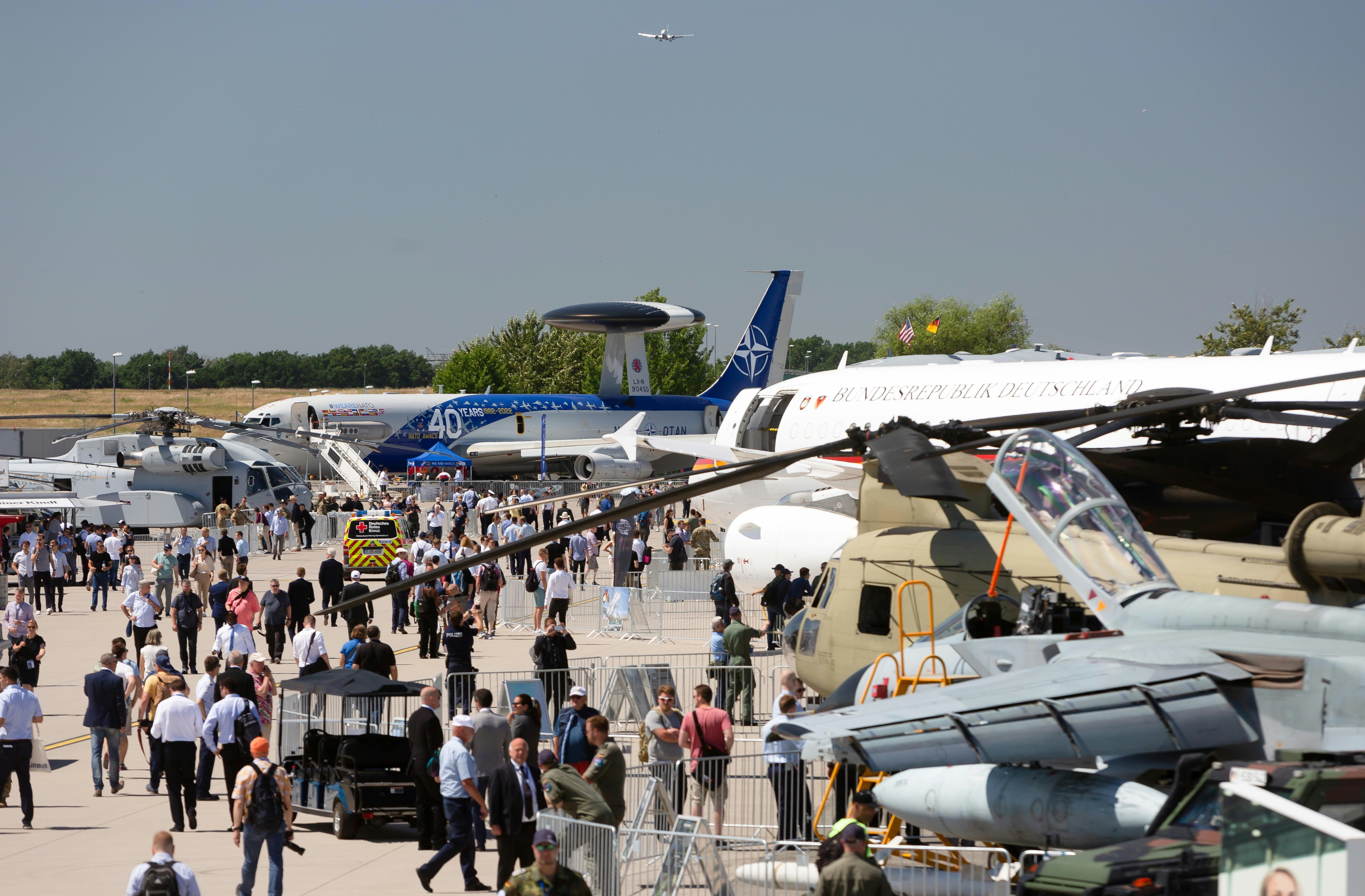
At ILA Berlin 2026, Deutsche Aircraft unveiled a series of technological advancements and strategic partnerships that underscore its dedication to innovation and sustainability within regional and special-mission aviation. The German original equipment manufacturer (OEM) highlighted significant progress in the development and industrialisation of its next-generation D328eco® regional turboprop, positioning itself at the forefront of both commercial and multi-role aviation sectors.

Technological Advancements and Strategic Partnerships

In collaboration with Sierra Nevada Corporation, Deutsche Aircraft introduced an integrated uncrewed aircraft system designed to complement the D328MR platform. This new capability extends operational reach for intelligence, surveillance, disaster response, and environmental monitoring missions, targeting both civil and governmental multi-role operations. The integration of uncrewed systems reflects the company’s commitment to expanding the versatility and effectiveness of its aircraft in diverse operational contexts.

Further advancing sustainable aviation, Deutsche Aircraft partnered with INERATEC to showcase a fully integrated synthetic fuel-to-flight solution. This demonstration featured a D328® Multi-Role Maritime Patrol Aircraft alongside a containerised synthetic fuel production unit and autonomous refuelling concepts. The scalable ecosystem enables on-site synthetic fuel generation, supporting lower-emission, resilient operations in remote and mission-critical environments. This innovation reduces logistical dependencies and enhances operational autonomy, addressing key challenges in sustainable mission execution.

Deutsche Aircraft also announced a long-term supply agreement with Hexcel to incorporate advanced composite materials into the D328eco airframe. This partnership aims to optimise weight reduction, durability, and fuel efficiency, thereby supporting both performance and sustainability objectives. Additionally, it strengthens the resilience of the European aerospace supply chain by fostering closer industrial collaboration.

Supported by Germany’s LuFo Klima programme, Deutsche Aircraft demonstrated progress in sustainable aviation research, including sustainable aviation fuel (SAF) readiness, advanced testing, and acoustic optimisation. The German Aerospace Center’s (DLR) D328 UpLift research aircraft and simulator were showcased to highlight ongoing validation trials, reflecting the company’s focus on practical, data-driven advancements in reducing environmental impact.

Industry Challenges and Market Dynamics

Deutsche Aircraft acknowledged persistent supply chain challenges, particularly in equipment sourcing. To address these issues, the company plans to introduce its own landing gear design, aiming to enhance supply chain reliability and operational independence. This strategic move is intended to mitigate risks associated with external suppliers and ensure greater control over critical components.

Market reception to the D328MR has been positive, especially due to its short take-off and landing capabilities and lower operational costs. These features have garnered interest from European defence and parapublic sectors. However, the competitive landscape remains intense. At ILA Berlin, companies such as Elbit Systems presented advanced defence technologies, including airborne laser systems and drones, while Boeing and Rheinmetall unveiled an enhanced Ghost Bat for Germany, signalling robust competition within the defence and aerospace markets.

Commitment to Collaboration and Sustainability

Nico Neumann, CEO of Deutsche Aircraft, emphasised the importance of collaboration across the European aerospace ecosystem during ILA Berlin 2026. He stated, “From sustainable propulsion concepts and applied research to multi-role mission capabilities and industrial partnerships, we are translating innovation into practical aviation solutions. The momentum and engagement we experienced throughout the week reinforce our commitment to shaping a more sustainable, resilient future for regional aviation.”

Through its integrated approach—combining technological innovation, strategic partnerships, and a focus on sustainability—Deutsche Aircraft is positioning itself as a key player in the evolving European aerospace sector.
More news
The Role of Aviation in Linking Global Economies and Communities

The Role of Aviation in Linking Global Economies and Communities

The Role of Aviation in Linking Global Economies and Communities Every day, millions of passengers rely on a complex aviation ecosystem that connects cities, countries, and economies across the globe. This system encompasses commercial airlines, airports, aircraft manufacturers, and maintenance providers, forming a critical foundation for global mobility and economic development. As passenger traffic recovers and demand for air connectivity intensifies, the aviation sector is entering a new phase characterized by modernization, sustainability initiatives, and digital transformation. Aviation’s Integral Contribution to the Global Economy Aviation remains a cornerstone of the global transportation network, facilitating international trade, supporting tourism, enabling business travel, and linking remote regions to major economic hubs. The sector’s growth is propelled by increasing urbanization, rising disposable incomes, and the expansion of the middle class worldwide, all of which drive higher demand for air travel. In response, airlines are investing heavily in fuel-efficient aircraft and advanced technologies aimed at enhancing operational performance while reducing environmental impact. Market analyses underscore this upward trajectory. According to Mordor Intelligence, the global aviation market is projected to expand from $358.85 billion in 2025 to $524.14 billion by 2030, reflecting a compound annual growth rate (CAGR) of 5.77%. This growth is underpinned by rising passenger volumes, fleet expansions, and sustained investments in aviation infrastructure. Market Dynamics and Regional Developments The aviation market continues to broaden as airlines introduce new routes and augment fleet capacities. Commercial aviation dominates the industry, with passenger travel constituting the majority of activity. Cargo aviation also plays a vital role, underpinning global supply chains and supporting the rapid growth of e-commerce. Regionally, North America maintains a leading position, commanding 34.87% of the global market share. This dominance is attributed to its extensive airline networks, robust passenger demand, and ongoing investments in technology and infrastructure. Meanwhile, the Asia-Pacific region is emerging as one of the fastest-growing markets, driven by rapid economic development and escalating demand for air travel. Emerging Trends and Industry Challenges The aviation industry is undergoing significant transformation, driven by several key trends. Airlines are increasingly adopting next-generation, fuel-efficient aircraft and integrating Sustainable Aviation Fuel (SAF) to mitigate environmental impacts. Digital technologies are enhancing operational efficiency and improving passenger experiences, while predictive maintenance techniques are reducing aircraft downtime. Concurrently, airport modernization projects aim to increase capacity and elevate service standards. Despite these advancements, the sector faces notable challenges. Persistent engine supply constraints, highlighted by airline executives at the recent IATA Annual General Meeting in Rio de Janeiro, are expected to continue for at least the next five years, according to United Airlines CEO Scott Kirby. Volatility in fuel prices remains a major concern, as jet fuel constitutes a significant portion of airline operating costs. Economic uncertainties may also lead consumers to curtail discretionary spending, potentially dampening demand following the peak summer travel season. Additionally, operational complications have arisen from the flawed implementation of the European entry and exit system, affecting carrier efficiency. Nevertheless, demand for air travel remains strong in key markets such as Spain and Portugal, reaffirming aviation’s enduring role in connecting people and economies worldwide. Outlook for the Aviation Industry As the aviation sector confronts both opportunities and obstacles, its focus on modernization, sustainability, and digital innovation will be essential. By adapting to shifting market conditions and addressing operational challenges, the industry is poised to continue linking global economies and communities, fostering growth and connectivity in the years ahead.
Middle East Tensions Have Limited Impact

Middle East Tensions Have Limited Impact

Middle East Tensions Have Limited Impact on Malaysia’s Aviation MRO Sector The escalating conflict in the Middle East has introduced fresh uncertainty into global markets, sparking concerns over fuel prices, supply chains, and operational stability across various industries. Despite these challenges, Malaysia’s aviation maintenance, repair, and overhaul (MRO) sector has so far experienced only a limited immediate impact. Operational Stability Amid Rising Costs Kong Hon Leong, managing director and executive plant leader of GE Engine Services (Malaysia) Sdn Bhd (GEESM), confirms that the company has not yet felt significant operational disruptions. While closely monitoring the situation and maintaining communication with customers, Kong acknowledges that rising fuel prices have increased costs associated with running engines in test cells during maintenance. Nevertheless, he describes these cost increases as manageable and not a major concern at the business level at this stage. This operational resilience is reflected across the broader MRO sector, which remains largely driven by regulatory and safety imperatives. Shamsul Kamar Abu Samah, CEO of National Aerospace Industry Corp Malaysia (NAICO Malaysia), emphasizes that MRO activities continue to ensure aircraft airworthiness regardless of geopolitical challenges. He notes that airlines have not cancelled aircraft orders, nor have manufacturers such as Boeing and Airbus announced any production scale-backs. According to Shamsul Kamar, the sector’s fundamentals remain intact despite the geopolitical tensions. Emerging Opportunities and Sector Outlook The ongoing instability in the Middle East may, in fact, create new opportunities for Malaysian MRO providers. Airlines operating in conflict-affected regions could increasingly seek maintenance support, aircraft parking, and technical services outside their home markets. Shamsul Kamar highlights Malaysia’s capability to service aircraft beyond its domestic operators, positioning the country as a potential hub for Middle Eastern carriers should the conflict persist. This perspective is shared by Base Maintenance Malaysia Sdn Bhd (BMM), a local venture of Singapore’s SIA Engineering Co Ltd. BMM chairman Foo Kean Shuh points out that the industry has already endured significant supply chain disruptions during the Covid-19 pandemic and has seen gradual improvements since. While the company is monitoring the geopolitical developments closely, Foo reports no significant impact to date. In fact, BMM has observed increased interest from prospective customers seeking alternative maintenance options amid the current uncertainties. Broader Market Reactions and Risk Management Challenges Malaysia’s aviation sector’s muted response to Middle East tensions aligns with broader market reactions. CNBC commentator Jim Cramer advises vigilance but notes that market responses have been relatively subdued so far. Steve Brice, Chief Investment Officer at Standard Chartered, anticipates some market weakness over the summer but maintains a cautiously optimistic long-term outlook, particularly in light of major upcoming IPOs. Meanwhile, Bosch CEO Stefan Hartung confirms that the company remains on track to meet its 2026 targets, though he remains alert to potential supply chain disruptions linked to the region. However, the conflict has exposed vulnerabilities in risk management, especially within the insurance sector, where fluctuating rates and availability are prompting significant strategic adjustments. For now, Malaysia’s MRO industry continues to demonstrate resilience, with sector leaders closely monitoring developments and prepared to adapt should the conflict’s impact deepen.
Malaysia’s aerospace ambitions take flight

Malaysia’s aerospace ambitions take flight

Malaysia’s Aerospace Ambitions Take Flight As the global aerospace industry grapples with ongoing supply chain disruptions, Malaysia is rapidly establishing itself as a pivotal hub for major aerospace investments. Leading international companies, including the US-based GE Aerospace and Singapore’s SIA Engineering Co Ltd (SIAEC), are expanding their operations in the country, attracted by Malaysia’s skilled workforce, well-developed aviation infrastructure, and competitive cost advantages. Expanding Infrastructure and Capacity GE Aerospace is currently developing a new 500,000 square foot engine overhaul facility in Sepang, Selangor. This initiative forms part of GE’s broader US$45 million investment plan targeting its Asia-Pacific maintenance, repair, and overhaul (MRO) network over the next five years. The facility is expected to be operational by 2028 or 2029. The initial phase will focus on constructing a dedicated engine test cell, followed by the establishment of a comprehensive MRO facility within the subsequent year. Kong Hon Leong, managing director and executive plant leader of GE Engine Services (Malaysia) Sdn Bhd (GEESM), highlighted that this expansion will at least double the company’s current annual engine overhaul capacity at its existing 300,000 square foot facility in Subang, which currently employs approximately 700 workers. In parallel, SIA Engineering Co Ltd has inaugurated its Base Maintenance Malaysia Sdn Bhd (BMM) operation at Subang Airport. The first of two planned hangars is already operational, capable of accommodating two wide-body and one narrow-body aircraft simultaneously. A second hangar is scheduled to open by the end of the year, which will increase the facility’s capacity to handle up to six aircraft maintenance checks concurrently. BMM’s CEO, Lee Yang Loong, emphasized Malaysia’s strong aerospace talent pool and existing infrastructure as key factors influencing the investment decision. He noted the presence of numerous training institutions and a steady supply of skilled aerospace professionals that support maintenance activities. Additionally, the availability of six pre-developed aircraft hangars at Subang Airport, constructed by Impeccable Vintage Properties Sdn Bhd—a subsidiary of Khazanah Nasional Bhd—has expedited the facility’s operational readiness compared to greenfield developments elsewhere. Strategic Challenges and Policy Directions Despite these promising developments, Malaysia’s aerospace ambitions face significant challenges. The country aims to transition from a manufacturing-centric economy to one that captures greater value within the aerospace sector, necessitating comprehensive policy reforms and active stakeholder engagement. The chief investment officer of Khazanah Nasional Bhd has underscored the importance of moving beyond manufacturing to develop capabilities that secure a larger share of the industry’s economic benefits. The National Defence Industry Policy (NDIP) 2026–2030 further reflects this strategic shift, emphasizing the goal of establishing a self-reliant military and defense industry. This policy highlights the critical role of innovation and the reduction of dependence on foreign technology in achieving national security and technological advancement objectives. Regional competition is intensifying, with markets such as Hong Kong actively promoting aerospace technology development. Malaysia’s capacity to innovate, align its aerospace sector with national security priorities, and cultivate a self-sustaining ecosystem will be decisive factors in its ability to emerge as a leading regional aerospace hub. As global demand for aircraft maintenance continues to rise, Malaysia’s expanding role in the aerospace industry is increasingly evident. However, the country’s future leadership in this sector will depend on how effectively it addresses policy challenges, fosters innovation, and navigates competitive pressures in the coming years.
US and Global Partners Address AI-Driven Changes in Travel Payment Systems

US and Global Partners Address AI-Driven Changes in Travel Payment Systems

US and Global Partners Address AI-Driven Changes in Travel Payment Systems The United States has joined forces with a coalition of countries—including the United Kingdom, Singapore, the United Arab Emirates, India, Germany, Australia, Japan, South Korea, and Canada—to confront the rapid transformation of travel payment systems driven by artificial intelligence. As major corporations such as Visa, Mastercard, OpenAI, and Google accelerate the integration of AI into booking and payment processes, the travel industry is preparing for profound changes anticipated by 2026. AI Agents Reshape Travel Payments By 2026, AI-powered agents are expected to become central to how travelers book and pay for flights and accommodations. These digital agents, supported by leading payment and technology companies, will automate much of the booking process, enabling travelers to establish spending limits and preferences. Airlines including Emirates, Lufthansa, Delta, British Airways, and Singapore Airlines are actively preparing for a fundamental shift in service distribution and pricing models as AI-driven systems become standard. Visa and Mastercard have announced that their automated digital agents will comply with self-imposed spending controls, providing consumers with greater oversight while streamlining transactions. Recent fintech research indicates that 77 percent of users now rely on AI during their shopping journeys, reflecting a significant shift in consumer behavior and expectations. Leading Countries in AI Travel Payment Adoption Countries with advanced digital payment infrastructures are leading this transformation. The anticipated impact on the global travel payment landscape varies among these nations. The United States, with OpenAI and Visa’s cross-integration, is expected to experience very high adoption. The United Kingdom’s strong fintech sector and airline digitization position it for high adoption, while Singapore’s 77 percent AI shopping adoption base also forecasts very high impact. The UAE’s automation in aviation and luxury travel, India’s rapid digital payments and online travel agency growth, Japan’s digital tourism frameworks, and South Korea’s mobile-first AI commerce integration all contribute to high adoption levels. Germany, Canada, and Australia are also notable players, with medium to medium-high anticipated outcomes. These countries are poised to set the pace for global adoption, shaping how tourism and business travel payments are processed worldwide. Challenges and Industry Response Despite the promising outlook for AI-driven travel payments, the transition faces significant challenges. The Global Business Travel Association (GBTA) has identified obstacles such as limited AI adoption, fragmented data systems, and inconsistent traveler experiences. Market responses remain mixed, with some companies emphasizing governance, security, and data quality to build trust in AI-powered commerce. Industry leaders, as discussed at the Skift Data + AI Summit, stress the importance of clear ownership, robust technical foundations, and transparency to ensure successful implementation. The recent sale of American Express Global Business Travel (Amex GBT) to Long Lake Capital Management highlights the evolving role of AI in the sector and may prompt other travel management companies to accelerate their AI adoption efforts to maintain competitiveness. Looking Ahead As artificial intelligence continues to reshape travel payments, the industry confronts both opportunities and challenges. The coming years will test the ability of airlines, payment providers, and technology firms to deliver secure, seamless, and trustworthy experiences for travelers around the world.
JAL and Partners to Develop Aircraft MRO Facility at Vietnam’s Van Don Airport

JAL and Partners to Develop Aircraft MRO Facility at Vietnam’s Van Don Airport

JAL and Partners to Develop Aircraft MRO Facility at Vietnam’s Van Don Airport Japan Airlines (JAL), in collaboration with Hong Kong Aircraft Engineering Company (HAECO), Toyota Tsusho, and Vietnam’s Sun Group, has announced plans to establish a large-scale aircraft Maintenance, Repair, and Overhaul (MRO) complex at Van Don International Airport in northern Vietnam. The consortium will form a joint venture company to oversee the project, which involves a total investment of $360 million, with operations expected to commence in 2028. A Strategic Aviation Hub for Vietnam The new facility will be constructed on a 20-hectare site within Van Don International Airport and is poised to become one of the largest aircraft maintenance hubs in Vietnam. Designed to service up to four wide-body and two narrow-body aircraft simultaneously, the complex aims to meet the increasing demand for sophisticated aviation maintenance services in the country. This development reflects Vietnam’s ambition to reduce reliance on established regional MRO centers in Singapore, Malaysia, and Thailand, where much of its current aircraft maintenance is outsourced. Each partner in the joint venture brings distinct expertise to the project. HAECO will provide advanced maintenance technologies and extensive global operational experience. Sun Group, with its strong background in airport and infrastructure development within Vietnam, will manage the foundational construction. Toyota Tsusho will oversee the global supply chain and operational logistics, while JAL will contribute its operational and maintenance expertise, emphasizing safety, quality, and human resource development. Market Potential and Challenges According to the Civil Aviation Authority of Vietnam, the domestic MRO market is projected to reach $7.4 billion by 2030. The establishment of this facility is expected to enhance Vietnam’s self-sufficiency in aircraft maintenance, facilitate technology transfer, and encourage the clustering of related industries. These developments are anticipated to stimulate regional economic growth and generate employment opportunities. Despite the promising outlook, the project faces significant challenges. The joint venture must navigate complex regulatory and logistical hurdles to ensure compliance with stringent international maintenance standards. Additionally, securing a skilled workforce remains a critical concern, given the specialized nature of MRO operations and the current shortage of qualified technicians in Vietnam. Regional Implications and Competitive Landscape The entry of this joint venture into the regional MRO market is likely to intensify competition. Established players such as Emirates, with its extensive MRO facility in Dubai, and VietJet’s MRO center in Thailand may respond by enhancing their own capabilities or pursuing new strategic partnerships to maintain market share and operational efficiency. This heightened competition could drive innovation and elevate standards across the Asia-Pacific aviation maintenance sector, ultimately benefiting airlines operating in the region. By developing a major MRO hub at Van Don, JAL and its partners aim not only to address Vietnam’s growing aviation maintenance needs but also to position the country as a significant player in the regional aircraft maintenance industry.
Silla University’s Aviation Maintenance Department Graduates Its First Dual Degree Student

Silla University’s Aviation Maintenance Department Graduates Its First Dual Degree Student

Silla University Celebrates First Graduate of Dual Degree Aviation Maintenance Program Silla University in Busan has reached a pivotal moment in international aviation maintenance education by graduating its first student from a dual degree program in partnership with South East Technological University (SETU) in Ireland. This milestone arrives amid a growing global shortage of skilled aviation maintenance professionals, as experienced workers retire and demand for qualified technicians intensifies. At the same time, many recent graduates, particularly in technology sectors, continue to face a challenging employment landscape marked by high unemployment and limited hiring opportunities. A Groundbreaking Dual Degree Collaboration Sugeun Kim, a student in Silla University’s Department of Aviation Maintenance, was selected as the inaugural participant in the dual degree program jointly administered with SETU’s Department of Aerospace and Mechanical Engineering. The program enables students to earn degrees from both institutions by completing three years of study at Silla University followed by one year at SETU. Kim is scheduled to begin his studies at SETU in September 2026. This initiative differs from traditional exchange programs by offering formal recognition of Silla University’s aviation maintenance curriculum from a leading European institution. SETU, one of Ireland’s foremost public universities with approximately 18,000 students and over 2,000 faculty and staff, is highly regarded for its expertise in aerospace and aviation maintenance education. Kim’s acceptance into the program was the result of a rigorous selection process, including interviews with SETU professors and international exchange officers. His English proficiency, subject knowledge, and academic aptitude were thoroughly evaluated. Silla University attributes this success to its enhanced English language instruction, practical training, and strong industry partnerships, which collectively prepare students to compete on an international stage. Addressing Industry Needs Amid Global Workforce Challenges The timing of this achievement is particularly noteworthy as the Maintenance, Repair, and Overhaul (MRO) market expands across Europe, the Middle East, and Asia, intensifying competition for globally skilled talent. Other institutions, such as Sinclair Community College and Sierra Nevada Corporation, are similarly investing in specialized training and workforce development to meet industry demands, highlighting the critical role of programs like Silla’s dual degree initiative. Despite the robust demand within aviation maintenance, the broader job market for recent graduates remains difficult, especially in technology-related fields where unemployment rates remain high and hiring is slow. Silla University’s approach aims to provide its graduates with a competitive advantage by equipping them with international credentials and practical experience. Looking forward, Silla University’s Department of Aviation Maintenance plans to expand overseas employment opportunities and deepen international educational cooperation through the dual degree program. The university is actively building a global network for aviation maintenance talent development, with ambitions to extend its reach to Europe, Australia, and the Middle East. Professor Youngin Kim of Silla University’s Department of Aviation Maintenance remarked, “This is not only an individual achievement for the student but also a demonstration of the international competitiveness of Silla University’s aviation maintenance education. We will continue to expand global educational programs so our students can showcase their capabilities in the global aviation industry.”
Salaries of America's Regional Turboprop Pilots in 2026

Salaries of America's Regional Turboprop Pilots in 2026

Salaries of America's Regional Turboprop Pilots in 2026 Over the past decade, regional airline pilot salaries in the United States have experienced a significant surge. First-year first officers at major regional jet carriers now earn between $80,000 and $110,000, a dramatic increase that has garnered considerable attention within the aviation industry and the media. However, comparatively little focus has been placed on the pilots operating turboprop and piston aircraft for Essential Air Service (EAS) carriers, charter operators, and medevac companies—pilots who occupy a tier below their regional jet counterparts. The Role and Compensation of Turboprop and Piston Pilots Pilots flying turboprop and piston aircraft such as the ATR 42, Pilatus PC-12, Cessna Caravan, and various piston twins primarily serve smaller airports that regional jets cannot efficiently access. These positions often function as stepping stones, enabling pilots to accumulate the flight hours necessary to advance to regional jet roles. The number of U.S. carriers operating turboprop and piston aircraft in scheduled service remains relatively limited. JSX, known predominantly for its semi-private Embraer regional jet service, began introducing ATR 42-600 turboprops in December 2025, with plans to expand its fleet to 25 aircraft. These 30-seat, all-premium turboprops are designed to serve smaller airports and complement JSX’s existing jet operations. Other notable operators include Boutique Air, which flies Pilatus PC-12 turboprops under EAS contracts; Southern Airways Express, operating Cessna 208 Caravans; and Cape Air, which, while not a turboprop operator, utilizes piston-powered Cessna 402s, Tecnam P2012 Travellers, and Britten-Norman Islanders on regional routes. Despite their critical role, compensation at these carriers remains substantially lower than that of regional jet pilots. At JSX, a first-year first officer earns approximately $35,000, while a fifth-year captain’s salary can reach around $135,000. Data from Cape Air in 2023 indicates a median gross pay of $89,130 for first-year captains and $106,616 for second-year captains, figures that include guaranteed hours, overtime, and incentives. Smaller EAS operators, particularly those flying single-engine turboprops, typically offer salaries at the lower end of the professional spectrum. Entry Requirements and Industry Dynamics The disparity in pay is partly attributable to differing certification and experience requirements. Regional jet first officer positions at major Part 121 carriers mandate an Airline Transport Pilot (ATP) certificate, which generally requires 1,500 flight hours or 1,000 hours for graduates of approved aviation university programs. In contrast, most turboprop and piston operators operate under Part 135 regulations, allowing them to hire pilots holding a Commercial Pilot License with significantly fewer flight hours. This lower entry barrier positions these roles primarily as time-building opportunities rather than long-term career destinations. Challenges Facing Turboprop Pilots in 2026 In 2026, regional turboprop pilots confront challenges that extend beyond compensation. The competition for experienced crews is intensifying, driven by demand from commercial airlines and private aerospace employers alike. Concurrently, rising fuel costs are compressing airline profit margins, compelling carriers to reevaluate their compensation structures to retain skilled personnel. Some competitors have responded by increasing salaries and enhancing benefits, while the aviation maintenance sector contends with labor shortages and escalating costs—factors that may further influence industry dynamics and pilot remuneration in the years ahead. Despite these pressures, turboprop and piston pilot positions continue to serve as vital entry points for aspiring aviators, even as the sector adapts to evolving economic and competitive forces.
Ahmedabad Air India Crash Highlights Need for Greater Transparency in Software Failures

Ahmedabad Air India Crash Highlights Need for Greater Transparency in Software Failures

Ahmedabad Air India Crash Highlights Need for Greater Transparency in Software Failures A Cautionary Tale from Cybernetics to Aviation In 1964, Norbert Wiener, the pioneering mathematician and father of cybernetics, published *God & Golem, Inc.*, in which he warned of the perils posed by intelligent systems that surpass human understanding and control. Wiener frequently invoked the allegory of the Sorcerer’s Apprentice, where a magical broom, set in motion by an apprentice, floods a house because he lacks the ability to stop it. This story was not a critique of technology itself but a caution against blind obedience in the face of complexity that exceeds human oversight. More than half a century later, Wiener’s warning resonates profoundly in the wake of the Air India Flight 171 disaster. Exactly one year ago, the aircraft crashed shortly after departing Ahmedabad, resulting in the deaths of 260 people in one of the deadliest aviation accidents in India’s history. The tragedy continues to cast a long shadow, with families still grieving and survivors like Vishwash Kumar Ramesh—the sole survivor—bearing deep psychological and financial burdens. Ramesh has publicly demanded greater transparency and honesty regarding the circumstances of the crash, reflecting the broader calls from victims’ families who remain without clear answers or justice. The Challenge of Investigating Software-Driven Failures The investigation into Flight 171 remains unresolved. Indian authorities have pledged that the final report will be grounded in evidence, yet they have not provided a definitive timeline for its publication, citing the need for further examination of the aircraft’s engines. This delay has only heightened demands for openness and accountability. The crash also raises a fundamental question about ownership of truth in the era of technological failure. Historically, industrial accidents were largely mechanical, allowing investigators to analyze broken components and tangible evidence. Today’s aircraft, however, are sophisticated, software-driven machines that generate enormous volumes of digital data. Crucial evidence following a failure is often not physical but embedded within proprietary algorithms, encrypted logs, and corporate intellectual property, complicating efforts to uncover the facts. This challenge extends beyond aviation. Modern cars, healthcare systems, financial markets, power grids, and military operations increasingly rely on software and automation. As these technologies evolve, the key to understanding failures often lies in code and data that are difficult for external parties to access or interpret. The Imperative for Transparency and Accountability The aftermath of the Ahmedabad crash underscores the urgent necessity for greater transparency in the management of digital evidence. Survivors and bereaved families deserve clear and timely explanations—not only to find closure but also to ensure accountability and enhance safety standards. As technological systems grow ever more complex, society must reconsider how truth is established when these systems fail and who is entitled to scrutinize the evidence. The lesson drawn from Wiener’s early insights and the ongoing investigation is unequivocal: transparency and oversight must advance in tandem with technological progress, or the truth risks remaining elusive.
Air Canada Ends Widebody Monopoly with Airbus A321XLR Transatlantic Flight from Montreal to Toulouse

Air Canada Ends Widebody Monopoly with Airbus A321XLR Transatlantic Flight from Montreal to Toulouse

Air Canada Ends Widebody Monopoly with Airbus A321XLR Transatlantic Flight from Montreal to Toulouse In a significant development for international aviation, Air Canada has successfully completed the first commercial transatlantic flight operated by the Airbus A321XLR, flying nonstop from Montreal–Trudeau International Airport to Toulouse-Blagnac Airport. This achievement challenges the traditional reliance on widebody aircraft for intercontinental routes and introduces a new paradigm in which single-aisle jets can efficiently traverse the North Atlantic. A New Era for Transatlantic Travel Historically, airlines have depended on large twin-aisle aircraft such as the Boeing 777, 787, or Airbus A330 to service transatlantic flights. This approach often required passengers from secondary cities to endure complex hub-and-spoke itineraries, involving lengthy layovers and increased susceptibility to delays. The Airbus A321XLR, with its extended range of approximately 8,700 kilometers, disrupts this model by enabling direct, point-to-point flights between cities that previously lacked the passenger volume to justify widebody service. This innovation promises to reduce connections, minimize travel fatigue, and streamline journeys for travelers. Montreal was a strategic choice for this inaugural flight. Serving as Air Canada’s primary gateway to Francophone Europe, Montreal–Trudeau International Airport allows the airline to profitably operate routes to secondary European destinations that cannot sustain larger aircraft. The direct flight to Toulouse, home to Airbus’s global manufacturing headquarters, highlights the industrial significance of this milestone and marks the transition of the A321XLR from testing to commercial operation. Overcoming Challenges and Industry Implications Air Canada’s introduction of the A321XLR followed considerable delays in aircraft delivery, which extended over two years and complicated fleet planning and route development. Despite these obstacles, the airline’s deployment of the aircraft positions it at the forefront of an emerging industry trend. Major carriers are increasingly exploring long-haul narrowbody operations to enhance flexibility and reduce operational costs. Competitors such as American Airlines are reportedly considering new widebody orders to remain competitive with Delta and United, while other airlines are expected to follow Air Canada’s lead by expanding their transatlantic services with next-generation narrowbody jets. This shift is likely to intensify competition on key routes, reshape market dynamics, and provide passengers with greater choice. By leveraging the capabilities of the A321XLR, Air Canada is expanding its network and redefining the possibilities of transatlantic air travel. For travelers seeking additional information, Montreal–Trudeau Airport offers comprehensive resources including live flight schedules, terminal maps, and check-in details. Passengers can also access Air Canada’s official portal for booking, baggage policies, and cabin information specific to the A321XLR, while real-time flight tracking and route monitoring are available through services such as FlightAware. Air Canada’s historic A321XLR flight marks a pivotal moment in international aviation, signaling the end of the widebody monopoly and ushering in a new era of direct, efficient, and passenger-centric transatlantic service.
Leading Edge Aviation to Receive First Piper Archer DX at Alhama Training Base

Leading Edge Aviation to Receive First Piper Archer DX at Alhama Training Base

Leading Edge Aviation to Receive First Piper Archer DX at Alhama Training Base Leading Edge Aviation, a distinguished flight training provider operating campuses at London Oxford Airport and Alhama de Murcia, is preparing to enhance its fleet with the arrival of the first of four new Piper Archer DX aircraft at its Alhama, Murcia facility. The Piper Archer DX, a diesel-powered variant of the PA-28 Archer, features a Continental CD-155 jet-fuel engine paired with Garmin G1000 NXi avionics. This advanced configuration offers significant advantages in fuel efficiency and operational cost reduction compared to traditional avgas-powered trainers, making it particularly well-suited for high-utilization training environments. Fleet Expansion and Training Capabilities The introduction of the Archer DX will augment Leading Edge Aviation’s existing fleet, which currently includes Diamond DA40 and DA42 models alongside specialized platforms and advanced simulators. This strategic modernization facilitates a streamlined training pathway for students, enabling a smooth transition from single-engine to multi-engine instruction on standardized, contemporary systems. The investment reflects the company’s ongoing commitment to maintaining cutting-edge training resources that meet the evolving demands of pilot education. Industry Context and Market Challenges The delivery of the new aircraft occurs amid a complex and competitive aviation landscape. The business and general aviation sectors are contending with uncertainties fueled by ongoing legal disputes between prominent eVTOL developers Archer Aviation and Joby Aviation. These conflicts have introduced volatility into the market, even as the preowned business jet segment remains robust. Meanwhile, general aviation deliveries have experienced fluctuations in the first quarter of the year. Competitors are actively advancing their technological capabilities, exemplified by Honda’s recent achievement of its first full-scale eVTOL flight, as companies vie to secure or expand their positions within the rapidly evolving industry. Despite these challenges, Leading Edge Aviation continues to prioritize fleet modernization and excellence in training. The company recently celebrated the graduation of its Class of 2026 and marked the first anniversary of its Jet2FlightPath launch Approved Training Organisation (ATO) partnership, underscoring its dedication to delivering state-of-the-art training solutions in a dynamic market environment.
line