
Превращайте аналитические выводы ИИ в реальные действия

В тренде
Categories
Digital Payments, AI, and Aviation Strengthen Philippines-India Relations
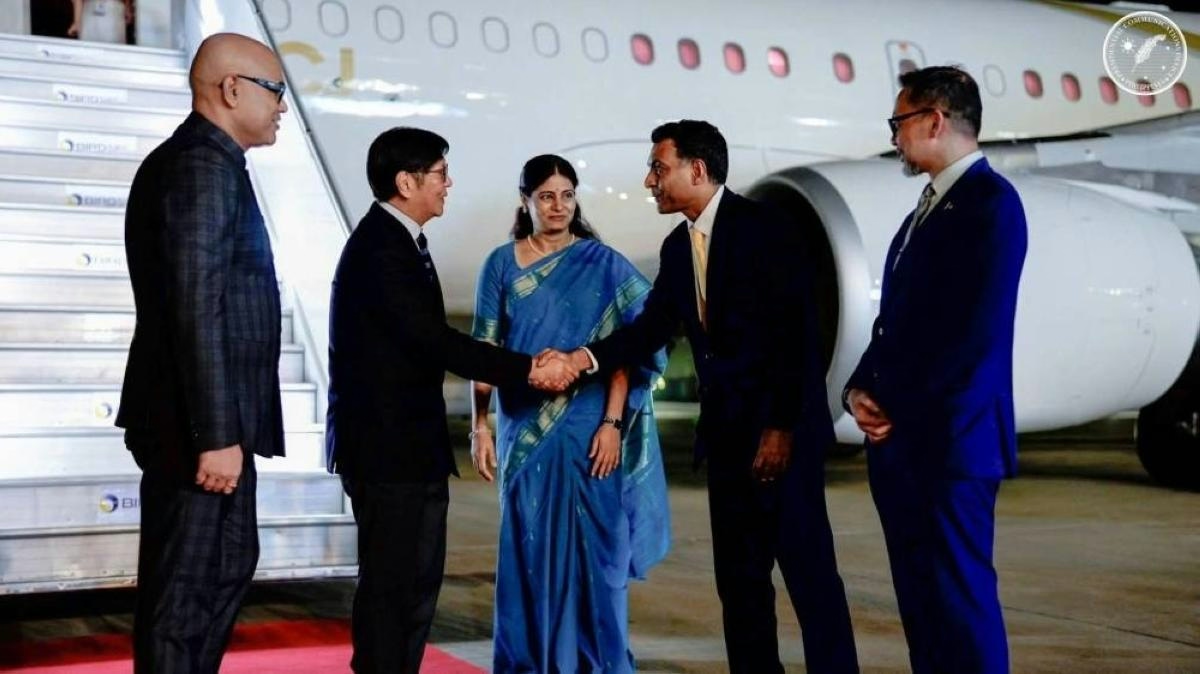
Digital Payments, AI, and Aviation Strengthen Philippines-India Relations
Expanding Economic Cooperation in Key Sectors
Digital payments, artificial intelligence (AI), telecommunications, and aviation have become focal points for enhanced business collaboration between the Philippines and India. This development was underscored during President Ferdinand R. Marcos Jr.’s engagements with Indian companies in New Delhi on the sidelines of the 18th BRICS Summit. The discussions culminated in commitments from Indian firms already operating in the Philippines to expand their investments, reflecting growing confidence in the bilateral economic relationship.
India is increasingly recognized as a crucial technology and business partner for the Philippines, as both nations pursue ambitious digital transformation agendas. President Marcos held talks with executives from NPCI International Limited to advance cooperation in digital payments, including exploring a partnership with LandBank to implement a payment system modeled on India’s Unified Payments Interface (UPI). Trade and Industry Secretary Maria Cristina Roque highlighted the potential benefits of such a system, particularly for overseas Filipino workers, small and medium enterprises, and government transactions. The initiative aims to improve interoperability of QR-based payments and facilitate faster cross-border financial flows.
Opportunities and Challenges in Digital and AI Integration
While the push toward digital payments and AI integration presents significant opportunities, it also introduces notable challenges. Regulatory complexities, technological integration issues, and the imperative to reskill the workforce remain pressing concerns. The Philippines’ involvement in the Pax Silica initiative seeks to strengthen its AI supply chain capabilities but raises important questions regarding technological control and dependence on foreign industries. The country’s national AI strategy, which aspires to increase AI data center capacity thirtyfold and establish the Philippines as a regional AI hub, faces hurdles related to infrastructure development and workforce preparedness.
Aviation Infrastructure and Strategic Partnerships
In the aviation sector, President Marcos met with representatives from GMR Group and Cavitex Holdings Inc. to discuss the Sangley Point International Airport project. Secretary Roque emphasized the critical need for new airport infrastructure to support anticipated growth in air travel, tourism, and trade. The proposed Sangley Point airport is envisioned as a multi-runway facility designed to alleviate congestion at Ninoy Aquino International Airport, enhance regional logistics, and accommodate increasing passenger and aircraft traffic. Nonetheless, collaboration in aviation may encounter regulatory and operational challenges, including the maintenance of safety standards and the navigation of complex geopolitical considerations.
Industry Engagement and Investment Prospects
During an Executive Roundtable Discussion, President Marcos engaged with leaders from Cognizant, VVDN Technologies, Hinduja Group, and HCLTech. These companies expressed strong intentions to expand their operations in digitalization, AI, telecommunications, and other technology-driven sectors. Secretary Roque noted that their positive experiences in the Philippines, combined with the country’s skilled workforce and expanding digital economy, position the nation as an attractive destination for further investment.
Navigating Regional Competition and Sovereignty Concerns
Despite the optimistic outlook, market responses to these initiatives may vary. While increased foreign investment is anticipated, concerns persist regarding economic dependency and technological sovereignty. Additionally, regional competitors such as Indonesia are advancing their AI and digital infrastructure, which could influence the Philippines’ strategic positioning within Southeast Asia.
As the Philippines and India deepen their cooperation across digital payments, AI, and aviation, the partnership’s trajectory will be shaped by a complex interplay of opportunities and challenges.
Ryanair and Alaska Airlines Apply AI to Operational Decision-Making
PlaneSense Suspends PC-12 Jet Card Sales
How AI Could Transform Bird-Strike Prevention for Business Aviation
American Airlines and Boeing Complete First 737 MAX Landing Gear Swap
Vietjet and Thales sign major MRO and AI deals in Paris
Etihad CEO Cites Aircraft Capacity as Limiting Factor Amid Growth in China and Africa
Artificial Intelligence Enters the Cockpit
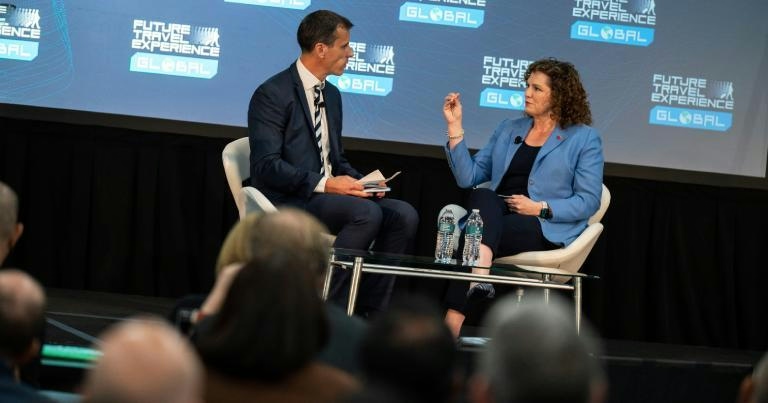
How Southwest Airlines is using technology, data and AI to strengthen CX while keeping the human touch
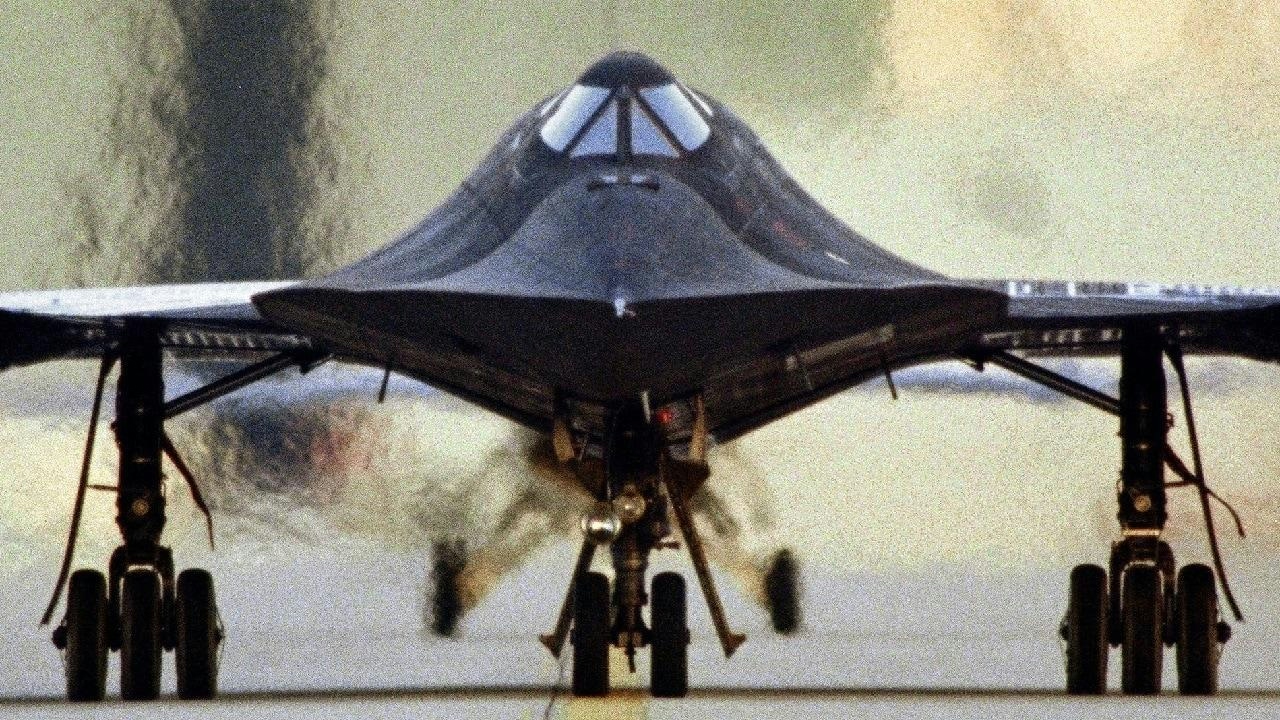
The SR-71 Blackbird Reached Mach 3.5 and 85,000 Feet Using Advanced Materials and Engines

Red Sea Airlines to Lease Two Boeing 737 MAX 8 Aircraft
