
Превращайте аналитические выводы ИИ в реальные действия

В тренде
Categories
Drone Innovations Explored by Hundreds at Air Force Museum
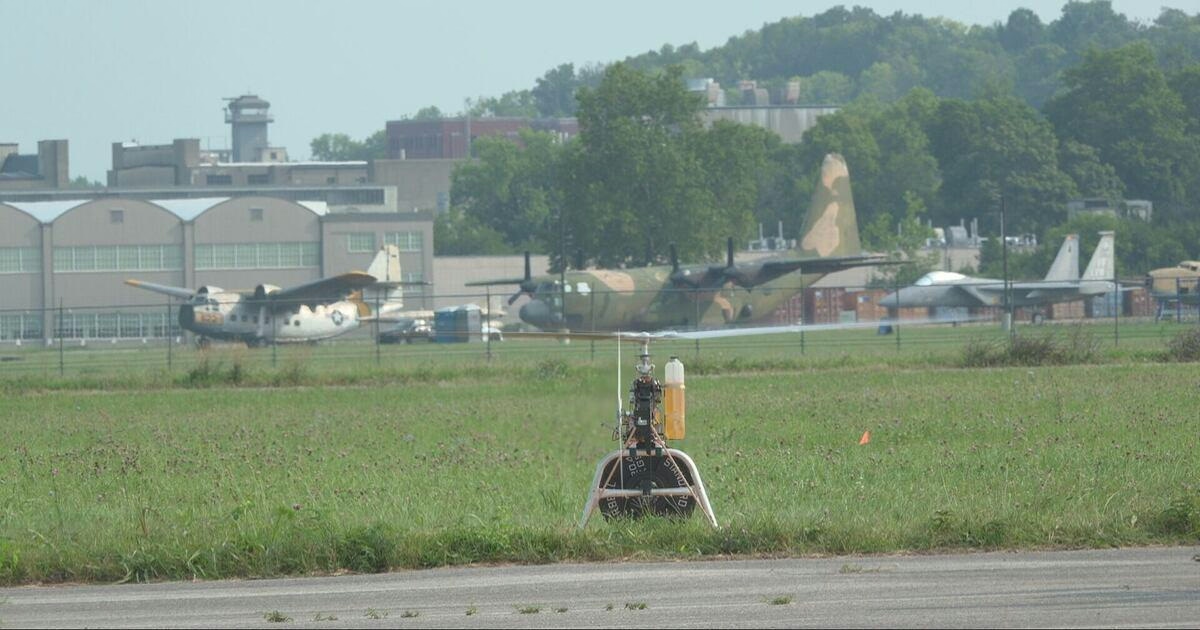
Drone Innovations Take Center Stage at National Museum of the U.S. Air Force
Hundreds of enthusiasts and industry experts convened at the National Museum of the U.S. Air Force in Dayton on Sunday to witness the culmination of the Defense Advanced Research Projects Agency (DARPA) Lift Challenge. This national competition, designed to push the boundaries of heavy vertical-lift drone technology, showcased the latest advancements in unmanned aerial systems. Participants from across the globe tested their custom-built drones, striving to meet the demanding objective of carrying payloads up to four times their own weight—a milestone that underscores both the potential and the technical challenges inherent in scaling drone capabilities for practical use.
Although no team fully reached the ambitious target, the event highlighted significant progress in drone engineering and design. Stephen Winchell, Director of DARPA, emphasized the broader vision behind the challenge, stating, “If there were no limits, if there was nothing that was stopping me, what would I do? One of our goals is to inspire the next generation of young aerospace engineers to get started early and start imagining the impossible and doing it.”
International Competition and Industry Implications
Among the international contenders was Peter Jakaeowsky and his team, Xtreme Aerial Concepts, who traveled from Vienna, Austria. Their drone, weighing just under 55 pounds, successfully lifted approximately 190 pounds, achieving a lift ratio of about 3.5 times its own weight and securing third place. The top positions were claimed by Avidrone and M Tech Operations, reflecting the high level of innovation present at the competition.
The Lift Challenge arrives at a critical juncture for the drone industry, as increased Pentagon support for startups signals a growing integration of drone technology into both commercial and military applications. Companies such as Ascent’s Aero Spirit have recently secured substantial contracts, while established defense contractors are intensifying their efforts. General Atomics, for example, has upgraded its SkyGuardian drone with enhanced weaponry, and BAE Systems is collaborating with Skunk Works on multi-mission air vehicles. These developments illustrate the fierce competition for dominance in a rapidly evolving market.
Despite the enthusiasm surrounding these technological advances, significant obstacles remain. Scaling production to meet the demands of heavy-lift drones presents considerable technical and logistical challenges. Additionally, the shifting geopolitical landscape complicates the deployment and adoption of drone technology. Incidents such as Iran’s recent downing of a drone amid regional tensions underscore the strategic and security implications that accompany these innovations.
Nonetheless, DARPA’s Winchell expressed optimism about the future. He remarked, “I hope we can get people started on this path to innovate and give them the tools they need to build successful companies and actually produce these things for the commercial market and for the military market.”
Sunday’s event at Wright-Patterson Air Force Base not only celebrated the technical achievements of the Lift Challenge but also sought to inspire the next generation of aerospace innovators. As the drone industry continues to advance, competitions like this are shaping the future of flight and redefining the possibilities within aerospace engineering.

Etihad Airways Suspends Airbus A380 Flights on Key Route

Aditya Birla Group Seeks Approval for Aircraft Leasing in GIFT City

Qatar Airways Highlights Innovation and Connectivity at Arabian Travel Market 2026

Hong Kong's Five-Year Plan Includes Andrew Fan's Aircraft Parts Processing Hub Proposal

ACIA Aero Leasing Delivers ATR72-600 to Air Nostrum

RTX Appoints Jill Albertelli as Head of Pratt & Whitney

TAT Technologies Joins Beyond Aero Hydrogen Aircraft Program

AURAK Study Highlights Barriers to Air Taxi Adoption in Emerging Economies

Xiamen Air Selects Altitude for 787 Maintenance at Heathrow

Etihad and Swissport Extend Global Partnership
