Изображение

Превращайте аналитические выводы ИИ в реальные действия

Присоединяйтесь к списку ожидания AeroGenie уже сегодня!

В тренде

Categories

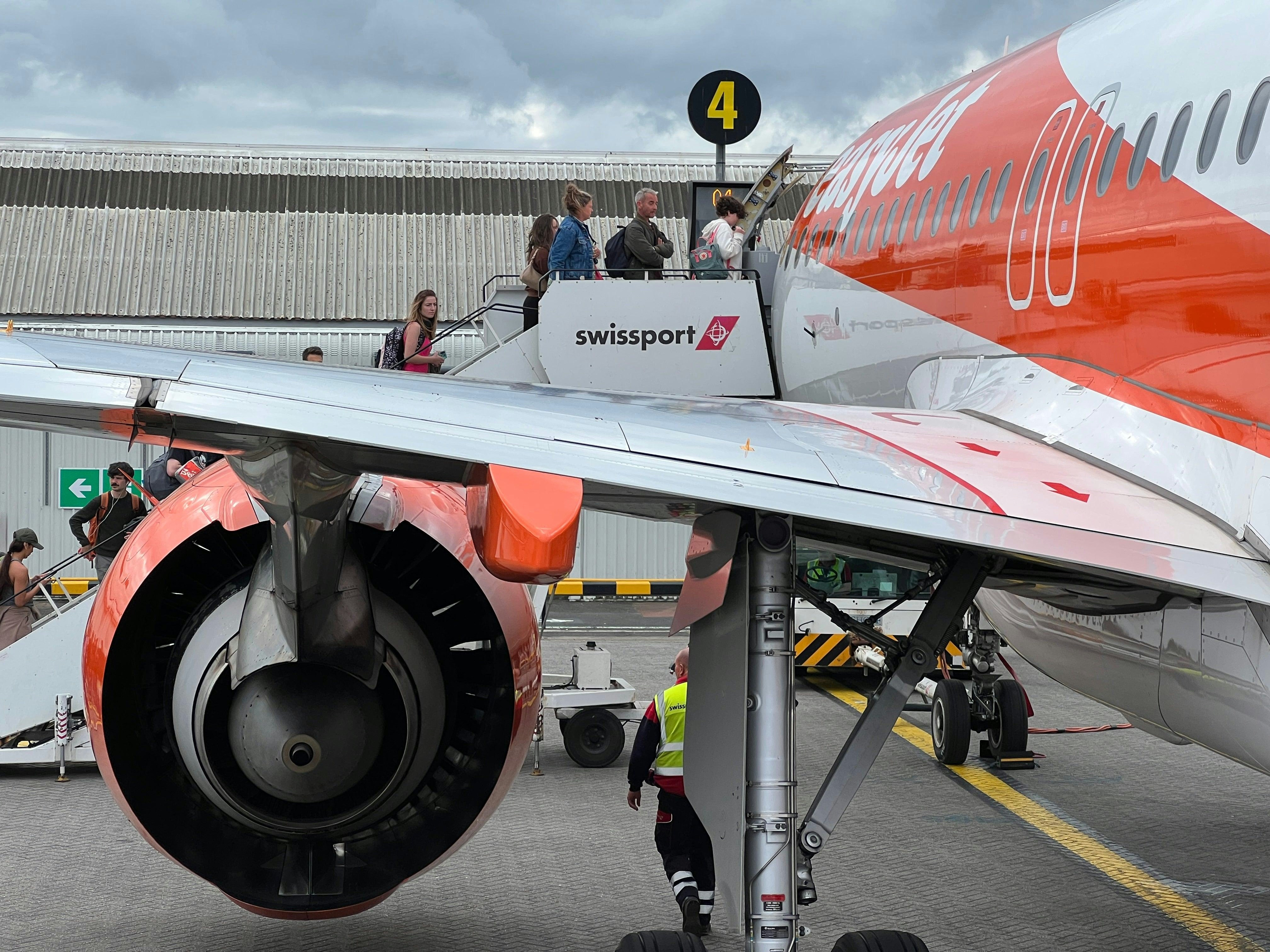
easyJet Receives 100th Airbus A320neo in Hamburg
June 10, 2026By ePlane AI
easyJet Receives 100th Airbus A320neo in Hamburg
0
0
easyJet
Airbus A320neo
Fleet Renewal

easyJet Receives 100th Airbus A320neo in Hamburg, Advancing Fleet Modernisation

easyJet has marked a significant milestone with the delivery of its 100th Airbus A320neo Family aircraft at Airbus’s Hamburg facility. This addition represents a crucial step in the airline’s ongoing fleet renewal and decarbonisation efforts. With over a quarter of its 359-aircraft, all-Airbus fleet now composed of the latest A320neo narrowbodies, easyJet reinforces its commitment to operational efficiency and environmental responsibility.

Enhanced Passenger Experience and Operational Efficiency

The newly delivered aircraft features Airbus’s advanced ‘Airspace cabin’, designed to elevate passenger comfort through improved lighting, a sophisticated colour scheme, and upgraded furnishings. Accessibility enhancements include braille indicators on seat row placards to assist visually impaired travellers. The cabin also benefits from increased shoulder room, touchless and redesigned lavatories aimed at improving hygiene, and a greater incorporation of repairable and recycled materials. Cabin crew will experience improved working conditions with redesigned galleys offering enhanced storage and, notably, the introduction of dual ovens at both the front and rear of the aircraft—a first for the A320 and A321neo models.

Future easyJet A320neo deliveries will be equipped with non-retractable LED Multi-Functional Runway Lights, a modification that reduces drag and weight while enhancing reliability and optical performance. These aircraft are powered by CFM LEAP-1A engines, which currently support operations with up to 50% Sustainable Aviation Fuel (SAF), with a target to achieve 100% SAF usage by 2030. Additionally, Skywise-enabled digital systems will facilitate data-driven operational efficiency.

The A320neo Family offers up to 20% lower fuel consumption and CO₂ emissions per seat compared to previous-generation aircraft, alongside a 50% reduction in noise footprint. These advancements are integral to easyJet’s strategy to reduce carbon intensity, lower operating costs, and improve the overall customer experience.

Strategic Fleet Renewal Amid Industry Challenges

This delivery aligns with easyJet’s broader plan to retire its older A319 aircraft by September 2029, aiming to increase fleet capacity and achieve unit cost savings. However, the airline faces potential challenges as Airbus has recently announced further delays in A320neo deliveries scheduled for 2027 and 2028, which may affect easyJet’s expansion timeline.

Despite ongoing fleet modernisation and operational improvements, easyJet continues to grapple with market pressures in the post-pandemic environment, including difficulties in enhancing its market capitalisation. These challenges have attracted takeover interest, notably from the U.S. investment firm Castlelake.

David Morgan, easyJet’s Chief Operating Officer, emphasized the significance of this milestone, stating, “The arrival of our 100th A320neo Family aircraft is a significant milestone for easyJet. These aircraft are at the heart of our strategy to operate a more efficient fleet and reduce our environmental impact, while continuing to enhance the travel experience for our customers and crews alike.”

Johan Pelissier, President of Region Europe and Head of Commercial Europe for Commercial Aircraft at Airbus, highlighted the partnership’s innovative spirit: “The delivery of the 100th A320neo reflects the shared DNA of innovation between Airbus and easyJet. By integrating the world’s most efficient single-aisle aircraft at this scale, we are actively redefining the future of sustainable aviation.”

As easyJet advances its transition to a modern and sustainable fleet, its ability to manage supply chain disruptions and market dynamics will be critical to sustaining its competitive position within the European aviation sector.

More news
WTI Events Drive Marine Aviation Transformation at MAWTS-1

WTI Events Drive Marine Aviation Transformation at MAWTS-1

WTI Events Drive Marine Aviation Transformation at MAWTS-1 At the heart of Marine aviation’s quest for combat excellence lies a semi-annual event that remains largely obscure outside military circles: the Weapons and Tactics Instructor (WTI) Course. As a former commanding officer of Marine Aviation Weapons and Tactics Squadron One (MAWTS-1) has noted, WTI is where the United States Marine Corps unites to train for war. This characterization highlights the course’s significance as more than a routine training exercise; it serves as the primary catalyst for transformation, tactical refinement, and innovation within Marine aviation. The Scale and Scope of WTI MAWTS-1, headquartered at Marine Corps Air Station Yuma, Arizona, conducts two WTI courses annually, each spanning approximately seven weeks. These events represent the most substantial recurring training and innovation exercises within Marine Corps aviation, attracting hundreds of students, thousands of maintenance personnel, and dozens of aircraft from across the service and allied units. The scale of these exercises is immense. For instance, a recent course involved 236 students, 92 additional aircraft, and over 4,000 maintenance personnel, generating roughly 2,350 sorties. This concentration of aviation assets—comparable to the air power of a Marine Expeditionary Brigade—enables integrated, multi-platform tactical training on a scale unattainable during routine operations. The WTI curriculum encompasses the full spectrum of Marine aviation missions, including offensive air support, control of aircraft and missiles, assault support, aerial reconnaissance, anti-air warfare, electronic warfare, and aviation ground support. Crucially, ground combat element personnel train alongside aviators, ensuring that lessons learned from recent operational deployments are swiftly incorporated into evolving tactics and procedures. Broader Context: Economic and Technological Challenges The transformative impact of WTI does not occur in isolation. Broader economic and industry trends increasingly influence the operational environment of Marine aviation. Recent fluctuations in global oil prices, such as the declines in Brent and WTI crude between May and June driven by demand concerns and economic uncertainty, underscore the volatility of fuel costs. Although temporary price rebounds have occurred due to supply disruptions, ongoing apprehensions about demand destruction continue to affect operational planning and resource allocation. In response to these challenges, both military and civilian aviation sectors are exploring alternatives, including a transition to sustainable aviation fuels. This shift carries significant implications for agricultural feedstocks and supply chains, potentially affecting the logistics that support large-scale training events like WTI. Simultaneously, the retirement of legacy platforms such as the AV-8B Harrier II marks a pivotal transition for Marine aviation. This change not only alters tactical capabilities but also impacts pilot retention and compensation strategies, as the Marine Corps competes with commercial and private aerospace sectors for skilled aviators. Ultimately, the WTI course remains the cornerstone of Marine aviation’s capacity to adapt and innovate. By assembling personnel, platforms, and the latest operational insights, MAWTS-1 ensures that the Marine Corps maintains agility amid evolving threats and the shifting economic and technological landscape that defines modern warfare.
AMARG Holds 3,200 Aircraft and Over 340,000 Parts, Potentially Second Largest Air Force

AMARG Holds 3,200 Aircraft and Over 340,000 Parts, Potentially Second Largest Air Force

AMARG Holds 3,200 Aircraft and Over 340,000 Parts, Potentially Second Largest Air Force At the 309th Aerospace Maintenance and Regeneration Group (AMARG) in Tucson, Arizona, an extraordinary collection of more than 3,200 aircraft and over 340,000 parts is stored across 2,600 acres. This vast repository, often described as the world’s largest aircraft boneyard, is so extensive that if its inventory were considered an air force, it would rank as the second largest globally, surpassed only by the United States Air Force itself. Strategic Location and Operational Practices AMARG operates as a subordinate unit of the Ogden Air Logistics Complex at Hill Air Force Base, under the Air Force Sustainment Center within the Air Force Materiel Command. Its location at Davis-Monthan Air Force Base in the Arizona desert provides ideal conditions for long-term aircraft storage. The region’s hard-packed caliche soil, low humidity, minimal rainfall, and temperate climate significantly reduce corrosion, preserving aircraft far more effectively than coastal environments. The facility employs a distinctive method known as “storage on the wing,” whereby parts and components remain attached to the aircraft rather than being removed and stored separately. This approach lowers overhead costs, streamlines maintenance processes, and facilitates rapid identification and reclamation of needed parts. Over time, AMARG’s industrial workspace has expanded to 540,000 square feet, including a high-bay hangar and specialized paint facilities, enhancing its capacity to maintain and refurbish stored assets. Inventory and Institutional Significance AMARG’s inventory has fluctuated over the decades, peaking at 6,080 aircraft in 1973. Today, the facility manages not only aircraft but also approximately 5,900 engines and extensive production tooling. These assets belong to more than 80 organizations, encompassing various branches of the U.S. Department of Defense, the Department of Homeland Security, NASA, the Department of Agriculture, and the Smithsonian Institution. The scale and complexity of AMARG’s operations present significant logistical and preservation challenges. Maintaining such a diverse and expansive collection requires meticulous care and sophisticated tracking systems to manage both historical and operational aircraft. Beyond storage, AMARG plays a vital role in supporting active military and civilian aviation by providing parts and components to sustain current fleets. Influence on Defense Technology and Preservation AMARG’s prominence has influenced broader trends in defense technology and historical preservation. Institutions such as the Air Mobility Command Museum at Dover Air Force Base have adopted similar strategies to manage and display their aircraft collections, highlighting technological advancements and preserving aviation heritage. This has generated increased interest from the public and industry alike, prompting military museums and defense contractors to explore innovative ways to showcase and utilize their assets. Furthermore, advancements in additive manufacturing and shifting defense market dynamics are transforming how stored assets are reclaimed, restored, or repurposed. As these technologies evolve, facilities like AMARG are poised to play an increasingly important role in preserving aviation history while supporting future innovation in aerospace and defense. AMARG stands as a testament to the United States’ commitment to airpower readiness, historical preservation, and technological progress, its vast desert fleet quietly underpinning both the nation’s aviation legacy and its future capabilities.
Aerius Leasing Finalizes Purchase and Leaseback of Leonardo AW139 Helicopter

Aerius Leasing Finalizes Purchase and Leaseback of Leonardo AW139 Helicopter

Aerius Leasing Completes Purchase and Leaseback of Leonardo AW139 Helicopter Aerius Leasing has finalized its inaugural purchase and leaseback agreement involving a Leonardo AW139 helicopter, marking a strategic advancement in supporting offshore energy operations in Indonesia. The helicopter was acquired from Malaysia-based Weststar Aviation Services and will be operated by PT Weststar Aviation Indonesia to facilitate ENI’s offshore oil and gas activities. Supporting Offshore Energy Operations Amid Industry Challenges This transaction underscores the sustained demand for modern, medium twin-engine helicopters capable of executing complex offshore transportation missions throughout the Asia-Pacific region. However, the deal occurs against a backdrop of increased industry scrutiny following recent safety incidents involving comparable helicopter models. A fatal crash involving a UK Royal Navy AW101 and a serious tail rotor malfunction with an AW139 have prompted aviation regulators to implement additional safety measures. These developments have raised concerns among operators and may affect market perceptions, with some competitors highlighting their safety records and offering competitive terms to attract clients seeking assurance. Despite these challenges, Weststar Aviation Services reaffirmed its confidence in the AW139 platform. Syed Azni, Executive Director of Weststar Aviation Services, emphasized the helicopter’s reliability and operational value, stating, “We are pleased to partner with Aerius Leasing on this important transaction supporting ENI’s operations in Indonesia. The AW139 continues to demonstrate its value as one of the most capable and reliable platforms in the offshore sector, and we look forward to continuing to support our customers with safe and dependable operations across the region.” Strategic Significance for Aerius Leasing The leadership at Aerius Leasing also highlighted the importance of the transaction. Managing Partners Sameer Rehman and Chris Lloyd remarked, “This transaction represents another important milestone for Aerius Leasing as we continue to expand our presence in the global helicopter leasing market. Indonesia remains a crucially important offshore market, and we are proud to support critical energy infrastructure through the placement of high-quality assets with strong operating partners.” They further noted that the successful execution of this purchase and leaseback exemplifies the creative and relationship-driven transactions that Aerius Leasing aims to deliver worldwide. The partners expressed particular appreciation for the collaboration with Weststar Aviation Services and the support provided by Investec Bank in completing the deal. As Aerius Leasing navigates the evolving helicopter leasing landscape, the company confronts the dual challenge of fulfilling operational demands while addressing heightened safety expectations. The outcome of this transaction may influence broader market sentiment and competitive dynamics as operators and regulators continue to scrutinize the performance and safety of the AW139 and similar aircraft in offshore roles.
First Responder Reflects on AI 171 Crash: 'Wish We Could Save More Lives'

First Responder Reflects on AI 171 Crash: 'Wish We Could Save More Lives'

First Responder Reflects on AI 171 Crash: ‘Wish We Could Save More Lives’ A Tragedy That Haunts Ahmedabad Ahmedabad continues to grapple with the aftermath of one of the deadliest aviation disasters in recent history. On June 12, 2025, Air India flight AI-171 crashed moments after takeoff from Sardar Vallabhbhai Patel International Airport, claiming 260 lives. Satinder Singh Sandhu, a supervisor with 108 Emergency Services, remains deeply affected by the tragedy. Stationed just 200 metres from the crash site at Ahmedabad Civil Hospital’s Gate No. 8, Sandhu vividly recalls the harrowing moments when the routine afternoon was shattered by a deafening explosion. “I saw a thick cloud of smoke rising from the hostel complex. At first, I thought it was a bomb blast,” Sandhu recounts. Upon learning that an aircraft had collided with the BJ Medical College hostel building, he immediately dispatched ambulances and rushed to the scene. The scale of devastation was overwhelming—bodies and injured individuals were scattered both inside the complex and on the surrounding roads. Within minutes, Sandhu and his team arrived with four ambulances, soon joined by the airport fire brigade, all focused on the urgent task of saving lives. The Rescue Effort and Its Lingering Impact Sandhu supervised the deployment of 35 ambulances throughout the night, coordinating the transport of the injured and deceased to nearby hospitals. Among the survivors was Vishwas Kumar Ramesh, the sole individual to survive the crash. The grim recovery operation extended over a week, as rescuers painstakingly retrieved charred victims and body parts from the wreckage. For Sandhu and his colleagues, the experience left an indelible mark. “Whenever I pass through the area, the memories return—the smell of burnt flesh and aviation fuel,” he reflects. “Our biggest regret is that we couldn’t save more lives.” Broader Implications: AI, Ethics, and Market Reactions The AI-171 disaster also intensified ongoing debates about the role of artificial intelligence in aviation safety. The crash occurred during a period of heightened scrutiny over AI technologies, coinciding with the introduction of Anthropic’s Mythos model and the emergence of what has been termed the “restricted-AI era.” Ethical concerns regarding AI’s reliability and decision-making capabilities in critical systems have grown, prompting calls from regulators and industry leaders for stricter oversight. The repercussions extended beyond the tragedy itself, affecting financial markets and corporate strategies. Technology stocks experienced volatility as investors reassessed the costs and regulatory risks associated with advanced AI systems. Analysts observed a strategic pivot among major tech firms, with some shifting focus from consumer-facing AI products to enterprise solutions, a trend highlighted in Elliott’s analysis of OpenAI’s IPO filing. The Nasdaq index reflected this uncertainty, declining amid concerns over interest rate hikes and escalating expenses related to AI development. As Ahmedabad marks the anniversary of the AI-171 crash, the event remains a poignant reminder of the complex interplay between technological advancement, ethical responsibility, and human resilience.
GA Telesis Expands GE90 Engine Repair Services

GA Telesis Expands GE90 Engine Repair Services

GA Telesis Enhances GE90 Engine Fuel Pump Repair Capabilities GA Telesis has completed a major upgrade to its fuel pump test bench infrastructure, significantly expanding its maintenance, repair, and overhaul (MRO) services to include full overhaul, testing, and certification of GE90 jet engine fuel pumps. This development introduces advanced testing equipment and updated procedures designed to meet the stringent performance requirements of GE90 engine fuel systems, thereby broadening the company’s component repair offerings. Advancing Technical Expertise and Service Quality The enhanced test platform allows GA Telesis to provide comprehensive support for fuel pumps integral to one of the aviation industry’s leading wide-body engine programs. Airlines and engine MRO providers now have access to an independent repair option that prioritizes quality, responsiveness, and cost efficiency. Pastor Lopez, President of GA Telesis’ MRO Services Group, emphasized that this investment reflects the company’s commitment to deepening its technical expertise and delivering reliable component repair services. He further noted that the new capability strengthens GA Telesis’ standing as a prominent independent MRO provider. The upgraded test bench is capable of verifying fuel pump performance across the full operating range of the GE90 engine, ensuring strict compliance with original equipment manufacturer (OEM) specifications and industry standards. Customers are expected to benefit from reduced turnaround times, enhanced component reliability, and diminished operational risks, supported by GA Telesis’ established technical proficiency. Competitive Landscape and Operational Challenges GA Telesis’ expansion into GE90 engine repair services occurs amid a competitive environment dominated by established players such as StandardAero and Héroux-Devtek, both of which possess extensive experience and market presence in engine component repair. The company’s strategic move necessitates significant investment in infrastructure and technology, heightening the importance of effective execution. Furthermore, ongoing supply chain disruptions pose potential risks to the timely delivery of parts and services, which could impact customer satisfaction. Market reception may include skepticism from airlines assessing the reliability and cost-effectiveness of GA Telesis’ new offerings, particularly as operators consider transitioning from incumbent providers. In response, competitors are likely to enhance their repair capabilities or pursue strategic partnerships to safeguard their market positions. Despite these challenges, GA Telesis aims to distinguish itself through its upgraded technical capabilities and customer-centric approach. This latest investment aligns with a broader industry trend favoring independent MRO solutions, as airlines and operators increasingly seek greater flexibility and cost control in the maintenance of critical engine components.
Thailand Advances U-Tapao Airport Expansion as Thai Airways Revives Key MRO Project

Thailand Advances U-Tapao Airport Expansion as Thai Airways Revives Key MRO Project

Thailand Advances U-Tapao Airport Expansion as Thai Airways Revives Key MRO Project Thailand is progressing with a significant expansion of U-Tapao International Airport, marked by the revival of Thai Airways’ long-delayed maintenance, repair, and overhaul (MRO) facility. This initiative is set to bolster the country’s aviation industry and support the government’s Eastern Economic Corridor (EEC) strategy, which seeks to attract investment and cultivate high-value sectors. Revival of the MRO Facility and Strategic Importance After years of uncertainty, the MRO project has regained momentum following a new agreement between Thai Airways International and U-Tapao International Aviation Company (UTA). This accord resolves previous disputes regarding the facility’s location, enabling Thai Airways to proceed with its original site plan. The MRO complex will be situated on a 210-rai site within U-Tapao Airport. According to the Eastern Economic Corridor Office, the proposal is advancing through the approval process, representing a crucial step in Thailand’s ambition to establish itself as a regional aviation hub. The facility is expected to provide advanced aircraft maintenance services, allowing airlines to service their fleets closer to key Asian routes rather than relying on overseas centers. The project involves an estimated investment of 13 billion baht, with a 50-year lease period. Construction is anticipated to take two to three years following final approvals, with operations projected to commence alongside the completion of U-Tapao’s second runway. Regional Competition and Industry Development Despite the promising outlook, the project faces intensifying competition within Southeast Asia’s aviation maintenance sector. Vietjet, a rapidly expanding Vietnamese airline, is also developing an MRO center at U-Tapao and plans to expand its fleet to 50 Boeing 737 Max 8 aircraft. Vietjet’s growing presence could divert business from Thai Airways’ facility, potentially affecting its market share. Concurrently, Malaysia is making substantial investments in MRO capabilities at Subang Airport and Kuala Lumpur International Airport (KLIA), aiming to capture a larger portion of the regional aviation maintenance market. These developments highlight the increasingly competitive environment for MRO services in the region. Beyond routine aircraft servicing, the U-Tapao MRO center is envisioned as a catalyst for attracting broader aviation-related investment and fostering technical expertise within Thailand. As air travel demand rises across Asia, airlines are seeking reliable regional maintenance options. The new facility aims to meet this demand while cultivating a skilled workforce of engineers, technicians, and aviation specialists. Proponents also emphasize the potential for technology transfer and knowledge-sharing, which could further enhance the country’s aviation sector. Government Revenue Model and Future Outlook The agreement between Thai Airways and UTA incorporates a revenue model designed to benefit the government through lease payments and a phased revenue-sharing arrangement. Initially, government revenue will primarily derive from land lease payments, with the revenue-sharing component increasing once the facility becomes operational. As Thailand advances the U-Tapao expansion and the MRO project, industry observers will closely monitor the developments amid shifting dynamics and growing competition in Southeast Asia’s aviation sector.
Why leasing could become the financial engine of advanced air mobility

Why leasing could become the financial engine of advanced air mobility

Why Leasing Could Become the Financial Engine of Advanced Air Mobility Praveen Vetrivel, CEO of SLI—the aerospace investment arm of the Libra Group—brings nearly two decades of experience in shaping and financing aviation enterprises. With a strategic focus on emerging technologies such as electric aircraft, autonomous cargo drones, and next-generation propulsion systems, Vetrivel is positioning SLI at the forefront of aviation’s next evolution. His prior role in building helicopter lessor LCI into a global player, overseeing transactions exceeding $12 billion before its sale to Japan’s Sumitomo Mitsui Finance and Leasing Co (SMFL), underscores his deep expertise in this rapidly evolving sector. SLI has already placed orders with innovators like Beta Technologies and Elroy Air, while actively evaluating other manufacturers as it prepares for the future of advanced air mobility (AAM). In a recent discussion, Vetrivel elaborated on why leasing could serve as a pivotal mechanism for the sector, the commercial opportunities that lie ahead, and the challenges that must be addressed. A Logical Progression to Advanced Air Mobility Libra Group’s entry into AAM represents a strategic evolution that began with a shift from shipping to aircraft leasing in 2003, leveraging the similarities between these asset classes. After successfully exiting its initial aviation portfolio just before the financial crisis, Libra re-entered the market in 2009 with widebody aircraft and later expanded into freighters. By 2010, the company had begun exploring adjacent sectors such as engines, simulators, and helicopters, eventually building LCI into a substantial business. Vetrivel describes the emergence of eVTOL and advanced air mobility as “the most compelling answers” to the question of what comes next, characterizing this development as a logical progression rather than a series of abrupt leaps. Leasing as a Catalyst for Commercialization Leasing, according to Vetrivel, is particularly well-suited to the introduction of emerging aviation technologies. Lessors can absorb early-mover risk and structure financing arrangements with discounted purchase prices, thereby unlocking value for asset owners, manufacturers, and operators alike. He highlights that “being a first-mover lessor creates advantages that compound over time,” citing the accumulation of proprietary data on utilization, maintenance, and residual values. For operators, leasing mitigates technology risk in a rapidly evolving sector, enabling them to transition to newer assets without the burden of outdated technology. Building the Financial Infrastructure for AAM Despite its promise, the leasing model faces significant challenges within the AAM sector. Regulatory hurdles, high initial capital costs, and the absence of a mature financial ecosystem—such as operating leases, Enhanced Equipment Trust Certificates (EETCs), and asset-backed securities (ABS) structures common in commercial aviation—pose obstacles to rapid growth. The market’s response has been one of cautious optimism: while leasing offers flexibility and a potentially cost-effective alternative to outright ownership, concerns about regulatory approval and the pace of infrastructure development temper enthusiasm. Established aviation leasing companies are responding by enhancing their leasing offerings and forming strategic partnerships to address these challenges and capture market share. Vetrivel emphasizes, “We are trying to accelerate the development of financial infrastructure around these asset classes,” recognizing that a robust ecosystem is essential for AAM to scale effectively. Looking Ahead As advanced air mobility approaches commercial viability, leasing is positioned to become a key financial engine for the sector. Its success, however, will depend on overcoming regulatory and financial barriers, as well as the industry’s capacity to adapt to rapid technological change. For now, leasing remains a promising, albeit complex, pathway to unlocking the full potential of next-generation aviation.
Romania Orders Airbus H160 and H145 Helicopters to Enhance Emergency and Rescue Operations

Romania Orders Airbus H160 and H145 Helicopters to Enhance Emergency and Rescue Operations

Romania Orders Airbus H160 and H145 Helicopters to Enhance Emergency and Rescue Operations Airbus Helicopters has secured a significant contract with Romania’s Ministry of Internal Affairs for the acquisition of 12 multirole helicopters, comprising seven H160s and five H145s. This procurement aims to modernize and strengthen the country’s emergency response, civil protection, and public safety capabilities. The initiative forms part of the broader European Security Action for Europe (SAFE) programme, which seeks to enhance integrated rescue and security mechanisms across the continent. Modernizing Romania’s Emergency Fleet The newly ordered helicopters will be operated by the Ministry’s General Inspectorate of Aviation, with coordination managed by the Department for Emergency Situations. The introduction of these advanced aircraft is expected to significantly improve Romania’s operational readiness and reduce emergency reaction times. The H160 fleet will be deployed across multiple roles: four helicopters will focus on civil protection and disaster relief, while the remaining three will support public order, aerial surveillance, and tactical security operations. Meanwhile, the five H145 helicopters will be dedicated exclusively to emergency and mountain rescue missions, serving as critical assets for rapid medical interventions, specialized evacuations, and complex search-and-rescue efforts. Matthieu Louvot, CEO of Airbus Helicopters, expressed gratitude for the trust placed in Airbus by the Romanian authorities, highlighting the versatility of the H160 and H145 platforms in addressing a wide range of complex missions. He emphasized that the deployment of these helicopters under the SAFE programme positions Romania as a key contributor to European integrated rescue and security frameworks. Challenges and Regional Implications While the acquisition marks a significant advancement, integrating these sophisticated helicopters into Romania’s existing rescue infrastructure may present challenges. Potential delays in delivery and the adaptation of current systems to accommodate the new platforms could affect the timeline for full operational capability. Nonetheless, this procurement is poised to set a new standard in the region, potentially stimulating demand for similar helicopter models among other countries with comparable emergency and rescue requirements. Industry analysts anticipate that competitors will respond by enhancing their own offerings to rival the advanced features of the Airbus H160 and H145. The order coincides with Romania’s revival of Super Puma final assembly operations, a development that may strengthen local manufacturing capabilities and enhance the country’s competitive position in the regional defense and rescue helicopter market. Airbus’s Established Presence in Romania Airbus has maintained a robust presence in Romania for over two decades, encompassing a customer center for helicopters, secure communications and systems engineering services through Airbus Defence and Space, and manufacturing activities for Airbus Commercial Aircraft. Since its inception, the Romanian customer center has generated approximately 75% of its turnover through export contracts. Globally, the H145 family boasts more than 1,800 helicopters in service, accumulating over 8.5 million flight hours. Powered by twin Safran Arriel 2E engines, the H145 features full authority digital engine control, the Helionix digital avionics suite, and a four-axis autopilot, all contributing to enhanced safety and reduced pilot workload. Airbus also highlights the H145’s low acoustic footprint and industry-leading CO2 emissions. The H160 is recognized as one of the world’s most technologically advanced helicopters, designed to deliver exceptional operational safety and efficiency.
FL Technics Names Alameri CEO of Middle East Subsidiary

FL Technics Names Alameri CEO of Middle East Subsidiary

FL Technics Appoints Arif Alameri as CEO of Middle East Subsidiary FL Technics, a global provider of maintenance, repair, and overhaul (MRO) services, has announced the appointment of Arif Alameri as chief executive officer of its Middle East subsidiary, FL Technics LLC. Alameri, who previously served as managing director, will now lead the company’s line maintenance operations across the region. Leadership and Strategic Vision In a recent company statement, FL Technics outlined that Alameri will be responsible for steering the strategic direction, commercial growth, operational performance, and long-term development of its Middle Eastern operations. The company emphasized his extensive experience in aviation maintenance leadership and regulatory compliance, highlighting his commitment to building a high-performing organization known for reliability, customer service, and technical excellence. Under Alameri’s leadership, FL Technics LLC aims to combine commercial insight with practical execution to strengthen its position as a trusted and agile aviation services partner in the region. Challenges Amid Regional Uncertainty Alameri’s appointment comes at a critical juncture as FL Technics navigates a complex and volatile regional environment. The Middle East continues to experience geopolitical tensions that have already affected various businesses, including Talabat and Ascend Airways, posing significant challenges for aviation service providers. Successfully managing these uncertainties will be a key priority for Alameri as he seeks to sustain growth and operational stability. Market responses to the leadership change are expected to vary. While some investors express optimism about emerging opportunities in AI-driven aviation technologies and broader technological advancements, others remain cautious due to ongoing regional instability. Competitors in the sector may also recalibrate their strategies, leveraging global networks to mitigate risks and maintain operational resilience amid shifting market conditions. As Alameri assumes his new role, FL Technics LLC faces the task of balancing its ambitions for expansion and innovation with the realities of operating in a challenging environment. The company’s ability to adapt and remain competitive will be crucial as it continues to evolve within the Middle East’s dynamic aviation landscape.
Airlines Focused on Human Customers, Not AI Agents

Airlines Focused on Human Customers, Not AI Agents

Airlines Prioritize Human Customers Amid AI Integration Challenges As artificial intelligence continues to transform the aviation sector, airline executives are confronting a critical question: should their focus remain on human passengers, or should they optimize operations for AI-driven agents? This issue took center stage at the International Air Transport Association’s (IATA) 2026 Annual General Meeting, reflecting ongoing debates from the recent Skift Data + AI Summit. Nikhil Ravi Shankar, CEO of Air New Zealand, encapsulated the industry's dilemma with a striking analogy, stating, “The aviation industry has built a tractor, and it’s using it to haul shovels.” His remarks underscored the need for airlines to fully leverage AI’s capabilities rather than confining it to marginal roles. The panel, comprising airline leaders and AI experts, examined the delicate balance between harnessing AI for operational efficiency and preserving authentic customer relationships. The Complexities of Dynamic Pricing Dynamic pricing emerged as a particularly contentious topic, generating both passenger unease and industry scrutiny. Megan O’Keeffe, Vice President for Airline Solutions at Amadeus, differentiated traditional revenue management—which adjusts fares based on historical trends—from contemporary AI-driven models capable of setting individualized prices in real time. Andrew Sellers, Vice President of Technology Strategy at Confluent, drew comparisons to the hotel industry, where AI systems have exploited corporate travel policies by pricing rooms just below reimbursement thresholds. Sellers highlighted a fundamental challenge in AI deployment: interpretability. Unlike earlier models that could explain their decision-making processes, modern deep learning systems operate with considerable opacity. “We’re extremely poor at understanding why they make certain decisions. These systems are inherently stochastic—probabilistic. We simply don’t always know what they’ll do,” he explained, emphasizing the unpredictability embedded in current AI technologies. Ethical Considerations and Maintaining Customer Trust Ravi Shankar stressed a non-negotiable principle for the industry: pricing must remain fair and non-discriminatory, irrespective of technological advances. This concern is far from theoretical. Abha Dogra, Chief Product Officer at IBS Software, cautioned that hyper-personalization could breach ethical boundaries. She illustrated this with the example of AI systems accessing loyalty and travel data to identify passengers traveling for sensitive reasons, such as funerals or medical emergencies, and adjusting prices accordingly. “If the offer is dynamically formed, hyper-personalization can work against the customer at their most vulnerable moments,” Dogra warned. The industry has yet to establish clear regulations or standards to govern such practices. Navigating Innovation While Preserving Human Connection As AI adoption accelerates in areas like predictive maintenance, disruption management, and customer service, airlines face increasing pressure to integrate these technologies to remain competitive. Panelists acknowledged that AI already provides measurable benefits, particularly in managing disruptions such as rerouting passengers during adverse weather conditions. Nonetheless, skepticism persists among consumers regarding AI-driven services, and airlines that fully embrace AI may gain advantages in efficiency and customer experience. The discussions at IATA and the Skift Data + AI Summit highlighted a fundamental tension within the industry: the need to innovate while safeguarding customer trust and service quality. Prioritizing human customers can strengthen loyalty and relationships but may risk ceding ground to competitors who aggressively deploy AI. The evolving challenge lies in responsibly governing AI’s application to ensure that technology serves people, rather than the reverse.
line









