
Превращайте аналитические выводы ИИ в реальные действия

В тренде
Categories
Egypt Invests in Aviation Modernization Through AI and IoT
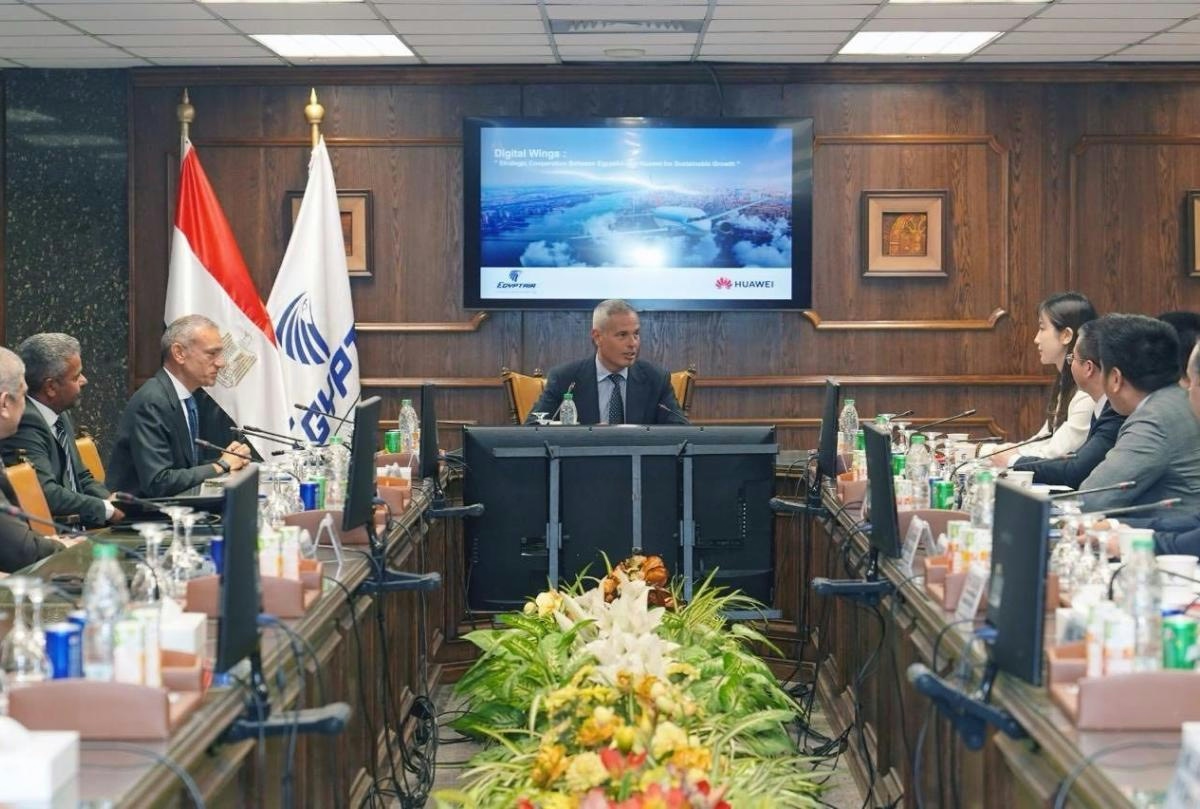
Egypt Invests in Aviation Modernization Through AI and IoT
Egypt is undertaking a comprehensive modernization of its aviation sector by integrating artificial intelligence (AI) and Internet of Things (IoT) technologies to enhance airport operations and stimulate economic development. Key airports, including Cairo International, Hurghada, and Sharm El-Sheikh, serve as vital entry points for millions of travelers each year. However, these facilities have historically faced operational inefficiencies that have constrained Egypt’s ambitions to establish itself as a premier regional hub for tourism and commerce.
To overcome these challenges, the Egyptian government has initiated a series of ambitious infrastructure projects while actively promoting private sector investment. This approach aligns with global trends, as airports worldwide increasingly adopt smart technologies to improve operational efficiency and passenger experience.
Major Expansion and Private Sector Engagement
Cairo International Airport is currently undergoing a $4.5 billion expansion of Terminal 4, which is expected to double its annual passenger capacity from 30 million to 60 million. According to Minister of Civil Aviation Sameh El Hefny, this expansion underscores Egypt’s strategic focus on aviation infrastructure as a catalyst for tourism, trade, and regional connectivity.
Hurghada International Airport has emerged as a key site for private sector involvement, with passenger numbers reaching 10.5 million in the fiscal year 2024/2025—a 22 percent increase compared to the previous year. In collaboration with the International Finance Corporation (IFC), the government has launched a public-private partnership (PPP) initiative designed to attract private operators into airport management. The initiative has garnered interest from over 60 international consortia, reflecting strong investor confidence in Egypt’s aviation development plans.
Similarly, Sharm El-Sheikh International Airport is undergoing a phased upgrade valued at $420 million, aimed at expanding its capacity beyond 10 million passengers annually. Terminal 1 has been modernized to include enhanced retail and dining facilities, while Terminal 2 continues to accommodate EgyptAir and charter flights. These improvements form part of Egypt’s broader objective to attract 30 million tourists by 2030.
Digital Transformation and Smart Systems
In response to increasing passenger volumes and congestion, Egypt is making significant investments in digital infrastructure. Current initiatives emphasize the deployment of biometric systems, automated check-in and boarding processes, and advanced security technologies. Aly Sameh, an aviation sector expert, notes that “biometric check-in systems help reduce queues and speed up passenger processing, improving the overall travel experience.” Additionally, AI-driven scheduling tools are being implemented to optimize resource allocation, staff deployment, and operational efficiency.
The success of these technological advancements depends heavily on robust public-private partnerships, which remain central to Egypt’s modernization strategy. Nonetheless, the rapid integration of AI and IoT presents several challenges. Intensifying global competition in AI and IoT markets, supply chain disruptions exacerbated by geopolitical tensions in the Middle East, and the need for substantial technological and regulatory adjustments all pose significant risks. The global AI industry, dominated by firms such as Nvidia, is experiencing heightened competition and margin pressures, while semiconductor supply chains remain volatile, potentially affecting Egypt’s project timelines and costs.
Moreover, as AI technologies become more embedded in government contracts and airport operations, compliance and cybersecurity requirements are becoming increasingly stringent. Ensuring data protection and regulatory adherence will be critical as Egypt advances its efforts to modernize the aviation sector and strengthen its position as a leading regional hub.
Despite these obstacles, Egypt’s dedication to digital transformation and strategic partnerships is laying the groundwork for a new era in aviation, promising enhanced operational efficiency, improved passenger experiences, and sustained economic growth.

Etihad Airways Suspends Airbus A380 Flights on Key Route

Aditya Birla Group Seeks Approval for Aircraft Leasing in GIFT City

Qatar Airways Highlights Innovation and Connectivity at Arabian Travel Market 2026

Hong Kong's Five-Year Plan Includes Andrew Fan's Aircraft Parts Processing Hub Proposal

ACIA Aero Leasing Delivers ATR72-600 to Air Nostrum

RTX Appoints Jill Albertelli as Head of Pratt & Whitney

TAT Technologies Joins Beyond Aero Hydrogen Aircraft Program

AURAK Study Highlights Barriers to Air Taxi Adoption in Emerging Economies

Xiamen Air Selects Altitude for 787 Maintenance at Heathrow

Etihad and Swissport Extend Global Partnership
