
Превращайте аналитические выводы ИИ в реальные действия

В тренде
Categories
Eighteen Years On, the Airbus A380 Remains Central to a $34 Billion Airline
Eighteen Years On, the Airbus A380 Remains Central to a $34 Billion Airline
Emirates and the Enduring Legacy of the A380
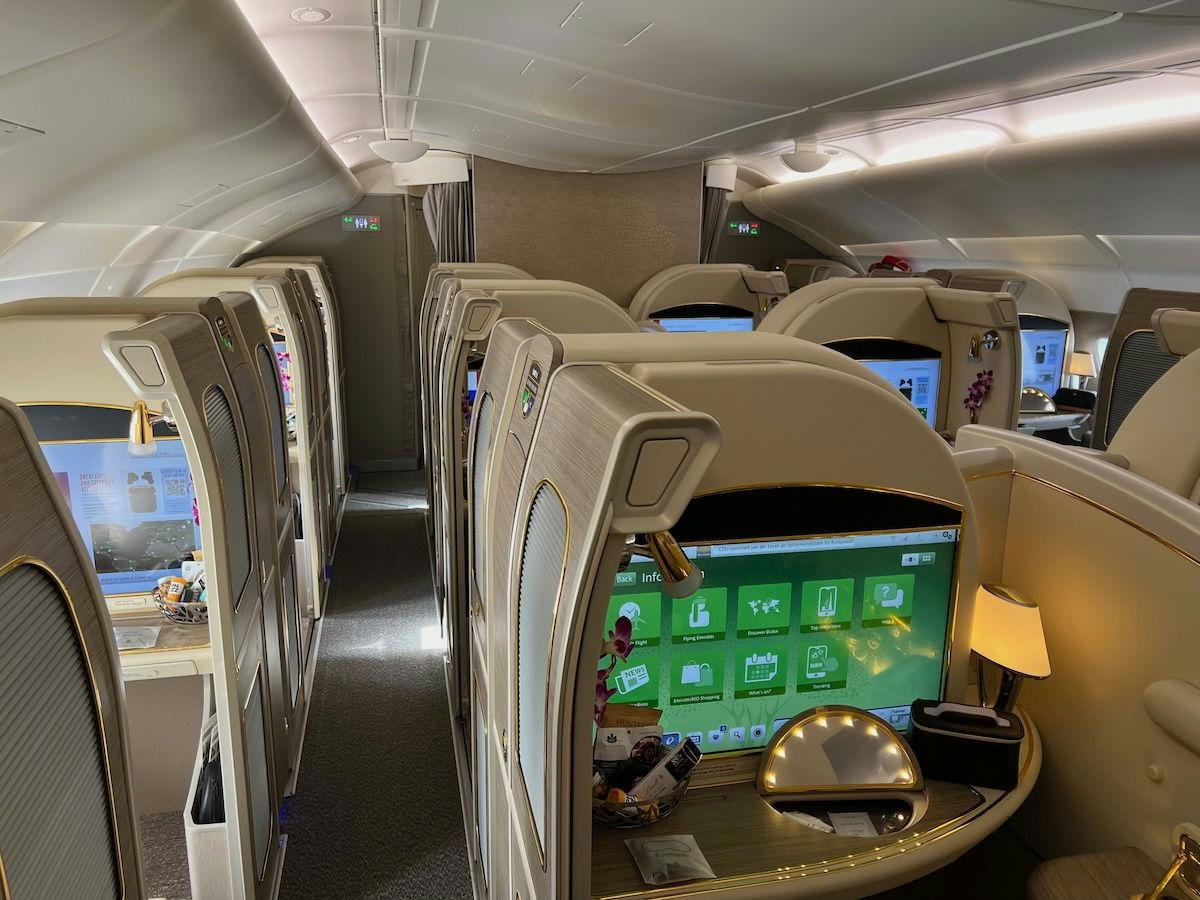
Emirates has established itself as the foremost operator of the Airbus A380, with the iconic double-decker aircraft serving as the flagship of its fleet. Although Singapore Airlines was the launch customer for the A380, Emirates has become synonymous with the superjumbo, currently operating 118 of the aircraft—accounting for nearly half of its 280-strong fleet. The average age of Emirates’ A380s is just 11.2 years, with 97 still in active service, highlighting the airline’s sustained commitment to the model even as it incorporates newer aircraft such as the Boeing 777 and Airbus A350.
The A380’s considerable size and operational efficiency have made it a cornerstone of Emirates’ business strategy. Despite the high operating costs, estimated at $30,000 per flight hour and fuel consumption of approximately 12,000 liters (3,170 gallons) per hour, Emirates continues to profitably deploy the aircraft on both ultra-long-haul and shorter regional routes. Notably, the airline operates the A380 on the Dubai–Bangkok–Hong Kong route, where the first leg lasts just over two hours, demonstrating the aircraft’s versatility beyond traditional long-haul flights.
Strategic Importance of Dubai and the A380’s Role in Global Connectivity
A critical factor underpinning the A380’s ongoing relevance is Emirates’ hub at Dubai International Airport (DXB). The airport’s infrastructure is specifically designed to accommodate the A380, and Dubai’s strategic geographic position at the nexus of Europe, Asia, and Africa enhances its role as a global transit hub. This advantageous location enables Emirates to fully leverage the A380’s large passenger capacity on high-demand routes to major cities such as London, New York, Sydney, and Tokyo. Moreover, Dubai serves as a vital connecting point for international travelers, reinforcing the aircraft’s importance in the airline’s network.
Industry Context and Airbus’ Broader Challenges
The significance of the A380 extends beyond Emirates. Lufthansa, for example, has integrated the superjumbo into its $34 billion fleet renewal program, recently investing in retrofitting its A380 business class cabins to maintain competitiveness. However, the aircraft faces challenges amid delays in next-generation jet deliveries and intensifying competition from Boeing. Boeing’s recent production ramp-up of the 737 MAX and renewed emphasis on safety have bolstered its market position, even as Airbus continues to lead in total aircraft deliveries.
Airbus itself is confronting difficulties beyond the commercial aviation sector. The company has experienced delays and financial setbacks in its space division, prompting a strategic realignment that includes consolidating operations with other aerospace firms. In the helicopter market, Airbus is actively promoting its H160 model to challenge Leonardo’s dominance with the AW139, reflecting the broader competitive dynamics within the aerospace industry.
Despite these evolving industry conditions, the A380 remains a potent symbol of ambition and scale in commercial aviation. For Emirates and other major carriers, the superjumbo continues to play a pivotal role in connecting continents and managing the complex logistics of global air travel, even as new aircraft models emerge and the sector undergoes transformation.

Etihad Airways Suspends Airbus A380 Flights on Key Route

Aditya Birla Group Seeks Approval for Aircraft Leasing in GIFT City

Qatar Airways Highlights Innovation and Connectivity at Arabian Travel Market 2026

Hong Kong's Five-Year Plan Includes Andrew Fan's Aircraft Parts Processing Hub Proposal

ACIA Aero Leasing Delivers ATR72-600 to Air Nostrum

RTX Appoints Jill Albertelli as Head of Pratt & Whitney

TAT Technologies Joins Beyond Aero Hydrogen Aircraft Program

AURAK Study Highlights Barriers to Air Taxi Adoption in Emerging Economies

Xiamen Air Selects Altitude for 787 Maintenance at Heathrow

Etihad and Swissport Extend Global Partnership
