Изображение

Превращайте аналитические выводы ИИ в реальные действия

Присоединяйтесь к списку ожидания AeroGenie уже сегодня!

В тренде

Categories

EirTrade Approved to Expand Knock Facility
March 13, 2026By ePlane AI
EirTrade Approved to Expand Knock Facility
0
0
EirTrade
Aircraft Disassembly
MRO Facility Expansion

EirTrade Approved to Expand Knock Facility

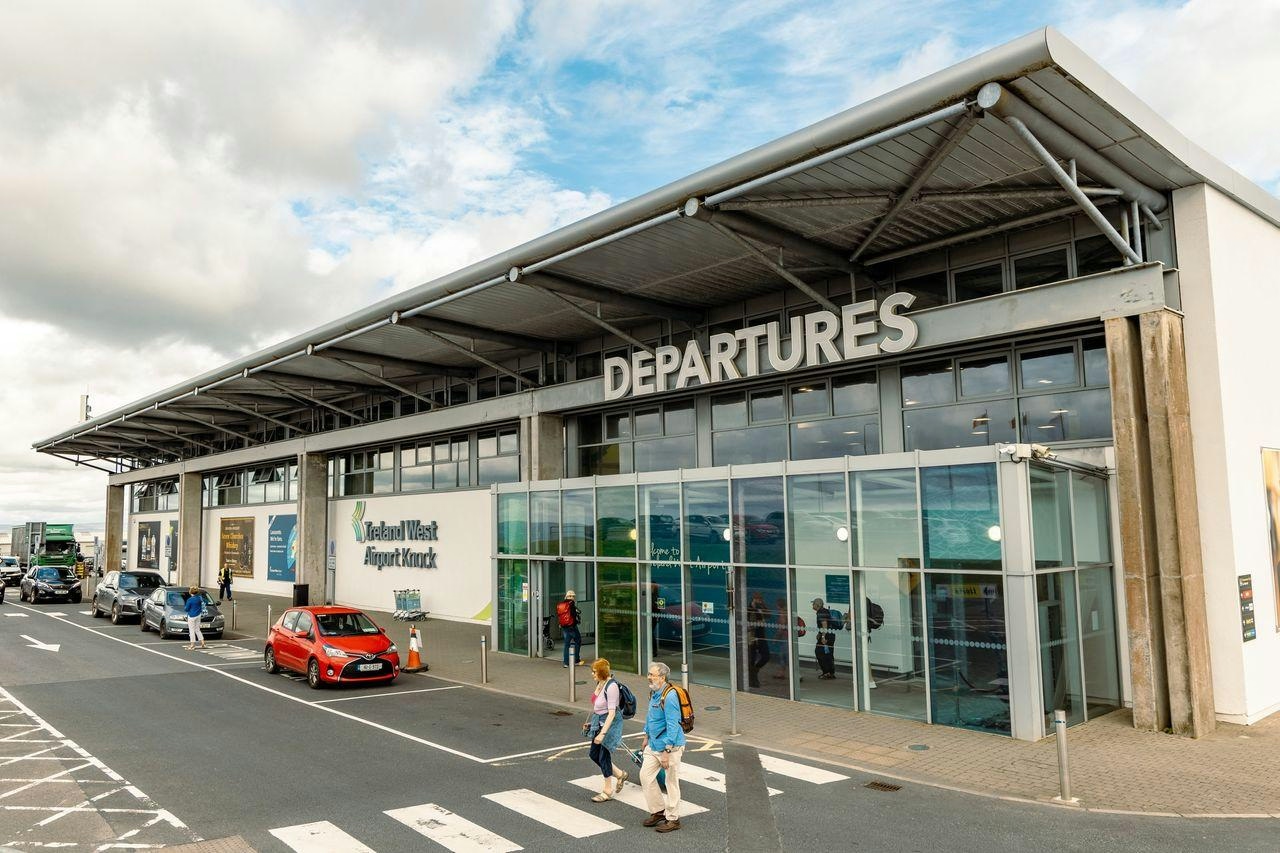
EirTrade has obtained full planning permission from Mayo County Council to undertake a substantial expansion of its facility at Ireland West Airport Knock. This development is poised to enhance the company’s aircraft disassembly and maintenance capabilities significantly. The existing 2,100 square meter site will be augmented by a new 10,500 square meter facility, designed to increase capacity for engine and airframe disassembly alongside EASA Part 145 line maintenance services.

Facility Enhancements and Operational Impact

A key component of the expansion is the construction of a new aircraft hangar capable of housing a narrow-body aircraft. This hangar will be configured to support both airframe disassembly and maintenance, repair, and overhaul (MRO) operations. The enlarged site will also feature dedicated workshop and crating areas, high-bay very narrow aisle (VNA) racking, bulk storage, and specialized engine storage facilities. These improvements are expected to enhance EirTrade’s operational efficiency and logistics capabilities, enabling a more integrated approach to aircraft servicing.

Steven Trowell, Senior Vice President of Maintenance & Disassembly at EirTrade Aviation, emphasized that the expansion builds on the company’s recent relocation of its engine disassembly operations to Knock in November 2025. He highlighted that the new development will allow EirTrade to consolidate a broad range of services at a single location, combining aircraft maintenance, airframe disassembly, and engine teardown under one roof. The facility will also support asset management, parts trading, and leasing activities, with a dedicated on-site parts inventory to streamline operations.

Strategic and Market Considerations

The increased capacity aligns with EirTrade’s strategic objective to strengthen support for aircraft operators, owners, and lessors on a global scale. The facility’s design has been carefully tailored to meet operational demands while addressing airside and runway constraints at Ireland West Airport. Sustainability is a prominent feature of the project, with plans for a high-performance building envelope and a substantial solar panel installation intended to exceed environmental and regulatory standards.

Nonetheless, the expansion occurs within a competitive and evolving market environment. Industry analysts suggest that the approval may introduce challenges related to regulatory compliance, operational scalability, and intensified competition. The move is likely to attract increased interest from other aftermarket parts providers seeking to expand their presence in the region. Competitors may respond by upgrading their own facilities or advocating for regulatory adjustments to preserve their market positions. This development highlights the growing significance of the aircraft teardown market, which could prompt further investment and strategic realignments among industry players.

As EirTrade advances with its expansion plans, close attention will be paid to the company’s ability to manage regulatory and operational complexities, as well as the broader market’s response to this notable advancement in Ireland’s aviation sector.

More news
Saudi Arabia Outlines Dual-Track AI Strategy for Aviation, Says GACA President

Saudi Arabia Outlines Dual-Track AI Strategy for Aviation, Says GACA President

Saudi Arabia Advances Dual-Track AI Strategy in Aviation Saudi Arabia is pursuing a dual-track approach to integrating artificial intelligence (AI) and automation within its aviation sector, aiming to balance rapid technological advancement with stringent safety oversight. Abdulaziz Al-Duailej, President of the General Authority of Civil Aviation (GACA), detailed this strategy during the Aerospace Future Technology Symposium held alongside the El Alamein International Airshow 2026 in Egypt. His remarks underscored the kingdom’s commitment to fostering innovation while preserving human expertise and operational integrity. Balancing Innovation with Safety The first component of Saudi Arabia’s strategy focuses on accelerating the deployment of advanced technologies in areas that do not directly impact safety-critical operations. This approach allows for swift modernization and operational efficiency gains without compromising safety standards. The second component involves a cautious, phased introduction of AI and automation into safety-sensitive functions. This measured rollout ensures that new systems are rigorously evaluated and meet or exceed existing safety benchmarks before full implementation. Throughout both tracks, Al-Duailej emphasized that human oversight and expertise will remain central to aviation operations, even as automation expands. The evolving role of AI is also reshaping workforce requirements within the sector. There is growing demand for specialized skills in AI assurance, data science, and human factors to ensure effective collaboration between humans and automated systems. Al-Duailej highlighted the Saudi Data & AI Authority’s One Million Saudis in AI (SAMAI) Initiative, which has successfully trained over one million citizens in AI competencies. This milestone reflects Saudi Arabia’s broader ambition to build an AI-driven digital society and underscores the importance of translating general AI readiness into sector-specific expertise through advanced training and simulation programs. Navigating Challenges and Strategic Partnerships Despite the promising outlook, the dual-track strategy faces significant challenges, particularly in regulatory adaptation. As AI becomes one of the most heavily regulated industries worldwide, Saudi Arabia must carefully navigate complex regulatory frameworks that could influence the pace of AI adoption. Al-Duailej called for regulatory evolution that keeps pace with technological progress while ensuring robust human oversight remains integral to critical safety functions. The competitive landscape within Saudi aviation is also evolving. Local carriers are strengthening their market positions through strategic partnerships. For instance, Flynas recently acquired a stake in Swissport Saudi Arabia to enhance ground-handling capabilities. Additionally, collaborations such as the partnership between Mistral and Humain aim to develop sovereign AI capabilities, potentially positioning Saudi Arabia as a regional leader in AI innovation. However, there remains a strong emphasis on monetizing existing technologies like 5G, with telecom operators such as Mobily prioritizing current revenue streams over long-term AI investments. As automation becomes increasingly prevalent, Al-Duailej reiterated the enduring importance of human judgment, situational awareness, and the capacity to intervene during critical moments. He stressed that while technology will drive progress, safeguarding human skills and adapting regulatory structures are essential to ensuring the safe and effective integration of AI within Saudi Arabia’s aviation sector.
Could AI Replace Human Pilots?

Could AI Replace Human Pilots?

Could AI Replace Human Pilots? Recent developments in aviation technology have brought the question of artificial intelligence (AI) replacing human pilots into sharper focus. Two notable flights illustrate the current capabilities and limitations of AI and automation in the cockpit. On December 20, 2025, a Beechcraft King Air departing Aspen experienced a sudden loss of cabin pressurization at flight level 230. The two pilots donned oxygen masks and allowed the aircraft to land autonomously at Rocky Mountain Metropolitan Airport near Denver, marking the first real-world deployment of Garmin’s Emergency Autoland system since its introduction in 2019. Several months later, in May 2026, CNN reported from the right seat of a Merlin Labs Cessna Caravan, where an AI system managed takeoff, communicated with a simulated air traffic controller, and responded over the radio, all while the test pilot refrained from manual control. These events have intensified ongoing discussions within aviation circles about whether AI will eventually render human pilots obsolete. Despite the technological progress, the consensus remains that AI will not replace pilots on passenger airliners in the near future. Regulatory frameworks, technological constraints, and economic considerations continue to pose significant barriers. While AI is already reshaping pilot roles and enabling pilotless operations in cargo and other non-passenger sectors, fully autonomous passenger flights remain a distant prospect. Automation Versus AI: Clarifying the Distinction Automation has been integral to commercial aviation for decades, with systems such as autopilot, autothrust, autoland, and fly-by-wire managing much of routine flight operations. The critical difference between traditional automation and AI lies in decision-making processes. Conventional automation operates strictly within pre-programmed parameters, executing defined tasks without deviation. In contrast, AI systems learn from data and adapt to novel situations, potentially handling a wider array of unexpected events. Stanford researcher Mykel Kochenderfer highlights that current cockpit automation functions within narrowly defined limits, whereas AI aspires to manage a broader spectrum of contingencies. Garmin’s Autoland system exemplifies advanced conventional automation. During its inaugural real-world emergency, the system activated automatically when cabin altitude reached unsafe levels, successfully completing the landing with pilot consent. However, the system’s automated radio transmissions mistakenly reported pilot incapacitation, underscoring the limitations of scripted responses compared to nuanced human judgment. Airbus has pursued more ambitious AI applications through its ATTOL project, which employed onboard image recognition to enable autonomous taxiing, takeoff, and landing on an A350-1000 aircraft after more than 500 test flights. The objective is to allow pilots to concentrate on strategic decision-making rather than manual control. The subsequent DragonFly demonstrator simulated pilot incapacitation scenarios, with the A350 autonomously diverting and landing safely. Despite these advances, Airbus stresses that such technologies are designed to augment, not replace, the traditional two-pilot flight deck. Regulatory and Economic Challenges The primary focus in recent years has shifted from eliminating pilots entirely to reducing crew numbers. Initiatives like Extended Minimum Crew Operations (eMCO) propose allowing one pilot to rest while the other manages the aircraft during cruise phases. However, regulatory scrutiny has intensified, with fund managers warning that AI could become one of the most heavily regulated sectors, potentially impeding its adoption in aviation. Economists at the European Central Bank have also cautioned that AI-driven economic booms may precipitate market corrections, injecting further uncertainty into investments in autonomous flight technologies. Simultaneously, workforce pressures are mounting as airlines and manufacturers plan for growth amid AI-driven transformation. Many organizations face challenges in adapting to these changes, highlighting the necessity for clear communication, robust governance, and practical support for employees and management navigating this transition. The Future of Piloting in an AI-Driven Era AI is undeniably transforming aviation, yet regulatory, economic, and workforce considerations ensure that human pilots will remain indispensable, particularly in passenger operations, for the foreseeable future. While automation technologies will continue to evolve and assume greater responsibilities, the prospect of an empty cockpit remains unlikely in the near term.
Concerns Grow Over Spirit’s Pending Data Sale to Google Amid Bankruptcy

Concerns Grow Over Spirit’s Pending Data Sale to Google Amid Bankruptcy

Concerns Grow Over Spirit’s Pending Data Sale to Google Amid Bankruptcy Dispute Over Ownership of Proprietary Data Doug Kreuzkamp, founder of the startup Springshot, expressed shock following reports that Google had secured an auction victory to acquire a substantial collection of operational data from Spirit Airlines as part of the carrier’s ongoing bankruptcy process. Springshot’s proprietary platform, which has been integral to Spirit’s technology infrastructure for the past three years and is utilized by hundreds of airports globally to optimize airline logistics and efficiency, is at the center of the dispute. Kreuzkamp asserts that Springshot was not notified when Spirit moved to auction off a dataset that, in his view, improperly includes significant data and intellectual property (IP) owned by Springshot rather than Spirit. In a limited objection filed last month, Springshot challenged the clarity of Spirit’s sale agreement, which broadly references categories such as “productivity and collaboration data,” “core business systems and business application data,” and “workflow and process data.” According to Springshot, these vague terms risk encompassing its proprietary information without distinction. The company’s court filing emphasized that the agreement fails to differentiate between Springshot’s intellectual property embedded within Spirit’s data repositories and the data actually owned and sellable by Spirit. Calls for Judicial Oversight and Industry Implications Springshot has petitioned the bankruptcy court to suspend the sale pending a transparent forensic review to ensure that no third-party-owned data is transferred to Google. The company warns that proceeding without such safeguards could facilitate the unauthorized acquisition and use of trade secrets, potentially inflicting harm on startups and establishing a troubling precedent. Springshot highlighted concerns about a scenario in which vast amounts of intellectual property are transferred to some of the world’s wealthiest and most monopolistic corporations through bankruptcy proceedings. The proposed transaction has also ignited broader industry and regulatory apprehensions. Reports indicate that the sale encompasses not only business data but also software code and extensive operational information. This has raised questions about how Google might exploit the data to enhance its artificial intelligence models and consolidate its competitive edge in the technology sector. Competitors are closely monitoring the deal, viewing it as a potential strategic advantage for Google in the intensifying race to dominate AI and data-driven services. Regulatory and Employee Concerns Regulatory scrutiny is mounting as privacy advocates and industry stakeholders voice concerns regarding the ethical ramifications of transferring sensitive operational data to a major technology conglomerate. Objections have also emerged from Spirit’s flight attendants, who have expressed unease about privacy issues and the handling of employee information. The sale’s approval by the bankruptcy court and its evaluation by federal regulators are anticipated to be closely observed, given the potential to influence future data sales in bankruptcy contexts and reshape competitive dynamics within the market. As the court deliberates on the objections and the industry awaits a final ruling, the Spirit-Google data sale is poised to become a pivotal case in determining how proprietary data and intellectual property are managed in high-stakes bankruptcy proceedings. The outcome will raise critical questions about data ownership, privacy protections, and the shifting balance of power in the digital economy.
Texas and Joby Launch FAA-Supported Air Taxi Demonstrations

Texas and Joby Launch FAA-Supported Air Taxi Demonstrations

Texas and Joby Launch FAA-Supported Air Taxi Demonstrations Integration of Electric Air Taxis into Controlled Airspace Precertified electric air taxis have commenced a weeklong demonstration campaign in Texas, operating alongside conventional air traffic under a Federal Aviation Administration (FAA) contract. Joby Aviation, a prominent developer of electric vertical takeoff and landing (eVTOL) aircraft, announced that its preproduction prototype is conducting flights to demonstrate its capability to integrate safely into busy airspace, including the highly controlled environment of Dallas/Fort Worth International Airport (DFW). Although Joby’s air taxi has not yet received certification to carry passengers, the company is using this campaign to showcase real-world routes across North Texas, connecting major urban centers as it advances toward FAA certification expected in the coming months. The initiative began with a flight at Perot Field Fort Worth Alliance Airport and has included joint demonstrations with other manufacturers. These activities are scheduled to continue through Monday, subject to weather and operational conditions. Partnership and Regulatory Framework This campaign represents a significant milestone for Joby, conducted in collaboration with the Texas Department of Transportation (TxDOT) and forming part of the FAA’s eVTOL Integration Pilot Program (eIPP). The eIPP is a three-year initiative spanning 26 states, designed to assist the FAA in identifying regulatory gaps, refining operational procedures, and supporting the safe integration of eVTOL aircraft into the National Airspace System. FAA Administrator Bryan Bedford emphasized the importance of these efforts, stating that the agency is leveraging data from test flights in Texas and across the country to ensure the safe incorporation of these new aircraft into the national airspace. Joby’s prototype, adorned with Texas’ Lone Star Flag, operates under a signed other transaction agreement (OTA) with the FAA. This agreement outlines the planned activities and data reporting requirements essential for regulatory oversight. The eIPP program anticipates a phased progression from flights with only a pilot on board to those carrying non-paying passengers, and eventually, paying customers, contingent upon rigorous FAA evaluation. Challenges and Industry Context Despite these advancements, Joby faces considerable challenges on the path to commercial air taxi service. Regulatory hurdles remain substantial as the FAA adapts existing frameworks to accommodate this emerging class of aircraft. The competitive landscape is intensifying, with companies such as Archer Aviation recently acquiring Boeing’s automated air taxi initiative, signaling a broader industry momentum toward commercialization. Joby’s strategic approach encompasses both commercial and military markets. The company’s acquisition of a defense contractor, alongside partnerships with entities like Blade’s aviation network and Toyota-backed manufacturing, reflects a multifaceted effort to address financial and strategic challenges. While increased defense spending may open new avenues, it also diverts some focus from immediate commercial deployment. As Joby and its competitors continue to navigate technological integration and regulatory approval, the Texas demonstrations stand as a critical milestone in the development of urban air mobility. The results of these trials will play a pivotal role in shaping the future of air taxi services both within Texas and across the United States.
Flair Airlines Signs 15-Year Engine Maintenance Deal with Lufthansa in Calgary

Flair Airlines Signs 15-Year Engine Maintenance Deal with Lufthansa in Calgary

Flair Airlines Secures 15-Year Engine Maintenance Partnership with Lufthansa Technik in Calgary Edmonton-based Flair Airlines has entered into a 15-year agreement with Lufthansa Technik to provide maintenance services for its aircraft engines at the Calgary facility. This strategic partnership marks a significant shift, bringing engine maintenance jobs back to Canada from the United States and other international locations. Under the deal, Lufthansa Technik, a subsidiary of Germany’s Lufthansa Group, will service Flair’s fleet of 18 Boeing 737 aircraft powered by CFM International Leap engines. Enhancing Canadian Aerospace Capabilities Currently, much of Flair’s engine maintenance is conducted outside Canada, including at Lufthansa Technik’s facility in Tulsa, Oklahoma. While Flair has not disclosed all existing maintenance locations, spokeswoman Kim Bowie emphasized that the new agreement supports the retention and growth of skilled jobs within Canada. The partnership is expected to enhance maintenance capabilities domestically, allowing more work to be performed closer to Flair’s operational base. Lufthansa Technik’s Calgary facility, which opened in 2025 and currently employs 80 people, is undergoing a substantial $120-million expansion. The upgraded 14,000-square-metre site will feature Canada’s first test cell for advanced jet engines and is projected to increase its workforce to approximately 160 employees by 2030. This expansion, partially funded by an $18 million contribution from federal, Alberta, and Calgary governments, will also accommodate other clients, including WestJet Airlines. Market Context and Industry Implications The agreement arrives amid growing capacity constraints in the market for Leap engine maintenance. Industry analysts note that the anticipated entry of IAG Engine Tech into this sector in 2027 could alter competitive dynamics, as airlines worldwide face mounting pressure to manage maintenance costs while ensuring operational reliability. Recent engine-related disruptions at carriers such as Air New Zealand have intensified scrutiny on maintenance practices, prompting regional competitors to consider similar long-term contracts to secure cost-effective and dependable services. Georgios Ouzounidis, Lufthansa Technik’s vice-president of sales for the Americas, highlighted that Flair’s decision reflects confidence in the expanding capabilities of the Calgary facility. The maintenance package includes advanced analytics that integrate aircraft data, engineering insights, digital records, and asset management systems, which Flair anticipates will streamline maintenance planning and operational efficiency. In a joint statement, Flair Airlines and Lufthansa Technik underscored that the partnership “advances Lufthansa Technik’s commitment to build aviation capability in Canada while connecting that capability to a global aerospace network.” Financial details of the agreement were not disclosed. Alberta’s Minister of Jobs, Economy, Trade and Immigration, Joseph Schow, praised the deal as “a strong example of how investment in Canada’s aerospace sector is strengthening our supply chains, developing a skilled workforce and building the expertise and capacity our industry will need for years to come.” Technical Background on Leap Engines The Leap engines serviced under this agreement are manufactured by CFM International, a joint venture between GE Aerospace and Safran Aircraft Engines. These engines power both the Boeing 737 Max and Airbus A320 Neo families, making them a critical component in modern commercial aviation fleets.
Electric Air Taxis Approved for Flight Tests in Texas

Electric Air Taxis Approved for Flight Tests in Texas

Electric Air Taxis Begin Flight Tests in Texas A significant milestone in urban aviation has been reached in Texas as federal regulators have authorized the first flight tests of electric air taxis. The Federal Aviation Administration’s (FAA) Advanced Air Mobility and Electric Vertical Takeoff and Landing (eVTOL) Integration Pilot Program (eIPP) has initiated its inaugural public demonstration flights this week in the Dallas-Fort Worth area. Leading eVTOL manufacturers, including Joby Aviation, Beta Technologies, and Wisk Aero, are participating in these tests, which represent a critical step toward integrating electric air taxis into the national airspace. Demonstration Flights and Collaborative Efforts Over the course of the coming week, these companies will conduct demonstration flights along prospective routes connecting urban centers and regional airports, such as Dallas Fort Worth International Airport. Although these initial flights will not carry passengers, they are designed to gather essential data on how Texas’s air traffic control systems handle the increased activity generated by these novel aircraft. This initiative is part of TxDOT’s Project Nexus, a collaborative effort involving federal, state, and local agencies aimed at exploring the integration of electric air taxis into U.S. airspace. Joby Aviation’s involvement highlights both the potential and the challenges facing the emerging sector. JoeBen Bevirt, Founder and CEO of Joby Aviation, expressed optimism about the opportunity, stating, “I’m incredibly excited by the potential for vertical lift in Texas, a state with the infrastructure, expertise, and partnerships to help lead the next era of American aviation.” The company’s week-long campaign in the Dallas-Fort Worth region seeks to demonstrate practical routes and connections to major urban hubs, emphasizing the prospects for reduced travel times and environmental benefits. Regulatory Framework and Industry Dynamics The eIPP program, established by the White House, aims to accelerate the commercialization of electric and autonomous aircraft even as regulatory frameworks remain under development. By permitting companies to collect operational data prior to full certification, the program intends to inform the creation of new regulations that will safely enable widespread adoption of this technology. Given that type certification—a mandatory step for commercial passenger service—can take several years, these early tests are vital for manufacturers to advance their aircraft toward market readiness. The electric air mobility sector is rapidly evolving, with competitors responding to Joby Aviation’s progress. Archer Aviation, which recently acquired Wisk Aero from Boeing, is positioning itself with a focus on defense applications and autonomous flight capabilities. Meanwhile, Zoox, a company known for its autonomous ground vehicles, is expanding its robotaxi testing in Houston, signaling intensifying competition across both air and ground mobility sectors. Market responses to these developments are anticipated to be favorable, driven by the promise of faster and cleaner transportation options. Nonetheless, significant challenges remain, including regulatory approval, infrastructure development, and public acceptance. Legal disputes, such as the ongoing litigation between Joby and Archer over alleged trade secret theft, as well as technical obstacles like battery limitations and sensor integration, could influence the pace of adoption. Additional eVTOL test flights are scheduled in states including New York, Utah, Pennsylvania, Louisiana, Florida, North Carolina, and New Mexico, as industry stakeholders and regulators collaborate to shape the future of electric and autonomous flight in the United States.
AvioBook Uses Amazon Bedrock AgentCore to Analyze Turnaround Operations

AvioBook Uses Amazon Bedrock AgentCore to Analyze Turnaround Operations

AvioBook Employs Amazon Bedrock AgentCore to Enhance Airline Turnaround Efficiency Airlines operate within tightly constrained schedules, where even minimal delays during aircraft turnarounds can trigger widespread disruptions throughout the day. Each minute lost at the gate incurs an estimated cost of $20, accounting for fuel consumption, crew expenses, gate fees, and missed connections. For a mid-sized carrier managing approximately 200 flights daily, reducing average turnaround times by just two minutes could yield savings approaching $240,000 per month. Advancing Operational Coordination with AvioBook Connect AvioBook, a subsidiary of the Thales Group, specializes in software solutions tailored to flight and ground operations. Since 2018, its flagship platform, AvioBook Connect, has facilitated airline communications by centralizing coordination among flight crew, cabin crew, dispatch, and station operations teams. The platform organizes interactions through “flightrooms,” dedicated live chat environments for each flight that consolidate automated operational data alongside conversational exchanges. Importantly, all data is securely maintained within the airline’s own infrastructure. Despite the extensive collection of timestamped events and messages within AvioBook Connect, deriving actionable insights traditionally demanded labor-intensive manual analysis, involving the review of weeks of historical data and cross-referencing delay codes. To address this, AvioBook introduced Connected Analytics, a solution built on Amazon Bedrock AgentCore. This agentic AI platform supports the creation, deployment, and management of intelligent agents at scale, compatible with various frameworks and foundation models. Transforming Data into Real-Time Decision Support Connected Analytics empowers airline managers and operations control center dispatchers to query turnaround data using natural language, obviating the need for manual searches. Two specialized AI agents, tailored to each user role, automatically extract pertinent flight events, validate them against flightroom logs, and provide concise, evidence-based responses. This innovation converts static archives into dynamic tools that support real-time operational decision-making. However, integrating agentic AI into airline workflows presents challenges. Organizations must adapt their processes and invest in workforce training and change management to fully realize the benefits of these advanced technologies. Market responses to AI-driven transformations remain mixed; some investors express caution over potential disruptions to traditional travel operations, while others anticipate substantial efficiency improvements and competitive advantages. Concurrently, industry competitors are accelerating their own technology initiatives. For instance, major retailers such as Walmart are expanding delivery drone services through partnerships with companies like Wing and Zipline, reflecting a broader trend toward automation and AI-enhanced logistics. Early feedback from AvioBook Connect customers suggests that leveraging turnaround data through AI can yield tangible operational improvements. As airlines and their partners continue to navigate this evolving landscape, platforms like Amazon Bedrock AgentCore may play a critical role in reshaping efficiency and resilience within the air travel sector.
Civil Aviation Minister Outlines Opportunities for MSMEs in India’s Aviation Sector

Civil Aviation Minister Outlines Opportunities for MSMEs in India’s Aviation Sector

Civil Aviation Minister Outlines Opportunities for MSMEs in India’s Aviation Sector Expanding Horizons in India’s Aviation Industry India’s burgeoning aviation sector is presenting significant opportunities for Micro, Small, and Medium Enterprises (MSMEs) to integrate into global aerospace supply chains, according to Civil Aviation Minister K Rammohan Naidu. Addressing a conference organized by the Confederation of Indian Industry (CII) in New Delhi, Naidu highlighted the sector’s rapid growth, driven by substantial aircraft orders and a market expected to double by 2035. This expansion has the potential to transform India from a mere assembly hub into a comprehensive center for designing, certifying, and manufacturing aerospace components. The Indian aviation market is witnessing remarkable momentum, with domestic airlines placing orders for over 1,600 aircraft. This surge is generating demand for approximately 800 million parts and components. The aerospace and defence market in India is projected to nearly double from over USD 30 billion in 2025 to USD 61 billion by 2035. Concurrently, the commercial aviation fleet is expected to grow to around 2,050 aircraft, creating substantial opportunities for Indian manufacturers and MSMEs to deepen their participation in the sector. Naidu emphasized that Indian MSMEs and startups already contribute significantly, supplying aircraft components valued at more than USD 4 billion annually to global Original Equipment Manufacturers (OEMs). He pointed out that with Airbus and Boeing holding orders for over 15,000 commercial aircraft worldwide, the expanding market represents a major opportunity for Indian MSMEs to increase their global footprint. From Assembly to Innovation: Building a Global Aerospace Hub The minister underscored the necessity for India to evolve beyond its current role as an assembly destination and emerge as a hub for aerospace design, certification, and manufacturing. He stressed that realizing this potential requires the deliberate creation of an enabling ecosystem supported by robust policy frameworks and industry collaboration. “Potential does not automatically become production,” Naidu remarked, highlighting the importance of strategic interventions to foster innovation and capacity building. Supporting this vision, Salil Gupte, President of Boeing India and South Asia, revealed that Boeing sources products and services worth nearly Rs 14,000 crore annually from India. Notably, about 25 percent of Boeing’s 300 Indian suppliers are MSMEs, reflecting the growing integration of smaller enterprises into global aerospace supply chains. Addressing Challenges and Strategic Initiatives Despite the optimistic outlook, industry leaders acknowledge several challenges that must be addressed to sustain growth. India’s dependence on Gulf hubs for international connectivity exposes the aviation sector to geopolitical risks, including potential disruptions from regional conflicts such as the ongoing tensions in Iran. Such events can significantly affect airline operations and international traffic flows. To mitigate these vulnerabilities, Naidu emphasized the importance of strengthening the domestic workforce, particularly by reducing reliance on foreign pilots through enhanced training programs. Additionally, the sector is actively exploring the adoption of digital technologies, including artificial intelligence and automation, to improve productivity and maintain global competitiveness. Manufacturing industry leaders have highlighted these technological advancements as critical to the sector’s future success. Efforts are also underway to develop domestic semiconductor and advanced manufacturing capabilities. This strategic push aims to integrate Indian MSMEs more deeply into global value chains by enhancing their technological capacity and expanding market access. Outlook for MSMEs in India’s Aviation Sector With global aerospace giants such as Boeing and Airbus increasing their sourcing from India, and with concerted government and industry initiatives focused on ecosystem development, MSMEs are positioned to play a pivotal role in the next phase of India’s aviation growth. However, realizing this potential will require addressing structural challenges, investing in workforce development, and embracing technological innovation to ensure sustained competitiveness on the international stage.
EASA Advances Regulations for Increased AI Use in Cockpits

EASA Advances Regulations for Increased AI Use in Cockpits

EASA Advances Regulations for Increased AI Use in Cockpits The European Union Aviation Safety Agency (EASA) is intensifying its efforts to regulate the integration of artificial intelligence (AI) within the aviation sector. This initiative was highlighted during the recent EASA AI Days held in Cologne, Germany, where developers presented sophisticated AI systems designed to enhance cockpit decision-making and safety analysis. Central to the discussions was an update on RMT.0742, EASA’s regulatory framework aimed at establishing comprehensive requirements for AI applications across all regulated aviation activities. Regulatory Progress and Industry Implications EASA first introduced its proposed AI regulations in November of last year, setting out foundational standards addressing AI assurance, human factors, and ethical considerations for systems intended to assist or collaborate with human operators. Following a public consultation period that concluded in March, the agency is currently reviewing stakeholder feedback. A subsequent proposal is anticipated to tailor these general principles to specific aviation domains, including aerodromes and other regulated operations. In its latest concept paper released in June, EASA expanded its regulatory scope to encompass emerging AI technologies such as reinforcement learning, symbolic AI, and Level 3 systems, which represent advanced automation. The agency underscored that these developments enable new operational paradigms where human operators may be remotely located or entirely absent during flight operations. The integration of AI into aviation presents a range of challenges. Comprehensive safety assessments are required to mitigate risks including atmospheric icing and thermal runaways in lithium-ion batteries. Security concerns are also mounting, particularly as the industry prepares for the transition to unleaded aviation gasoline by 2030 amid escalating cybersecurity threats. Market responses indicate that airlines adopting AI technologies may encounter heightened regulatory scrutiny and increased compliance costs, while competitors may accelerate their own AI initiatives to preserve market position. These dynamics unfold against a backdrop of persistent labor shortages and rising operational expenses. AI Systems Under Evaluation At the conference, EASA evaluated ten AI systems selected from a pool of fifty submissions for its inaugural “AI Olympics.” Among the finalists was Kairós Aeroespacial’s FOR-DEC AI, a cockpit assistance tool designed to help flight crews organize operational information, weigh options, and identify uncertainties during decision-making processes. Other notable contenders included an AI platform for analyzing aviation safety reports and Xcert AI, which supports engineers in certification and regulatory compliance tasks. The list of finalists was published on Wednesday, with conference participants voting to award gold, silver, and bronze distinctions. Kairós emphasized that its system is designed to maintain the pilot as the ultimate decision-maker, providing transparent reasoning to support crew decisions rather than autonomously executing operational commands. Looking Ahead The remaining sessions of the conference will focus on research into large language models and reinforcement learning, culminating in a panel discussion addressing the benefits and risks associated with advanced automation. As EASA progresses toward formalizing AI regulations, both the agency and industry stakeholders continue to navigate a complex environment where innovation must be carefully balanced with the imperative to uphold the highest standards of aviation safety.
2026 Commander's Awards Recognize Advances in Naval Aviation Readiness

2026 Commander's Awards Recognize Advances in Naval Aviation Readiness

2026 Commander’s Awards Recognize Advances in Naval Aviation Readiness Vice Admiral John E. Dougherty IV, commander of Naval Air Systems Command and Portfolio Acquisition Executive Aviation (PAE(A)), presided over the 26th annual Commander’s Awards ceremony on September 1 at Patuxent River, Maryland. The event honored exceptional individuals and teams across nine categories, reflecting the enterprise’s core priorities of people, capability, readiness, and business operations. From 87 nominations, finalists were selected for their outstanding collaboration and innovation in delivering affordable capabilities to the fleet. The ceremony also featured the presentation of the Association of Naval Aviation’s Edward H. Heinemann Award, underscoring the community’s dedication to excellence. Vice Admiral Dougherty remarked, “Today’s ceremony recognizes the best of the best. Naval aviation is projecting power and deterring aggression across the globe because of you.” Steve Cricchi, NAVAIR executive director, highlighted the collective nature of the achievements, stating, “We’re here celebrating the output of some of our best teams and people. They’re reflective of the whole organization and the contributions we’re making to capability delivery, readiness, workforce, and the industrial base.” Challenges and Shifting Dynamics in Naval Aviation Readiness Despite the progress celebrated at the awards, the broader naval aviation readiness landscape continues to face significant challenges. Recent test failures in South Korea’s K-LUCAS development program have raised concerns about the reliability of international collaborations and the pace of technological advancement. These setbacks may affect future partnerships and the integration of emerging technologies into U.S. naval aviation initiatives. Market dynamics are also evolving, with the U.S. Army’s decision to open military test ranges to private companies aiming to accelerate innovation. This policy shift is expected to increase competition and potentially hasten the development of advanced defense technologies. Concurrently, global competitors are making strategic advances; for instance, Destinus has partnered with Danish firms to develop naval anti-drone capabilities, reflecting a broader international effort to enhance maritime defense systems. However, not all international programs have met expectations. Danish AW101 helicopters, recently scrutinized by national auditors, have reportedly failed to meet operational requirements, highlighting the complexities involved in maintaining readiness and ensuring that new acquisitions fulfill mission demands. As the 2026 Commander’s Awards celebrate the achievements of the naval aviation community, they also serve as a reminder of the evolving challenges and competitive pressures shaping the future of maritime defense. The commitment to innovation, collaboration, and readiness remains central as the Navy navigates a rapidly changing technological and strategic environment.
line









