
Превращайте аналитические выводы ИИ в реальные действия

В тренде
Categories
Engine issue forces Malaysia Airlines flight to make emergency landing in Chennai
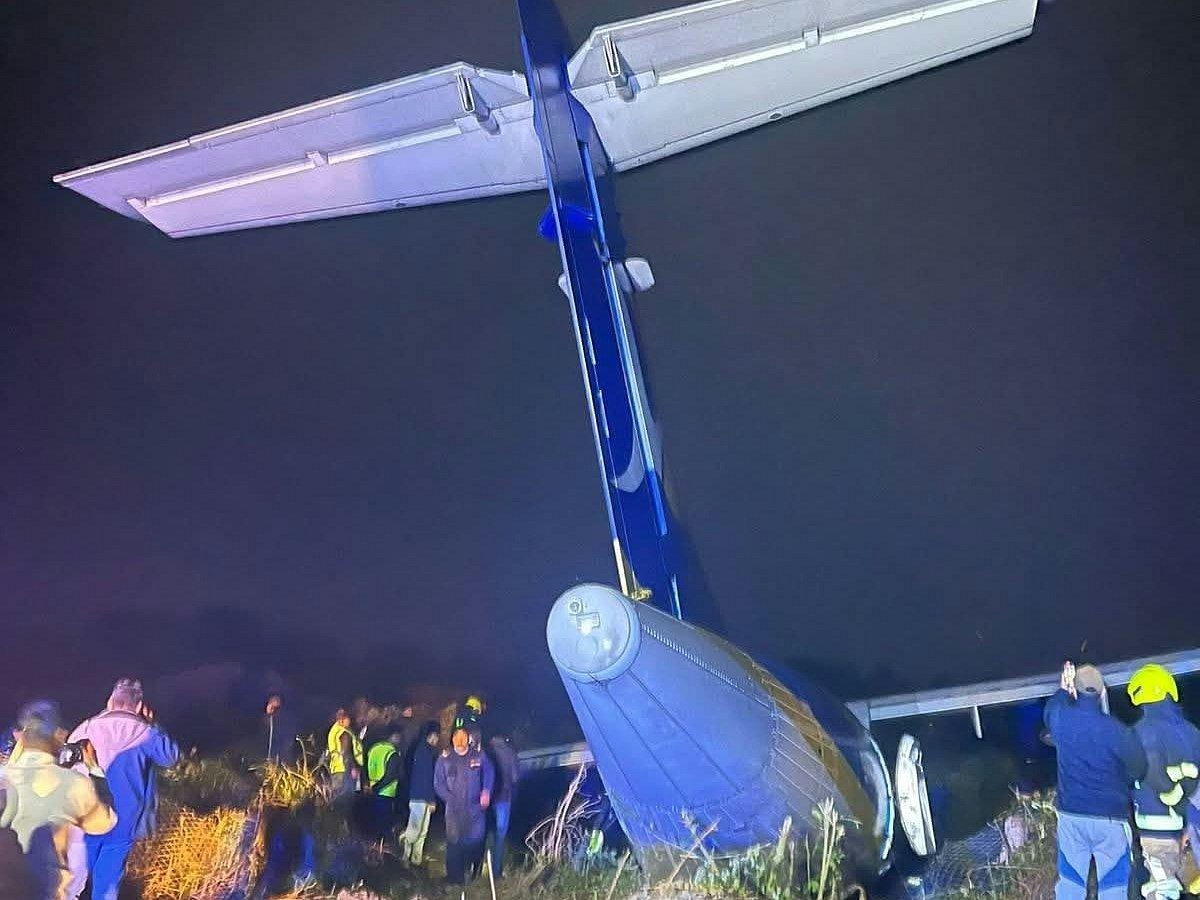
Engine Issue Forces Malaysia Airlines Flight to Make Emergency Landing in Chennai
A Malaysia Airlines flight carrying 186 passengers was compelled to make an emergency landing at Chennai airport on Thursday after experiencing an engine malfunction mid-flight. Flight MH156, operating from Kuala Lumpur to Jeddah, reported a suspected fault in its second engine, prompting the pilot to contact Chennai air traffic control and request immediate clearance to land. Authorities promptly declared a full emergency in response to the situation.
Emergency Response and Passenger Safety
As the aircraft approached Chennai, emergency services including ambulances, fire engines, and personnel from the Central Industrial Security Force (CISF) were placed on high alert. The plane landed safely, and all passengers disembarked without injury. Their baggage was also removed without incident. A spokesperson for Malaysia Airlines confirmed that a comprehensive assessment of the aircraft and the technical issue is currently underway, involving both the airline’s technical teams and relevant authorities. Despite the emergency, airport operations at Chennai continued without disruption.
Investigations and Broader Context
Aviation authorities in Delhi and Chennai have initiated investigations to determine the root cause of the engine malfunction. This event marks the second emergency landing involving a commercial flight in India within a week. Earlier, an IndiGo flight traveling from Goa to Delhi was forced to return to Goa airport after reporting an engine problem shortly after takeoff. Flight 6E 2102 declared a full emergency and landed safely, with all passengers accommodated without incident.
The recent series of emergency landings has intensified scrutiny of airline safety protocols across the industry. For Malaysia Airlines, the incident may result in increased regulatory oversight, potential compensation claims from passengers, and reputational challenges. Industry analysts suggest that such events can temporarily affect airline stock prices due to heightened perceptions of operational risk. Meanwhile, competitors may leverage the situation to emphasize their own safety records and reliability in marketing campaigns.
Authorities continue to stress the critical importance of rigorous maintenance and safety standards within the aviation sector as investigations into both incidents proceed.

Etihad Airways Suspends Airbus A380 Flights on Key Route

Aditya Birla Group Seeks Approval for Aircraft Leasing in GIFT City

Qatar Airways Highlights Innovation and Connectivity at Arabian Travel Market 2026

Hong Kong's Five-Year Plan Includes Andrew Fan's Aircraft Parts Processing Hub Proposal

ACIA Aero Leasing Delivers ATR72-600 to Air Nostrum

RTX Appoints Jill Albertelli as Head of Pratt & Whitney

TAT Technologies Joins Beyond Aero Hydrogen Aircraft Program

AURAK Study Highlights Barriers to Air Taxi Adoption in Emerging Economies

Xiamen Air Selects Altitude for 787 Maintenance at Heathrow

Etihad and Swissport Extend Global Partnership
