Изображение

Превращайте аналитические выводы ИИ в реальные действия

Присоединяйтесь к списку ожидания AeroGenie уже сегодня!

В тренде

Categories

Erickson Group Acquires 321 Precision Conversions
February 25, 2026By ePlane AI
Erickson Group Acquires 321 Precision Conversions
0
0
Erickson Group
321 Precision Conversions
A321-200PCF Freighter Conversions

Erickson Group Acquires Full Ownership of 321 Precision Conversions

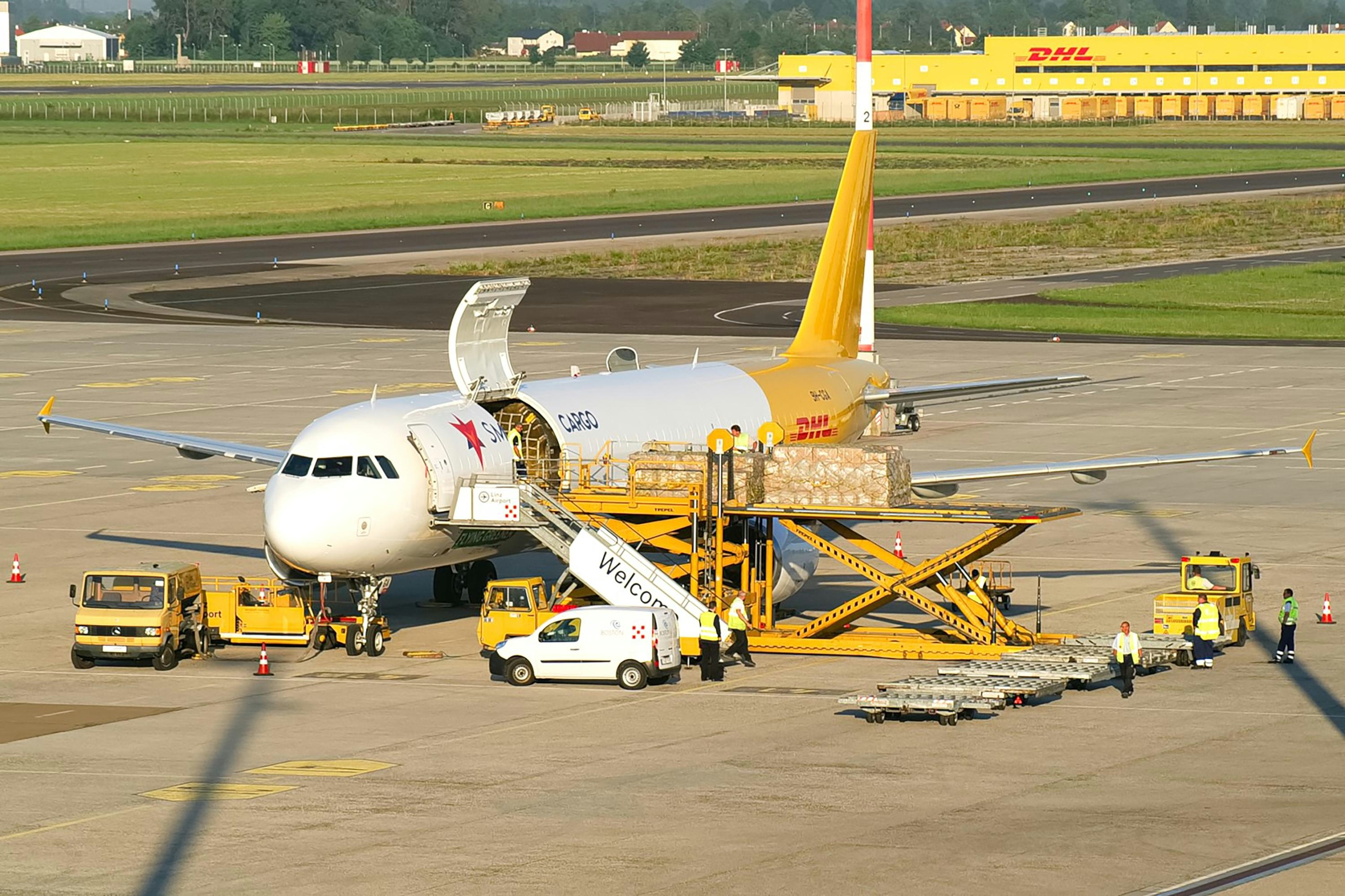
Erickson Group, a prominent global aviation and aerospace company, has completed the acquisition of full ownership of 321 Precision Conversions, a specialist in Airbus A321-200PCF freighter conversions. The transaction was executed through Erickson’s subsidiary, Precision Aircraft Solutions, which purchased the remaining minority interest from Air Transport Services Group (ATSG), previously held via ATSG’s subsidiary, Cargo Aircraft Management, Inc.

Strategic Integration and Market Positioning

This acquisition consolidates Erickson’s presence in the narrowbody freighter conversion market by bringing 321 Precision Conversions under the umbrella of a larger, vertically integrated aerospace group. With full ownership, Erickson intends to more closely align 321 Precision Conversions with Precision Aircraft Solutions’ engineering, certification, and program management capabilities. This integration is expected to accelerate the development of the A321-200PCF platform and enhance its competitiveness within the global cargo aircraft sector.

Gary Warner, President of 321 Precision Conversions, emphasized the significance of the acquisition, describing it as a strategic milestone that reinforces the company’s commitment to delivering advanced freighter conversion solutions worldwide. He highlighted that full ownership by Erickson will enable bolder investments in personnel, partnerships, and future conversion programs. Warner also expressed gratitude to ATSG for their longstanding support and collaboration, affirming that ATSG will continue as a valued customer.

Dylan Garner, President of Erickson Group, acknowledged ATSG’s partnership in building the A321PCF program and expressed confidence in the platform’s potential and the expertise of the 321 Precision Conversions team. Garner underscored Erickson’s commitment to investing in the program’s next phase of growth, reflecting strong belief in the sustained demand for narrow-body freighters.

Todd France, Chief Commercial Officer at ATSG, noted ATSG’s active role in the development and launch of the A321PCF program and welcomed the transition of ownership to Erickson. He expressed optimism that Erickson’s leadership would guide 321 Precision Conversions into its next stage, while reaffirming ATSG’s intention to continue marketing the A321 converted freighter within its broader leasing portfolio.

Challenges and Industry Implications

As Erickson advances with the integration, the company faces several challenges, including the assimilation of new technologies into existing operations and ensuring a smooth transition for customers. Maintaining a competitive advantage against other key players in the precision conversion and aerospace markets will be essential. Industry analysts suggest that this acquisition may stimulate increased investor interest in advanced aviation and precision technologies, potentially prompting competitors to accelerate their research and development efforts or seek new strategic alliances. Rival firms might also respond with pricing strategies or the introduction of new products to protect their market share.

Through this acquisition, Erickson Group aims to leverage its expanded capabilities to foster innovation and growth in the global cargo aircraft sector, positioning 321 Precision Conversions for sustained success amid a rapidly evolving market environment.

More news
Archer Aviation Escalates Patent Dispute with Joby as Delta Voices Concerns

Archer Aviation Escalates Patent Dispute with Joby as Delta Voices Concerns

Archer Aviation Intensifies Patent Dispute with Joby Aviation Amid Industry Concerns Archer Aviation (NYSE: ACHR) has escalated its legal confrontation with competitor Joby Aviation, intensifying a critical patent dispute that could significantly influence the trajectory of the nascent U.S. electric vertical takeoff and landing (eVTOL) sector. Archer recently lodged a formal complaint with the U.S. International Trade Commission (ITC), accusing Joby of infringing on its patents through the importation of aircraft components. Should the ITC grant Archer’s request for exclusion orders, Joby may face prohibitions on importing certain eVTOL aircraft or parts into the United States, potentially disrupting its market access. Legal Battle Amidst Industry Race This dispute unfolds as both companies compete to commercialize urban air mobility solutions, attracting the attention of major airline partners and investors. Delta Air Lines, a prominent stakeholder in the industry, has publicly expressed apprehension regarding the broader ramifications of the legal conflict. Delta cautions that regulatory decisions stemming from this dispute could have a ripple effect across the entire U.S. eVTOL market, potentially impeding the deployment of future air taxi services. The complexity of the legal proceedings has increased, with Archer simultaneously pursuing its patent claims at the ITC while seeking to dismiss a separate trade secret lawsuit filed by Joby. Joby alleges that Archer, along with a former Joby employee, misappropriated confidential information. A federal judge recently allowed the core elements of Joby’s trade secret case to proceed, rejecting Archer’s counterclaims and paving the way for a potential jury trial. Archer’s attempts to have these trade secret claims dismissed have thus far been unsuccessful. Implications for Market and Development The timing of this legal wrangling is critical for both companies. Archer is advancing through regulatory approvals and preparing for initial operations within the United States. Concurrently, Joby continues to develop its aircraft and anticipates securing a second $250 million investment from Toyota by the end of the year, contingent upon finalizing a manufacturing supply agreement. For investors and industry analysts, the resolution of these disputes carries significant weight. Legal outcomes may determine the competitive landscape in the U.S. eVTOL market, influencing not only which companies can operate freely but also the pace at which infrastructure and aircraft deployment progress. The heightened scrutiny from regulators and airline partners such as Delta underscores that the future of eVTOL services will be shaped by a confluence of technological innovation, legal rulings, regulatory frameworks, and intellectual property considerations. As Archer navigates these multifaceted challenges, including its inclusion in several Russell value benchmarks and its strategic focus on both commercial and defense applications, the company faces uncertainties related to legal expenses, capital requirements, and market access. This evolving legal environment highlights the pivotal role that certification, safety standards, and intellectual property rights will play in defining the future of the U.S. eVTOL industry.
California Developers Construct Vertiports Ahead of Air Taxi Approval

California Developers Construct Vertiports Ahead of Air Taxi Approval

California Developers Construct Vertiports Ahead of Air Taxi Approval Advancing Urban Air Mobility Infrastructure Amid Regulatory Uncertainty Developers in Los Angeles and New York are proactively installing vertiports and electric charging infrastructure in anticipation of future Federal Aviation Administration (FAA) certification for electric vertical takeoff and landing (eVTOL) aircraft. Despite ongoing regulatory ambiguity, significant investments are being made to establish the foundational infrastructure necessary for the emerging urban air mobility sector. In Los Angeles, the Reuben Brothers Group has transformed an existing heliport atop its Park Elm luxury towers in Century City into a vertiport through a collaboration with Joby Aviation and Blade Air Mobility. This facility is being promoted as a premium amenity to prospective buyers of penthouse units, some priced as high as $78 million. Archer Aviation has secured the master lease of Hawthorne Airport in Los Angeles County, with plans to develop a network of approximately a dozen landing sites throughout the region. Additionally, Stephen Ross has partnered with Archer to create vertiports at Hard Rock Stadium and other properties in the Miami area. Legal and Regulatory Challenges California developers face challenges beyond regulatory approval. Ongoing legal disputes among leading eVTOL manufacturers have complicated the sector’s development. A recent federal court ruling dismissed claims and counterclaims in the litigation between Archer and Joby Aviation, highlighting the legal uncertainties that persist. Meanwhile, Joby Aviation is anticipated to receive a second $250 million investment from Toyota by the end of the year, potentially bolstering its competitive position. The FAA initiated its eVTOL Integration Pilot Program in March, conducting trials across eight locations. However, even optimistic forecasts suggest that full certification will not be achieved until 2027 or 2028. Currently, eVTOL aircraft are regulated as helicopters, restricting them to existing helicopter routes and FAA-approved landing sites. Los Angeles benefits from unique 1970s building codes that mandated helipads on tall buildings for fire safety, and the city’s Urban Air Mobility Partnership, launched in 2020, has further established it as a leader in this emerging field. Industry Developments and Infrastructure Hurdles Companies such as Joby, Archer, and Beta Technologies are actively testing prototype multi-rotor electric aircraft with ranges near 100 miles, having raised billions in capital. Beta Technologies’ Alia 250 model is expected to receive certification soon, enabling the company to expand beyond air taxis into broader urban air mobility applications. Beta has already installed over 50 eVTOL chargers at rural airports and is initially focusing on cargo and emergency medical services before entering the passenger market. Despite these advances, infrastructure challenges remain significant. A recent study by San Francisco International Airport found that its helipads are located too far from terminals, and the cost of installing charging infrastructure would serve too few users to be economically viable. Most existing helipads are privately owned and often fail to meet FAA design standards. New construction faces additional obstacles, including fire safety regulations, zoning restrictions, and the need for special permits. Market Dynamics in New York and Global Context In New York City, rooftop helicopter service has been banned since a fatal crash in 1977, and noise complaints related to helicopter traffic have increased in recent years. Blade Air Mobility, which transported approximately 100,000 passengers last year on routes in New York City and Southern Europe, currently charges upwards of $195 per passenger for helicopter flights from Manhattan to area airports or the Hamptons. This volume remains modest compared to the daily passenger throughput at Penn Station. Internationally, the competition to launch commercial air taxi services is intensifying. Dubai recently certified the world’s first commercial vertiport for Joby Aviation operations, signaling growing global momentum. Archer has been designated the official air taxi provider for the 2028 Los Angeles Olympics, pending FAA approval. Both Joby and Archer aim to commence commercial services in the near future, even as questions regarding capacity, cost, and regulatory frameworks remain unresolved.
Pearson Airport Warns AI-Generated Articles Contain Inaccurate Flight Information

Pearson Airport Warns AI-Generated Articles Contain Inaccurate Flight Information

Pearson Airport Issues Warning Over Inaccurate AI-Generated Flight Information Toronto Pearson International Airport has issued a cautionary statement regarding a recent surge in AI-generated online articles containing false or misleading information about its operations. This alert highlights growing concerns about the reliability of artificial intelligence in providing accurate travel updates, particularly as these erroneous reports risk causing confusion and unnecessary alarm among passengers. Misleading Reports and Their Impact Erica Vella, spokesperson for the Greater Toronto Airports Authority, revealed that automated "bot authors" are producing upwards of 100 articles daily, many of which include fabricated figures and unverified claims. These articles, frequently published on clickbait websites, often suggest widespread system failures or cascading disruptions that do not reflect the actual situation at Pearson Airport. Sean Davidson, another airport representative, emphasized that some AI-generated reports have falsely alleged extensive technology outages across Canadian airports, a claim that has no basis in reality. He urged travelers to rely solely on official sources, such as airline communications and Pearson’s own website, for accurate and timely flight information. Broader Concerns Over AI Accuracy and Trust Pearson’s warning underscores a broader skepticism surrounding AI-generated content, especially when public trust and safety are involved. Recent studies, including research from Hotel News Resource, indicate that consumers are increasingly cautious about the accuracy of AI outputs, prompting businesses to enhance transparency and implement rigorous fact-checking protocols. The issue extends beyond airports; for instance, Air Canada recently faced criticism after its AI-powered chatbot disseminated misleading information to customers, highlighting the critical need for human oversight in AI applications. The proliferation of inaccurate AI-generated content has also led to heightened scrutiny within other industries. Legal technology firms have begun pursuing legal action over AI-generated documents, as reported by Bloomberg Law News, reflecting the potential reputational and legal risks posed by unchecked AI outputs. Similarly, the Asian Business Review has noted challenges faced by Australian insurers in managing AI search visibility, emphasizing the importance of robust digital content strategies to ensure the accuracy of AI-generated responses. Collaborative Efforts and Recommendations for Travelers In response to these challenges, Pearson Airport is collaborating with other airports across Canada and North America to address the spread of misleading AI-generated articles. The airport has also reached out to the publishers responsible for disseminating false information. Travelers are strongly advised to consult official channels for reliable flight updates and to exercise caution when encountering unverified online sources.
NTSB Attributes Ryanair Boeing Jet Emergency to Right Engine Problem

NTSB Attributes Ryanair Boeing Jet Emergency to Right Engine Problem

NTSB Attributes Ryanair Boeing Jet Emergency to Right Engine Problem Emergency Landing Following Engine and Cabin Issues A Ryanair Boeing 737 Next Generation aircraft was compelled to execute an emergency landing shortly after departing Thessaloniki, Greece, en route to Memmingen, Germany, due to complications involving the right engine, cabin decompression, and a dislodged passenger window. The incident, which occurred on Friday morning, prompted the deployment of oxygen masks and a swift return to Thessaloniki. The flight, operated by Malta Air—a Ryanair subsidiary—landed safely, with one passenger requiring medical attention on the ground. The airline has not disclosed details regarding the passenger’s condition. Local reports from Greece described a loud noise preceding the window’s detachment. Witnesses recounted a distressing moment when a Serbian man in his 60s was partially pulled out of the aircraft through the broken window before being rescued by fellow passengers. This harrowing episode highlights the critical importance of stringent safety inspections, particularly concerning engine maintenance and cabin integrity. Investigation and Industry Response The U.S. National Transportation Safety Board (NTSB) confirmed it was notified by the Aircraft Accident and Incident Investigation Committee of the Republic of North Macedonia, as the incident likely occurred within North Macedonian airspace. The NTSB indicated that the flight’s return was due to a right engine malfunction and cabin decompression. North Macedonia will lead the investigation, with the NTSB appointing an accredited representative to assist alongside advisors from the Federal Aviation Administration (FAA), Boeing, and General Electric Aerospace, the engine manufacturer. The FAA has expressed its readiness to support both the Hellenic Civil Aviation Authority and the NTSB throughout the investigation. Boeing, which delivered the 737 NG involved in 2008, acknowledged the incident and is maintaining communication with Ryanair. CFM International, the joint venture between GE and Safran responsible for producing engines for the 737 NG and 737 MAX, has also pledged full cooperation and expressed concern for those affected. Implications for Ryanair and the Aviation Industry This emergency landing has intensified scrutiny on engine maintenance and safety protocols within the airline industry. Observers suggest that Ryanair’s maintenance practices and safety measures may face increased examination, potentially influencing the airline’s reputation and operational expenses. Competitors may respond by reinforcing their own safety inspections and adherence to engine maintenance standards to mitigate the risk of similar incidents. Ryanair, Europe’s largest low-cost carrier, operates a fleet exceeding 400 Boeing 737 NG aircraft and over 200 737 MAX 8-200 “Gamechanger” jets, with an additional 300 Boeing 737 MAX 10 planes on order. While some reports speculate that engine component failure may have contributed to the incident, the event underscores the ongoing necessity for airlines to uphold rigorous safety standards and comprehensive inspection regimes to safeguard passenger well-being.
Both Engines Failed Before Fatal Citation Latitude Crash on Laredo Highway

Both Engines Failed Before Fatal Citation Latitude Crash on Laredo Highway

Both Engines Failed Before Fatal Citation Latitude Crash on Laredo Highway US investigators have disclosed that both engines of a Cessna 680A Citation Latitude flamed out during an emergency approach to Laredo, Texas, resulting in a fatal crash on a highway. Of the six individuals on board, five—including both pilots—survived, while one passenger lost their life. Sequence of Events Leading to the Crash The NetJets-operated aircraft was flying from Los Cabos, Mexico, to Austin, Texas, on June 16 when the crew reported a generator failure, multiple system malfunctions, and low fuel levels to Houston air traffic control. In response, the pilots requested an emergency diversion to Laredo. Air traffic controllers vectored the jet for an approach to runway 36L, instructing a 270-degree turn to lose altitude. However, during the final approach, the right engine flamed out, followed seconds later by the left engine, according to preliminary findings from the National Transportation Safety Board (NTSB). While the captain managed the aircraft, the first officer inquired with Laredo tower about possible emergency landing sites. The tower advised that only a nearby highway—the Bob Bullock Loop, approximately 1.5 kilometers east of the runway—was available. The crew aligned the aircraft with the northbound lane in an attempt to land. Video footage shows flames around the jet during the final approach. Upon touchdown, the aircraft struck several light poles, collided with a vehicle, and came to rest straddling the edge of an overpass. The fuselage rolled onto its right side, but after the main cabin door was opened, five occupants were able to escape. Investigation and Mechanical Findings Investigators have concentrated on significant damage discovered in the fuel system and the engine starter generator. Early in the flight, the crew reported an unusual intermittent vibration and consulted NetJets but were cleared to continue. As the aircraft approached the Mexico-US border, a series of alerts began: initially a low right-hand fuel pressure warning, followed by electrical issues, and ultimately a low-fuel warning. The crew declared an emergency with Monterrey control before being handed off to Houston. Examination of the wreckage revealed that the right engine’s fuel pressure switch had separated from the fuel tube assembly due to a fractured weld joint, and several clamps on the fuel tube assembly were broken. Additionally, the right engine’s starter generator was missing multiple screws from its outer housing. This generator had undergone an overhaul in April 2023 and had approximately 57 hours of service time remaining. Industry Implications The crash has raised broader concerns within the business aviation sector. Investigators continue to determine the precise mechanical failures that led to the dual engine flameout and are assessing the implications of the component damage uncovered. The incident has prompted scrutiny of NetJets’ operations and may result in increased regulatory oversight or safety audits across the industry. Competitors might respond by enhancing safety protocols or issuing public reassurances to maintain customer confidence. The event also highlights the critical importance of robust emergency procedures and crew training in managing in-flight crises.
DOT Launches Electric and Autonomous Aircraft Trials Across 26 States

DOT Launches Electric and Autonomous Aircraft Trials Across 26 States

DOT Launches Electric and Autonomous Aircraft Trials Across 26 States The U.S. Department of Transportation (DOT) and the Federal Aviation Administration (FAA) have initiated an extensive three-year trial program to advance electric and autonomous aircraft technologies across 26 states. Known as the eVTOL (electric vertical takeoff and landing) Integration Pilot Program (eIPP), this initiative represents a pivotal effort to integrate advanced air mobility (AAM) solutions—such as electric air taxis and autonomous cargo drones—into the national airspace system. Early Operations and Industry Participation The inaugural operational flights under the eIPP occurred in Maryland and Virginia, where Beta Technologies deployed its all-electric Alia CX300 aircraft to transport manufactured organs between four airports, including Virginia Tech/Montgomery Executive Airport and Baltimore County’s Martin State Airport. Beta’s Alia family, which also encompasses the eVTOL A250, has accumulated over 160,000 nautical miles in various markets across the United States, Europe, Japan, and New Zealand, primarily through market survey operations. The eIPP now authorizes Beta and other manufacturers to conduct previously restricted activities, potentially extending to revenue-generating cargo and passenger flights. These trials are designed to produce essential data on the safe integration of electric and autonomous aircraft alongside conventional air traffic. Although the FAA is not directly funding these flights, it will utilize the operational insights to inform future certification processes and regulatory frameworks for emerging aviation technologies. Regulatory and Market Challenges Despite the program’s promising start, significant challenges remain. Regulatory hurdles continue to pose a major concern, as the certification process for AAM aircraft demands stringent safety standards, quality assurance, and comprehensive product lifecycle support, as outlined in recent Congressional Research Service reports. Safety issues have been further highlighted by legal actions such as the lawsuit against Boeing-owned Wisk Aero, underscoring the intense scrutiny faced by autonomous air taxi operations. Market competition is intensifying as companies vie to establish leadership in the burgeoning electric and autonomous aviation sector. Beta Technologies, for instance, has partnered with Surf Air Mobility to demonstrate electric aviation capabilities in Hawaiʻi, reflecting a broader industry push toward commercial deployment. These partnerships and demonstration campaigns are expected to accelerate development and testing efforts across the sector. Program Structure and Industry Perspectives In March, the FAA designated eight lead participants in the eIPP, each coordinated by a state or local transportation agency. These participants have since negotiated detailed operational agreements with the FAA, specifying requirements for data reporting, flight hours, and demonstration activities. Beta Technologies confirmed that its recent Alia campaign was conducted under one such agreement, marking the official commencement of the eIPP. Kristen Costello, Beta’s head of government and regulatory affairs, emphasized that the program will enable the company to deepen its experience within the U.S. operating environment and gather operational data on an unprecedented scale. Beta’s founder and CEO, Kyle Clark, highlighted the program’s focus on real-world reliability, stating, “It’s not, ‘Does the airplane work?’ It’s, ‘Does the airplane work every single day in IMC, with real operational payloads? Does the training work? Do the service and reliability meet the standards our customers expect?’” As the DOT and FAA advance these trials, the data and operational experience generated will play a critical role in shaping the future landscape of electric and autonomous aviation in the United States, even as regulatory, safety, and competitive dynamics continue to influence the industry’s evolution.
SpaceX Fires All 33 Engines in Starship Booster Test Ahead of Flight 13 Launch

SpaceX Fires All 33 Engines in Starship Booster Test Ahead of Flight 13 Launch

SpaceX Successfully Conducts Full Engine Static Fire Test on Starship Booster Ahead of Flight 13 SpaceX has achieved a significant milestone in its Starship program by successfully igniting all 33 engines of its Super Heavy booster during a static fire test at its Starbase facility in Texas. The test, conducted on July 10, involved Booster 20, the latest iteration of the "Version 3" (V3) Super Heavy model, as the company prepares for the upcoming Flight 13 launch, currently scheduled for July 14, 2026. Booster 20 Static Fire Test and Preparations for Flight 13 Booster 20 was transported to the launch pad on July 9 and positioned on its support structure using the launch tower’s “Mechazilla” chopstick arms. Early the following day, SpaceX closed Boca Chica beach to commence fueling operations. The static fire test began just before 11 a.m. EDT (1500 GMT), with all 33 upgraded Raptor 3 engines firing simultaneously for approximately 25 seconds. This test simulated actual launch conditions and represented a critical step in the preflight validation process. This successful static fire follows a related milestone achieved on July 2, when SpaceX fired all six Raptor engines on Ship 40, the upper stage that will be paired with Booster 20 for Flight 13. These consecutive tests highlight SpaceX’s ongoing efforts to refine Starship’s systems and operational procedures following challenges encountered during earlier missions. Context and Upgrades in the V3 Starship Flight 13 is set to build upon the lessons learned from Flight 12, which launched in May as the first mission to utilize the upgraded V3 Starship. While Flight 12 reached a suborbital trajectory and achieved a soft splashdown of the upper stage in the Indian Ocean, it also exposed areas requiring improvement. Notably, the Super Heavy booster (Booster 19) failed to perform a controlled ocean landing, and Ship 39 experienced an engine anomaly that prevented an in-space engine relight demonstration. The V3 Starship incorporates several enhancements over its predecessor, including advanced avionics designed to reduce mass and increase payload capacity, a taller and larger-volume fuel tank, and new equipment to facilitate in-space propellant transfer. These improvements are essential for the ambitious missions Starship aims to support, including NASA’s Artemis program, which seeks to return astronauts to the lunar surface. As one of two lunar landers contracted by NASA, Starship’s development is under heightened scrutiny amid tightening Artemis timelines. According to a Federal Aviation Administration notice, Flight 13 could launch as early as July 15. The mission is expected to follow a profile similar to Flight 12, emphasizing incremental progress and risk mitigation as SpaceX continues to advance its next-generation launch system. Despite previous setbacks, SpaceX remains optimistic about the upcoming test flight, viewing the recent static fire tests as significant progress toward demonstrating Starship’s capabilities and furthering the company’s broader ambitions in space exploration.
Air Greenland to Retrofit Two DHC-8-Q200 Aircraft for Defense Roles

Air Greenland to Retrofit Two DHC-8-Q200 Aircraft for Defense Roles

Air Greenland to Retrofit Two DHC-8-Q200 Aircraft for Defense Roles Air Greenland has commissioned PAL Aerospace to retrofit two of its DHC-8-Q200 turboprop aircraft for military operations under the United Nations International Maritime Organization’s Maritime Domain Awareness programme. The contract, announced by PAL Aerospace, covers extensive modifications, configuration, and integration of the aircraft, alongside ongoing support throughout their operational lifespan. This support includes training, technical and software assistance, future upgrades, supply chain management, and scheduled maintenance. Strategic Importance and Fleet Enhancement Jacob Nitter Sørensen, CEO of Air Greenland, highlighted the strategic importance of the initiative, stating, “Together, we are establishing a modern capability that will be operated from Greenland, while developing local competencies and creating long-term value for Greenland and the Arctic.” This project represents a significant development for Air Greenland, whose current fleet comprises one Airbus A330-800neo, eight DHC-8-Q200s, two Hawker 800XP variants, and a wet-leased Boeing 737-800. By converting two DHC-8-Q200s for defense purposes, the airline aims to bolster regional surveillance and security capabilities in the Arctic. Challenges and Regional Implications The retrofitting effort faces several challenges, including the need for specialized expertise to execute military-grade modifications and strict adherence to defense regulations. The financial demands of such a complex upgrade are substantial, necessitating careful management to ensure the project’s long-term viability. Aviation and defense analysts are closely monitoring the initiative, assessing the feasibility and strategic advantages of repurposing commercial aircraft for defense roles in the Arctic. Observers suggest that Air Greenland’s move may encourage other regional carriers to explore similar upgrades amid evolving defense priorities. Denmark’s recent procurement of P-8 Poseidon maritime patrol aircraft is also expected to influence future defense planning and cooperation in Greenland and the wider Arctic region. As Air Greenland advances this ambitious retrofit programme, it positions itself at the forefront of Arctic aviation innovation while confronting the operational, regulatory, and financial complexities involved in adapting commercial aircraft for military applications.
Beta Completes Initial Test Flights in U.S. Air Taxi Pilot Program

Beta Completes Initial Test Flights in U.S. Air Taxi Pilot Program

Beta Completes Initial Test Flights in U.S. Air Taxi Pilot Program Beta Technologies announced on Friday the successful completion of its first test flights under the U.S. government’s electric vertical takeoff and landing (eVTOL) pilot program, marking a significant advancement in the development of flying taxis. The Vermont-based aerospace firm, supported by Amazon, utilized its Alia 250 eVTOL aircraft to transport manufactured organs for United Therapeutics between airports in Maryland and Virginia, covering approximately 275 nautical miles. Advancing Medical Transport Through Electric Flight Beta’s CEO, Kyle Clark, emphasized the broader implications of these missions, stating that the flights pave the way for routine medical applications of electric aviation at substantially reduced costs nationwide. This demonstration underscores the potential for eVTOL technology to extend beyond traditional air taxi services, encompassing a wider range of urban air mobility solutions, including critical medical transport. The U.S. Air Taxi Pilot Program, initiated by executive order last year and managed by the Department of Transportation alongside the Federal Aviation Administration (FAA), seeks to expedite the integration of electric air taxis into the national airspace. The program encompasses eight projects across 26 states, with Beta participating in seven, making it the most active company involved. Industry Challenges and Market Dynamics Beta is among several competitors, such as Joby Aviation and Archer Aviation, striving to obtain FAA certification and launch commercial passenger flights. However, the certification process has encountered delays, with Beta projecting certification for its Alia 250 eVTOL in 2028, while its conventional takeoff and landing aircraft aims for certification in 2027. The industry faces additional obstacles, including safety concerns and ongoing legal disputes. A recent lawsuit involving Boeing-owned Wisk Aero highlighted issues related to reduced software testing for autonomous air taxis, drawing attention to the critical need for stringent safety protocols as the sector evolves. Market sentiment has also cooled considerably. Since its November initial public offering, Beta’s shares have declined by approximately 50 percent. Similarly, shares of Joby Aviation and Archer Aviation have fallen by more than one-third this year, while the U.K.-based Vertical Aerospace has seen its valuation drop by 68 percent. These declines reflect the impact of regulatory uncertainties and legal challenges on investor confidence. Despite these hurdles, Beta’s successful test flights represent a promising step forward for electric air taxis and urban air mobility. As companies continue to navigate technical, regulatory, and market challenges, the vision of routine electric air travel—serving passengers as well as critical medical and cargo missions—draws nearer to realization.
Kenya Airways Reclaims Boeing 777 from Turkish Airlines

Kenya Airways Reclaims Boeing 777 from Turkish Airlines

Kenya Airways Reclaims Boeing 777-300ER from Turkish Airlines Amid Maintenance Concerns Kenya Airways has repossessed a Boeing 777-300ER from Turkish Airlines following the expiration of a long-term operating lease. The airline plans to deploy the widebody aircraft on its flagship Nairobi–London Heathrow route starting July 17. According to ADS-B data, the aircraft, previously registered as TC-LKC (msn 42097) under Turkish Airlines, returned from Istanbul to Nairobi on July 7. Prior to its lease to the Turkish carrier in March 2016, the jet was registered in Kenya as 5Y-KZX. Transition and Operational Plans The aircraft had been undergoing pre-redelivery maintenance at Istanbul Atatürk Airport since January. Kenya Airways Group acting managing director and CEO, George Kamal, confirmed that the re-registration process is currently underway. He outlined the airline’s immediate plans for the aircraft, stating that it will operate initial flights from Nairobi to Mombasa between July 12 and 16, before commencing service on the Nairobi–London Heathrow route from July 17. The 400-seat Boeing 777 is expected to operate four weekly flights on this route, partially replacing the Boeing 787-8 currently in use. Incident and Maintenance Challenges The transition has been complicated by a prior incident involving the aircraft while under Turkish Airlines’ operation. The Boeing 777-300ER was involved in a collision at Antalya Airport, where its right wing struck a pole, resulting in significant damage to both the wing and fuselage. This incident has raised concerns regarding the aircraft’s condition, with potential implications for additional maintenance costs and operational delays for Kenya Airways. Industry analysts are closely monitoring the situation, and some passengers have expressed apprehension about the safety of the reclaimed jet. Competitor airlines have also commented on Kenya Airways’ decision to reintegrate the aircraft following the incident. Fleet Context and Future Outlook The Boeing 777-300ER is one of three such aircraft Kenya Airways acquired between 2013 and 2014. All three were retired in January 2016 after being deemed too large for the airline’s operational requirements. The other two remain on lease to Turkish Airlines. Kamal noted that Kenya Airways is actively seeking to secure a backup sistership for the Boeing 777 to ensure operational reliability. Meanwhile, the airline anticipates that all nine of its Boeing 787s will be back in service by the end of 2027. Currently, two of these aircraft have been grounded since late 2024 due to engine maintenance shortages and global supply chain disruptions, while a third is undergoing a scheduled 12-year major maintenance check—the first such overhaul to be conducted internally by Kenya Airways. As Kenya Airways prepares to reintroduce the Boeing 777-300ER to its fleet, the airline faces increased scrutiny over maintenance standards and operational readiness, highlighting the broader challenges of managing a modern long-haul fleet amid ongoing global aviation disruptions.
line









