
Превращайте аналитические выводы ИИ в реальные действия

В тренде
Categories
Etihad Airways Withdraws Airbus A380 from 6 Major Global Routes
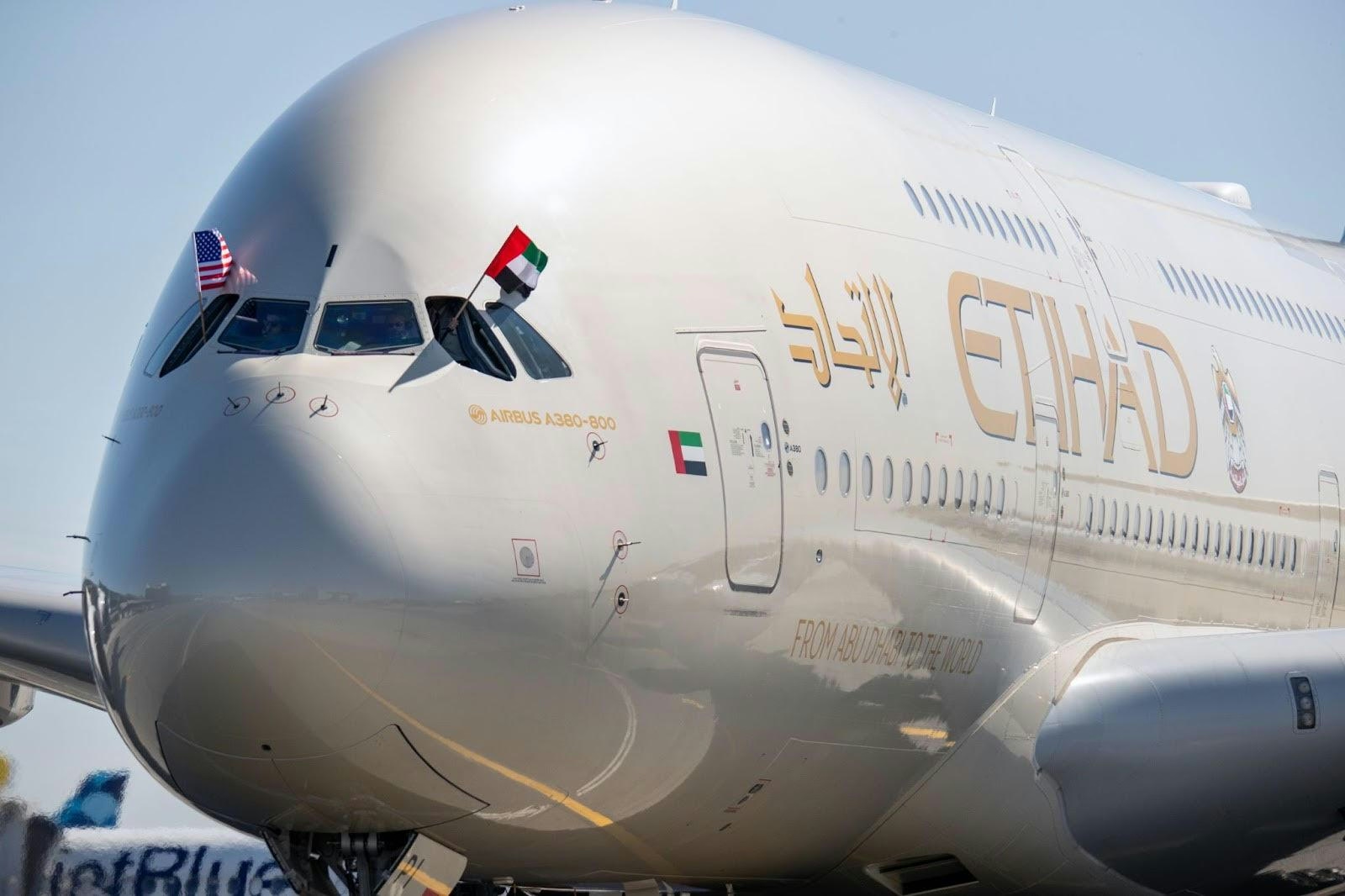
Etihad Airways Withdraws Airbus A380 from Six Major Global Routes
ABU DHABI – Etihad Airways has officially ceased Airbus A380 operations on six key international routes from its Abu Dhabi International Airport (AUH) hub, marking a notable shift in the airline’s long-haul strategy. Once among the few carriers operating the 486-seat superjumbo, the UAE-based airline is streamlining its fleet to better align with evolving market dynamics and operational requirements.
Currently, Etihad operates seven active A380s from a fleet of nine, including one aircraft recently returned from storage in France. While the airline continues to deploy the double-decker on select high-demand routes, it has permanently withdrawn the A380 from major airports across Australia, the United States, Asia, and India.
Discontinued A380 Routes and Impact
The six routes from which the A380 has been withdrawn include John F. Kennedy International Airport (JFK) in New York, Sydney Airport (SYD), Melbourne Airport (MEL), Chhatrapati Shivaji Maharaj International Airport (BOM) in Mumbai, Incheon International Airport (ICN) in Seoul, and King Abdulaziz International Airport (JED) in Jeddah.
New York JFK recorded the highest number of A380 departures among these destinations, with 2,413 flights operated between 2015 and 2020, and again from 2024 until mid-2025. Sydney followed closely with 2,194 departures, including periods of twice-daily service. Melbourne and Mumbai experienced shorter durations of A380 deployment, while Seoul and Jeddah saw limited or short-term operations. The withdrawal from Sydney and Melbourne effectively ends Etihad’s A380 presence in Australia, and the cessation of JFK flights removes the aircraft from the U.S. market.
Operational and Market Considerations
Etihad’s decision reflects broader industry challenges, including rising operational costs, shifting passenger demand, and intensifying competition. The replacement of the A380 with aircraft such as the Airbus A350-1000 may increase operational expenses due to new crew training requirements and adjustments in fleet utilization. While some passengers accustomed to the spacious cabins of the A380 may express disappointment, others may perceive little difference in their travel experience.
Meanwhile, competitors like Emirates continue to invest heavily in the A380, potentially positioning themselves to attract travelers seeking the superjumbo experience. Etihad’s withdrawal could prompt competitive responses as airlines vie for market share on high-demand routes.
Despite these challenges, Etihad’s robust financial performance—highlighted by a near 50% increase in net profit and ongoing fleet expansion plans—demonstrates the airline’s confidence in managing this transition while maintaining its competitive position.
Changes on the New York Route
Etihad operated its final A380 flight to New York JFK on June 23, 2025, replacing the aircraft with the Airbus A350-1000, which offers 371 seats across two classes. The A350-1000 introduces Etihad’s latest business class product but eliminates the First Class Apartments and The Residence suites previously available on the A380. This redeployment also frees up A380 capacity for other long-haul markets. Between July and November 2025, Etihad carried 162,677 round-trip passengers on the JFK route, with both seat capacity and traffic declining by approximately 9 to 10 percent compared to the previous year.
Current and Future A380 Network
Looking ahead, Etihad plans 2,104 A380 departures from Abu Dhabi in 2026, marking its fourth-highest annual deployment. The A380 will continue to serve five destinations: London Heathrow (LHR), Paris Charles de Gaulle (CDG), Singapore Changi (SIN), Narita International (NRT) in Tokyo, and Toronto Pearson (YYZ).
Notably, Tokyo Narita will receive its first-ever Etihad A380 service beginning June 17, 2026, while Singapore joined the network last year, expanding Etihad’s high-capacity footprint in Southeast Asia.
As Etihad reshapes its long-haul network, the airline remains focused on balancing operational efficiency, passenger preferences, and competitive positioning within a rapidly evolving global aviation landscape.

Etihad Airways Suspends Airbus A380 Flights on Key Route

Aditya Birla Group Seeks Approval for Aircraft Leasing in GIFT City

Qatar Airways Highlights Innovation and Connectivity at Arabian Travel Market 2026

Hong Kong's Five-Year Plan Includes Andrew Fan's Aircraft Parts Processing Hub Proposal

ACIA Aero Leasing Delivers ATR72-600 to Air Nostrum

RTX Appoints Jill Albertelli as Head of Pratt & Whitney

TAT Technologies Joins Beyond Aero Hydrogen Aircraft Program

AURAK Study Highlights Barriers to Air Taxi Adoption in Emerging Economies

Xiamen Air Selects Altitude for 787 Maintenance at Heathrow

Etihad and Swissport Extend Global Partnership
