
Превращайте аналитические выводы ИИ в реальные действия

В тренде
Categories
EU Issues Warning to Aviation Sector Over Fuel Risks Amid Iran Conflict
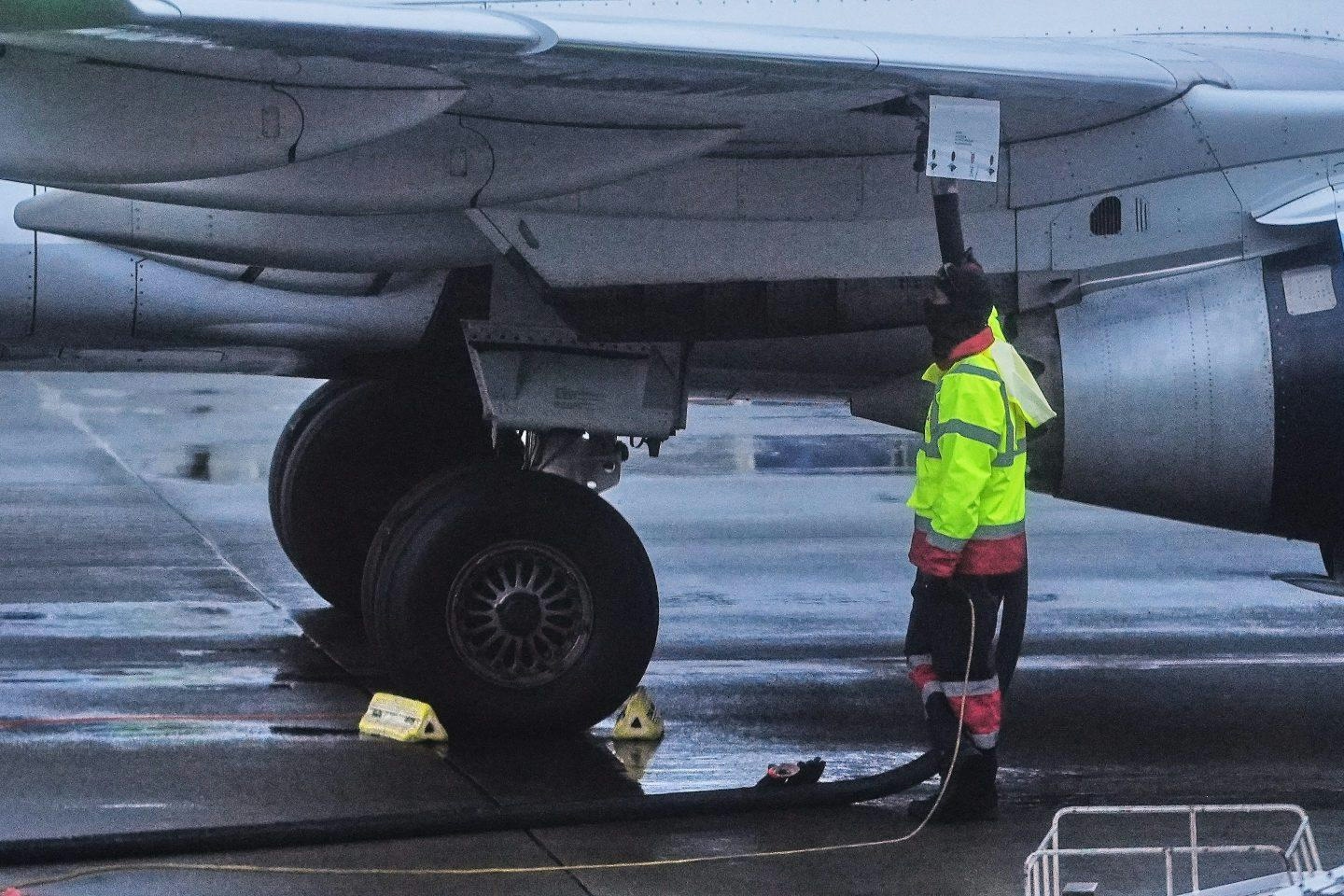
EU Issues Warning to Aviation Sector Over Fuel Risks Amid Iran Conflict
Rising Fuel Prices and Supply Disruptions
The European Union Aviation Safety Agency (EASA) has issued a serious warning to the aviation industry regarding the escalating risks of jet fuel shortages. The ongoing conflict in Iran has severely disrupted global supply chains, causing jet fuel prices to surge by nearly 84% since hostilities began in February. This sharp increase is exerting unprecedented pressure on European airlines and airports, threatening operational stability during a critical period for the sector.
Industry experts have expressed concern that the crisis could necessitate fuel rationing during the peak summer travel season, representing the most significant challenge the aviation sector has faced since the COVID-19 pandemic. Airlines have already sounded alarms about potential shortages emerging within weeks due to disruptions in Middle Eastern supply routes, which could severely impact flight schedules and overall service reliability.
Contingency Measures and Fuel Type Challenges
In response to the growing crisis, European authorities are exploring a range of contingency measures. These include boosting jet fuel imports from the United States and accelerating the development and adoption of sustainable aviation fuels. The EU is also issuing guidance to airlines on managing airport slots, protecting passenger rights, and fulfilling public service obligations should fuel shortages materialize.
A key concern centers on the possible need to transition from Jet A-1 fuel—the standard across Europe and much of the world—to Jet A fuel, which is predominantly used in the United States and Canada. Although both fuel types are certified for use in many aircraft, they differ in technical specifications such as freezing points. EASA warns that European aviation systems, procedures, and training have been designed almost exclusively around Jet A-1. A sudden switch to Jet A without careful management could introduce significant operational and safety risks.
The agency highlights the dangers associated with a mixed-fuel transition period, cautioning that errors such as loading the incorrect fuel type could have serious consequences, particularly on long-haul flights operating in cold environments. EASA also emphasizes the critical role of human factors, warning that insufficient training or unclear fuel information could lead pilots and ground crews to misjudge safety limits or delay essential decisions.
Recommendations Across the Fuel Supply Chain
To address these risks, EASA has issued comprehensive recommendations spanning the entire fuel supply chain. Fuel suppliers are urged to maintain rigorous handling and traceability standards. Airports are advised to clearly label fuel types and coordinate any changes with all relevant providers. Airlines must update crew training, flight planning procedures, and contingency protocols to ensure pilots are fully informed of any fuel type changes at airports. Additionally, aircraft manufacturers are called upon to assess how mixed fuel loads may behave within aircraft tanks, particularly concerning temperature and safety thresholds.
Despite these precautions, EASA stresses that Jet A fuel itself is not inherently unsafe and is widely used in North America. The agency characterizes its guidance as precautionary, noting that no emergency regulations are currently necessary. EASA will continue to monitor developments closely and may adjust its recommendations as global fuel supply conditions evolve, especially ahead of the upcoming winter season.
Analysts warn that, despite strong travel demand, the combination of elevated fuel costs and potential shortages could erode industry profits and compel capacity reductions, particularly in vulnerable regions such as the U.S. West Coast. The EU’s efforts to diversify fuel sources and promote sustainable alternatives are viewed as essential measures to enhance the sector’s resilience amid ongoing geopolitical uncertainties.

Etihad Airways Suspends Airbus A380 Flights on Key Route

Aditya Birla Group Seeks Approval for Aircraft Leasing in GIFT City

Qatar Airways Highlights Innovation and Connectivity at Arabian Travel Market 2026

Hong Kong's Five-Year Plan Includes Andrew Fan's Aircraft Parts Processing Hub Proposal

ACIA Aero Leasing Delivers ATR72-600 to Air Nostrum

RTX Appoints Jill Albertelli as Head of Pratt & Whitney

TAT Technologies Joins Beyond Aero Hydrogen Aircraft Program

AURAK Study Highlights Barriers to Air Taxi Adoption in Emerging Economies

Xiamen Air Selects Altitude for 787 Maintenance at Heathrow

Etihad and Swissport Extend Global Partnership
