
Превращайте аналитические выводы ИИ в реальные действия

В тренде
Categories
EVA Air Increases Kaohsiung Flights Using Wide-Body Jets
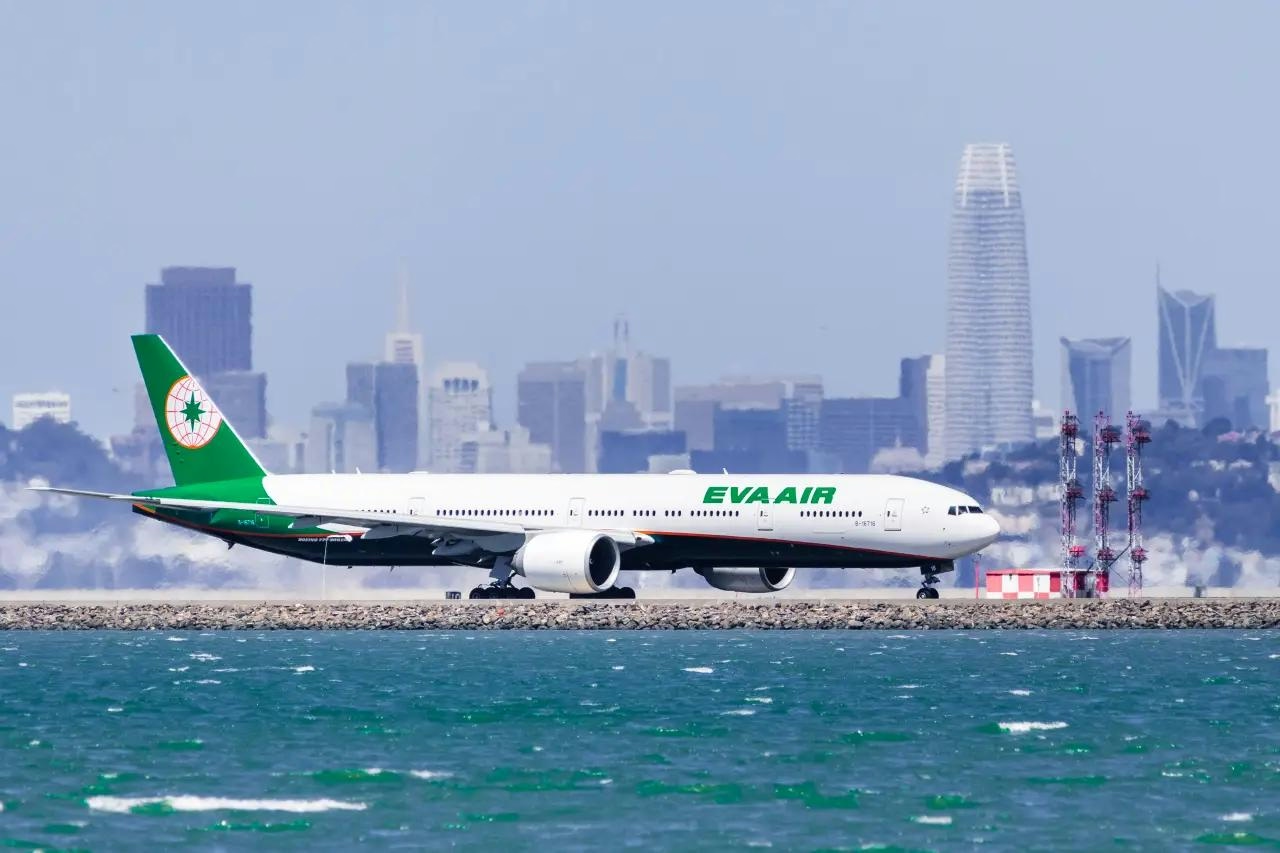
EVA Air Expands Kaohsiung Operations with Introduction of Wide-Body Aircraft
EVA Air has commenced the deployment of larger aircraft on key routes from Kaohsiung, reflecting its strategic intent to capitalize on growing travel and business demand in southern Taiwan. Beginning Wednesday, the airline’s Airbus A330-300 jets, each accommodating 309 passengers, will service flights from Kaohsiung to Macau, Shanghai Pudong, and Tokyo Narita. This upgrade increases seat capacity on these routes by nearly 70%, according to the Central News Agency (CNA).
This expansion forms part of EVA Air’s broader initiative to develop Kaohsiung as a secondary hub, thereby strengthening its network in southern Taiwan. EVA Air President Sun Chia-ming acknowledged the crucial support from the Ministry of Transportation and Communications and the Civil Aviation Administration, which facilitated the airline’s capacity enhancement at Kaohsiung International Airport.
The launch of the upgraded service was celebrated with a traditional water salute and a boarding area designed to highlight the A330-300 aircraft. Passengers expressed enthusiasm for the change, with one traveler, identified as Lin, emphasizing that the introduction of wide-body jets would simplify access to larger aircraft for residents of southern Taiwan, eliminating the need to transit through northern airports.
EVA Air emphasized the advantages of the A330-300, including its twin-aisle configuration, modernized entertainment systems, increased cabin space, and complimentary in-flight Wi-Fi. The airline’s Kaohsiung network now offers 56 weekly flights to destinations such as Seoul, Hong Kong, Fukuoka, Osaka, Macau, Shanghai Pudong, and Tokyo Narita.
Industry Challenges and Competitive Landscape
EVA Air’s expansion occurs amid a complex and challenging aviation environment. Rising fuel costs continue to exert pressure on Asia-Pacific carriers, compelling airlines to carefully balance competitive pricing with operational expenditures. The shift to wide-body jets also raises considerations regarding fuel efficiency and environmental impact, as the aviation industry faces heightened scrutiny over sustainability practices.
The competitive landscape is further intensified by regional developments. Airlines such as Vietnam Airlines are broadening their route networks, while established carriers including Cathay Pacific, Singapore Airlines, and Malaysia Airlines are adjusting their flight frequencies to Europe in response to shifting demand patterns away from the Middle East. These dynamics may influence passenger preferences and heighten competition on critical routes.
As EVA Air advances its strategy of deploying larger aircraft and expanding services from Kaohsiung, it must navigate fluctuating demand, cost pressures, and evolving expectations related to environmental sustainability. The effectiveness of this approach will depend on the airline’s capacity to adapt to market changes while addressing the needs of travelers in southern Taiwan.

Etihad Airways Suspends Airbus A380 Flights on Key Route

Aditya Birla Group Seeks Approval for Aircraft Leasing in GIFT City

Qatar Airways Highlights Innovation and Connectivity at Arabian Travel Market 2026

Hong Kong's Five-Year Plan Includes Andrew Fan's Aircraft Parts Processing Hub Proposal

ACIA Aero Leasing Delivers ATR72-600 to Air Nostrum

RTX Appoints Jill Albertelli as Head of Pratt & Whitney

TAT Technologies Joins Beyond Aero Hydrogen Aircraft Program

AURAK Study Highlights Barriers to Air Taxi Adoption in Emerging Economies

Xiamen Air Selects Altitude for 787 Maintenance at Heathrow

Etihad and Swissport Extend Global Partnership
