
Превращайте аналитические выводы ИИ в реальные действия

В тренде
Categories
FAA Employs AI to Enhance Runway Safety
FAA Employs AI to Enhance Runway Safety
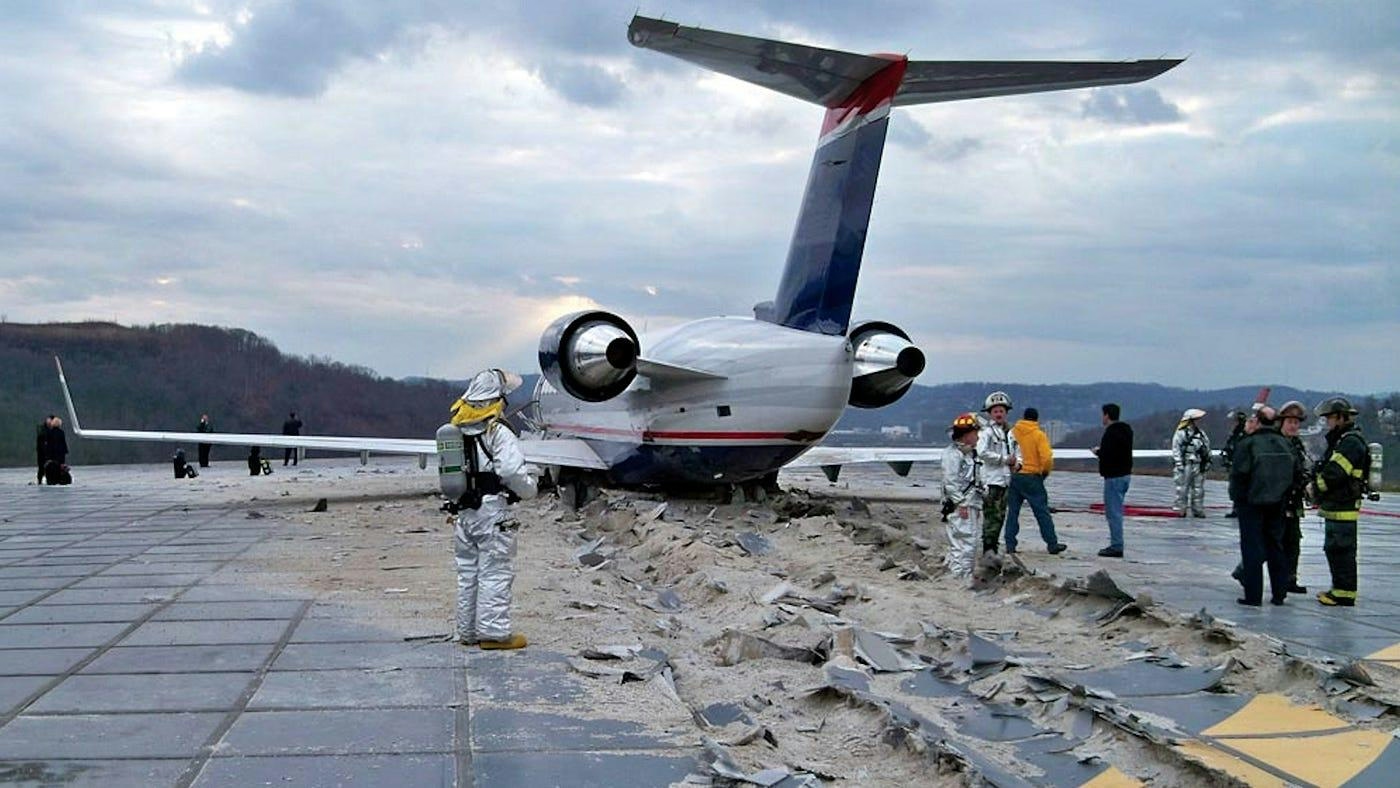
The Federal Aviation Administration (FAA) is leveraging artificial intelligence to strengthen runway safety by implementing a new platform designed to analyze extensive aviation data. This initiative aims to identify emerging risks and unusual safety patterns that were previously difficult to detect due to fragmented data management.
Centralizing Aviation Data for Improved Risk Detection
Historically, the FAA’s various divisions operated in silos, each analyzing their own datasets independently, which limited the agency’s ability to recognize broader safety trends. An FAA official familiar with the project, speaking anonymously, explained that while the data has always existed, its compartmentalization hindered comprehensive analysis. The agency has now partnered with Palantir to deploy a central integration platform that consolidates incident reports, safety data, and precursor events into a unified system. Artificial intelligence then processes hundreds of thousands of records, identifying trends, outliers, and potential threats that might otherwise go unnoticed.
Although Palantir declined to comment on the project, the FAA confirmed that the AI tool has already influenced policy decisions. In April, the agency prohibited parallel landings at San Francisco International Airport after the platform flagged potential safety concerns. Such proactive interventions are vital, given that runway incursions remain among the most serious hazards in aviation, with the potential for catastrophic consequences. Despite a relatively low number of incursions this year, a fatal collision in March between a fire truck and an Air Canada jet at New York’s LaGuardia Airport highlighted the persistent need for enhanced safety measures.
Limitations and Ongoing Development of AI Tools
FAA officials acknowledge that the AI system is not a comprehensive solution. The LaGuardia incident, involving multiple complex factors, was not predicted by the current model. According to the FAA official, the platform—known as Foundry—is designed to detect recurring patterns and emerging risks over time rather than forecast isolated, complex events. While the system might have flagged a pattern of increased vehicle incursions had one developed, the unique circumstances surrounding the LaGuardia crash exceeded its present predictive capabilities.
The AI model is updated weekly with new data from a wide array of sources, including weather conditions, turbulence reports, live aircraft tracking, collision alerts, news articles, surface radar, National Transportation Safety Board (NTSB) reports, laser-pointing incidents, and drone sightings. FAA analysts can query the system using virtually any variable, enabling examination of both historical and real-time information. FAA Administrator Bryan Bedford recently announced plans to expand the agency’s use of the Palantir platform, signaling a commitment to further integrating AI into safety monitoring.
Balancing AI Innovation with Human Oversight
Former National Transportation Safety Board chair Robert Sumwalt emphasized the importance of maintaining human oversight amid growing enthusiasm for AI. While acknowledging the technology’s genuine potential to enhance aviation safety, he cautioned against over-reliance on automated systems. “At least for the intermediate term, human involvement with such data analysis will be essential,” Sumwalt stated.
The transition to AI-driven safety monitoring presents challenges, including the complexity of integrating diverse data sources and potential resistance from advocates of traditional safety protocols. Although the aviation industry and financial markets may welcome the promise of improved efficiency and safety, skepticism persists regarding AI’s reliability in high-stakes environments. Competitors are likely to respond by developing their own AI solutions or collaborating with the FAA to bolster their safety measures, indicating a broader shift toward technology-driven risk management within the aviation sector.

Etihad Airways Suspends Airbus A380 Flights on Key Route

Aditya Birla Group Seeks Approval for Aircraft Leasing in GIFT City

Qatar Airways Highlights Innovation and Connectivity at Arabian Travel Market 2026

Hong Kong's Five-Year Plan Includes Andrew Fan's Aircraft Parts Processing Hub Proposal

ACIA Aero Leasing Delivers ATR72-600 to Air Nostrum

RTX Appoints Jill Albertelli as Head of Pratt & Whitney

TAT Technologies Joins Beyond Aero Hydrogen Aircraft Program

AURAK Study Highlights Barriers to Air Taxi Adoption in Emerging Economies

Xiamen Air Selects Altitude for 787 Maintenance at Heathrow

Etihad and Swissport Extend Global Partnership
