
Превращайте аналитические выводы ИИ в реальные действия

В тренде
Categories
FAA Establishes Air Taxi Research Hub in Oklahoma City to Shape the Future of Urban Flight
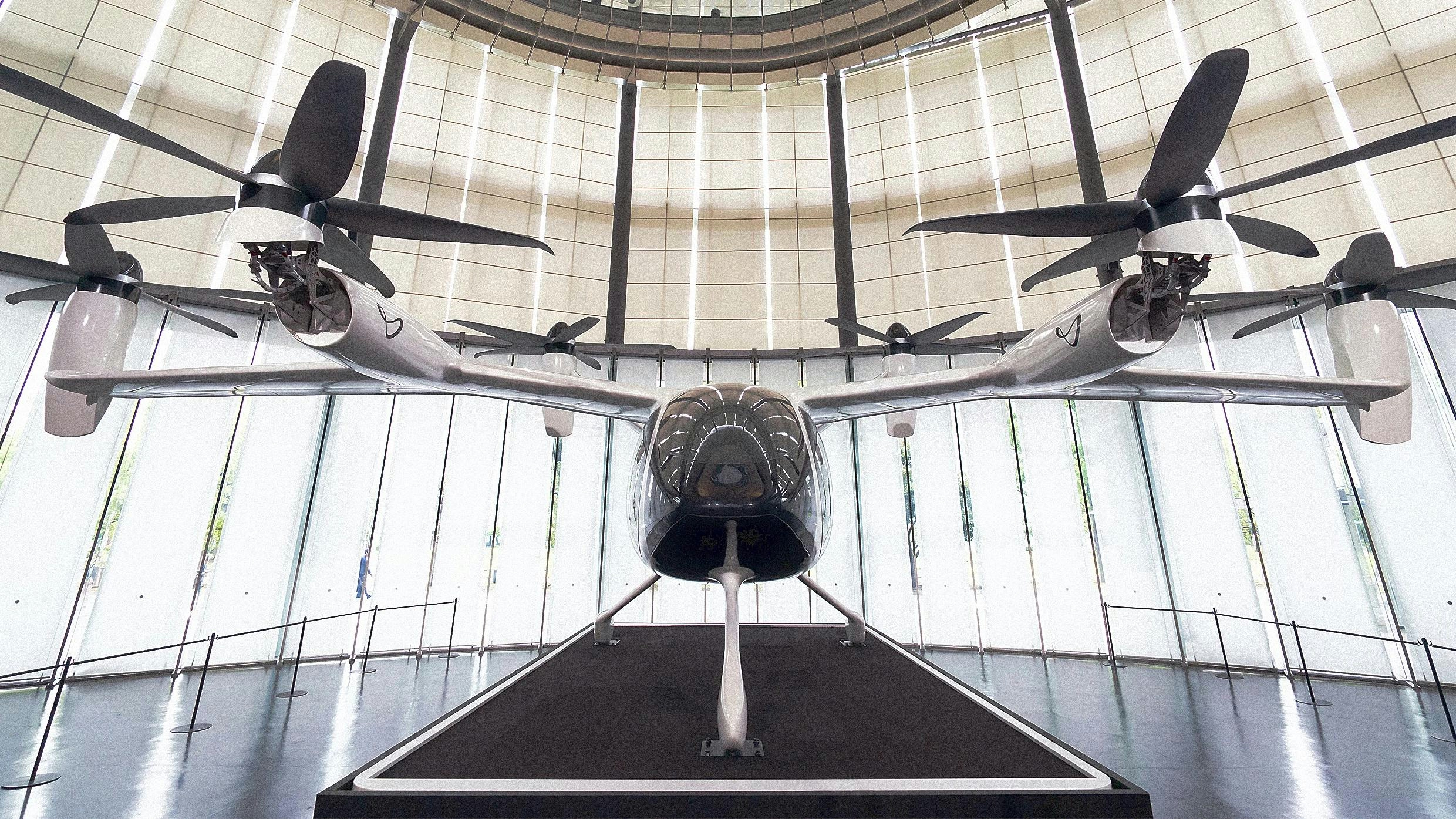
FAA Establishes Air Taxi Research Hub in Oklahoma City to Shape the Future of Urban Flight
The Federal Aviation Administration (FAA) has announced the creation of a dedicated research hub in Oklahoma City aimed at advancing urban air mobility. This initiative represents a significant federal investment in the development and study of electric air taxis, particularly electric vertical takeoff and landing (eVTOL) aircraft. Situated at the FAA’s Mike Monroney Aeronautical Center, the new facility will concentrate on addressing the operational, training, and safety challenges associated with advanced air mobility (AAM).
A Research Center for Next-Generation Aviation
The Mike Monroney Aeronautical Center, already the FAA’s principal site for training and logistics, will now incorporate air taxi research into its existing aviation infrastructure. This development coincides with accelerating efforts by manufacturers to introduce eVTOLs into commercial service, with several companies targeting passenger operations within the next few years.
At the hub, researchers will focus on the integration of powered-lift aircraft—a new FAA category created specifically for eVTOLs—into the National Airspace System. Their work will encompass pilot training requirements, simulator development, maintenance protocols, and the formulation of airspace procedures tailored to aircraft that combine vertical takeoff capabilities with fixed-wing cruising. These hybrid flight characteristics pose unique regulatory challenges, as eVTOLs do not conform neatly to existing helicopter or airplane classifications. In response, the FAA issued a special federal aviation regulation in October 2024 to address pilot qualifications and operational standards for powered-lift aircraft.
Strategic Importance of Oklahoma City
Oklahoma City’s selection as the site for the research hub highlights its enduring role as a central hub for U.S. aviation administration. The Mike Monroney Aeronautical Center spans 1,100 acres and employs thousands of FAA personnel, including instructors, engineers, and safety inspectors. The campus also houses the Civil Aerospace Medical Institute, which conducts research on pilot health and human factors. Establishing the air taxi research hub at this location provides immediate access to simulators, laboratories, and subject-matter experts, while maintaining proximity to the FAA Academy, where future air traffic controllers and safety inspectors receive their training.
For the state of Oklahoma, the decision reinforces the economic significance of the aerospace sector, which is among the largest industries in the region. Anchored by Tinker Air Force Base, the FAA campus, and a network of private contractors, the aerospace industry supports tens of thousands of jobs across the state.
Addressing Challenges and Industry Developments
The research agenda at the new hub will tackle critical issues that must be resolved before air taxis can operate at scale. These include managing low-altitude eVTOL traffic over urban environments, establishing standards for batteries and propulsion systems, and designing and licensing vertiports. Pilot training remains a particularly urgent concern, as powered-lift aircraft demand a combination of skills traditionally associated with both helicopter and airplane operations.
Despite progress, significant challenges persist. Battery storage limitations continue to constrain electric aircraft endurance, as exemplified by Honda’s F1 model, which currently achieves a maximum flight time of just 15 minutes. Regulatory approval processes are also stringent; for instance, Joby Aviation’s demonstration flights in New York City have attracted attention but still require extensive FAA testing and certification before commercial operations can commence.
Industry players are pursuing varied strategies in response to these challenges. Archer Aviation aims to achieve a “Waymo moment” by 2026, signaling a breakthrough in commercial viability, while Beta Technologies is targeting near-term certification for its Alia 250 model. Market sentiment remains cautiously optimistic, bolstered by substantial investments from major corporations such as Toyota, which underscore strong confidence in the sector’s potential growth.
As the FAA’s new research hub begins its work, the agency and its partners confront a complex landscape of technical, regulatory, and operational challenges, alongside the opportunity to transform urban transportation in the coming years.

Etihad and Swissport Extend Global Partnership

Sepehran Airlines B737 Returns to Mashhad After Tyre and Engine Issues

Etihad Deploys Widebody Fleet to Meet Strong Demand

Korean Air Finalizes $36.2 Billion Deal with Boeing

Australia’s RFDS Queensland Section Orders Six King Air 260Cs

Korean Air Finalizes Order for 103 Boeing Jets and Engines

Embraer E195-E2 Features Distinctive Engine Placement Among Regional Jets

What Passengers Can Expect on Boeing’s New 777X Jet

How Ethiopian Airlines Became Africa’s Leading Carrier Amid Gulf Competition

Joby Aviation Extends Autonomous Flight Capabilities with Cross-Country Tour
