
Превращайте аналитические выводы ИИ в реальные действия

В тренде
Categories
FAA Orders Inspection of 1,069 Airbus A320 and A321 Aircraft in the U.S.
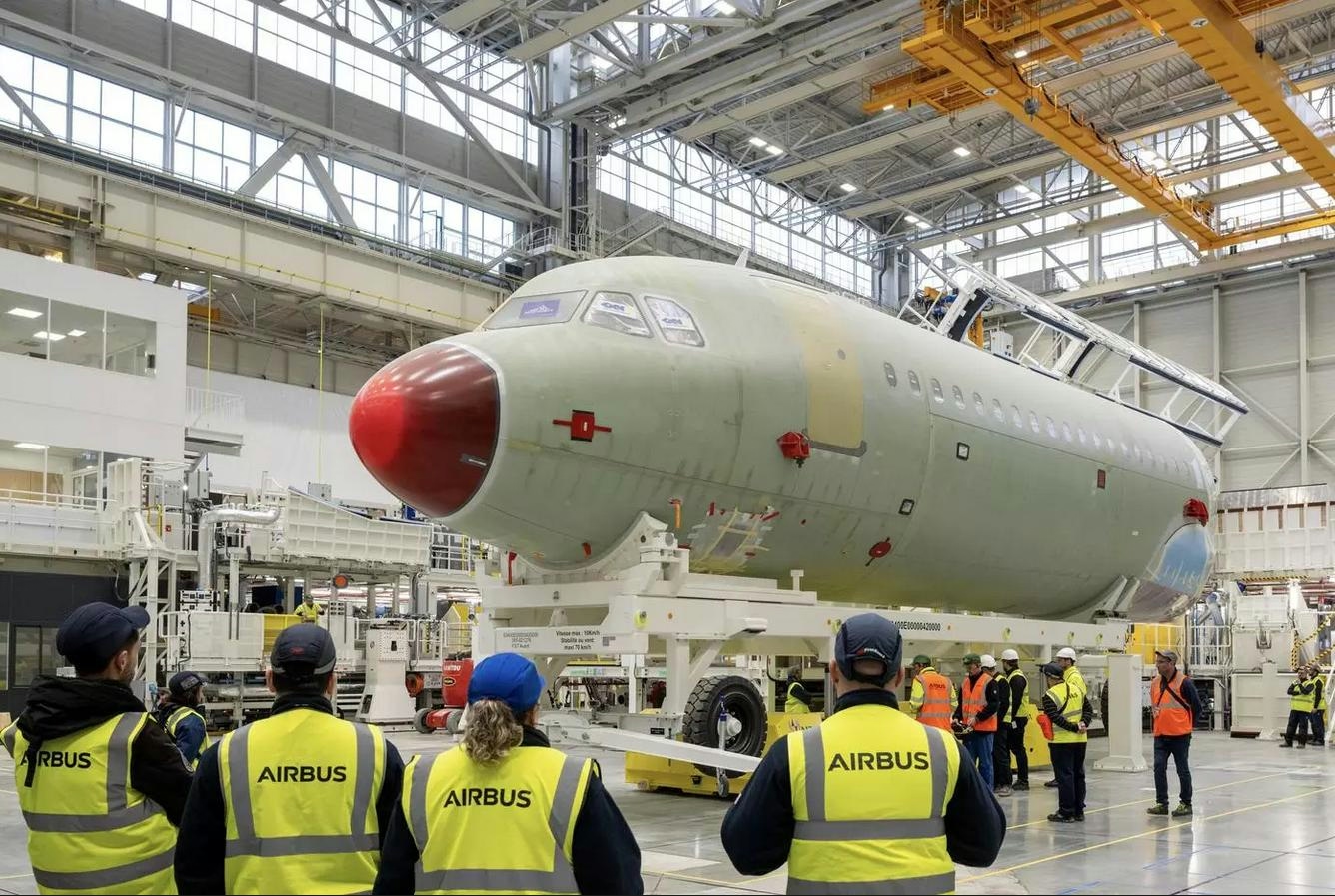
FAA Mandates Inspection of Over 1,000 Airbus A320 and A321 Aircraft in the U.S.
The Federal Aviation Administration (FAA) has issued a directive requiring inspections of 1,069 Airbus A320 and A321 aircraft registered in the United States. This mandate follows the detection of structural cracks during fatigue testing on an A320 model. Formalized as Airworthiness Directive (AD) 2026-17-01 and published in the Federal Register, the rule compels airlines to conduct targeted inspections aimed at identifying potential cracks in specific fuselage sections. The directive takes effect on October 1 and applies to certain A320 and A321 variants that meet defined technical parameters.
Focus of Inspections and Technical Procedures
The inspections concentrate on the upper corners of the cargo compartment door, specifically sections 16 and 17 of the fuselage on both sides of the aircraft. The FAA requires the use of rototest technology, a specialized non-destructive testing method designed to detect cracks in the holes where structural components are fastened. Should any cracks be discovered, airlines are obligated to carry out the necessary maintenance and repairs to maintain the aircraft’s airworthiness.
This directive arises from a fatigue test conducted as part of Airbus’s evaluation of extending the service life of its A320 family. The test revealed cracks around several fastening holes, raising concerns about the long-term structural integrity of the affected aircraft. The FAA has emphasized that failure to address these issues could jeopardize flight safety.
Alignment with European Aviation Authorities and Industry Impact
The FAA’s directive aligns closely with a similar mandate issued by the European Union Aviation Safety Agency (EASA) in September 2025 (AD 2025-0193). EASA’s regulation requires inspections of the same fuselage areas but prescribes different follow-up actions depending on inspection outcomes. If cracks are detected, operators must obtain repair instructions from Airbus. In cases where no damage is found, a cold working process is recommended to reinforce the fastening holes. Both the FAA and EASA directives apply exclusively to aircraft assigned an Extended Service Goal, rather than the entire A320 and A321 fleets.
Implementing these inspections poses significant challenges for U.S. airlines. The estimated cost per aircraft is approximately $363,460, representing a considerable financial burden across the affected fleet. Airlines may also encounter operational disruptions, including increased regulatory scrutiny, potential flight delays, and the need to adjust schedules while aircraft undergo inspection and maintenance. These factors could influence competitive dynamics, prompting some operators to modify delivery timelines and operational strategies to mitigate service interruptions.
Developed in coordination with EASA, the FAA’s directive reflects the increasing complexity of international regulatory compliance for airlines operating globally. Initially proposed in May, the requirements were finalized after thorough review of technical data and industry feedback, underscoring the agencies’ commitment to ensuring the continued safety and reliability of the Airbus A320 and A321 fleets in the United States.

Etihad Airways Suspends Airbus A380 Flights on Key Route

Aditya Birla Group Seeks Approval for Aircraft Leasing in GIFT City

Qatar Airways Highlights Innovation and Connectivity at Arabian Travel Market 2026

Hong Kong's Five-Year Plan Includes Andrew Fan's Aircraft Parts Processing Hub Proposal

ACIA Aero Leasing Delivers ATR72-600 to Air Nostrum

RTX Appoints Jill Albertelli as Head of Pratt & Whitney

TAT Technologies Joins Beyond Aero Hydrogen Aircraft Program

AURAK Study Highlights Barriers to Air Taxi Adoption in Emerging Economies

Xiamen Air Selects Altitude for 787 Maintenance at Heathrow

Etihad and Swissport Extend Global Partnership
