
Превращайте аналитические выводы ИИ в реальные действия

В тренде
Categories
Fairey Gannet: The Contra-Rotating Anti-Submarine Aircraft
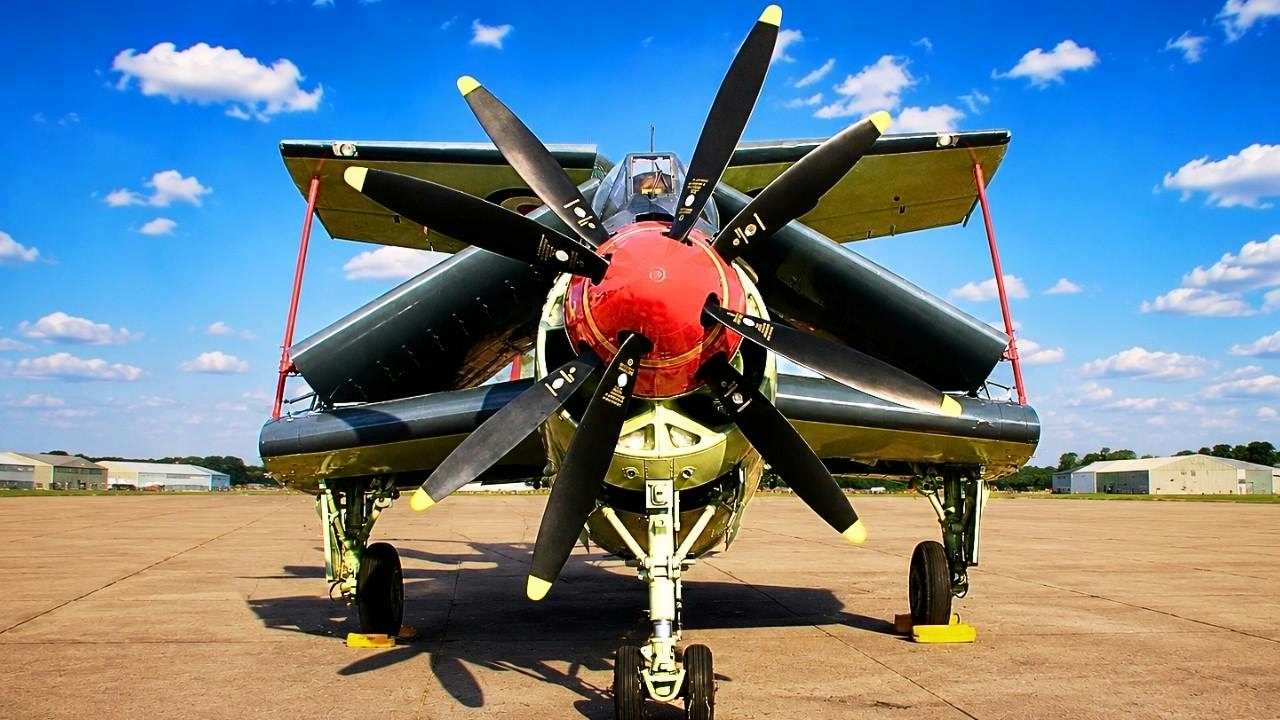
Fairey Gannet: The Contra-Rotating Anti-Submarine Aircraft
The Fairey Gannet, with its distinctive deep, humpbacked fuselage and a nose crowded with eight propeller blades arranged in two counter-rotating discs, might appear at first glance as an awkward design born of compromise. Yet, beneath its ungainly exterior lay one of the Royal Navy’s most effective maritime patrol aircraft. Renowned for its innovative engineering, the Gannet played a pioneering role in naval aviation during the mid-20th century.
Engineering Innovation: Two Engines, One Propeller
Central to the Gannet’s design was the Armstrong Siddeley Double Mamba engine, a unique powerplant consisting of two turboprop engines mounted side by side. Each engine drove one of two coaxial, contra-rotating propellers—the left engine powering the front propeller and the right engine the rear. This arrangement addressed a critical challenge faced by twin-engine aircraft: the loss of one engine did not produce asymmetric thrust, allowing the Gannet to maintain stable flight on a single engine.
This configuration also enabled remarkable operational flexibility. During extended patrols, crews could shut down one engine, reducing cruising speed from approximately 250 mph to 170 mph, but nearly doubling the aircraft’s endurance from around three and a half hours to over five. To ensure balanced wear, the engines were alternated every half hour. The aircraft’s start-up procedure was equally distinctive, with the front engine ignited by cartridge and the rear engine wind-milled to life by the slipstream. Combined with the dramatic unfolding of its double-hinged wings, the Gannet’s deck operations were a striking spectacle.
Design Tailored for Carrier Operations
Every element of the Gannet was purpose-built for life aboard aircraft carriers. Its wings folded twice into a characteristic ‘Z’ shape, conserving valuable hangar space. The robust nose-wheel undercarriage provided pilots with excellent forward visibility, a significant improvement over earlier tail-dragger designs. The aircraft was crewed by three personnel: a pilot, an observer, and an electronics operator, reflecting its complex operational role.
Legacy Amidst Modern Advancements
Although the Gannet was a technological marvel in its time, the field of anti-submarine warfare has advanced considerably. Contemporary European and Japanese systems, including the Eurodrone and its Japanese variant, offer extended endurance and enhanced payload capacities, challenging the relevance of legacy platforms like the Gannet. Market dynamics are shifting as nations such as Denmark invest in modern platforms like the P-8A Poseidon Maritime Patrol Aircraft, while the United Kingdom’s BAE Systems introduces the Brontanax uncrewed fighter jet, signaling a transition toward more sophisticated, multi-role surveillance and anti-submarine technologies.
Despite these developments, the Fairey Gannet’s legacy endures as a testament to mid-century innovation, marking a significant chapter in the evolution of maritime patrol aviation even as the focus moves toward unmanned and next-generation solutions.

Etihad and Swissport Extend Global Partnership

Sepehran Airlines B737 Returns to Mashhad After Tyre and Engine Issues

Etihad Deploys Widebody Fleet to Meet Strong Demand

Korean Air Finalizes $36.2 Billion Deal with Boeing

Australia’s RFDS Queensland Section Orders Six King Air 260Cs

Korean Air Finalizes Order for 103 Boeing Jets and Engines

Embraer E195-E2 Features Distinctive Engine Placement Among Regional Jets
What Passengers Can Expect on Boeing’s New 777X Jet

How Ethiopian Airlines Became Africa’s Leading Carrier Amid Gulf Competition
Joby Aviation Extends Autonomous Flight Capabilities with Cross-Country Tour
