
Превращайте аналитические выводы ИИ в реальные действия

В тренде
Categories
False AI-Generated Video of US Aircraft Carrier Spreads on Chinese Social Media
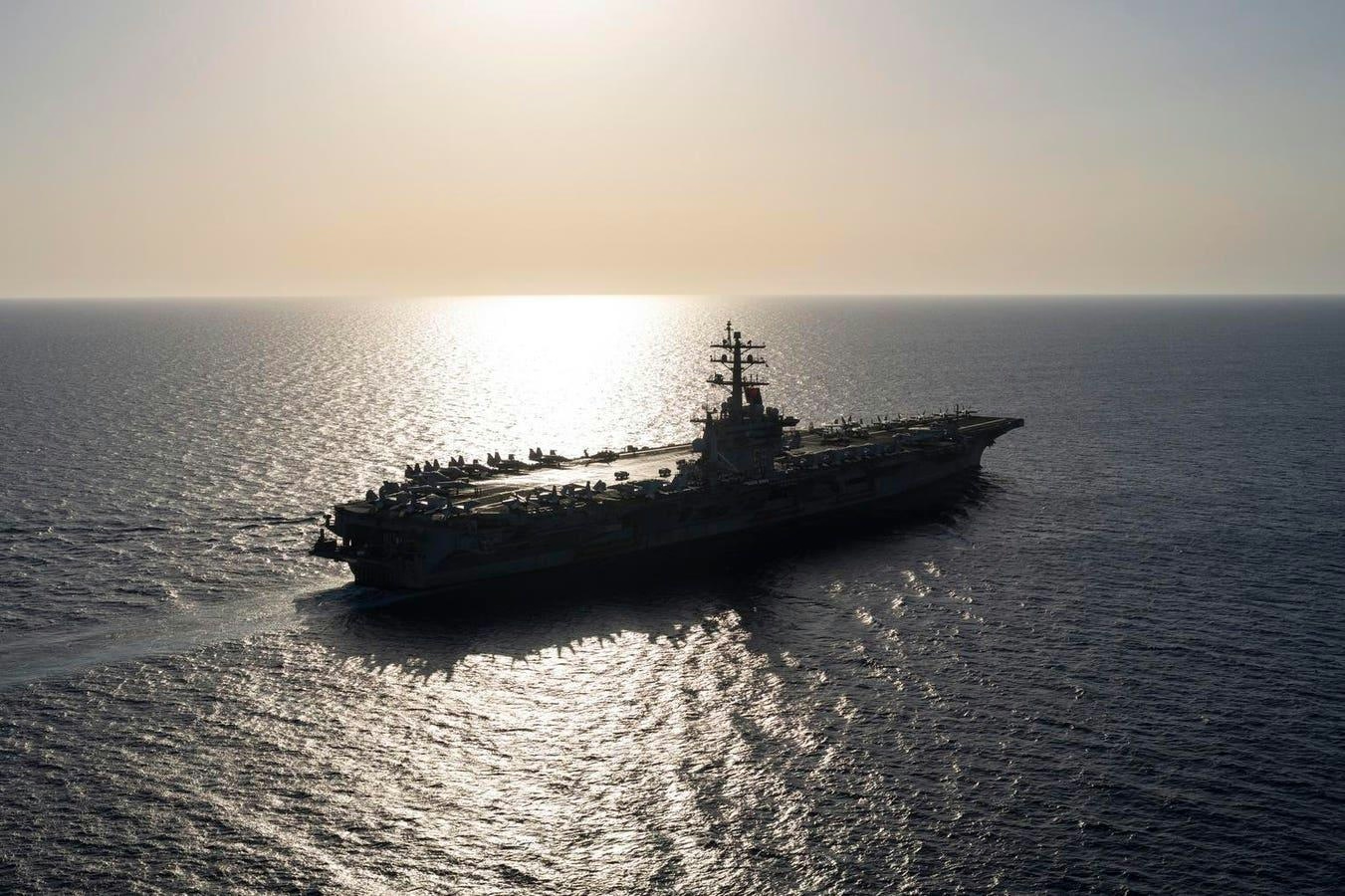
False AI-Generated Video of US Aircraft Carrier Circulates Widely on Chinese Social Media
Artificial intelligence-generated videos falsely depicting a U.S. aircraft carrier being struck by Iranian missiles have rapidly spread across Chinese social media platforms, raising alarm over the increasing sophistication and misuse of AI in disseminating misinformation. These videos surfaced shortly after Iranian officials claimed to have launched missile attacks on the USS Abraham Lincoln amid ongoing tensions involving U.S. and Israeli forces. The U.S. Central Command has categorically denied these claims, dismissing them as part of what it described as the “Iranian regime’s false messaging machine.” Efforts to obtain comments from both U.S. and Iranian authorities remain ongoing.
Viral Spread and Content of the Videos
The fabricated clips gained significant traction on popular Chinese platforms such as Weibo and Douyin, China’s equivalent of TikTok. They portray dramatic scenes of missile strikes on the Abraham Lincoln, destruction of fighter jets, and the aircraft carrier breaking apart. Some videos even incorporate AI-generated avatars resembling Chinese state media presenters, complete with narration that mimics official broadcasts. By Tuesday evening, discussions surrounding the videos had amassed over 10 million views, ranking among the top trending topics online.
This rapid dissemination underscores the challenges posed by generative AI technologies, which are increasingly capable of producing highly realistic yet deceptive content. The incident coincides with the rapid advancement of China’s AI industry, driven by well-funded startups and sophisticated models such as Seedance 2.0. Despite export restrictions imposed by the United States over national security concerns, China continues to narrow the technological gap.
Reactions and the Spread of Misinformation
Chinese state broadcaster CCTV echoed Iranian claims that the USS Abraham Lincoln had been rendered inoperable by missile strikes while operating in the Gulf of Oman. This narrative, consistent with Iranian statements, elicited mixed responses on Chinese social media. Some users expressed enthusiasm at what they perceived as a setback to U.S. military power, while others questioned the credibility of the claims and the plausibility of disabling a supercarrier so easily.
One Weibo user remarked, “The internet says two carriers were hit, but I don’t know if it’s true or false.” Another commented on the broader economic implications, stating, “Iran’s failure is not good for our country. Oil prices will rise, and the dollar will dominate.”
Broader Implications for AI and Information Warfare
The episode highlights wider concerns regarding the deployment and regulation of AI technologies both within China and internationally. The inconsistent enforcement of content restrictions and the potential for AI-generated propaganda have drawn increasing scrutiny. Platforms such as Seedance 2.0 have faced criticism for enabling misuse, while regulatory bodies worldwide are beginning to respond. The European Union, for instance, has threatened action against Meta for allegedly blocking AI competitors on WhatsApp, and Disney recently issued a cease and desist letter to ByteDance over unauthorized use of its characters in AI-generated content.
These developments have intensified calls for stricter global regulations and a reassessment of AI ethics to curb the spread of misinformation. As China, a longstanding ally of Iran, continues to criticize U.S. and Israeli actions in the Middle East and urges a cessation of hostilities, the proliferation of false AI-generated content adds a complex new dimension to information warfare and international diplomatic relations.

Etihad Airways Suspends Airbus A380 Flights on Key Route

Aditya Birla Group Seeks Approval for Aircraft Leasing in GIFT City

Qatar Airways Highlights Innovation and Connectivity at Arabian Travel Market 2026

Hong Kong's Five-Year Plan Includes Andrew Fan's Aircraft Parts Processing Hub Proposal

ACIA Aero Leasing Delivers ATR72-600 to Air Nostrum

RTX Appoints Jill Albertelli as Head of Pratt & Whitney

TAT Technologies Joins Beyond Aero Hydrogen Aircraft Program

AURAK Study Highlights Barriers to Air Taxi Adoption in Emerging Economies

Xiamen Air Selects Altitude for 787 Maintenance at Heathrow

Etihad and Swissport Extend Global Partnership
