Изображение

Превращайте аналитические выводы ИИ в реальные действия

Присоединяйтесь к списку ожидания AeroGenie уже сегодня!

В тренде

Categories

Florida Plans to Launch Air Taxi Service by 2026
January 12, 2026By ePlane AI
Florida Plans to Launch Air Taxi Service by 2026
0
0
Air Taxi Service
Advanced Air Mobility
Vertiport Infrastructure

Florida Advances Ambitious Air Taxi Service Plan

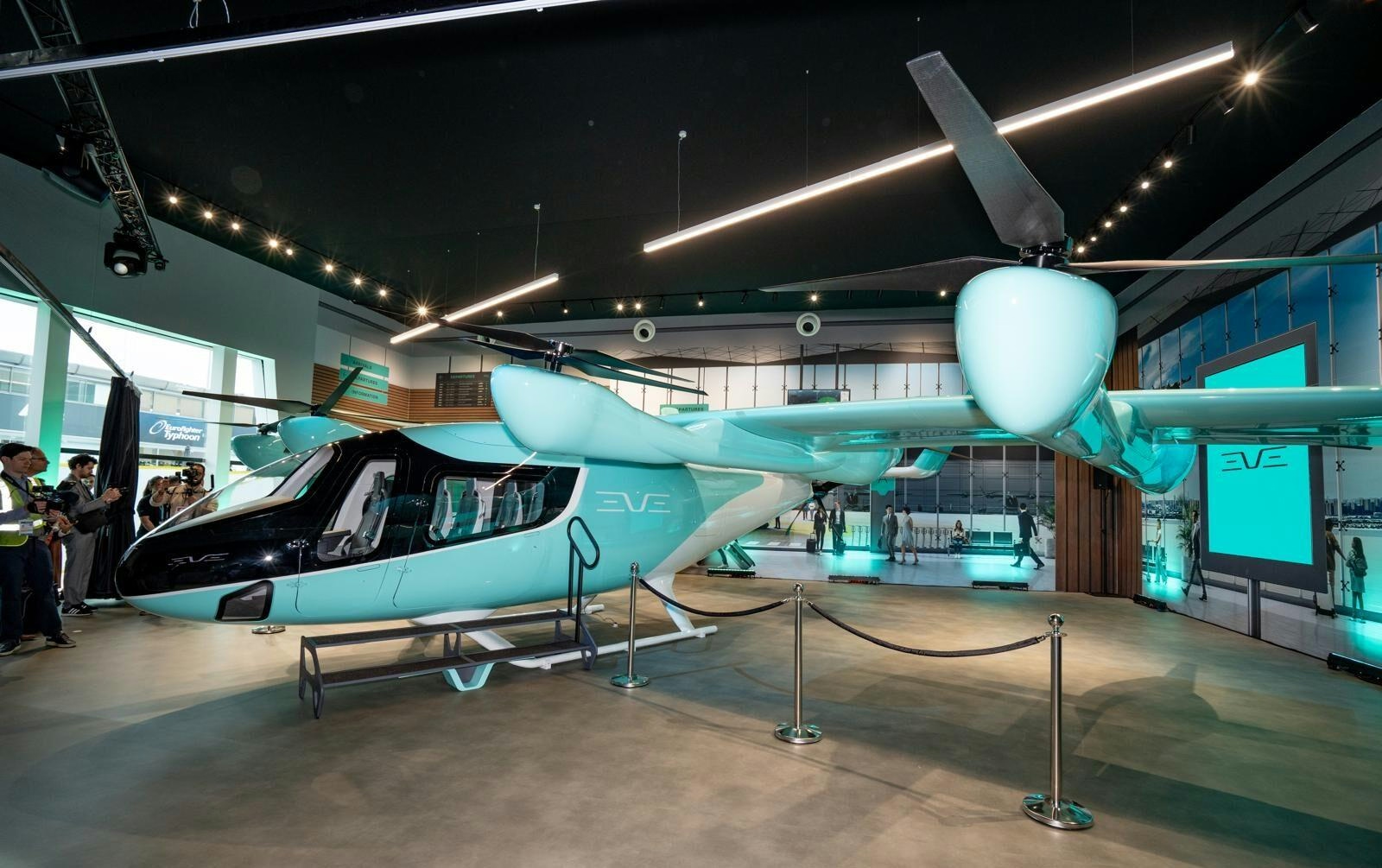
The Florida Department of Transportation (FDOT) is progressing with an innovative initiative to launch an air taxi service, aiming to commence operations by the end of this year and achieve full statewide coverage by 2026. This project forms a key component of Florida’s Advanced Mobility Initiative, which seeks to alleviate congestion on the state’s heavily trafficked roadways, particularly along the I-4 corridor that connects Tampa, Orlando, and Sarasota. By introducing a high-tech alternative to traditional ground transportation, the state hopes to enhance mobility for both residents and visitors.

Development of the Advanced Air Mobility Network

The initial phase of the Advanced Air Mobility Network will establish connections between airports along the I-4 corridor, creating a new transportation option that leverages vertical takeoff and landing (VTOL) aircraft. Central to this effort is the construction of the nation’s first vertiport—a specialized facility designed to accommodate these advanced air vehicles. Florida plans to build two vertiports to serve as controlled environments for testing and operational deployment. An FDOT representative highlighted the pioneering nature of the project, suggesting it could be the first of its kind in the United States and potentially worldwide.

Challenges and Competitive Landscape

Despite the ambitious timeline, the project faces significant challenges. The development of necessary infrastructure, obtaining regulatory approvals, and ensuring passenger safety remain critical obstacles. The regulatory framework is evolving, with recent federal efforts aimed at accelerating the integration of flying taxis into U.S. airspace. This regulatory progress occurs amid intensifying international competition, notably from China, where companies such as EHang have already made substantial advances in urban air mobility.

Domestically, the air taxi market is becoming increasingly competitive, with U.S.-based firms like Archer and Joby Aviation rapidly advancing their technologies. Florida’s early investment in vertiport infrastructure may provide a strategic advantage, but industry analysts caution that the ultimate success of the initiative will depend on the speed and safety with which the service can be introduced to the market.

State officials remain optimistic about the project’s potential impact. The Advanced Air Mobility Network is envisioned as a model for other regions, with the capacity to transform travel within Florida and establish a precedent for urban air mobility across the nation. The initial phase is expected to be completed by the end of this year, with broader statewide service planned for 2026.

More news
China Joins Exclusive Group of Countries Producing Single-Crystal Blades for Advanced Aircraft Engines

China Joins Exclusive Group of Countries Producing Single-Crystal Blades for Advanced Aircraft Engines

China Joins Elite Group in Producing Single-Crystal Blades for Advanced Aircraft Engines China has announced a major technological milestone, declaring full mastery over the production of single-crystal turbine blades—critical components for high-performance aircraft engines. This development, reported by Chinese state media, places China among a select group of nations, including the United States, United Kingdom, Russia, and France, capable of independently developing, manufacturing, and deploying this advanced technology without reliance on foreign suppliers. Significance of Single-Crystal Blades in Aerospace Engineering Single-crystal blades are indispensable to the “hot section” of turbine engines, where temperatures reach extreme levels immediately following fuel combustion. Components in this area must withstand intense heat, high rotational speeds, severe pressure, and corrosive environments. The durability of these blades directly influences engine efficiency, power output, fuel consumption, reliability, and the operational lifespan of both military and civilian aircraft. Unlike conventional metal parts composed of multiple crystalline grains, which contain boundaries that can weaken under stress, single-crystal blades are produced as a continuous crystal. This unique structure eliminates internal grain boundaries, significantly enhancing resistance to deformation and wear at elevated temperatures. Consequently, single-crystal blades are widely regarded as a technological benchmark in advanced aeronautical engines and represent a critical barrier to achieving industrial autonomy in aerospace manufacturing. China’s Technological Breakthrough and Challenges Ahead China’s recent advancement centers on the DD6 alloy, a nickel-based, second-generation monocrystalline superalloy developed by the AECC Beijing Institute of Aeronautical Materials. Engineered to improve mechanical strength, thermal stability, and corrosion resistance under extreme conditions, the DD6 alloy is claimed by the institute’s chief engineer, Li Jiarong, to match or exceed the performance of comparable Western alloys. However, these assertions are based on internal evaluations, with no independent public verification currently available to fully validate the DD6’s performance relative to its Western counterparts. Despite this progress, China continues to face significant challenges in maintaining technological parity with established aerospace leaders in the United States and Europe. Ensuring consistent quality control to meet stringent international standards remains a formidable task, as does managing potential supply chain vulnerabilities that could disrupt production. These issues are critical as China endeavors to strengthen its position within the global aerospace market. Implications for the Global Aerospace Industry The international aerospace community is closely monitoring China’s advancements in single-crystal blade technology. Increased competition may affect major manufacturers such as Boeing and GE Aerospace, potentially prompting intensified research and development efforts or strategic partnerships among rival nations and companies seeking to protect their market share. Furthermore, China’s progress in this sensitive technological domain could exacerbate trade tensions, particularly if perceived as a challenge to the dominance of established players. As China advances its capabilities in single-crystal blade production, the global landscape for advanced aircraft engines is likely to experience heightened competition and potential shifts in market dynamics.
Review of Task A43 Report on Airborne Collision Severity and Engine Ingestion

Review of Task A43 Report on Airborne Collision Severity and Engine Ingestion

Review of Task A43 Report on Airborne Collision Severity and Engine Ingestion The rapid proliferation of uncrewed aircraft systems (UAS) has introduced significant safety challenges to commercial aviation, particularly concerning airborne collisions and the risk of engine ingestion. Recreational UAS operators, often lacking comprehensive knowledge of airspace regulations, exacerbate these hazards. Unlike traditional airborne threats such as birds or ice, UAS components—including lithium-polymer batteries and electric motors—are denser and more rigid, rendering existing aviation certification standards inadequate for assessing their impact. In response to these emerging concerns, the Federal Aviation Administration (FAA) sponsored the Task A43 research program, conducted by The Ohio State University (OSU) in collaboration with the National Institute for Aviation Research (NIAR). The program’s primary objective was to perform a live UAS engine ingestion test to validate computational models previously employed in collision severity studies. The Live Ingestion Experiment The live ingestion test was carried out at the Naval Air Warfare Center (NAWC) in China Lake, California. Researchers selected a CFM56-7B high-bypass turbofan engine, a model representative of modern commercial fleets and exclusively used on the Boeing 737 Next Generation series. The projectile was a DJI Phantom 3 Standard quadcopter, chosen for its representative rigid components and the availability of a validated computational model. The drone weighed 1.216 kilograms (2.68 pounds). To replicate a severe takeoff collision scenario, the engine was operated at 5,175 revolutions per minute (RPM), while the UAS was launched at a relative velocity of 92.6 meters per second (180 knots). The impact targeted 75 percent of the fan blade’s radial span, a location known to cause maximum fan damage while minimizing the risk of core engine ingestion. Computational Modelling and Validation A central focus of Task A43 was to evaluate the accuracy of computational simulations, particularly those utilizing LS-DYNA software, in predicting real-world engine damage resulting from UAS ingestion. Researchers developed a finite element model of the CFM56-7B fan assembly and compared the simulated outcomes with data obtained from the live test. Additionally, they assessed an “open representative fan assembly model” from prior research, designed to emulate typical high-bypass engines without relying on proprietary designs. Data collection employed high-speed cameras, digital image correlation (DIC), and strain gauges affixed to the fan blades. Although some lighting limitations affected the resolution of the DIC measurements, the high-speed cameras effectively captured the UAS’s orientation, velocity, and trajectory immediately prior to impact. Damage Severity and Industry Implications The live ingestion test resulted in significant damage to multiple fan blades. Both physical observations and computational analyses classified the event as severity level 3, indicating substantial material loss and visible cracking above the blade mid-span. Despite this damage, the resulting imbalance remained within the engine’s certification limits. These findings emphasize the necessity for comprehensive safety reviews and potential modifications to training aircraft, such as the T-38 Talon II, to mitigate future collision risks. The aviation industry is expected to respond with heightened scrutiny of safety protocols for similar aircraft. Concurrently, competitors may accelerate advancements in engine technology to reduce ingestion hazards, as exemplified by GE Aerospace’s recent dust ingestion tests on the Leap-1A engine. The Task A43 report underscores the critical importance of updating certification standards and adopting advanced modelling techniques to address the evolving risks posed by UAS to commercial aviation safety.
Keyamo Signs Aviation Agreement with AfDB to Advance Nigeria’s Leasing Initiative in Congo

Keyamo Signs Aviation Agreement with AfDB to Advance Nigeria’s Leasing Initiative in Congo

Keyamo Signs Aviation Agreement with AfDB to Advance Nigeria’s Leasing Initiative in Congo Strengthening Africa’s Aviation Sector through Strategic Partnership Festus Keyamo, SAN, Nigeria’s Minister of Aviation and Aerospace Development, has formalized a significant partnership with the African Development Bank (AfDB) by signing a Letter of Intent (LOI) on behalf of the Nigerian government. The agreement, concluded during a high-level dialogue in Brazzaville, Congo, seeks to accelerate the Integrated Aviation Transformation Programme (IATP) across Africa. This initiative arrives at a critical juncture for the continent’s aviation industry, which is poised for growth but faces considerable challenges. Keyamo, recently appointed as the African Champion of the IATP, emphasized the AfDB’s $7 billion aviation transformation programme as a pivotal driver for the sector’s expansion. He outlined President Bola Ahmed Tinubu’s Renewed Hope Agenda, highlighting ongoing reforms and investment opportunities aimed at establishing Nigeria as a premier aviation hub within Africa. Central to his address was the introduction of the Nigeria Aircraft Leasing Company, a newly approved initiative designed to enhance the continent’s aviation infrastructure. Nigeria’s Leasing Initiative and Regional Implications The Minister called on the AfDB to provide capital support for the leasing company, underscoring its potential to serve as a benchmark for other African nations seeking to modernize their aviation sectors. Nigeria has already taken significant preparatory steps, including domesticating the Cape Town Convention, revising its Irrevocable Deregistration and Export Request Authorisation (IDERA), and reforming aviation insurance policies to meet international standards. These measures are intended to create a robust framework for the leasing initiative’s success. Despite the promising outlook, the aviation sector must contend with several obstacles. Geopolitical tensions, notably the ongoing Iran-U.S. conflict, threaten the stability of raw material supply chains essential to the industry. Additionally, Africa faces diminishing aid flows and the destabilizing effects of the Ebola outbreak, which could impede progress on the leasing initiative and broader transformation goals. Nevertheless, investor sentiment remains cautiously optimistic, with market participants closely monitoring Nigeria’s efforts and competitors likely to adjust their strategies in response. Commitment to Continental Aviation Transformation The AfDB President expressed strong approval of Nigeria’s presentation and reaffirmed the Bank’s dedication to advancing the IATP, particularly within Nigeria. Following the dialogue, Minister Keyamo unveiled Nigeria’s Country Compact for the aviation sector before the formal signing of the LOI. This agreement commits both parties to collaborate closely in implementing the Bank’s aviation transformation programme, aiming to surmount existing challenges and unlock new growth opportunities for Africa’s aviation industry.
Sam Suseelan’s Role in Advancing AI in Aviation

Sam Suseelan’s Role in Advancing AI in Aviation

Sam Suseelan’s Role in Advancing AI in Aviation The aviation industry is experiencing a profound transformation as airports and airlines increasingly adopt advanced technologies to enhance safety, minimize delays, and manage escalating operational costs. Central to this evolution are artificial intelligence (AI) and connected systems, which facilitate smarter monitoring of aircraft performance, improved fuel efficiency, and accelerated, data-driven decision-making processes. Among the leading figures driving this technological shift is Sam Suseelan, whose research focuses on intelligent aviation systems, runway safety, and operational efficiency. His work investigates how AI-powered technologies can contribute to safer, faster, and more reliable air travel while addressing the complex challenges facing the industry. The Expanding Role of AI in Aviation Modern aviation depends heavily on data, automation, and real-time monitoring to manage thousands of daily operations where speed and accuracy are paramount. Intelligent aviation systems are increasingly deployed for aircraft performance monitoring, predictive maintenance, fuel efficiency management, runway safety detection, and flight operation analysis. These technologies enable earlier detection of potential issues and enhance overall operational efficiency. By moving beyond traditional manual processes, airlines can make faster, more informed decisions that reduce maintenance delays, improve aircraft reliability, enhance passenger safety, lower fuel consumption, and enable quicker responses to operational risks. Despite these advantages, integrating AI into aviation presents significant challenges. The industry grapples with workforce shortages and the imperative to boost productivity while ensuring that personnel possess the technical expertise necessary for sustainable AI implementation. As AI adoption expands, the demand for critical thinking and advanced technical skills becomes increasingly urgent—a concern underscored by recent industry discussions, including those from CommuteAir regarding AI’s role in maintenance and operations. Sam Suseelan’s Vision for Intelligent Aviation Suseelan’s research is dedicated to developing aviation systems that are smarter, safer, and more interconnected. His approach emphasizes real-time monitoring systems that continuously track aircraft operations, enabling early identification of potential issues and mitigating operational risks. By harnessing the vast volumes of operational data generated daily, his work supports faster and more accurate decision-making in maintenance planning and performance analysis. Furthermore, Suseelan advocates for creating integrated infrastructures where airports, aircraft, and monitoring technologies communicate seamlessly, thereby improving coordination and operational precision. His focus on long-term efficiency prioritizes solutions that enhance reliability, reduce delays, and optimize fuel management over time. Market Dynamics and Competitive Pressures The broader market environment also influences the pace and scope of AI adoption in aviation. Technology providers such as Nvidia, which supply AI platforms and software, face challenges from slowing growth, intensifying competition, and margin pressures. Competitors are responding by bolstering their own AI ecosystems to maintain market advantage, a dynamic that affects how rapidly and effectively AI solutions are integrated across the aviation sector. Enhancing Runway Safety Through AI Runway safety remains a critical concern, particularly at busy airports where continuous aircraft movement heightens the risk of conflicts and errors. Suseelan’s research advances AI-based detection systems designed to improve the identification and response to potential runway incidents. These innovations aim to support safer and more efficient flight operations, addressing one of the most pressing safety challenges in aviation. As the aviation industry continues to evolve, the integration of AI—guided by researchers like Sam Suseelan—will be vital in meeting operational demands, overcoming workforce challenges, and ensuring the long-term safety and reliability of air travel.
United Airlines Proposes Using AI to Explain Flight Delays

United Airlines Proposes Using AI to Explain Flight Delays

United Airlines Proposes AI-Driven Transparency for Flight Delays United Airlines has announced an ambitious plan to leverage artificial intelligence (AI) and maintenance footage to enhance communication with passengers during flight delays. The initiative, revealed by CEO Scott Kirby at Bernstein’s 42nd Annual Strategic Decisions Conference, forms part of a broader investment in technology aimed at fostering customer loyalty and increasing transparency during irregular operations. Enhancing Passenger Communication Through AI Kirby highlighted that the uncertainty surrounding delays often causes more frustration than the delays themselves. United’s objective is to provide passengers with clear, straightforward explanations whenever a flight is delayed. The airline intends to send videos detailing maintenance issues alongside AI-generated updates that precisely describe the status of each flight. Kirby emphasized that the communication approach is designed to be as informative as if he were personally seeking updates while onboard. While United has already improved the detail and frequency of delay notifications, Kirby acknowledged the complexity of scaling such communication across its extensive network of approximately 6,000 daily flights. Unpredictable factors such as severe weather and airport closures further complicate these efforts. Nonetheless, he asserted that United is currently “two to three times better than any other airline in the world” at keeping passengers informed, attributing this to years of system modernization and data organization. Developing Real-Time, Automated Flight Updates Looking ahead, United is developing a proprietary AI system capable of delivering real-time, flight-specific updates without human intervention. By harnessing vast operational data, this technology aims to reduce passenger uncertainty and improve the overall travel experience by providing timely and accurate information on flight status. However, the rollout of these AI-driven tools faces challenges amid ongoing operational difficulties, including recent flight reductions at Chicago’s O’Hare International Airport due to Federal Aviation Administration (FAA) restrictions. These constraints may complicate the implementation of new communication technologies. Furthermore, the airline’s approach is expected to attract regulatory scrutiny, particularly concerning the accuracy and dependability of automated updates. Industry Implications and Passenger Reception Market response to United’s proposal is likely to be mixed. While some travelers may welcome enhanced transparency and prompt information, others remain cautious about AI’s capacity to address the underlying causes of delays or to provide genuinely useful updates. Building trust in automated communication systems remains a significant hurdle. United’s initiative is also poised to influence the competitive landscape. Rival carriers, including American Airlines, may accelerate their own efforts to improve communication strategies or develop advanced AI tools, potentially intensifying competition in how airlines manage and explain delays to customers. As United advances its AI-powered communication strategy, the airline is betting that delivering better information through innovative technology will distinguish it in an industry where uncertainty and passenger frustration are persistent challenges.
The C-2 Greyhound Quickly Stops on Aircraft Carriers While Transporting Jet Engines and Parts

The C-2 Greyhound Quickly Stops on Aircraft Carriers While Transporting Jet Engines and Parts

The C-2 Greyhound: Essential Logistics on Aircraft Carriers Landing a fully loaded cargo aircraft on a moving aircraft carrier represents one of the most demanding challenges in naval aviation. The C-2A Greyhound has met this challenge for over fifty years, serving as the U.S. Navy’s primary Carrier Onboard Delivery (COD) aircraft. Tasked with transporting cargo, mail, spare parts, medical supplies, and personnel between shore bases and carriers at sea, the Greyhound has been a critical component in sustaining carrier strike groups operating far from home ports. Though it lacks the high-profile status of fighter jets, the Greyhound’s role is indispensable. According to the Naval Air Systems Command (NAVAIR), the aircraft is a high-wing, twin-engine turboprop powered by two Allison T56-A-425 engines. Its mission is straightforward yet demanding: to deliver urgent cargo—including jet engines, critical components, and even medical evacuation patients—between ship and shore within hours. This rapid logistical support ensures that carriers remain operational without the need to return to port. Even routine mail deliveries contribute significantly to crew morale, highlighting the importance of dependable supply lines at sea. Precision Landings and Specialized Design The most dramatic phase of the Greyhound’s mission occurs during landing. Approaching the carrier deck at approximately 240 km/h (150 mph), the aircraft must come to a complete stop within seconds. This is achieved through a combination of reinforced landing gear, a tailhook, and a robust airframe engineered to withstand the intense stresses of carrier operations. The arresting gear system halts the plane in just 340 feet, a process comparable to catching a speeding truck with a cable rather than a conventional civilian landing. The Greyhound’s design reflects its specialized role. Derived from the E-2C Hawkeye, it features a widened fuselage and a rear loading ramp that facilitate the handling of bulky cargo such as jet engines—items that have recently become more valuable than entire aircraft due to shifting market conditions. A cargo cage system secures loads during the rigors of launch and recovery, while folding wings conserve vital deck space aboard carriers. These capabilities have gained heightened importance amid global supply chain disruptions, intensified by the ongoing conflict in Iran. Delays affecting aerospace manufacturers like Bombardier and General Dynamics have led to shortages that drive up demand and prices for jet engines and parts. Some airlines, including Spirit, now regard their engines as more valuable than their aircraft. This dynamic has forced competitors across the civil aviation sector to adapt strategies to secure essential components and maintain fleet readiness. As the Navy prepares to replace the Greyhound with the CMV-22B Osprey—a tiltrotor aircraft offering vertical takeoff and extended range—the C-2A’s legacy remains a testament to the logistical ingenuity and resilience necessary to sustain carrier operations amid evolving global challenges.
AI Startup stratosX Brings Together Former Southwest Airlines Leaders to Develop Airline Recovery Technology

AI Startup stratosX Brings Together Former Southwest Airlines Leaders to Develop Airline Recovery Technology

AI Startup stratosX Unites Former Southwest Airlines Executives to Innovate Airline Recovery Technology Montreal-based artificial intelligence startup stratosX has announced significant leadership appointments, assembling a team of former Southwest Airlines executives to drive the development of advanced airline operational recovery solutions. Matt Hafner, who previously served as Vice President of Network and Ground Operations at Southwest, has joined stratosX as Strategic Advisor. Charles Cunningham, a key architect behind Southwest’s day-of-operations and analytics systems, assumes the role of Chief Product Officer. Alongside co-founder and Chief Operating Officer Kaitlin Guarino, formerly head of Southwest’s Network Operations Control (NOC), this leadership trio brings extensive operational expertise to the company’s mission of transforming airline recovery processes. Addressing Growing Challenges in Airline Operations The aviation industry is confronting escalating challenges in operational recovery. In 2024, European Air Traffic Flow Management (ATFM) delays reached their highest level in 23 years, revealing critical weaknesses in existing legacy systems. Regulatory uncertainty remains a pressing issue, with reforms to the EU261 passenger rights regulation stalled in Brussels. Recent irregular operations (IROPS) incidents, such as the disruption of over 150 flights at Nashville International Airport, further highlight the urgent need for innovative and effective recovery solutions. stratosX aims to become a catalyst for resilience and operational efficiency by leveraging AI-driven, integrated recovery technology. The company’s approach emphasizes proactive disruption anticipation, optimized decision-making, and accelerated recovery processes. This represents a significant shift away from the traditional reactive crisis management model that has long characterized Operations Control Center (OCC) systems, which have struggled to keep pace with the increasing complexity of airline operations. Leadership Experience Meets Startup Agility Hafner and Cunningham were instrumental in Southwest Airlines’ operational modernization efforts, overseeing investments exceeding $1 billion since 2023 to enhance analytics capabilities, real-time situational awareness, and agile operational frameworks. stratosX intends to apply these proven principles within a nimble startup environment, focusing on delivering recovery-centric solutions designed to improve operational reliability, reduce cascading disruptions, and enhance the passenger experience. Despite this strong foundation, stratosX faces considerable challenges in a competitive and rapidly evolving market. Established AI-first companies such as Scout AI and Cowboy Space are expected to respond by advancing their own offerings. Moreover, integrating sophisticated recovery technology into entrenched airline operations may encounter resistance from traditional carriers, which often remain skeptical of new and unproven systems. The startup must also navigate a more cautious venture capital landscape, where securing funding is increasingly difficult amid a crowded field of AI-focused enterprises. Navigating a Competitive AI Ecosystem The broader startup ecosystem is increasingly centered on AI innovation, as underscored by events like TechCrunch Disrupt 2026. While this trend may enhance stratosX’s visibility, it simultaneously intensifies competition and raises expectations for differentiation. The company’s success will depend on its ability to demonstrate measurable operational improvements and to build trust with airline partners. Looking Ahead stratosX plans to showcase its technology and strategic vision at the Aviation Festival Americas in Miami this June, aiming to engage industry leaders and potential collaborators. As the aviation sector contends with unprecedented operational complexity, stratosX’s leadership team is betting that their combination of deep airline experience and AI-driven innovation can establish a new benchmark for operational recovery—provided they can overcome the inherent challenges of disrupting a legacy industry.
787 Instability Delays Program Ramp-Up and Affects Boeing’s Commercial Deliveries

787 Instability Delays Program Ramp-Up and Affects Boeing’s Commercial Deliveries

787 Instability Delays Program Ramp-Up and Affects Boeing’s Commercial Deliveries Production Challenges and Supply Chain Bottlenecks Boeing’s 787 Dreamliner program, once praised for its recovery and stabilization at a production rate of eight aircraft per month, is encountering renewed difficulties as supply chain disruptions continue to affect both manufacturing and delivery schedules. After a difficult start to 2025, the program gained momentum in the latter half of the year. However, production rates began to decline below the targeted level in early 2026, primarily due to delays in the GEnx engine program. Despite these engine-related setbacks, Boeing managed to maintain delivery targets by utilizing its stored inventory. As engine supply constraints have started to ease and production rates have approached the eight-per-month goal once again, a new challenge has arisen. Delivery rates are now falling behind production because of persistent shortages in premium business class seating. Unlike previous years, Boeing no longer has sufficient inventory to compensate for this bottleneck, resulting in a growing disconnect between assembly line output and actual deliveries. This ongoing issue is expected to continue, contributing to instability within the 787 program. Implications for Boeing and Market Response The 787 Dreamliner remains a critical component of Boeing’s commercial aircraft portfolio, projected to be the company’s second-most delivered model in 2026, representing 15.4% of total annual commercial deliveries, just behind the 737 MAX. Consequently, the performance of the 787 program is central to Boeing’s ability to meet its corporate objectives and revenue forecasts for the commercial airplanes segment. Market reactions to the program’s instability have been mixed. Some investors have voiced concerns regarding the potential impact on Boeing’s revenue and the company’s capacity to resolve these issues promptly, a sentiment reflected in recent stock price fluctuations. Conversely, other investors maintain a positive outlook on the long-term prospects of the 787 program, highlighting the easing of engine delays and Boeing’s ongoing efforts to address supply chain challenges. Competitors have seized upon Boeing’s difficulties by intensifying their focus on their own product lines, seeking to capture market share amid the Dreamliner’s delays. Meanwhile, the persistent supply chain headwinds may discourage suppliers from expanding capacity, potentially hindering Boeing’s ambitions to stabilize production at ten aircraft per month. As Boeing continues to tackle these bottlenecks, the health of the 787 program will remain a vital indicator of the company’s broader commercial performance and its ability to fulfill both investor expectations and customer commitments.
Temco TT Pinto Makes Forced Landing

Temco TT Pinto Makes Forced Landing

Temco TT Pinto Forced to Make Emergency Landing Following Fuel Transfer Malfunction A vintage Temco TT Pinto jet trainer was compelled to execute an emergency landing near Laurel Hill, Florida, after experiencing an engine flameout caused by a fuel management issue. The incident occurred during a cross-country positioning flight that commenced with a full fuel load of 224 gallons. Flight Progress and Incident Details The flight initially proceeded without incident, with takeoff and climb phases completed smoothly, reaching a cruising altitude of 12,500 feet. Approximately 33 minutes into the flight, the pilot initiated descent toward the destination airport. Six minutes later, a “FUEL PRESSURE LOW” warning illuminated in the cockpit. Despite the pilot confirming that the electric fuel boost pump was engaged and that the fuel transfer switches from the tip tanks to the main tanks were activated, the engine lost power and could not be restarted. With the airport out of reach, the pilot was forced to land in a nearby field. The aircraft collided with a barbed wire fence and uneven terrain, sustaining significant airframe damage. Post-accident examination revealed no evidence of engine case rupture or fluid leakage. The engine was manually rotated using the battery-powered starter and operated normally without unusual sounds. Investigation Findings and Fuel System Analysis Investigators recovered approximately 33 gallons of fuel from the left tip tank, 40 gallons from the right tip tank, and about 30 gallons from the main tanks, although some fuel loss may have occurred during the crash. The TT Pinto’s fuel system is designed to transfer fuel from the tip tanks to the main tanks; however, the main tanks lack fuel quantity indicators, requiring pilots to estimate fuel consumption based on power settings. Aircraft guidance recommends burning 60 gallons from the main tanks before activating the transfer pumps. Data from the aircraft’s fuel flow indicator showed an average fuel burn rate of 222 gallons per hour during the flight, with fuel transferring from the tip tanks at 80 gallons per hour. Investigators concluded that the pilot likely delayed activating the fuel transfer switches after takeoff, causing the main tanks to deplete faster than they were replenished. This fuel starvation led to the engine flameout. The presence of fuel in the tanks after the accident was attributed to the continued operation of battery-powered transfer pumps following engine shutdown. The probable cause was identified as the pilot’s delay in activating the fuel transfer system, resulting in fuel starvation and subsequent engine failure. Implications for Temco and Market Perception Beyond the immediate safety concerns, this incident may have broader repercussions for Temco’s market reputation. In sectors where safety and reliability are critical, such events can affect consumer confidence and provide competitors with opportunities to emphasize their own safety features. Market reactions often depend on demand for similar aircraft and prevailing technological trends. As competitors observe such incidents, Temco may face increased scrutiny and potential shifts in consumer preference, highlighting the vital importance of operational reliability in sustaining market position.
Why Airlines Are Adding Lie-Flat Beds to Narrowbody Jets

Why Airlines Are Adding Lie-Flat Beds to Narrowbody Jets

Why Airlines Are Adding Lie-Flat Beds to Narrowbody Jets The traditional perception of narrowbody aircraft as cramped and uncomfortable for international travel is rapidly changing. Once associated with basic reclining seats and limited amenities, these single-aisle jets are now being outfitted with high-end lie-flat suites, a feature previously exclusive to widebody aircraft. This transformation reflects more than a commitment to passenger comfort; it represents a strategic effort by airlines to unlock new revenue opportunities and redefine the economics of long-haul flights. The Revenue Dynamics of Lie-Flat Seating Long-haul routes have historically depended on widebody aircraft, whose large cabins allow airlines to distribute operating costs across hundreds of seats. Narrowbody jets, with their smaller cabins, compel carriers to optimize revenue per square foot. Installing lie-flat beds in business class is central to this strategy. A single premium passenger paying between $3,000 and $6,000 for a transatlantic ticket can generate more net revenue than an entire economy cabin filled with $400 seats. By dedicating the forward section of a narrowbody to premium seating, airlines significantly enhance their revenue potential. This model enables carriers to charge fares comparable to those on widebody services while benefiting from the lower operating costs inherent to single-aisle jets. Without the ability to attract high-spending corporate travelers through lie-flat beds, operating narrowbodies on extended international routes would be financially unsustainable. The presence of these premium seats is thus essential to justifying and maintaining such routes. Operational Challenges and Competitive Pressures Retrofitting narrowbody aircraft with lie-flat beds presents several challenges. The high costs of installation and the limited cabin space necessitate careful compromises in seat count and layout. Despite these obstacles, competition among airlines to enhance in-flight comfort has intensified. For instance, Air New Zealand is pushing the envelope with innovations like the Skynest bunk beds, aiming to redefine passenger rest on long-haul flights. Technological amenities have also become a critical factor in the competitive landscape. American Airlines’ choice to equip its Airbus fleet with Starlink Wi-Fi, while excluding its Boeing aircraft, underscores the difficulties in delivering a consistent customer experience across diverse fleets. Such inconsistencies can affect passenger perceptions and loyalty, adding complexity to the market dynamics. The Emergence of the Long-Thin Route Model The introduction of premium narrowbody fleets has given rise to what industry experts term the “long-thin” route revolution. Aircraft such as the Airbus A321XLR are designed specifically for routes connecting secondary cities—markets too small to support a 250-seat widebody but well suited to a fully equipped narrowbody. These jets, featuring lie-flat beds, enable airlines to profitably serve city pairs that previously required inconvenient connections through major hubs. In this evolving landscape, the lie-flat bed is more than a comfort enhancement; it is a critical component of a business model that maximizes revenue from limited cabin space, opens new direct routes, and intensifies competition for premium travelers. As airlines continue to innovate, the capabilities of single-aisle jets are being redefined—one flat bed at a time.
line
Florida Plans to Launch Air Taxi Service by 2026









