
Превращайте аналитические выводы ИИ в реальные действия

В тренде
Categories
Flying Cars Expected to Begin Operations in U.S. This Summer
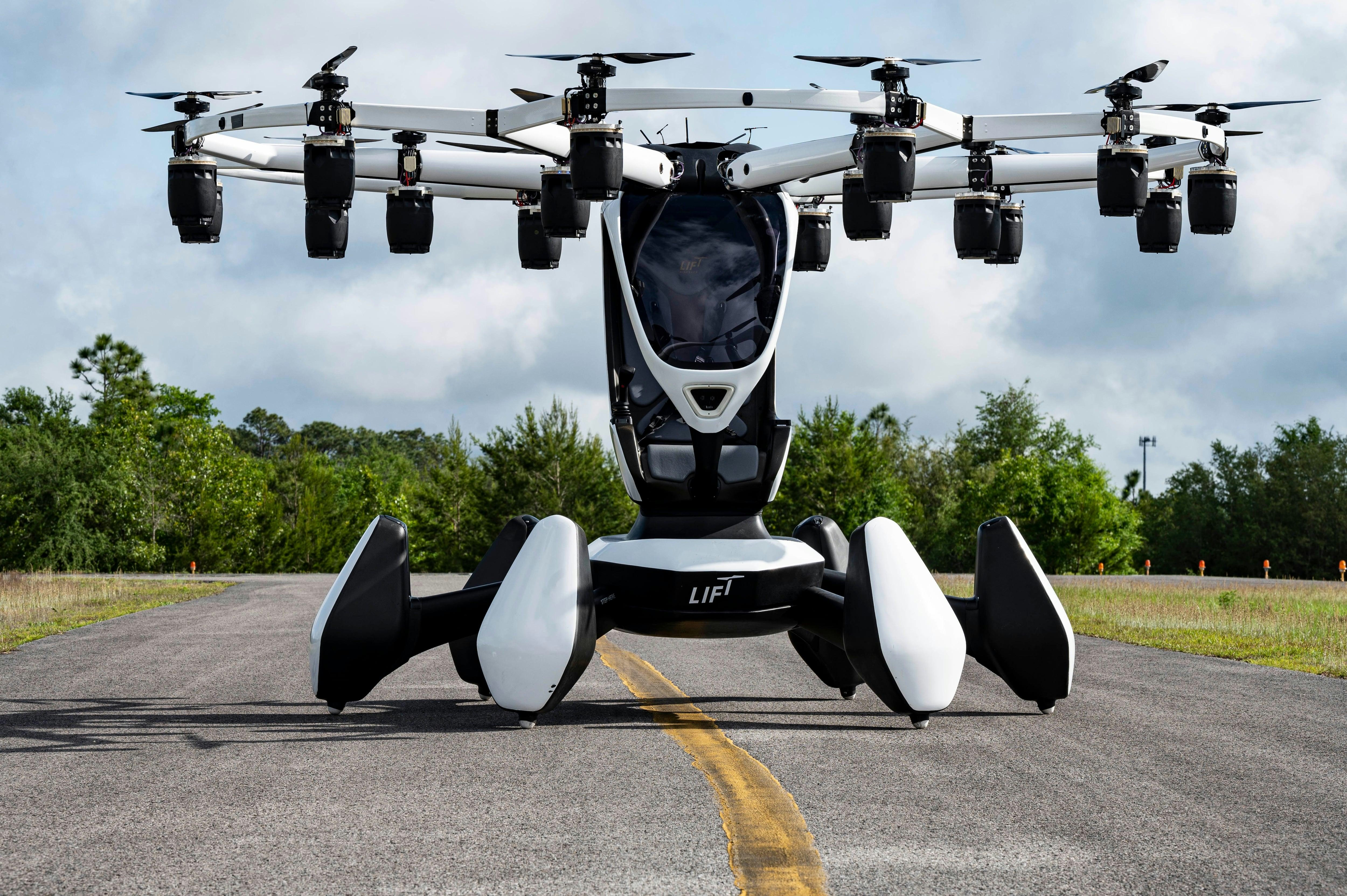
Flying Cars Expected to Begin Operations in U.S. This Summer
A New Chapter in Urban Aviation
The United States is poised to enter a new era of urban transportation as flying cars—advanced aircraft capable of vertical or ultra-short takeoff and landing—are anticipated to commence operations as early as June. This development, announced by the U.S. Department of Transportation, marks the launch of a three-year federal pilot program spanning eight regions, including major metropolitan areas such as New York, New Jersey, Texas, Florida, and Albuquerque, New Mexico. These vehicles, which blend the compact landing capabilities of helicopters with the efficiency of fixed-wing airplanes, aim to revolutionize passenger and cargo transport.
The pilot program permits participating companies to operate their innovative aircraft designs prior to receiving full certification from the Federal Aviation Administration (FAA). Firms involved in the initiative—Archer Aviation, Beta Technologies, Joby Aviation, and Electra—assert that their models are quieter, more cost-effective, and environmentally friendlier than conventional helicopters or airplanes. Some of these aircraft are designed for fully autonomous flights, while most require significantly less space for takeoff and landing, enabling operations closer to urban centers and potentially transforming daily commutes and regional travel patterns.
Industry Leaders and Technological Advances
Archer Aviation’s electric air taxi, named Midnight, is engineered to carry up to four passengers on journeys lasting between 60 and 90 minutes. Supported by investors including Stellantis and United Airlines, Archer will participate in pilot projects across Texas, Florida, and New York. CEO Adam Goldstein described the federal program as a pivotal moment akin to the advent of self-driving cars, stating, “Now the goal is to have half a million people in the biggest cities in the country start to see these aircraft as part of your everyday commute, just like they started to see Waymos every day.”
Other key participants include Beta Technologies, a producer of small electric planes; Joby Aviation, backed by Toyota and JetBlue; and Electra, which is developing a hybrid-electric ultra-short takeoff aircraft. All four companies have successfully completed test flights within the United States. Electra CEO Marc Allen emphasized the tangible progress of the technology, noting, “What we love about the pilot is the chance to demonstrate that this is not fantasy. It’s not science fiction. It’s in the real world.”
Regulatory and Market Challenges Ahead
Despite the enthusiasm surrounding flying cars, significant challenges remain. Regulatory frameworks must evolve as the FAA and other agencies work to integrate these new vehicles into existing aviation laws. While the Trump administration’s executive order aimed at reducing regulatory burdens may accelerate some approval processes, it has also sparked debate over the balance between innovation and maintaining stringent safety standards.
Market reception is expected to be varied. While many consumers express excitement about the prospect of flying taxis, concerns persist regarding safety and environmental impact. Competition among companies is intensifying as each vies for market share and regulatory endorsement. Additionally, critics question the energy efficiency of flying cars compared to electric ground vehicles, highlighting that flying taxis may consume more energy per mile traveled.
As the pilot program progresses, the transition of flying cars from concept to everyday reality will be closely scrutinized—not only in terms of technological feasibility but also through regulatory, environmental, and public acceptance lenses.

Why AI Trustworthiness Depends on Its Surrounding Systems
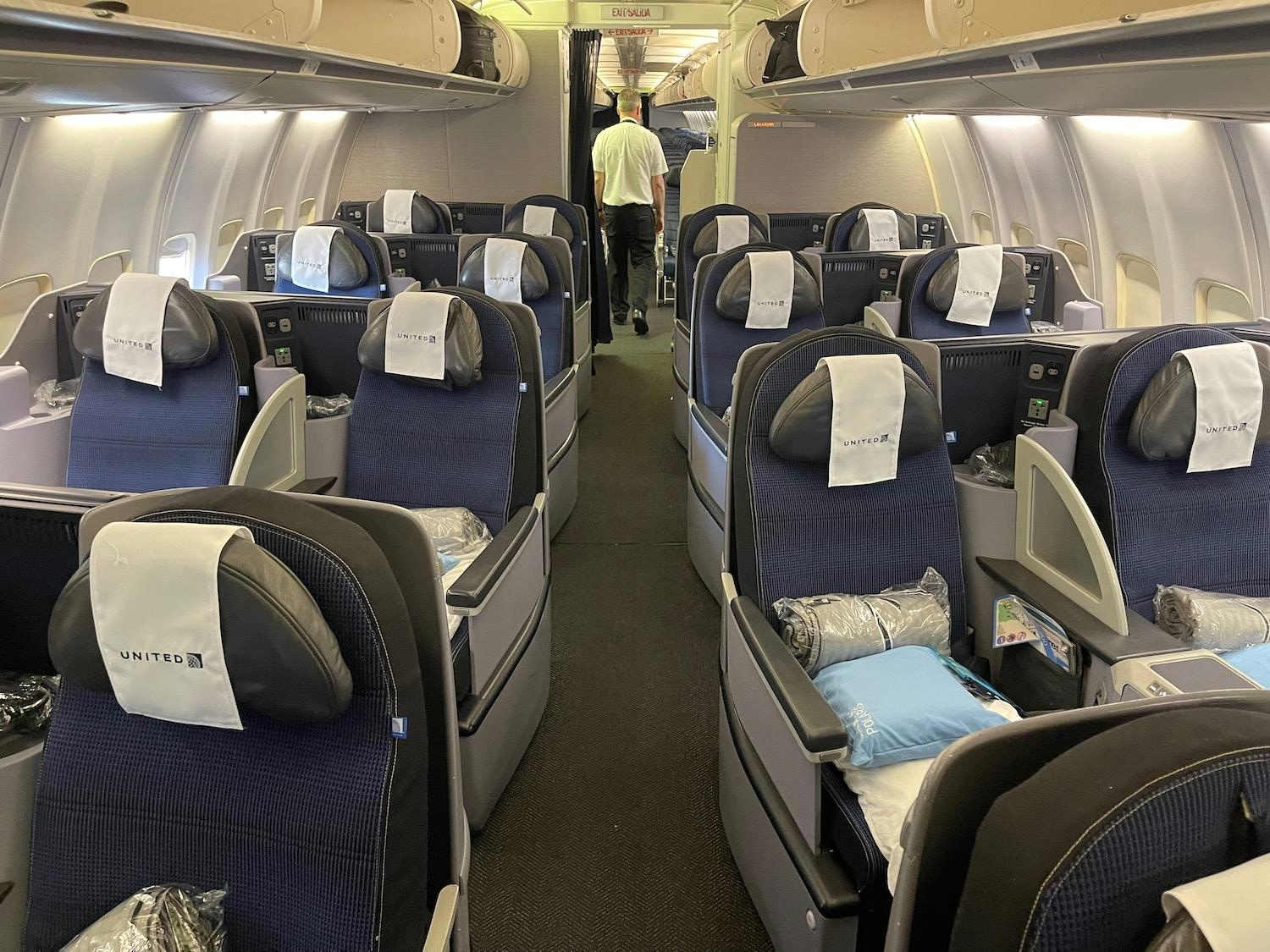
United Airlines’ Lie-Flat Boeing 757 Dominated Premium Transcontinental Routes and Its Upcoming Replacement
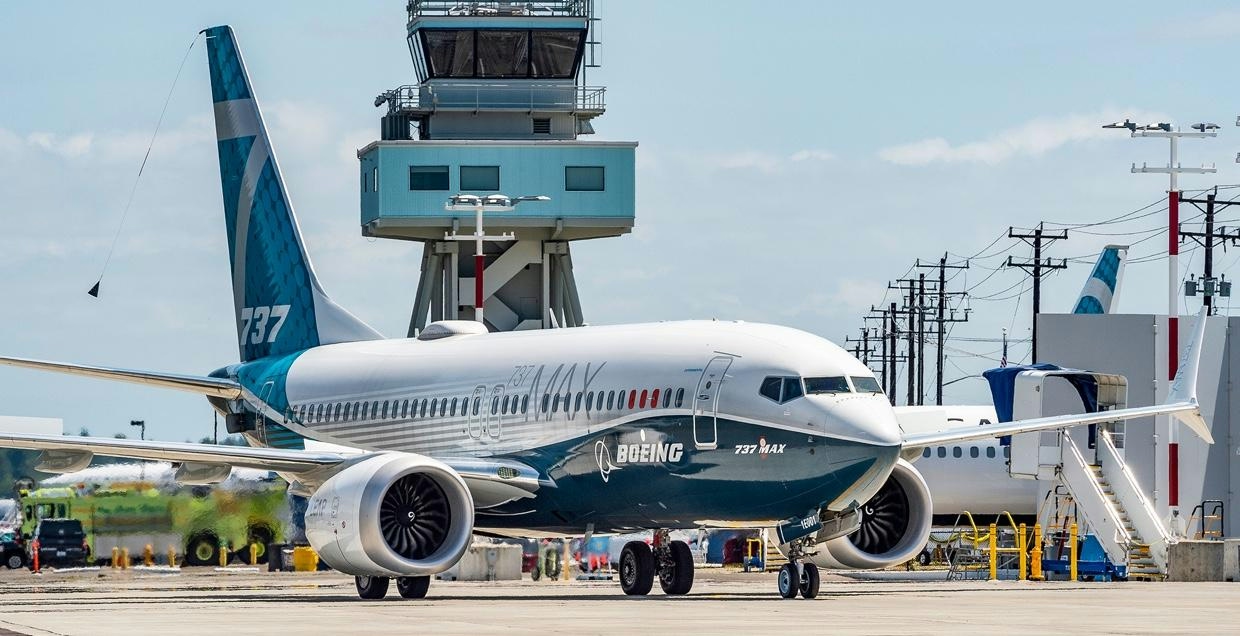
Boeing Completes Flight Tests for 737 MAX 7 and MAX 10, Aiming for 2027 Deliveries
Why the McDonnell Douglas MD-80 Outlasted Its Successor
Alaska Airlines Expands Freighter Fleet to Nine Boeing 737-800BCFs
American Airlines Plans Widebody Aircraft Order to Boost Profits
How Airports Can Use AI to Improve Decision-Making
Textron Cites Workforce Challenges in Jet Delivery Delays
A380 Flight to China Delayed by 10 Hours
Ryanair Expands Partnership with AWS on AI Initiatives
