Изображение

Превращайте аналитические выводы ИИ в реальные действия

Присоединяйтесь к списку ожидания AeroGenie уже сегодня!

В тренде

Categories

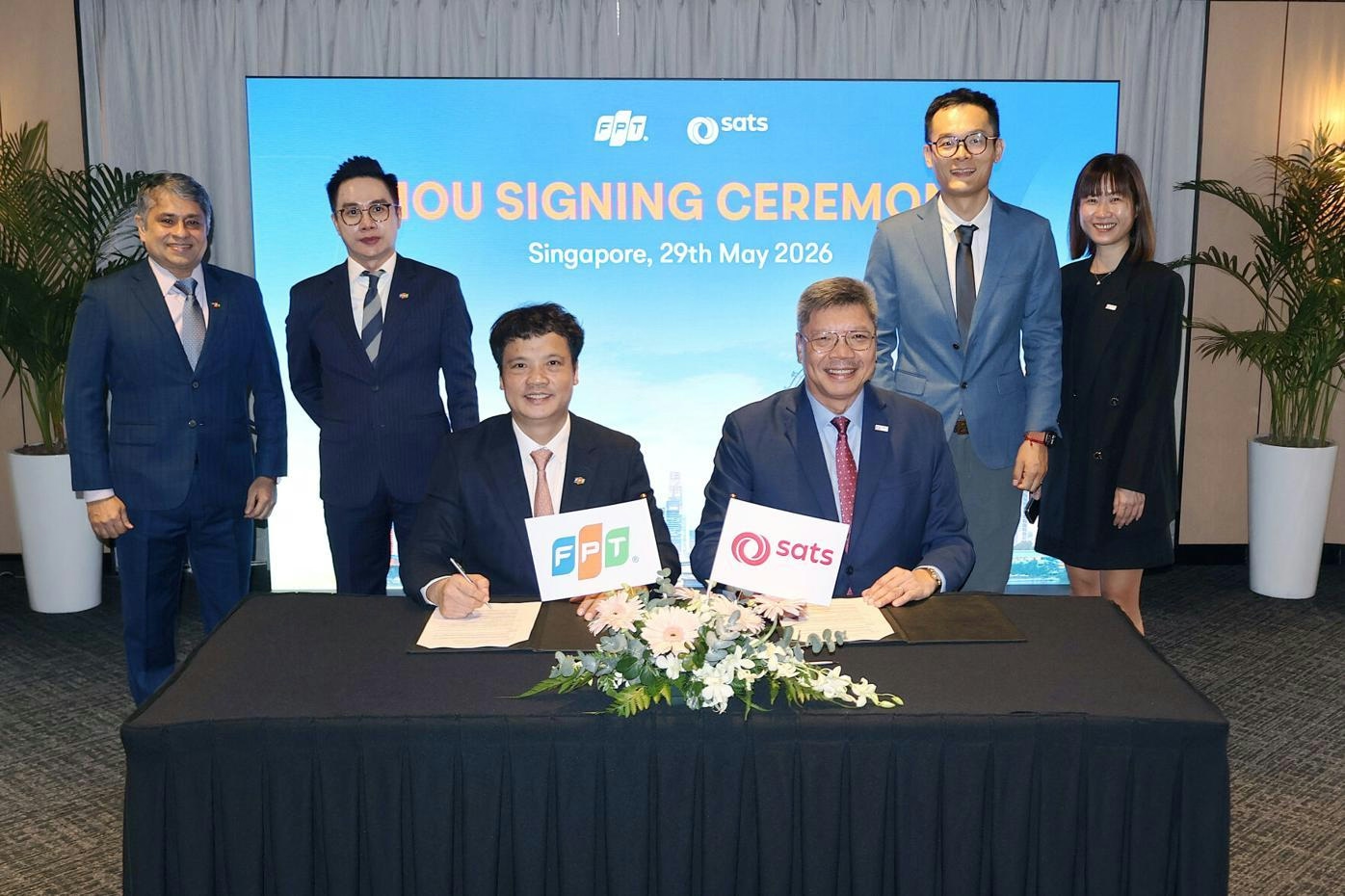
FPT and SATS Collaborate on AI and Digital Innovation in Aviation Logistics
June 2, 2026By ePlane AI
FPT and SATS Collaborate on AI and Digital Innovation in Aviation Logistics
0
0
Aviation Logistics
Artificial Intelligence
Digital Transformation

FPT and SATS Collaborate on AI and Digital Innovation in Aviation Logistics

Global technology firm FPT has formalized a strategic partnership with SATS Ltd, a prominent provider of air cargo handling and airline catering services in Asia, through a Memorandum of Understanding (MOU). This collaboration seeks to advance artificial intelligence (AI) and digital innovation within aviation logistics across Singapore, Vietnam, and the broader Asia-Pacific (APAC) region.

Strategic Objectives and Regional Focus

The alliance aims to combine SATS’ extensive expertise in ground handling and in-flight catering with FPT’s capabilities in AI and digital transformation. Together, the companies intend to develop initiatives that modernize aviation logistics by enhancing operational efficiency, strengthening resilience, and improving the passenger experience. This effort is particularly significant in the APAC market, where Singapore serves as a global logistics hub and Vietnam is rapidly emerging as a key supply chain center.

Challenges and Industry Implications

Despite the promising outlook, the partnership faces several challenges. Navigating complex regulatory frameworks, integrating heterogeneous technological systems, and ensuring stringent data security will be critical to the successful deployment of AI-driven solutions. Furthermore, the energy demands associated with large-scale AI implementation present a supply chain risk that must be managed carefully to align with sustainability objectives.

Market responses to the collaboration may include skepticism regarding the immediate impact of AI in logistics, as stakeholders assess the tangible benefits of such technologies. The announcement is also likely to prompt competitors to accelerate their own AI initiatives, intensifying the competition for leadership in digital transformation within the sector.

Leadership Perspectives and Future Outlook

David Nguyen, Senior Vice President of FPT Software and CEO of FPT Asia Pacific, emphasized the practical benefits of AI, stating, “AI application has moved beyond the hype to drive real, measurable gains in efficiency, cost savings, and service quality. FPT is committed to being a trusted partner in delivering AI transformation at scale for logistics and aviation sectors, ensuring that Singapore and Vietnam remain at the forefront of global supply chain excellence.”

Bob Chi, CEO of APAC Gateway Services at SATS Ltd, noted that the MOU represents a mutual intention to explore collaboration opportunities and establish a framework for ongoing discussions. He acknowledged that while the partnership is still in its exploratory phase, the alignment of strategic priorities between the two companies is encouraging.

FPT’s track record includes accelerating digital transformation for over 500 enterprises across sectors such as aviation, logistics, healthcare, and banking, financial services, and insurance (BFSI). The company’s AI-first approach is supported by its FleziPT platform, a global workforce of more than 30,000 AI-augmented engineers, and AI Factories located in Vietnam and Japan, underscoring its commitment to embedding AI as a core competitive advantage.

As FPT and SATS advance their collaboration, their ability to address regulatory, technological, and sustainability challenges will be pivotal in unlocking the full potential of AI and digital innovation in aviation logistics throughout the APAC region.

More news
IAG strengthens operational innovation with AISmartPlan deployment at Aer Lingus

IAG strengthens operational innovation with AISmartPlan deployment at Aer Lingus

IAG Strengthens Operational Innovation with AISmartPlan Deployment at Aer Lingus Aer Lingus has formalized a multi-year agreement to implement AISmartPlan, an artificial intelligence-powered maintenance planning platform, following a successful trial conducted through the International Airlines Group (IAG) Accelerator programme. This initiative represents a pivotal advancement in IAG’s broader strategy to enhance operational innovation and efficiency across its airline portfolio. Transforming Maintenance Planning through AI AISmartPlan automates the traditionally complex and manual process of aircraft maintenance production planning by harnessing operational data and artificial intelligence. The platform synthesizes critical information—including flight schedules, aircraft availability, and workforce constraints—to generate optimized maintenance schedules and engineer allocations. This automation enables maintenance teams to respond swiftly to changing conditions and manage tasks with increased confidence and precision. Lucas De Almeida Ramos Faria, Maintenance Production Planning Manager at Aer Lingus, highlighted the impact of the technology: “The way maintenance tasks were allocated to our engineers was previously highly manual and time consuming, which limited how far ahead we could plan. The IAGi Accelerator programme provided us with a valuable opportunity to work with AISmartPlan and test an AI‑optimised approach using real operational constraints. What used to take hours each day can now be done in minutes, and with far greater confidence in the outcome.” During the three-month accelerator trial, Aer Lingus collaborated closely with AISmartPlan to refine the platform’s visual planning tools, automation logic, and overall usability. This partnership tailored the solution specifically to the demands of aviation maintenance, facilitating a rapid transition from proof of concept to commercial deployment. The success of this rollout at Aer Lingus opens the possibility for expansion to other airlines within the IAG group. Challenges and Industry Implications Despite the promising benefits, integrating AI into existing operational systems presents notable challenges. Ensuring data accuracy and reliability remains paramount, alongside managing the financial costs associated with implementing advanced AI solutions. These considerations are particularly salient for Aer Lingus, which has recently faced scrutiny over its operational performance relative to other IAG carriers. Industry analysts have expressed skepticism regarding the immediate financial returns of AI integration, questioning whether such investments will deliver rapid benefits amid the airline’s ongoing operational challenges. Competitors within the aviation sector are expected to observe IAG’s progress closely. Some may adopt similar AI-driven maintenance technologies to sustain competitive parity, while others might pursue alternative innovations to counterbalance IAG’s advancements in operational efficiency. Nicolas Grondin, Founder of AISmartPlan, underscored the significance of the collaboration: “The IAGi Accelerator gave us an incredible opportunity that early-stage companies rarely get—deep operational engagement with an airline willing to test, challenge, and co-create the solution with us. Aer Lingus’ feedback directly shaped the product and proved its market fit in aviation.” The IAGi Accelerator has engaged with over 120 companies to rapidly test and validate emerging technologies, reflecting IAG’s commitment to fostering collaboration between startups and its airline operations. As Aer Lingus advances with the AISmartPlan deployment, this initiative will serve as a critical test case for the wider adoption of AI-driven maintenance planning across the aviation industry.
Air New Zealand Introduces Skynest for Long-Haul Travel Innovation

Air New Zealand Introduces Skynest for Long-Haul Travel Innovation

Air New Zealand Introduces Skynest: A New Standard in Long-Haul Economy Comfort Air New Zealand is poised to revolutionize long-haul travel with the launch of Economy Skynest, an innovative onboard sleep pod experience designed to enhance passenger comfort. Supported by IBS Software’s iRetail platform, Skynest marks a significant advancement in economy and premium economy travel by offering lie-flat rest options previously unavailable in these cabins. This development positions Air New Zealand as a leader in passenger comfort innovation on the global stage. The Skynest Experience and Operational Details Skynest is available as a paid add-on for eligible Economy and Premium Economy passengers, providing access to one of six individual lie-flat pods for a dedicated four-hour rest period. These pods are strategically located between the Economy and Premium Economy sections on select Boeing 787-9 V5 aircraft. Initially, the service will be introduced on the ultra-long-haul Auckland–New York route, with tickets going on sale for flights commencing in late December 2026. This offering allows passengers to maintain their original seats while enjoying a private rest interval during one of the world’s most demanding flights. For Air New Zealand, Skynest represents a strategic effort to personalize the long-haul travel experience and reinforce its reputation for innovation, all without requiring travelers to upgrade to a full premium cabin. Financial and Operational Challenges The introduction of Skynest comes amid a challenging financial landscape for Air New Zealand. The airline is contending with rising fuel costs and weakening demand, factors that have contributed to increased losses. These pressures may constrain the airline’s ability to invest in new technologies and sustain its competitive advantage. Nevertheless, Skynest is anticipated to attract economy passengers willing to pay a premium for enhanced comfort, potentially mitigating some of the financial difficulties. From a commercial perspective, Skynest presents a complex digital retailing challenge. Unlike conventional ancillary services such as seat selection, baggage, or meals, the pods require precise inventory management and timed access. Each pod is allocated for a single four-hour session per passenger, coordinated around meal services, necessitating seamless booking and servicing. IBS Software’s iRetail platform facilitates this intricate process by ensuring accurate stock control, enforcing booking rules, and delivering a smooth experience for both passengers and crew. Industry Implications and Competitive Landscape Industry analysts suggest that Air New Zealand’s introduction of Skynest could prompt competitive responses from other carriers. Airlines such as Southwest are reportedly exploring long-haul international routes and enhanced premium amenities, while European carriers like Condor, aiming to reposition themselves as network competitors to Lufthansa, may consider similar innovations to attract discerning travelers. As the aviation industry continues to evolve, Air New Zealand’s Skynest initiative stands as a bold experiment in redefining economy-class comfort. Its outcome may influence passenger expectations and shape airline strategies worldwide, as carriers strive to balance innovation with financial sustainability in an increasingly challenging market environment.
ATSB Investigates Engine Failure in Remote Plane Crash

ATSB Investigates Engine Failure in Remote Plane Crash

ATSB Investigates Engine Failure in Remote Plane Crash Preliminary Findings from Broome Incident Australia’s transport safety authority is conducting an investigation into a possible engine shutdown that may have contributed to a plane crash shortly after take-off from Broome Airport in northern Western Australia. The incident occurred on March 19, approximately 2,000 kilometres north of Perth, involving a Skippers Aviation Cessna 441 carrying two pilots and five passengers. One passenger sustained serious injuries, while the others suffered minor harm. The aircraft was heavily damaged after it came to rest in nearby mangroves. The Australian Transport Safety Bureau (ATSB) released a preliminary report outlining early findings from the ongoing inquiry. Although the report does not draw definitive conclusions, it highlights a known defect requiring both engines to be started manually due to inoperative control computers responsible for fuel enrichment. This manual procedure was necessary under certain conditions, complicating engine management during critical phases of flight. According to the ATSB, the pilot flying the aircraft was uncertain immediately after take-off whether the engine stop or start buttons had been pressed. These buttons are positioned adjacent to each other on the same control panel, increasing the risk of inadvertent activation. The pilot reportedly pressed what they believed were the start buttons for both engines without visually confirming their actions. Following a noticeable change in engine sound, the training captain questioned whether the stop buttons had been engaged instead. With limited time to rectify the situation, the captain elected to execute an emergency landing in the mangroves. The report also draws attention to safety concerns arising from the forced landing, noting that two passenger seats detached completely from their tracks, while a third partially detached. This raises important questions about seat attachment integrity and occupant safety during emergency landings. Focus of Ongoing Investigation and Broader Safety Context ATSB Chief Commissioner Angus Mitchell stated that the investigation will continue to examine operational procedures, pilot training, and aircraft design elements, particularly the proximity of the stop and start buttons. The bureau will also assess the broader safety implications related to seat attachment mechanisms. This investigation occurs amid intensified global scrutiny of aviation safety standards. Recently, the United States National Transportation Safety Board (NTSB) concluded an inquiry into a fatal UPS cargo plane crash in Louisville, Kentucky. That investigation revealed Boeing’s failure to address critical cracks in an engine attachment point, first identified in 2002, which hindered the Federal Aviation Administration’s safety assessments and may have contributed to the November crash that claimed 15 lives. The NTSB also cited relaxed inspection schedules and fragmented data management as contributing factors. These developments have prompted widespread reflection within the aviation industry, with stakeholders closely monitoring the outcomes of such investigations. Both the ATSB and NTSB cases underscore the vital importance of rigorous safety oversight, robust maintenance protocols, and clear operational procedures to prevent future tragedies. The ATSB’s inquiry into the Broome crash remains active, with further updates anticipated as additional evidence is collected and analyzed.
M&M Pursues Global Aerospace Acquisitions Amid Supply Chain Challenges

M&M Pursues Global Aerospace Acquisitions Amid Supply Chain Challenges

M&M Pursues Global Aerospace Acquisitions Amid Supply Chain Challenges Expanding Role in a Volatile Aerospace Sector Mahindra & Mahindra (M&M) is actively pursuing acquisitions within the global aerospace supply chain as leading aircraft manufacturers increasingly seek its support to address persistent production bottlenecks. The aerospace industry is currently navigating a period of heightened supply chain volatility, driven by geopolitical disruptions, evolving trade dynamics, and structural shifts in transportation capacity. These factors have collectively intensified challenges in meeting delivery schedules for new aircraft. Anish Shah, Group CEO and Managing Director of Mahindra, disclosed that global original equipment manufacturers (OEMs) have approached the company to assume a larger role in mitigating supply chain disruptions. Speaking during a recent earnings call, Shah emphasized that OEMs are not only placing orders but are also looking to Mahindra for scalable, high-quality supply solutions amid widespread supplier difficulties. “More than orders, we've got global OEMs looking at us saying, ‘You deliver very high quality, can you scale up and can we rely on you as our supplier?’ because they're facing challenges,” he stated. Although Shah did not specify the OEMs involved, industry analysts highlight Airbus as a key partner that has significantly expanded its collaboration with Mahindra Aerostructures over the past year. Despite a backlog of confirmed aircraft orders extending over a decade, manufacturers continue to struggle with delivery delays caused by smaller suppliers who lack the capacity and resources to invest adequately in quality and production scale. Challenges and Strategic Responses The current supply chain environment is further complicated by factors such as supplier concentration, long lead times for critical components, limited testing infrastructure, and protracted qualification processes. In the United States, for instance, declining imports amid tariff pressures and global market volatility are reshaping supply chain configurations, adding layers of complexity for aerospace companies worldwide. Shah revealed that OEMs are actively encouraging acquisition-led consolidation within the supply chain. “They're telling us, ‘Can you come in and acquire, we'll help you acquire?’” he explained, noting that Mahindra is maintaining stringent return expectations before committing to such deals. “If we do acquire, you need to guarantee our returns for five years. They said, ‘We will do that but we want you to come in.’” These developments highlight the increasing strategic significance of Mahindra’s aerospace division, which has emerged as one of the group’s fastest-growing sectors. Over the past year, the aerospace unit secured nearly $1 billion in orders, a remarkable increase compared to approximately $150 million accumulated over the previous 12 to 15 years. Shah expressed confidence in the company’s trajectory, stating, “Our aspiration for our aerospace business is to be among the Top 5 aerostructures companies in the world. It's feasible that in the next three to five years we can actually get there as well.” Strengthening Partnerships and Future Prospects Mahindra’s ambitions have been reinforced by recent contract wins with Airbus. In April 2025, Airbus Helicopters awarded Mahindra Aerostructures a contract to manufacture the main fuselage assembly for the H130 helicopter, marking a significant advancement from component manufacturing to complex aerostructures. This partnership was further deepened in August 2025 when Mahindra was selected as an additional source for the main fuselage of the best-selling H125 helicopter. As the aerospace sector continues to grapple with supply chain disruptions, competitors are investing heavily in automation, innovation, and digitalization to sustain their competitive advantage. For Mahindra, strategic acquisitions combined with deepening collaborations with global OEMs may prove critical in navigating ongoing turbulence and realizing its global growth ambitions.
Delta Air Lines May Cancel New Business Class Seat for Transcontinental Flights

Delta Air Lines May Cancel New Business Class Seat for Transcontinental Flights

Delta Air Lines Considers Cancelling New Business Class Seat for Transcontinental Routes Delta Air Lines is reportedly reevaluating its plans to introduce a new lie-flat Business Class seat on its Airbus A321neo aircraft, which were intended to replace the aging Boeing 757s on key transcontinental routes such as Los Angeles to New York JFK. The airline’s initial strategy centered on the Safran Vue Business Class seat, a reverse herringbone design promising enhanced privacy and comfort. However, ongoing and unresolved certification challenges with the seat have cast doubt on its future deployment. Certification Delays and Design Features The Safran Vue seat, unveiled in 2022, was designed to offer passengers all-aisle access and sliding privacy doors, with a layout that positions seats facing the window rather than the aisle. This configuration was intended to provide superior privacy compared to the herringbone-style lie-flat seats used by competitors like American Airlines and United Airlines. Safran emphasized the seat’s ability to prevent direct eye contact between passengers, positioning it as a significant upgrade over existing narrow-body Business Class products, which are often criticized for their cramped nature relative to widebody aircraft. Despite these advantages, the Federal Aviation Administration (FAA) has yet to certify the Safran Vue seat, delaying its introduction well beyond the A321neo’s planned 2024 debut. This certification impasse forced Delta to place some of its new aircraft into long-term storage. In the interim, the airline has temporarily outfitted certain A321neos with 44 standard Business Class recliners for use on shorter domestic routes, a stopgap measure that falls short of the premium experience originally promised. Strategic and Operational Implications The prolonged certification delay has prompted speculation that Delta may abandon the Safran Vue seat in favor of the Thompson Vantage Solo seat, a move that would represent a significant shift in the airline’s premium product strategy for narrow-body aircraft. Aviation insider JonNYC has reported that this potential pivot reflects Delta’s need to find a viable alternative amid ongoing regulatory hurdles. Compounding these challenges are operational difficulties, including crew scheduling problems that have led to hundreds of flight cancellations. These disruptions threaten to undermine Delta’s service reliability and could alienate premium passengers accustomed to lie-flat seating on transcontinental flights. The potential reduction in Business Class offerings risks diminishing the airline’s competitive standing in a market where premium comfort is a key differentiator. Market Impact and Future Outlook The uncertainty surrounding Delta’s Business Class product may prompt dissatisfied passengers to consider rival carriers. American Airlines and United Airlines, both offering established lie-flat seats on transcontinental routes, are well positioned to capitalize on Delta’s setbacks. These competitors may intensify efforts to attract business travelers by emphasizing their superior premium cabin experiences. With no clear resolution in sight for the FAA certification and mounting operational pressures, Delta faces critical decisions regarding the future of its transcontinental Business Class service. The airline’s forthcoming actions will be closely monitored by industry analysts and frequent flyers alike, as they will shape the competitive dynamics of premium air travel on key domestic routes.
Kazakhstan Introduces Air Taxi Service Between Almaty and Charyn Canyon

Kazakhstan Introduces Air Taxi Service Between Almaty and Charyn Canyon

Kazakhstan Launches Electric Air Taxi Service Connecting Almaty and Charyn Canyon Kazakhstan has embarked on a pioneering venture in transportation with the introduction of its first electric air taxi test flight, linking Almaty to the renowned Charyn Canyon. This landmark event, demonstrated over Alatau City—an innovation hub near Almaty—marks a significant advancement for the nation’s tourism industry and its broader aspirations for smart, sustainable urban development. Transforming Regional Travel and Tourism The deployment of electric vertical take-off and landing (eVTOL) air taxis is set to revolutionize travel times between Almaty and key tourist destinations such as Charyn Canyon, Lake Kaindy, and surrounding mountain resorts. Traditionally, visitors have endured lengthy ground transfers to access these natural attractions. The introduction of air taxis promises not only to shorten these journeys but also to enhance the travel experience by offering panoramic aerial views of Kazakhstan’s expansive landscapes. The recent unmanned test flight has attracted international attention, underscoring the transformative potential of Urban Air Mobility (UAM) in improving regional connectivity. Plans are underway to develop vertiports—dedicated hubs for take-off and landing—that will facilitate swift transfers between major sites, eliminating the need for prolonged road travel. This initiative aligns closely with Alatau City’s vision as a forward-looking urban center that integrates cutting-edge transportation technologies while emphasizing sustainability and visitor satisfaction. From a tourism perspective, the benefits are substantial. Air taxis could enable visitors to optimize their itineraries, making day trips to mountain resorts, lakes, and UNESCO World Heritage sites more accessible without the exhaustion associated with long drives. The opportunity to soar over the Tien Shan foothills at dawn or to reach desert canyons in time for sunset views may soon become a widely available experience rather than a niche luxury. Challenges and Competitive Landscape Despite the promising outlook, several challenges remain. Regulatory frameworks must be carefully developed to ensure the safe integration of air taxis into Kazakhstan’s national airspace and transportation system. Compliance with international aviation standards is critical to fostering confidence among tourists and industry participants alike. Operational costs for eVTOL services are anticipated to be substantial, which could influence ticket pricing and limit accessibility. Moreover, Kazakhstan’s air taxi initiative enters a competitive global market where companies such as AutoFlight and Eve Air Mobility are making significant strides in the development and deployment of eVTOL aircraft. This competition may drive the emergence of rival services in the region, intensifying price competition and raising expectations for service quality. Initial market response is expected to be strong, particularly among tourists and VIP commuters attracted by the novelty and convenience of air taxis. However, concerns regarding safety, reliability, and environmental impact are likely to surface as the service expands. The government’s ongoing consultations and regulatory preparations aim to address these issues, ensuring that the new mode of transport operates with both dependability and sustainability. As Kazakhstan advances its air taxi program, it positions itself at the forefront of a regional transformation toward innovative, efficient, and memorable travel experiences, while navigating the complexities inherent in a rapidly evolving mobility sector.
Kazakhstan Tests Central Asia’s First Air Taxi in Almaty

Kazakhstan Tests Central Asia’s First Air Taxi in Almaty

Kazakhstan Tests Central Asia’s First Air Taxi in Almaty Kazakhstan has embarked on a groundbreaking venture in advanced air mobility by conducting the first test flight of Central Asia’s inaugural air taxi in Almaty. This initiative marks a significant milestone in the region’s urban transportation landscape, aiming to reduce traffic congestion and provide rapid transit alternatives. The demonstration has attracted considerable interest from investors and aviation stakeholders, highlighting Kazakhstan’s ambition to lead innovation in mobility solutions. Advancing Urban Mobility with eVTOL Technology The air taxi tested is an electric vertical take-off and landing (eVTOL) aircraft, showcased during a demonstration flight over Almaty. This technology promises to revolutionize urban travel by offering swift, flexible, and environmentally friendly transportation options. The project aligns with Kazakhstan’s broader strategy to modernize its transport infrastructure and establish itself as a hub for cutting-edge mobility technologies. Challenges and Industry Response Despite the promising outlook, the deployment of air taxi services faces several challenges. Regulatory frameworks are still under development, with authorities working to define safety protocols and operational standards for this nascent technology. Infrastructure requirements pose another significant hurdle, necessitating the construction of dedicated landing pads, charging facilities, and seamless integration with existing transport networks. Furthermore, the presence of established aviation operators in the region intensifies competition, prompting companies to vie for early market dominance. Nevertheless, the market response has been predominantly optimistic. Investors and airlines have demonstrated strong enthusiasm for the sector, anticipating robust growth driven by increasing urban populations seeking efficient travel solutions. This confidence is exemplified by recent agreements, such as the contract signed by Kazakhstan’s Alatau Advance Air Group to acquire 50 AutoFlight eVTOL aircraft, underscoring the momentum behind the country’s advanced air mobility ambitions. Regional Implications and Future Prospects Kazakhstan’s pioneering efforts have spurred competitors across Central Asia to announce plans for similar air taxi services, signaling a burgeoning market and heightened competition. This dynamic is expected to accelerate technological innovation and broaden consumer options within the region’s urban transport ecosystem. As Kazakhstan continues to refine and expand its air taxi operations, it is positioning itself at the forefront of a rapidly evolving sector. The outcomes of these trials may well influence the wider adoption of air taxis throughout Central Asia, potentially transforming urban and intercity mobility in the years ahead.
Delayed Again: Boeing 777X Certification Setback Puts 2027 Deliveries At Risk

Delayed Again: Boeing 777X Certification Setback Puts 2027 Deliveries At Risk

Delayed Again: Boeing 777X Certification Setback Puts 2027 Deliveries At Risk Certification Delays and Impact on Deliveries The Boeing 777X program has encountered yet another significant delay, with certification now unlikely to be granted before 2027. This postponement jeopardizes early deliveries and adds to the mounting pressures on the struggling manufacturer. At the recent CAPA Airline Leaders’ Summit in Charleston, South Carolina, Federal Aviation Administration (FAA) Administrator Bryan Bedford confirmed that the 777X certification will follow the completion of the 737 MAX trials, which are expected to conclude by the end of this year. This latest setback places the 777X at least seven years behind its original schedule, with 14 years having elapsed since the program’s launch in 2013. Boeing had initially aimed for FAA certification by October 2026, but no detailed explanation has been provided for the revised timeline. The company insists that no new technical issues have arisen, attributing the delay primarily to the certification process itself. Lufthansa, the launch customer, had anticipated receiving its first 777X aircraft in early 2027 but now faces increased uncertainty. The first production-standard 777-9 for Lufthansa completed its maiden flight in Everett, Washington, in May 2026 and is currently undergoing extensive real-world systems testing, including evaluations of cabin amenities and connectivity features. Boeing’s Response and Industry Implications Despite these challenges, Boeing CEO Kelly Ortberg expressed cautious optimism at the Bernstein Strategic Decisions Conference in New York. He stated, “You should expect that we will hopefully be done with our flight test program by the end of the year, with the exception of ETOPS... But we’re building the airplanes and getting ready to start the deliveries next year.” Nevertheless, with 30 aircraft already constructed deemed “at risk,” substantial rework will be necessary to bring these airframes up to the final certified standard. Airlines have indicated a preference to wait for newly built aircraft rather than accept modified existing frames. The delays come at a critical juncture for Boeing, as competition in the widebody aircraft market intensifies. Airbus and other manufacturers are accelerating their own development programs to capitalize on Boeing’s difficulties. Investor concerns are growing, and airlines are compelled to reschedule orders and adjust fleet strategies accordingly. The broader aerospace supply chain is also under strain; Airbus has experienced delays affecting Qantas’s plans for nonstop flights to London and New York, while Russia’s Rostec has postponed the first deliveries of its MC-21 aircraft until 2027. The 777X: Innovation Amid Uncertainty The 777X combines the proven airframe of the original 777 with advanced technologies derived from the 787 Dreamliner, including industry-first folding wingtips and the record-breaking GE9X engines. The aircraft’s cabin features, such as larger electronically dimmable windows and a lower cabin altitude, are designed to set new standards for passenger comfort. However, test airframes built since 2020 now require retrofitting to comply with updated FAA requirements, further complicating the path to certification and delivery. With this latest delay, Boeing confronts not only operational and reputational challenges but also a shifting competitive landscape. Airlines and investors are carefully evaluating their options amid ongoing turbulence in the aerospace industry.
Travel Industry Prepares for WMES 2026 in Madrid to Revamp Maintenance and Supply Chains

Travel Industry Prepares for WMES 2026 in Madrid to Revamp Maintenance and Supply Chains

Travel Industry Prepares for WMES 2026 in Madrid to Revamp Maintenance and Supply Chains Confronting Persistent Challenges in Aviation Maintenance The global aviation community is set to gather in Madrid for the World Maintenance & Engineering Symposium (WMES) 2026, an event organized by the International Air Transport Association (IATA) that aims to tackle pressing issues in aircraft maintenance and supply chain management. This symposium arrives at a critical juncture for the travel industry, which continues to face significant disruptions including engine servicing backlogs, delayed aircraft deliveries, and escalating operational costs. These challenges have placed considerable strain on airlines and ground support teams, resulting in extended wait times for passengers and increased ticket prices. Industry analyses, such as those conducted by Oliver Wyman, reveal that labor and material shortages within the aviation maintenance sector pose substantial risks to recovery efforts. Additionally, logistical concerns are intensifying, with potential disruptions at key hubs like Newark Liberty International Airport threatening the reliability of both international travel and cargo operations. WMES 2026 seeks to foster collaboration across the sector and develop practical strategies to restore stability and efficiency to aviation supply chains. Insights from Broader Supply Chain Dynamics The difficulties confronting the aviation sector are reflective of wider challenges in global supply chains. For instance, the hotel industry recently reported lower-than-anticipated bookings for the 2026 FIFA World Cup in the United States, highlighting the complexities of demand forecasting and supply management. Similarly, retailers are adjusting their logistics frameworks to navigate ongoing uncertainties related to trade policies and tariffs. These experiences offer valuable lessons in resilience and adaptability that aviation leaders are eager to incorporate as they address their own operational hurdles. Symposium Focus: Innovation and Operational Efficiency WMES 2026 will concentrate on two principal thematic tracks. The first, centered on supply chain management, will explore issues such as delivery delays for aircraft and engines, improving parts availability, and balancing maintenance schedules with operational demands. Cost containment remains a critical concern as airlines contend with economic pressures and unpredictable supply conditions. The second track will emphasize operational efficiency through technological innovation. Discussions will cover advancements in digital record keeping, predictive maintenance systems, and the integration of sophisticated information platforms designed to streamline technical operations and enhance reliability. Leading experts from aerospace engineering, major aircraft manufacturers, and IATA leadership will guide these sessions, offering insights into the root causes of supply delays and maintenance inefficiencies. Their collective objective is to bolster global travel reliability and mitigate the economic consequences of technical disruptions. Embracing Digital Transformation for Future Resilience A recurring theme throughout the symposium is the adoption of digital technologies. Industry specialists stress the importance of maintaining up-to-date maintenance information and deploying responsive systems to meet the demands of modern aviation. Innovations such as artificial intelligence-driven diagnostics and comprehensive digital records are anticipated to play a pivotal role in enhancing the agility and resilience of technical operations. As the travel industry prepares for WMES 2026 in Madrid, the emphasis remains on overcoming labor and material shortages, reinforcing supply chains, and harnessing technological advancements to secure a more dependable future for global aviation.
JAL and MHI Form Joint Venture for Regional Aircraft Maintenance

JAL and MHI Form Joint Venture for Regional Aircraft Maintenance

JAL and MHI Establish Joint Venture to Enhance Regional Aircraft Maintenance Japan Airlines’ engineering subsidiary and Mitsubishi Heavy Industries (MHI) have joined forces to create a new joint venture dedicated to regional aircraft maintenance. Named Aero Breath and headquartered in Nagoya, the company is structured with JAL Engineering holding a 51% stake and MHI owning 49%. The venture is set to commence operations within the current fiscal year, aiming to meet the rising demand for maintenance, repair, and overhaul (MRO) services as air travel recovers globally. Strategic Collaboration to Strengthen Aviation Services The establishment of Aero Breath follows a formal agreement signed in August 2024, which marked the beginning of a collaborative exploration into the aircraft aftermarket sector. This development builds upon a memorandum of understanding reached nearly two years prior, underscoring the strategic intent of both JAL and MHI to consolidate their positions within the competitive aviation services market. Aero Breath is designed to capitalize on the complementary strengths of its parent companies. It will combine JAL and JAL Engineering’s extensive operational and maintenance expertise with MHI’s advanced technical capabilities. The partners have emphasized their commitment to supporting the sustainable growth of Japan’s aviation industry while ensuring safe and reliable flight operations. In their joint statement, they highlighted the venture’s role in responding to the increasing maintenance demands driven by the resurgence of air passenger traffic. Navigating a Competitive and Regulated Market The joint venture enters a market already served by established MRO providers catering to regional aircraft operators. Industry analysts suggest that Aero Breath’s success will hinge on its ability to seamlessly integrate JAL’s operational experience with MHI’s technical innovation. This integration is essential for addressing the evolving requirements of regional carriers and for distinguishing the venture’s service offerings amid intense competition. Market response to the announcement has been largely positive, with stakeholders acknowledging the potential for improved maintenance services and enhanced support for regional airlines. Nonetheless, Aero Breath faces significant challenges, including managing the surge in maintenance demand, adhering to stringent aviation safety regulations, and effectively coordinating the expertise of both parent companies. As the venture prepares to launch, JAL Engineering and MHI have pledged to work closely with Aero Breath. Their shared objective is to foster the development of Japan’s aircraft aftermarket business and to contribute to the sustainable expansion of the aviation sector, all while maintaining the highest standards of safety and reliability.
line









