Изображение

Превращайте аналитические выводы ИИ в реальные действия

Присоединяйтесь к списку ожидания AeroGenie уже сегодня!

В тренде

Categories

France to add 4 Airbus A400Ms as Atlas gains new missions
October 21, 2025By ePlane AI
France to add 4 Airbus A400Ms as Atlas gains new missions
0
0
Airbus A400M
French Air And Space Force
Electronic Warfare

France to Expand Airbus A400M Fleet Amid Evolving Operational Roles

France has announced plans to acquire four additional Airbus A400M Atlas transport aircraft, a move that will increase the French Air and Space Force’s A400M fleet to 41 units. This expansion aligns with the 2024-2030 Military Programming Law (LPM) and reflects a strategic shift to broaden the aircraft’s mission profile beyond traditional heavy-lift transport. According to recent government budget documents and reports from Opex360, the new acquisitions will support emerging roles such as electronic warfare, intelligence gathering, and long-range strike capabilities.

Strategic Context and Program Support

The decision follows commitments made at the Paris Air Show 2025, where Airbus and the Organisation for Joint Armament Cooperation (OCCAR) reaffirmed their dedication to sustaining the A400M production line. Both France and Spain have expressed continued support for the program, underscoring its importance within European defense frameworks. Some of the newly procured aircraft may be assigned to specialized units, including Mixed Air Group 56 Vaucluse, which supports the DGSE foreign intelligence service. This unit is expected to replace its aging C-130H Hercules fleet with the more advanced A400Ms, according to Intelligence Online.

Expanding the A400M’s Capabilities

Airbus is actively repositioning the A400M as a versatile platform capable of fulfilling a range of modern military functions. Jean-Brice Dumont, Head of Military Air Systems at Airbus, described the Atlas as increasingly valuable as a “data collector,” emphasizing its role in operational data acquisition and relay. Future configurations are expected to enhance the aircraft’s payload capacity to approximately 40 tons, enabling it to carry multiple small unmanned aerial vehicles (UAVs) or larger drones. The A400M is currently under evaluation for intelligence, surveillance, and reconnaissance (ISR) as well as electronic warfare (EW) missions, utilizing modular systems that can be rapidly installed to support diverse operational requirements.

This evolution positions the Atlas as a potential “drone mothership,” data hub, and communications node within a broader system-of-systems network. The aircraft’s multi-mission potential was demonstrated in February 2022 during a test flight in Germany, where it successfully launched a drone from its cargo ramp while maintaining real-time data links. This capability highlights the A400M’s integration within the Future Combat Air System (FCAS) ecosystem.

Emerging Combat Roles and Industry Implications

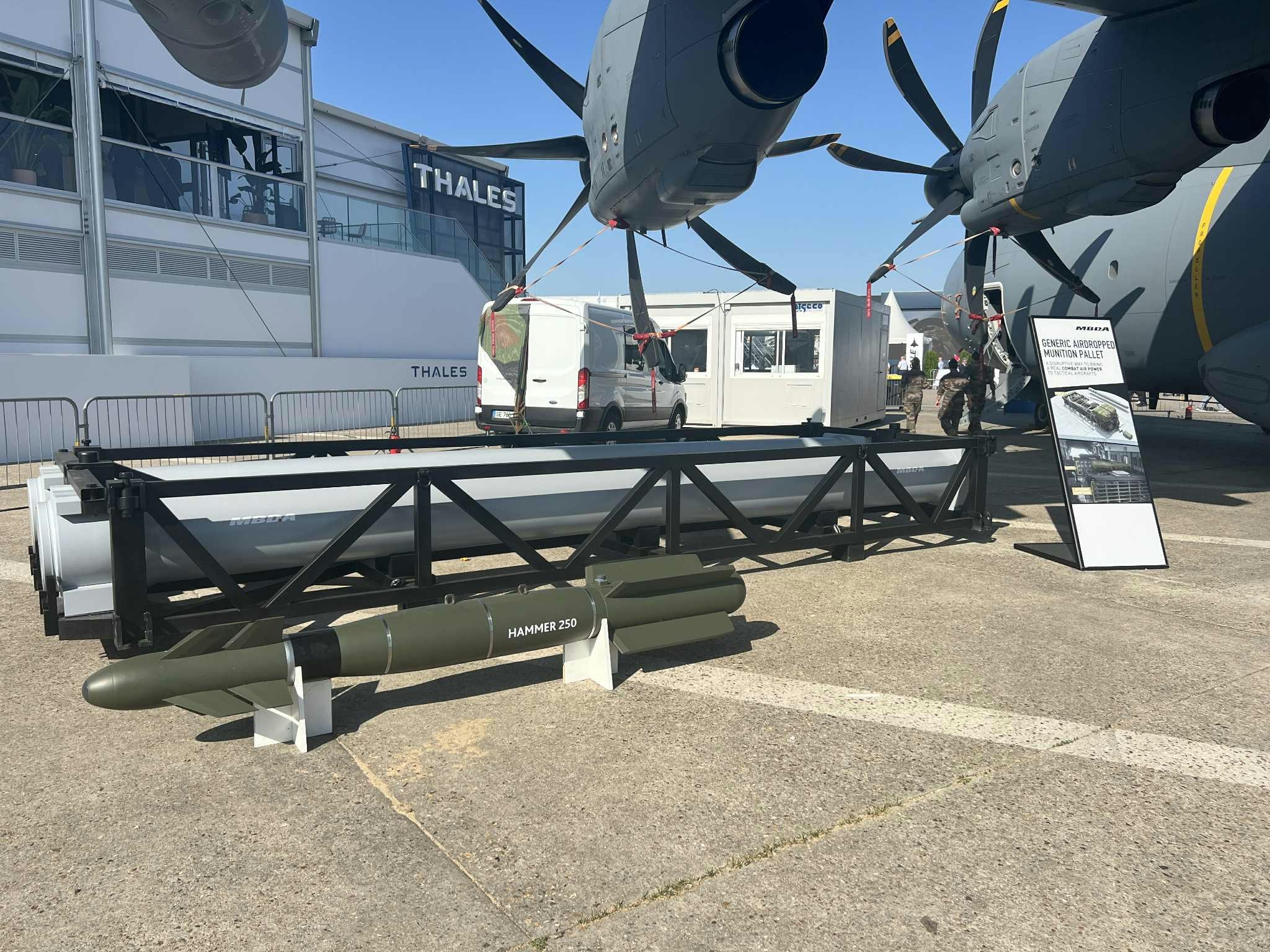
At the Paris Air Show, MBDA exhibited a “Generic Airdropped Munition Pallet” alongside a French A400M, showcasing the aircraft’s potential to deploy a variety of munitions, including cruise missiles, Mistral surface-to-air missiles, and loitering munitions. Additionally, a collaboration between Thales and Swiss startup Destinus aims to develop palletized, airdroppable kamikaze drones designed for mass deployment. This initiative reflects a broader trend among advanced air forces to derive new combat capabilities from transport fleets. The U.S. Air Force’s Rapid Dragon program has already demonstrated similar concepts by launching cruise missiles from unmodified cargo aircraft.

France’s decision to expand its A400M fleet occurs amid a dynamic period for the European aerospace sector. The move may attract scrutiny in light of the ongoing Air France and Airbus trial, which carries significant historical implications for the industry. Market reactions could also be influenced by broader sector developments, including delayed merger discussions involving Airbus, Thales, and Leonardo. Competitor responses are anticipated, particularly as European satellite ventures such as Eutelsat—supported by Airbus Defence and Space contracts—seek to compete with non-European providers like Starlink. Furthermore, Airbus’s commercial success with the A320 family, which recently surpassed Boeing’s 737 in deliveries, may shape market perceptions and strategic decisions across the aerospace landscape.

More news
Magnetic MRO Expands Pratt & Whitney Engine Support for A320neo Operators

Magnetic MRO Expands Pratt & Whitney Engine Support for A320neo Operators

Magnetic MRO Expands Pratt & Whitney Engine Support for A320neo Operators Magnetic MRO has extended its maintenance approval for Pratt & Whitney (P&W) engines, now encompassing a broader range of PW1000G-series powerplants that equip Airbus A320neo-family aircraft. This expanded certification enhances Magnetic MRO’s competitive standing within the European maintenance, repair, and overhaul (MRO) market, enabling the company to support a more diverse array of airlines, particularly those operating mixed-engine fleets. Strengthening Service Capabilities for A320neo Operators The PW1000G engine family is among the most prevalent in Europe’s A320neo fleet. As airlines increasingly prioritize flexibility and efficiency in fleet management, comprehensive maintenance capabilities have become a decisive factor in selecting MRO partners. Magnetic MRO’s enhanced approval allows it to offer a wider suite of services through a single provider, thereby streamlining maintenance planning and reducing administrative burdens for operators. Marko Männiste, Managing Director of Magnetic MRO, highlighted the strategic importance of this development, stating that the expanded capability enables the company to support a significant and growing segment of the regional fleet. He noted, “Our customers will benefit from access to a wider range of maintenance services from a single provider, helping to streamline fleet support and reduce operational challenges.” Navigating a Shifting Market Landscape This expansion occurs amid evolving market dynamics. The aging fleet of CFM Leap engines is generating increased maintenance demand, potentially leading to an oversupply of spare engines. Such conditions may prompt airlines to seek more competitive pricing for maintenance services, especially as demand for current-generation engines—including the CFM Leap, Pratt & Whitney GTF, and GEnx—faces additional pressure from rising fuel costs. In response, airlines are expected to scrutinize MRO offerings with greater rigor, favoring providers that can deliver both cost efficiency and operational reliability. Meanwhile, competitors such as HAECO are broadening their support for Airbus components, which could divert attention from Magnetic MRO’s Pratt & Whitney engine services and intensify competition within the sector. Despite these challenges, Magnetic MRO’s latest approval extension positions the company to address evolving customer requirements and assist airlines in maintaining high operational reliability. By offering a more comprehensive range of services, Magnetic MRO aims to simplify fleet management for A320neo operators and reinforce its role as a key maintenance partner in the region.
Singapore Airlines Considers Widebody Aircraft Order Amid Fleet Renewal

Singapore Airlines Considers Widebody Aircraft Order Amid Fleet Renewal

Singapore Airlines Considers Widebody Aircraft Order Amid Fleet Renewal Evaluating Options for Long-Haul Fleet Modernization Singapore Airlines is engaged in preliminary discussions with Airbus and Boeing regarding a potential order for at least 50 large widebody aircraft, according to industry sources cited by Reuters. The airline is assessing the Airbus A350-1000 and Boeing 777X models as part of its strategy to renew its long-haul fleet, with negotiations reportedly including options for additional aircraft beyond the initial order. This prospective acquisition would represent a significant advancement in Singapore Airlines’ ongoing efforts to modernize its fleet. Currently, the airline operates 65 Airbus A350-900s, 22 Boeing 777-300ERs—averaging over 16 years in service—and 12 Airbus A380s. While the A380 remains integral to its network, Singapore Airlines has previously indicated plans to phase out the type eventually, underscoring the need for suitable replacements. Challenges and Strategic Considerations Singapore Airlines is already a major customer for the Boeing 777X, having placed orders for 20 Boeing 777-9s in 2017 and an additional 11 in 2021, totaling 31 aircraft. However, the 777X program has encountered ongoing certification delays. Initially expected to enter service in 2020, the aircraft’s certification is now anticipated in early 2027, according to recent statements by FAA Administrator Bryan Bedford. In contrast, the Airbus A350-1000 is currently in commercial operation and offers operational commonality with Singapore Airlines’ existing A350-900 fleet. Nevertheless, Airbus has cautioned about delivery delays across several programs due to persistent supply-chain challenges. The decision between these aircraft will significantly influence Singapore Airlines’ long-haul operations throughout the 2030s. Both the A350-1000 and 777X fall within the 350- to 400-seat category and are capable of servicing the airline’s longest routes to Europe, North America, and Australia. Competitive Landscape and Future Initiatives Singapore Airlines’ fleet renewal occurs amid intensifying competition in the global aviation market. Leading carriers such as Lufthansa have recently committed to widebody orders from both Airbus and Boeing, increasing competition for delivery slots and favorable contract terms. Regional competitors, including Ethiopian Airlines, are also negotiating substantial Airbus orders, highlighting the competitive pressures Singapore Airlines faces. Market analysts are closely monitoring how Singapore Airlines balances its financial position with strategic fleet decisions in this challenging environment. Meanwhile, the airline’s low-cost subsidiary, Scoot, is reportedly considering expanding its fleet with additional Airbus A320neo aircraft, a move that could reshape its market positioning and operational approach. In an effort to enhance passenger experience, Singapore Airlines plans to introduce Starlink satellite connectivity across its long-haul fleet starting in the first quarter of 2027. This initiative aims to establish a new standard for in-flight connectivity in the region and may prompt competitors to upgrade their own services. As of this writing, Singapore Airlines, Airbus, and Boeing have not issued public statements regarding the reported negotiations.
United CEO Says 900 Jets Grounded Due to Engine Shortage, Impact to Last Years

United CEO Says 900 Jets Grounded Due to Engine Shortage, Impact to Last Years

United CEO Highlights Severe Engine Shortage Grounding 900 Jets Worldwide United Airlines CEO Scott Kirby has disclosed that a critical shortage of aircraft engines and essential components has led to between 800 and 900 jets being grounded or placed in storage globally. Speaking at Bernstein’s 42nd Annual Strategic Decisions Conference, Kirby described the situation as unprecedented, with disruptions expected to persist for several years, significantly impacting airline operations, manufacturing schedules, and passenger services. Strained Supply Chains and Operational Challenges Kirby emphasized the ongoing strain on the global aviation supply chain, noting that the shortage extends beyond grounded aircraft to delayed deliveries and rising operational costs. The most acute difficulties involve Pratt & Whitney’s PW1000G geared turbofan (GTF) engines, which power widely used models such as the Airbus A320neo, Airbus A220, and Embraer E2 jets. While some aircraft like the A320neo and Boeing 787 Dreamliner have alternative engine options, others—including the A220 and E2—lack such flexibility, forcing operators to ground affected planes. Additional engine families, including CFM International’s LEAP series and Rolls-Royce’s Trent engines, are also experiencing reliability and availability challenges. This shortage has triggered a cascade of operational disruptions. Airlines face the difficult choice of grounding significant portions of their fleets, which threatens flight cancellations and reduced passenger capacity. Maintenance demands have increased in complexity, driving up costs as carriers seek alternative parts or engines. Furthermore, manufacturing and delivery timelines for new aircraft are being extended, complicating future fleet planning and expansion. Industry Implications and Leadership Controversies The ongoing crisis presents both challenges and opportunities within the competitive airline landscape. While United and other carriers contend with grounded jets and schedule disruptions, rival airlines may leverage the situation to expand their market share. Kirby’s recent personal travel choices, including flying first class on American Airlines rather than United, have attracted scrutiny and sparked debate regarding his leadership priorities amid the crisis. Additionally, Kirby dismissed speculation about a potential merger with JetBlue, citing the unprofitable nature of JetBlue’s routes and reaffirming United’s commitment to independently managing the current challenges. The engine shortage highlights the fragility of the aviation supply chain and underscores the complex hurdles airlines must overcome to maintain reliable service. With no immediate resolution anticipated, industry leaders warn that the repercussions will continue to shape airline operations and competitive dynamics for years to come.
Azorra Delivers First ATR Aircraft to JSX

Azorra Delivers First ATR Aircraft to JSX

Azorra Delivers First ATR Aircraft to JSX, Expanding Regional Connectivity Azorra has officially delivered the first of two ATR 42-600 aircraft to JSX, a Dallas-based public charter carrier. This milestone marks the commencement of a new partnership and reinforces Azorra’s growing presence in the North American aviation leasing market. The ATR 42-600’s operational capabilities are expected to enable JSX to expand its public charter network significantly, providing access to thousands of additional airports across the United States, including many that are underserved by major commercial airlines. Enhancing JSX’s Network and Customer Experience Michael Davis, Chief Marketing Officer at Azorra, emphasized the strategic importance of this delivery, stating, “As JSX builds on the momentum of its tenth anniversary, the airline continues to innovate by connecting underserved airports across the United States and enabling travellers to avoid congested airport hubs.” He highlighted that the addition of the ATR 42-600 aircraft will offer customers more travel options while maintaining JSX’s commitment to a seamless flying experience. Davis also expressed optimism about the partnership’s potential, underscoring Azorra’s support for JSX’s vision. JSX’s Chief Financial Officer, Jeff Simmons, noted the growing demand for the airline’s public charter services and the role the ATR 42-600 will play in meeting this demand. He remarked, “Balancing customer experience with fuel efficiency is more important than ever, and we appreciate Azorra’s support as JSX helps shape the future of regional air travel.” The introduction of these aircraft aligns with JSX’s strategy to enhance operational efficiency while expanding its service footprint. Operational and Market Implications The integration of the ATR 42-600 into JSX’s existing fleet is expected to present certain operational challenges, including adjustments in maintenance protocols, crew training, and scheduling logistics. These factors will require careful management to ensure a smooth transition and sustained service quality. Additionally, the financial aspects of expanding the fleet are likely to attract scrutiny from industry analysts, as both carriers and lessors navigate the complexities of evolving market demands. Azorra’s recent acquisition of eight Airbus A220 aircraft from Dubai Aerospace Enterprise (DAE), which have also been delivered to JSX, further illustrates the competitive dynamics within the aviation leasing sector. As Azorra adapts to technological advancements and shifting customer requirements, competitors may respond by expanding their own fleets or investing in next-generation aircraft to maintain market relevance. The delivery of the ATR 42-600s not only strengthens the collaboration between Azorra and JSX but also reflects broader trends in the evolution of regional air travel in the United States. Carriers are increasingly focused on enhancing connectivity and operational efficiency amid a rapidly changing industry landscape.
MRO Growth Drives Demand for Skilled Workers, Including Military Retirees

MRO Growth Drives Demand for Skilled Workers, Including Military Retirees

MRO Sector Expansion Spurs Demand for Skilled Workforce, Including Military Veterans PUTRAJAYA (June 4) — Malaysia’s aircraft maintenance, repair, and overhaul (MRO) industry is experiencing significant growth, driven by increased investment in business aviation. This expansion is creating a heightened demand for skilled workers, with Malaysian Armed Forces (MAF) veterans emerging as a key talent pool to address the sector’s workforce needs, according to Transport Minister Anthony Loke. Strategic Collaboration to Harness Military Expertise Following a ceremony marking a strategic partnership between the Ministry of Transport (MOT) and the Ministry of Defence (Mindef) aimed at enhancing Technical and Vocational Education and Training (TVET) for MAF personnel, Minister Loke emphasized Malaysia’s rising status as a regional MRO and business aviation hub, particularly centered in Subang. He noted that the growth in aircraft numbers directly correlates with increased MRO requirements and a corresponding need for more technicians. The country’s appeal is further strengthened by substantial foreign investment in private jets and business aviation, with many international companies establishing MRO facilities in Subang. Malaysia’s competitive operating costs and well-developed infrastructure have positioned it as a preferred MRO hub not only for the domestic market but also for the broader ASEAN region and beyond. Nonetheless, the sector faces challenges common to the global aviation industry, including labor shortages, supply chain constraints, geopolitical uncertainties, and tariff pressures, as outlined in a recent Oliver Wyman survey. These factors underscore the urgency of expanding the skilled workforce. Minister Loke highlighted that MAF retirees possess technical skills and competencies that closely match industry demands. He stated, “The fastest group that can meet this demand is military retirees because they already have the necessary skill sets. They only require minimal additional training before they can be absorbed into the industry.” The MOT-Mindef TVET initiative seeks to capitalize on these existing skills across various transport subsectors, including air, sea, and land. Facilitating Transition from Military to Civilian Roles The collaboration between MOT and Mindef reflects a strong synergy, as the skill sets required in the transport sector are largely present among military retirees. Minister Loke explained that competencies developed in defence roles translate effectively to civilian industries. For instance, MAF retirees with experience operating trucks and heavy vehicles will be supported in converting their military licences to civilian Class E driving licences at no cost—a process that typically incurs fees ranging from RM4,000 to RM5,000. This demand for skilled workers in Malaysia’s MRO and transport sectors aligns with global trends. The United Arab Emirates has reported a 1.5% growth in its skilled private-sector workforce, driven by international demand for specialised expertise. Similarly, the United States Bureau of Labor Statistics has documented rising demand for veterans in civilian sectors such as public safety, manufacturing, and infrastructure. Worldwide, organisations are actively working to reduce barriers to entry and expand training opportunities to attract new talent into skilled trades. Defence Minister Datuk Seri Mohamed Khaled Nordin added that approximately 5,000 MAF personnel retire annually, with over 4,000 retirees aged 39 and above who remain in their productive years. Transition programmes overseen by the Armed Forces Veterans Affairs Corporation (Perhebat) are being restructured to better align with industry requirements and enhance employment prospects for future retirees. Personnel in pre-retirement transition phases continue to receive government salaries, as this period is considered part of their service. The transition lasts one year, including six months of industrial training, before personnel are integrated into civilian roles.
Welsh Researchers Help Develop First Hydrogen Aircraft Engine

Welsh Researchers Help Develop First Hydrogen Aircraft Engine

Welsh Researchers Advance Hydrogen Aircraft Engine Technology Researchers at Swansea University have been instrumental in a landmark achievement in aviation, contributing to the successful demonstration that hydrogen can power modern aircraft engines. This milestone was reached through the four-year international HYEST (Hydrogen Engine System Technologies) programme, led by Rolls-Royce and easyJet, which recently completed the first successful test of a contemporary aero engine operating on 100% hydrogen at full take-off power. Pioneering Materials Research for Hydrogen Engines The breakthrough represents a significant stride toward developing lower-carbon aviation technologies as the industry seeks alternatives to traditional fossil fuels. Hydrogen is widely regarded as a promising solution to reduce aviation’s carbon emissions, although experts acknowledge that considerable technical and infrastructural challenges remain before hydrogen-powered flight can become commercially viable. Swansea University’s Institute of Structural Materials (ISM) played a crucial role by providing essential data on material performance under the extreme conditions required for hydrogen-fuelled engines. The researchers developed advanced testing facilities capable of simulating cryogenic temperatures and high-pressure hydrogen environments. These facilities, created in collaboration with Swansea’s Steel and Metals Institute, enable scientists to replicate the harsh conditions inside hydrogen engines and generate vital data to assess the safety and performance of future designs. Professor Geraint Whittaker, director of the ISM and the Rolls-Royce University Technology Centre in Materials at Swansea, emphasized the university’s expertise in materials testing. He described ISM as an internationally recognised centre specialising in mechanical testing at high temperatures, noting that collaboration with the Steel and Metals Institute brought complementary expertise in handling challenging industrial gases such as hydrogen. This partnership facilitated the creation of unique testing capabilities. Professor Whittaker highlighted that the research has produced extensive data supporting the development of hydrogen-powered gas turbines. He pointed to the close collaboration with Rolls-Royce, which has enabled laboratory-scale mechanical characterisation to directly inform understanding of material behaviour in hydrogen-fuelled engines. International Collaboration and Industry Implications The HYEST programme united partners from the UK and abroad, with the final engine testing conducted at NASA’s Stennis Space Center in the United States. Louise Gale, a materials specialist at Rolls-Royce, described the work as part of a broader effort to establish whether hydrogen can safely and efficiently power future aircraft. She noted that the NASA testing represented the culmination of a comprehensive global programme aimed at proving hydrogen’s viability as an aerospace fuel. Gale underscored the importance of Swansea University’s specialist testing capabilities, stating that the development of hydrogen-fuelled engines requires novel materials testing to validate behaviour in hydrogen environments. The test facilities developed by Swansea have been critical in generating key materials data to support component design and safety assessments. Despite this progress, significant challenges remain on the path to commercial hydrogen aviation. These include the high costs associated with hydrogen production and storage, the need for substantial infrastructure investment, and technical difficulties in optimising hydrogen engines for large-scale use. The industry’s advancements have prompted increased investment in hydrogen propulsion technologies, with competitors such as China and other major aerospace firms accelerating research and forming strategic partnerships to advance their own hydrogen capabilities.
Gategroup's Baltic Play: Reshaping Europe's Aviation Supply Chain

Gategroup's Baltic Play: Reshaping Europe's Aviation Supply Chain

Gategroup's Baltic Play: Reshaping Europe's Aviation Supply Chain Strategic Expansion into the Baltic Region Gategroup’s recent acquisition of the Latvian and Estonian airline catering operations from LSG Group, previously owned by private equity firm Aurelius, marks a significant development in Europe’s aviation supply chain. Although the financial details of the deal remain confidential, industry analysts recognize this move as a critical step in the ongoing consolidation and outsourcing trends within the airline catering sector. By integrating a lean operation of 250 employees based in Riga and Tallinn, Gategroup strategically extends its Northern European presence into the Baltic region, a market of growing importance. This acquisition aligns closely with Gategroup’s established three-pillar growth strategy, which emphasizes organic growth, capitalizing on outsourcing opportunities, and pursuing selective, high-value acquisitions. The addition of the Baltic hubs complements the company’s 2020 landmark purchase of LSG’s larger European operations from Lufthansa, a transaction that significantly reshaped the continent’s catering landscape and solidified Gategroup’s partnership with the German airline giant. Herman Anbeek, President of Gategroup’s European region, described the deal as a “perfect fit” for the company’s European growth ambitions, highlighting the enhanced ability to provide seamless service to airline clients across the region. The integration also allows Gategroup to leverage its global procurement and logistics capabilities to improve operational efficiency locally. Financial Strength and Industry Challenges The timing of this acquisition is notable, coming on the back of a record-breaking 2024 for Gategroup. The company reported revenues of CHF 5.2 billion and an EBITDA increase of 73% to CHF 391 million, underscoring its robust financial position. This strength enables Gategroup to pursue targeted acquisitions that reinforce its competitive stance against major rivals such as dnata and Newrest. Despite these positive developments, the aviation supply chain continues to face significant challenges. Geopolitical tensions, particularly the ongoing Iran-U.S. conflict, have raised concerns about the stability of raw material supplies, as noted by the French aerospace group Gifas. Additionally, fluctuations in jet fuel prices have led airlines including Cathay Pacific, Qantas, Air New Zealand, and AirAsia Group to reduce capacity, while others like SIA Group are expanding their European operations. These market dynamics are driving industry players to reassess their technology investments and operational strategies, with a growing emphasis on network reliability and automation—a trend highlighted at the recent TOC Europe 2026 conference. Gategroup’s expansion into the Baltic region thus represents more than a regional growth initiative; it is a calculated strategic maneuver within a rapidly evolving aviation environment where scale, efficiency, and adaptability are increasingly critical to success.
LOT Polish Airlines to Pilot AI Voice Assistant Developed with ElevenLabs

LOT Polish Airlines to Pilot AI Voice Assistant Developed with ElevenLabs

LOT Polish Airlines to Pilot AI Voice Assistant Developed with ElevenLabs LOT Polish Airlines has announced a strategic partnership with ElevenLabs, a prominent developer in AI voice and audio technology, to pilot an AI voice assistant designed to enhance customer service. This initiative positions LOT as the first airline to deploy ElevenLabs’ “ElevenAgents” in a live customer support environment. Enhancing Customer Service Efficiency The AI voice assistant is intended to reduce phone waiting times and deliver prompt responses to routine inquiries, including reservations, itinerary modifications, and flight information. The system is programmed to resolve straightforward requests instantly, while more complex issues will be transferred seamlessly to human agents, accompanied by relevant caller data. This approach is designed to augment rather than replace human staff, enabling operators to concentrate on customers requiring personalized assistance. By automating standard queries, LOT anticipates improved operational efficiency and better management of call volume surges, particularly during peak travel periods. The pilot program is scheduled to launch this summer, initially providing support in Polish and English during selected hours. The airline also plans to expand language capabilities and extend the AI assistant’s functionality to chat and mobile app platforms in the future. Challenges and Industry Implications The rollout of this technology presents several challenges. Maintaining LOT’s established customer service standards through the AI voice interface and ensuring smooth integration with existing systems will be critical to the project’s success. Additionally, the airline must address potential passenger resistance, as some customers may prefer direct interaction with human agents. Market reactions are expected to be mixed. While many passengers may appreciate the convenience and speed offered by AI-driven service, others could express concerns about diminished human contact. Competitors in the aviation sector may respond by accelerating their own AI initiatives or forming partnerships with technology providers like ElevenLabs, potentially driving increased investment in AI voice solutions industry-wide. ElevenLabs’ Expanding Influence Founded by Polish entrepreneurs Piotr Dąbkowski and Mati Staniszewski, ElevenLabs has rapidly expanded its global footprint. Its AI voice services are currently utilized by organizations in 80 countries and by 67% of employees within Fortune 500 companies. LOT Polish Airlines’ adoption of this AI voice assistant reflects a broader trend in the aviation industry toward integrating advanced artificial intelligence technologies to improve customer experience and operational efficiency.
United Airlines Stockpiled Widebody Jets During Pandemic to Expand Mediterranean Routes Ahead of Delta

United Airlines Stockpiled Widebody Jets During Pandemic to Expand Mediterranean Routes Ahead of Delta

United Airlines Stockpiled Widebody Jets During Pandemic to Expand Mediterranean Routes Ahead of Delta Strategic Fleet Retention Amid Industry Downturn The COVID-19 pandemic brought global air travel to an unprecedented halt, with passenger volumes plunging by more than 90%. In response, most major airlines implemented aggressive cost-cutting measures, including the retirement of entire aircraft types to streamline operations and reduce expenses. American Airlines, for instance, phased out its Airbus A330s, Boeing 757s and 767s, Bombardier CRJ200s, and Embraer E190s. Similarly, Delta Air Lines retired its Boeing 777s along with its McDonnell Douglas MD-88 and MD-90 fleets. United Airlines, however, adopted a markedly different approach. Instead of downsizing its fleet extensively, United chose to retain nearly all of its aircraft, anticipating a swifter recovery in travel demand. This decision positioned the airline advantageously, particularly in transpacific markets, and enabled rapid expansion across the Atlantic, including the launch of new routes such as Newark to Johannesburg. While United did retire a limited number of older Pratt & Whitney-powered Boeing 757-200s—primarily used for transcontinental flights—the majority of its widebody and long-haul aircraft were placed in storage but remained ready for reactivation. The airline’s 16 Boeing 767-400ERs, distinct from its 767-300ERs in both parts and engine configuration, were also temporarily grounded but subsequently returned to service as demand improved. Unlike some competitors, United’s fleet composition avoided a proliferation of “oddball” aircraft types, reducing the need for further downsizing. Competitive Advantages and Emerging Challenges United’s decision to stockpile widebody jets has allowed it to outpace American and Delta in restoring and expanding international services, particularly to Mediterranean destinations. This fleet strategy has provided the airline with a significant operational edge during the recovery phase. However, the broader aviation industry continues to face substantial challenges, including ongoing supply chain disruptions. For example, Qantas has experienced delays in the delivery of Airbus A350-1000 aircraft, a situation that could similarly affect United’s plans to deploy additional aircraft on new routes. In response to United’s expansion, competitors are also adjusting their strategies. Airlines such as Ethiopian are accelerating growth through new Airbus orders, while American and Delta may recalibrate their route networks and fleet compositions to protect their market shares. Moreover, United’s ambitions are subject to external risks, including regulatory obstacles, geopolitical tensions, and the unpredictable effects of conflicts and bureaucratic complexities on international operations. Despite these headwinds, United’s pandemic-era fleet management has conferred a distinct advantage in the current recovery. By retaining its widebody jets, the airline is well-positioned to capitalize on emerging opportunities in transatlantic and Mediterranean markets, even as the industry contends with ongoing uncertainty and intensifying competition.
SITA Acquires AI Platform to Address Flight Disruptions

SITA Acquires AI Platform to Address Flight Disruptions

SITA Acquires AI Platform to Address Flight Disruptions SITA, a global leader in air transport communications, has announced the acquisition of Big Blue Analytics, a move aimed at tackling the persistent challenges posed by flight disruptions. Finalized on June 4, 2026, the deal incorporates Big Blue Analytics’ advanced AI-powered disruption management platform, OCC Assistant Manager (OCCam), into SITA’s portfolio. This strategic acquisition is designed to help airlines and passengers mitigate the growing impact of delays and cancellations worldwide. Confronting the Aviation Disruption Crisis The aviation industry continues to face significant operational challenges stemming from unpredictable weather conditions, logistical constraints, and outdated management systems. These factors often lead to cascading failures within airline operations, with legacy infrastructure breakdowns identified as a primary cause of widespread airport disruptions. The resulting delays and cancellations generate billions of dollars in annual losses, affecting grounded flights, crew availability, and passenger compensation. Traditionally, airlines have addressed disruptions through fragmented processes, managing aircraft scheduling, crew assignments, and passenger rebooking independently. This siloed approach has exacerbated operational bottlenecks and intensified financial losses, frequently leaving thousands of travelers stranded during major incidents. SITA’s acquisition of Big Blue Analytics directly addresses these systemic inefficiencies. By integrating OCCam’s AI-driven capabilities, SITA aims to offer airlines a comprehensive, real-time overview of their operations. This holistic perspective is intended to accelerate recovery from unforeseen disruptions and prevent localized delays from escalating into widespread travel crises. Integration Challenges and Market Dynamics Despite the technological advancement represented by this acquisition, SITA faces considerable challenges in integrating OCCam with existing airline systems. Resistance from providers of legacy technology and the complexity of merging new AI tools with entrenched infrastructure may slow the deployment process. Furthermore, the acquisition intensifies competition within the aviation AI sector, prompting rivals such as Volatus Aerospace and Flight Science to accelerate their innovation efforts. The absence of disclosed financial details has drawn scrutiny from investors concerned about SITA’s growth prospects amid rising competition from established AI platform providers like Nvidia. Competitors are expected to respond by enhancing their proprietary data assets and emphasizing unique features to distinguish their offerings from SITA’s expanded suite. Financial Imperatives Driving Innovation Central to this acquisition is the urgent need to reduce the substantial financial losses caused by flight disruptions. OCCam’s AI platform has demonstrated its effectiveness in real-world applications, enabling airlines to recover more swiftly from operational setbacks and minimizing the domino effect of delays across networks. By adopting a unified and intelligent approach to disruption management, SITA seeks to transform how airlines respond to crises, ultimately protecting both their financial performance and the travel experience of millions of passengers. As the aviation industry faces increasing pressure to modernize, SITA’s acquisition signals a new era of AI-driven resilience. However, integration challenges and competitive dynamics will continue to influence the evolution of global air travel.
line









