
Превращайте аналитические выводы ИИ в реальные действия

В тренде
Categories
Fraport Reports January 2026 Traffic Figures
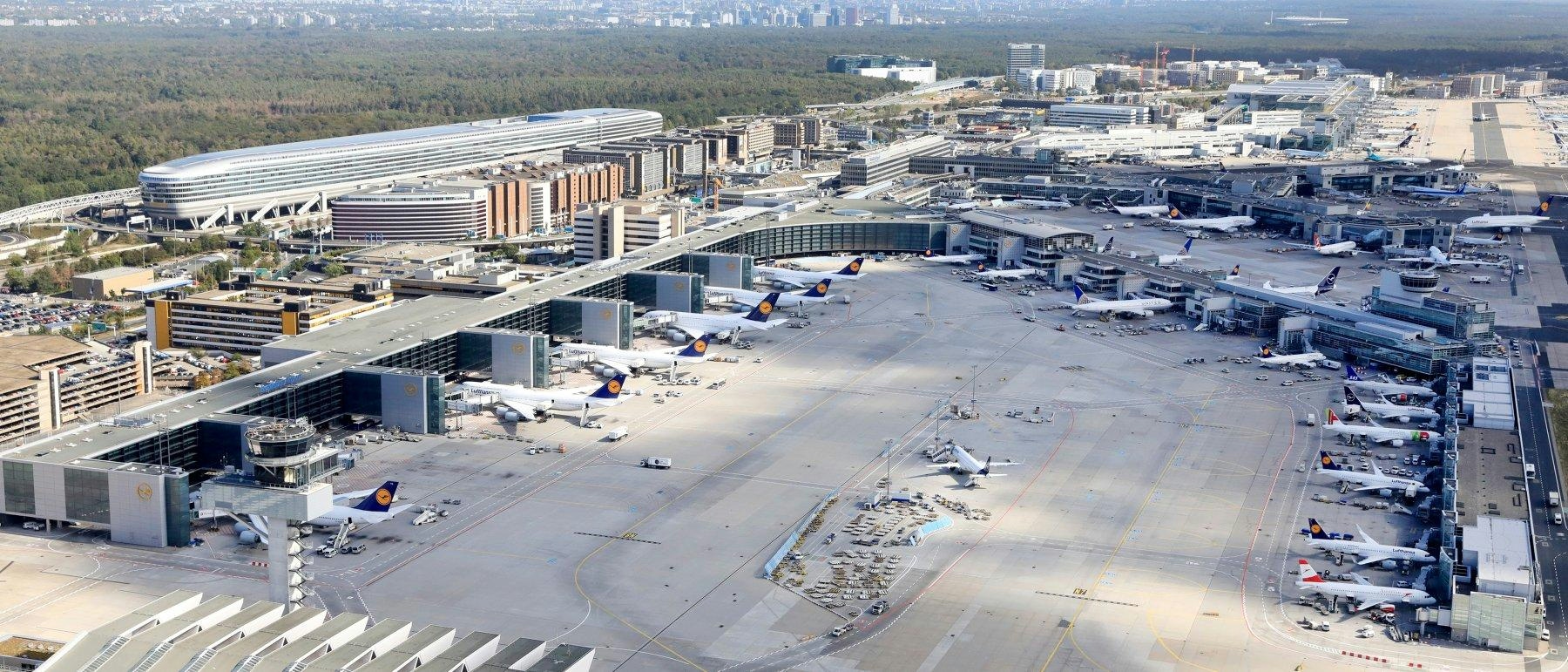
Fraport Reports Growth in January 2026 Traffic Amid Market Shifts
Frankfurt Airport (FRA) recorded a notable increase in passenger traffic in January 2026, welcoming 4.1 million travelers, a 4.9% rise compared to the same period last year, according to data released by Fraport AG. Cargo throughput experienced a modest growth of 1.2%, reaching 150,044 metric tonnes. Aircraft movements also saw a slight uptick of 1.1%, totaling 31,284 take-offs and landings, while the total maximum take-off weight increased by 0.6% year-on-year to approximately 2.0 million metric tonnes.
International Portfolio Shows Broad-Based Passenger Growth
Fraport’s international airports demonstrated strong performance across all regions. Ljubljana Airport (LJU) in Slovenia reported a significant 20.8% increase in passenger numbers, reaching 87,672. In Brazil, the combined traffic at Fortaleza (FOR) and Porto Alegre (POA) airports rose by 24.9%, handling a total of 1.3 million passengers. Lima Airport (LIM) in Peru experienced a more modest growth of 1.3%, with 2.2 million travelers passing through. The group’s 14 Greek airports collectively served 717,808 passengers, reflecting an 8.1% increase. Bulgaria’s coastal airports, Burgas (BOJ) and Varna (VAR), saw passenger numbers climb by 16.2% to 92,263. Antalya Airport (AYT) in Turkey recorded a 7.4% rise, reaching 1.1 million passengers. Overall, Fraport-managed airports handled approximately 9.6 million passengers in January, marking a 7.1% year-on-year increase.
Navigating a Dynamic and Competitive Aviation Environment
These positive results emerge amid a complex and evolving aviation landscape. Airlines such as Ryanair have revised their fiscal 2026 forecasts upward, driven by strong demand, which has led to capacity adjustments across the sector. Conversely, some competitors are anticipating declines; Vienna Airport, for example, projects a reduction in passenger numbers for 2026, attributing this to decreased capacity from low-cost carriers including Ryanair and Wizz Air. Such developments may affect passenger flows at Fraport’s airports, particularly if capacity cuts extend to routes within its network.
Regulatory factors are also influencing market conditions. Recent legal rulings at Dublin Airport, where authorities have imposed a passenger cap, highlight the potential for regulatory constraints to impact airport traffic and capacity management. Fraport, alongside other airport operators, faces the challenge of balancing growth prospects with the uncertainties posed by shifting demand patterns, competitor strategies, and regulatory pressures.
Despite these challenges, Fraport’s January traffic figures underscore the group’s ongoing recovery and resilience, positioning it to adapt effectively to the changing dynamics of the global aviation sector.

Etihad Airways Suspends Airbus A380 Flights on Key Route

Aditya Birla Group Seeks Approval for Aircraft Leasing in GIFT City

Qatar Airways Highlights Innovation and Connectivity at Arabian Travel Market 2026

Hong Kong's Five-Year Plan Includes Andrew Fan's Aircraft Parts Processing Hub Proposal

ACIA Aero Leasing Delivers ATR72-600 to Air Nostrum

RTX Appoints Jill Albertelli as Head of Pratt & Whitney

TAT Technologies Joins Beyond Aero Hydrogen Aircraft Program

AURAK Study Highlights Barriers to Air Taxi Adoption in Emerging Economies

Xiamen Air Selects Altitude for 787 Maintenance at Heathrow

Etihad and Swissport Extend Global Partnership
