Изображение

AeroGenie — Ваш интеллектуальный второй пилот.

Спрашивайте что угодно. Анализируйте все. Действуйте незамедлительно.

В тренде

Categories

FTE Airport Digital Transformation Power List EMEA 2026 Highlights Leading Airports
April 23, 2026By ePlane AI
FTE Airport Digital Transformation Power List EMEA 2026 Highlights Leading Airports
0
0
Airport Digital Transformation
Aeroporti di Roma
Innovation Hub

FTE Airport Digital Transformation Power List EMEA 2026 Highlights Leading Airports

Emanuele Calà and Aeroporti di Roma’s Digital Leadership

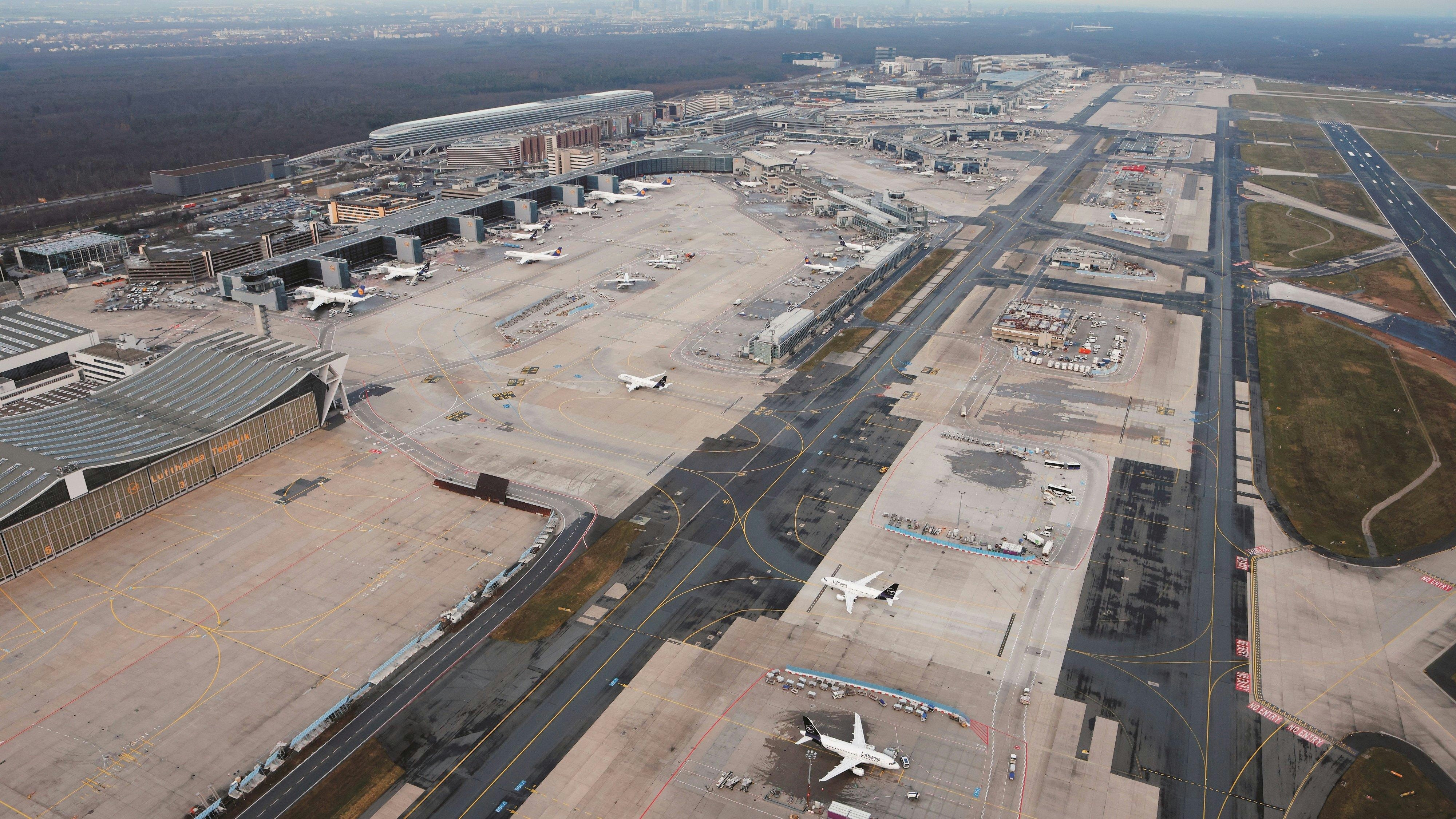
Emanuele Calà, Senior Vice President of Transformation & Technology and Managing Director of ADR Ventures, is spearheading the digital transformation of Aeroporti di Roma (ADR), establishing Fiumicino Airport as a global hub for next-generation technological innovation. As a Corporate Partner of the FTE Digital, Innovation & Startup Hub, Calà oversees ADR’s Innovation Hub, where a dedicated multidisciplinary team of 30 “Innovation Cabin Crew” mentors startups and drives innovation across the airport ecosystem.

Under his guidance, ADR has launched the ‘Runway to the Future’ acceleration programme, which has attracted over 1,000 startups worldwide. ADR Ventures plays a crucial role by providing both funding and expertise, enabling these startups to scale solutions that improve airport operations, enhance passenger experience, and promote sustainability. Collaboration is central to ADR’s approach; the company co-founded the ‘Airports for Innovation’ network, linking ten leading airports globally to simultaneously test and implement new technologies. Additionally, ADR partners with the Lufthansa Innovation Hub to exchange best practices and foster innovation.

Technological Innovations and Operational Advancements

Artificial intelligence (AI), robotics, automation, and the Internet of Things (IoT) form the backbone of ADR’s transformation strategy. AI-powered platforms now enable real-time monitoring of aircraft movements, passenger flows, and airside operations, shifting airport processes from reactive to predictive. Key initiatives include AI copilots for Procurement and Human Resources, AI-driven baggage handling developed in partnership with Azalea Robotics, and autonomous cleaning robots trained through Virtual Reality. Passenger-facing AI solutions, such as chatbots and integrated service platforms, facilitate seamless and personalized interactions throughout the travel experience.

Operational resilience and safety remain paramount. ADR has piloted advanced optical systems for Foreign Object Debris detection, real-time construction monitoring, and predictive weather analytics—all powered by AI—to enhance efficiency and risk management. Across the airport, AI integrates previously fragmented operations into a unified, continuously learning ecosystem, enabling faster, smarter decision-making while augmenting human expertise.

The upcoming fourth edition of the Call4Startups programme will engage over 400 startups in co-developing solutions focused on AI, automation, robotics, and active noise reduction. These startups will collaborate closely with ADR’s Innovation Cabin Crew in real operational environments, reinforcing ADR’s vision of transforming Fiumicino into a smart city where innovation, experimentation, and collaboration drive operational excellence, sustainability, and an improved passenger experience.

Challenges and Industry Impact

Despite significant progress, the digital transformation journey presents challenges. Integrating advanced digital infrastructure with legacy systems, ensuring sustainable energy consumption, and managing the financial demands of large-scale projects remain critical hurdles. The broader market has responded positively to comprehensive digital transformation strategies. For instance, Amsterdam Airport Schiphol recently issued €500 million in bonds to finance its own transformation efforts, while Swedavia reported notable increases in operating profit and passenger numbers following its digital initiatives. These developments have heightened investor interest and prompted competing airports to accelerate their digital strategies to maintain competitiveness.

In recognition of his pivotal role in advancing ADR’s digital transformation, fostering open innovation, and embedding AI and emerging technologies across airport operations and passenger services, Emanuele Calà has been named to the FTE Airport Digital Transformation Power List EMEA 2026.

More news
Airbus Achieves Milestone in A350F Cargo Door Development

Airbus Achieves Milestone in A350F Cargo Door Development

Airbus Achieves Milestone in A350F Cargo Door Development Completion of First Main Deck Cargo Door Airbus has reached a pivotal milestone in its A350F freighter program with the completion of the first main deck cargo door at its Illescas facility in Spain. This critical component has now been delivered to the final assembly line in Toulouse, where it will be integrated into the fuselage of the program’s first test aircraft. Ground and flight testing for the A350F are planned for 2026 and 2027, with two aircraft designated for the certification campaign. The main deck cargo door is a defining feature of the A350F, measuring 4.5 meters in width and 4.3 meters in height, making it the largest of its kind in the industry. Its design aims to enhance cargo handling by enabling faster, safer, and more efficient loading and unloading operations. Positioned in the rear fuselage, the door helps maintain an optimal center of gravity during loading. Constructed from advanced composite materials and equipped with an electrically powered actuation system, the door exemplifies Airbus’s commitment to innovation and operational efficiency. Production and Assembly Process The Illescas facility, a key Airbus center specializing in large composite structures, is responsible for manufacturing the door’s structural skins and completing its assembly before shipment. During the pre-series phase, the doors are installed in Toulouse. However, once serial production begins, integration will transition to Hamburg, where the door will be fitted into the aft fuselage and equipped with its actuation systems prior to final transport to Toulouse. A350F’s Capabilities and Market Position The A350F is engineered to address evolving air freight demands, offering a range of up to 8,700 kilometers and a payload capacity of 111 tonnes, positioning it well for long-haul operations. The aircraft is constructed with more than 70% advanced materials, resulting in a significantly lighter airframe compared to competitors, which enhances operational efficiency. Powered by Rolls-Royce Trent XWB-97 engines, the freighter is expected to achieve up to 20% lower fuel consumption and carbon emissions relative to previous-generation models. It is also the only freighter fully compliant with ICAO’s 2027 CO₂ standards and will be capable of operating with up to 50% sustainable aviation fuel at entry into service, with plans to reach 100% capability by 2030. Market Implications and Challenges Ahead This development has attracted considerable attention within the air cargo market, as the A350F emerges as a strong alternative to Boeing’s 777-8F. The progress of Airbus’s program has reportedly prompted Boeing to consider accelerating its own freighter development timelines to maintain competitiveness. Additionally, ongoing geopolitical tensions, particularly between the United States and China, may affect Boeing’s delivery schedules and order books, potentially providing Airbus with a strategic advantage. Despite this achievement, Airbus faces potential challenges, including the complexities of integration and the risk of delays during test flights. As the A350F advances toward certification, industry observers will closely monitor how Airbus manages these hurdles and how the competitive dynamics in the freighter market evolve.
Aeroporti di Roma Implements Outsight’s Physical AI System at Fiumicino Airport

Aeroporti di Roma Implements Outsight’s Physical AI System at Fiumicino Airport

Aeroporti di Roma Expands Deployment of Outsight’s Physical AI System at Fiumicino Airport Aeroporti di Roma (ADR) has announced a major expansion of its collaboration with Outsight, implementing the company’s Physical AI and 3D LiDAR technology across nearly all common-use areas within the Schengen zone at Rome Fiumicino Airport. This strategic move is designed to enhance operational efficiency, improve the passenger experience, and enable data-driven decision-making at Italy’s busiest airport. Enhancing Operational Efficiency Through Advanced Technology Outsight’s Spatial Intelligence platform utilizes real-time LiDAR data to deliver actionable insights into traveler flows, queue formation, and congestion patterns. This technology provides ADR with a comprehensive, end-to-end perspective of the passenger journey, facilitating more agile resource allocation and supporting the optimization of airport processes. The large-scale rollout follows a successful pilot phase in the arrivals immigration area, where measurable improvements were recorded. Emanuele Calà, Senior Vice President Transformation and Technology at ADR, emphasized the airport’s commitment to innovation as a means to continuously improve operations and service quality. He stated, “Expanding Outsight’s technology across Schengen common-use areas reflects our confidence in solutions that turn airport data into actionable intelligence. Full visibility over traveler flows allows us to act proactively, optimize processes, and support a more seamless and predictable experience for our passengers.” Broader Implications and Industry Perspectives The adoption of advanced AI and LiDAR analytics at Fiumicino represents a significant step toward predictive, AI-driven airport operations. By establishing a digital foundation for agentic AI systems, ADR is positioning itself at the forefront of next-generation airport management. However, this technological advancement also raises important considerations. Industry experts highlight concerns regarding the impact of AI integration on the workforce, including potential job displacement and the necessity for new economic and social frameworks to manage AI-driven growth. Additionally, the risk of AI misuse by malicious actors underscores the critical need for robust governance and oversight mechanisms. Market observers are closely monitoring ADR’s initiative, focusing on how AI integration will influence operational efficiency and customer experience. The move is anticipated to prompt other airports and operators to accelerate their adoption of similar technologies in order to remain competitive within an increasingly data-driven sector. Raul Bravo, President and Co-Founder of Outsight, expressed pride in deepening the partnership with ADR. He remarked, “Transitioning from a successful pilot to full-scale deployment is a powerful validation of our Spatial Intelligence platform. By combining Physical AI, LiDAR perception, and real-time analytics, we are helping set a new standard for how major hubs can operate smarter, more responsively, and more efficiently.” As Aeroporti di Roma continues to refine its operations through advanced AI solutions, the evolution of airport management at Fiumicino is poised to serve as a significant case study for the global aviation industry, illustrating both the opportunities and challenges inherent in large-scale artificial intelligence integration.
Fokker Expands Flight Recorder Line with SkyLog-25 Acquisition

Fokker Expands Flight Recorder Line with SkyLog-25 Acquisition

Fokker Expands Flight Recorder Line with SkyLog-25 Acquisition Fokker Services Group has entered into a commercial agreement with KGB Aviation Solutions to integrate the SkyLog-25 flight data and cockpit voice recorder across a variety of aircraft platforms. This collaboration allows Fokker to offer a certified, next-generation 25-hour recording solution within its aircraft modification and retrofit programs, addressing the increasing obsolescence of legacy flight recorder systems. Advancing Flight Recorder Technology The SkyLog-25 is designed to provide operators with a reliable and cost-effective upgrade path. Its lightweight construction and full compliance with ED-112A standards simplify data access and maintenance procedures. As regulatory demands for flight data recorders become more stringent, this new solution supports operators in maintaining compliance while enhancing operational efficiency and reducing lifecycle costs. Menzo van der Beek, Co-CEO of Fokker Services Group, emphasized the significance of this development, stating, “As legacy recorder fleets age, operators face escalating maintenance costs and significant obsolescence challenges. KGB Aviation Solutions offers a highly competitive, fully certified, and technically flexible path forward. SkyLog-25 aligns perfectly with our commitment to provide customers with future-proof, reliable solutions. We look forward to deploying this capability across multiple platforms.” Market Impact and Industry Response The introduction of the SkyLog-25 coincides with a growing demand for modern, compliant recording solutions. However, integrating new technology into existing fleets presents challenges, including compatibility with diverse aircraft systems and the requirement for specialized training and support. Industry analysts suggest that Fokker’s strategic move may prompt competitors to accelerate their own technological advancements and partnerships to maintain market share, potentially intensifying competition within the flight recorder segment. Market reactions to Fokker’s expansion have been predominantly positive. Analysts indicate that the enhanced capabilities of the SkyLog-25 could strengthen investor confidence in Fokker’s ability to improve safety and operational efficiency. This optimism may translate into increased stock value and favorable sentiment among stakeholders, reinforcing the company’s position as an independent engineering and certification specialist. By integrating the SkyLog-25, Fokker Services Group reaffirms its commitment to delivering practical, future-ready modification solutions for Airbus and Boeing aircraft, positioning itself at the forefront of innovation in aircraft safety and regulatory compliance.
Safran Exceeds First-Quarter Jet Engine Revenue Estimates, Affirms Outlook

Safran Exceeds First-Quarter Jet Engine Revenue Estimates, Affirms Outlook

Safran Surpasses First-Quarter Revenue Expectations Amid Strong Jet Engine Demand French aerospace conglomerate Safran reported first-quarter revenue that significantly exceeded market forecasts, driven by a surge in jet engine deliveries and robust demand for spare parts and maintenance services. The company reaffirmed its full-year outlook, emphasizing that the ongoing conflict in the Middle East has had a limited impact on its operations to date. Robust Growth in Engine Deliveries and Aftermarket Services Safran, which co-produces the LEAP jet engines for Boeing and Airbus narrow-body aircraft through its CFM International joint venture with GE Aerospace, announced adjusted revenue of €8.62 billion ($10.08 billion) for the first quarter. This figure represents an 18.8% increase year-on-year and surpasses the analyst consensus of €8.28 billion compiled by the company. The revenue growth was primarily driven by a more than 60% rise in LEAP engine deliveries. Additionally, sales of spare parts increased by 29%, while services revenue grew by 43%. Notably, civil engine spare parts revenue—a key industry indicator—rose by 29.3% in dollar terms. Chief Executive Olivier Andriès addressed the impact of geopolitical tensions during a media call, stating that Safran had not experienced any disruption from the Middle East conflict in the first quarter and did not foresee significant effects in the near term. “We saw no impact in the first quarter and do not expect a significant impact in the second quarter at this stage,” Andriès affirmed. Industry Context and Future Outlook Safran’s strong performance aligns with broader positive momentum in the aerospace sector. Its CFM partner, GE Aerospace, also reported robust engine deliveries and indicated it remains on track to achieve the upper range of its 2026 profit forecast. This is despite preparing for potential challenges such as rising oil prices, fuel supply constraints, and slower global economic growth. Looking ahead, Safran projects revenue growth of low- to mid-teens percentages for 2026. The company anticipates recurring operating income between €6.1 billion and €6.2 billion, alongside free cash flow ranging from €4.4 billion to €4.6 billion. Safran maintains a dominant market position, with CFM engines accounting for approximately 60% of the A320neo-family order book. Andriès emphasized that the company has no plans to expand this market share, even as competitor Pratt & Whitney contends with engine supply difficulties. Navigating Technological and Market Challenges Safran and its competitors face ongoing industry challenges, including the integration of larger electrical systems into aircraft and advancing engineering efforts toward hybrid propulsion technologies. These developments have prompted manufacturers to address durability concerns in their latest-generation turbofan engines. Safran’s hybridisation initiatives are designed to sustain its competitive advantage amid these technological shifts. The market has responded positively to Safran’s quarterly results, reflecting confidence in the company’s capacity to manage operational growth while addressing emerging industry challenges. ($1 = 0.8549 euros)
Alibaba Opens Qwen App to Partners in Collaboration with China Eastern Airlines

Alibaba Opens Qwen App to Partners in Collaboration with China Eastern Airlines

Alibaba Expands Qwen AI App Through Partnership with China Eastern Airlines Alibaba Group Holding has announced a significant milestone for its flagship consumer artificial intelligence application, Qwen, by establishing its first external partnership with China Eastern Airlines. This collaboration marks a strategic effort to extend Qwen’s agentic capabilities beyond Alibaba’s internal ecosystem, integrating the app into practical, real-world services. Through this partnership, users can now manage the entire flight booking process—including searching for flights, purchasing tickets, selecting seats, and completing check-in—via a single, natural-language chat interface. The app also functions as a proactive intelligent assistant, anticipating user needs and offering relevant suggestions throughout the process. Expanding Use Cases and Strategic Vision Alibaba has indicated that the Qwen app will soon broaden its scope to include airline loyalty programs and additional travel-related services. The company plans to onboard more partners both within and outside its ecosystem, aiming to deepen the app’s real-world applications and strengthen Alibaba’s foothold in applied artificial intelligence. Wu Jia, president of the Qwen app, emphasized the significance of this expansion, stating that integrating China Eastern Airlines represents the first time the app’s agentic capabilities are accessible to external partners, thereby enhancing everyday convenience for a wider user base. This partnership underscores Alibaba’s broader strategy to accelerate adoption of its comprehensive AI stack, which encompasses infrastructure, cloud services, foundational models, and applications tailored for both enterprise and consumer markets. Earlier this year, Alibaba committed to investing 380 billion yuan (approximately US$55.6 billion) in AI and cloud technologies over three years, having already allocated more than 120 billion yuan to the sector in the preceding four quarters. Competitive Landscape and Market Response Despite Alibaba’s ambitious plans, the company faces intense competition in the AI chatbot arena from other leading Chinese technology firms such as Tencent and ByteDance, both of which have established strong positions with their own AI products. To attract and retain users, Alibaba has employed aggressive marketing tactics, including promotional incentives like free milk tea for orders placed through the Qwen chatbot, a strategy that mirrors similar campaigns by its rivals. Market reactions to the collaboration between Alibaba and China Eastern Airlines have been mixed, reflecting the nascent stage of AI chatbot integration within the airline industry. Industry analysts suggest that competitors are likely to respond by intensifying their promotional efforts and enhancing their AI capabilities to protect or grow their market share. As Alibaba opens Qwen to external partners, the company is placing considerable emphasis on real-world applications and strategic collaborations as key differentiators in China’s increasingly competitive AI landscape.
Gov. DeSantis Signs Florida Law Advancing Air Taxi and Urban Air Mobility

Gov. DeSantis Signs Florida Law Advancing Air Taxi and Urban Air Mobility

Florida Advances Urban Air Mobility with New Legislation Florida is poised to become a leader in the emerging field of advanced air mobility following the signing of House Bill 1093 by Governor Ron DeSantis. Set to take effect on July 1, the law aims to accelerate the development of air taxi services and urban air mobility infrastructure throughout the state. It facilitates public-private partnerships to finance critical upgrades at airports, including the construction of vertiports—specialized hubs designed for electric vertical take-off and landing vehicles (eVTOLs)—and the installation of electric charging stations. Infrastructure Development and Airport Initiatives Several Florida airports, including Albert Whitted Airport, Sebring Regional Airport, and Tampa International Airport, are actively exploring the integration of eVTOL aircraft for passenger and cargo transport. These vehicles, envisioned as air taxis, air ambulances, and cargo carriers, represent a transformative shift in urban transportation. They promise to reduce travel times for commuters and enhance logistical efficiency across the state. Ed Montanari, former chairman of St. Petersburg’s Advanced Air Mobility Task Force, highlighted the importance of customizing solutions to fit the unique characteristics of each city and airport. He noted that the new legislation provides a vital funding mechanism to support necessary airport improvements tailored to local needs. Sebring Regional Airport has already unveiled FAA-approved renderings of its vertiport layout, signaling growing enthusiasm among airport authorities. Andrew Bennett, deputy director of the Sebring Airport Authority, described the moment as the dawn of a new aviation era. He emphasized the potential for air taxis to significantly reduce drive times for day trips and commutes to major airports, underscoring the practical benefits of this emerging technology. The Florida Department of Transportation (FDOT) is also engaged in the Federal Aviation Administration’s “Pilot Program for Advanced Air Mobility,” which aims to test and validate these innovative transportation modes for both passengers and cargo. Industry Challenges and Competitive Landscape Despite the promising outlook, the urban air mobility sector faces considerable challenges, including intense competition and ongoing legal disputes among key industry players. Since November 2025, Joby Aviation and Archer Aviation have been involved in a high-profile legal battle. Joby has accused Archer of misappropriating trade secrets, while Archer has countered with allegations that Joby misrepresented its operations and business relationships in China. These conflicts underscore the fierce competition to develop, certify, and commercialize air taxi aircraft. Such disputes may invite increased regulatory scrutiny and could influence the strategic direction of companies within the sector. The evolving legal and competitive environment highlights the complexities inherent in bringing advanced air mobility technologies to market. Positioning Florida at the Forefront of Urban Air Mobility By enabling access to state and federal funding alongside private investment, the new law is expected to accelerate Florida’s leadership role in shaping the future of urban air mobility. As airports and companies prepare to embrace this next phase, the state is strategically positioning itself at the forefront of a rapidly evolving industry that promises to redefine urban transportation.
ICAN Chief Highlights Digital Adoption as Crucial for Aviation Efficiency

ICAN Chief Highlights Digital Adoption as Crucial for Aviation Efficiency

ICAN Chief Highlights Digital Adoption as Crucial for Aviation Efficiency Digital Transformation as a Catalyst for Reform Sakiru Balogun, Director of Membership Affairs at the Institute of Chartered Accountants of Nigeria (ICAN), has underscored the imperative of accelerated digital adoption to enhance efficiency, reduce corruption, and strengthen financial governance within Nigeria’s aviation sector. Speaking at the first anniversary of ICAN Aviation in Lagos, under the theme “Digital Transformation, Professional Excellence and Financial Governance within Nigeria’s Aviation Industry,” Balogun emphasized the urgent need to shift from manual, cash-based operations to fully digital systems. Balogun pointed out that the sector’s dependence on manual processes has historically constrained operational efficiency and created vulnerabilities to malpractice. He argued that reducing human intervention through digitalisation would not only improve service delivery but also close systemic loopholes that facilitate corruption. Addressing concerns about potential job losses due to automation and artificial intelligence, Balogun contended that digital transformation would instead generate new opportunities for those prepared to adapt. Drawing on international precedents, he stated, “We need to go digital to achieve overall efficiency. Anything involving human beings can lead to issues, including corruption. Digitalising all activities in the aviation sector is crucial for effectiveness.” Despite some advancements, such as the introduction of electronic toll payments and online transaction platforms, Balogun assessed Nigeria’s aviation efficiency at approximately 40 percent, highlighting the significant work that remains. He identified low digital literacy among many Nigerians as a major obstacle to wider adoption of digital technologies. Industry Perspectives on Digitalisation and Its Challenges Ayodele Olatiregun, Chairman of the ICAN Aviation Chapter, reinforced the importance of digitalisation in transforming financial operations within the aviation ecosystem. He noted that most transactions in the sector are now automated, marking the end of the era of physical ticketing. Olatiregun stressed that robust automated systems are essential for accurate revenue tracking and accountability, asserting that digital platforms enhance transparency and operational efficiency. Dr. Comfort Eyitayo, former ICAN President and chair of the event, emphasized that digitalisation has become indispensable in modern aviation. She highlighted the sector’s demand for precision, accountability, and rigorous risk management—qualities that are best supported by digital tools. Nevertheless, the journey toward comprehensive digital transformation faces significant challenges. Industry experts point to the need for effective data coordination and integration across airlines, airports, and other stakeholders. While data-driven decision-making is increasingly central to improving operational resilience and managing disruptions, fragmented data flows between disparate systems continue to impede the full realization of technology investments. Market Trends and Future Outlook Despite these challenges, market responses to digital adoption in aviation remain optimistic. The in-flight payment solutions market, for instance, is projected to expand from $1.42 billion in 2024 to $3.09 billion by 2033. This growth is driven by the rise of cashless payment technologies and increasing passenger demand for onboard convenience. Competitors are responding by incorporating advanced solutions such as contactless payments, e-wallets, and mobile platforms to meet evolving traveler expectations and enhance ancillary revenue streams. ICAN leadership maintains that embracing digital transformation is essential for Nigeria’s aviation sector to meet global standards of efficiency, transparency, and financial governance.
GE Aerospace Explores Aviation and Defense Partnerships in Korea

GE Aerospace Explores Aviation and Defense Partnerships in Korea

GE Aerospace Pursues Strategic Partnerships in Korea’s Aviation and Defense Sectors GE Aerospace recently engaged with Korean aerospace parts manufacturers during the "KOTRA x GE Aerospace Day" event held at the JW Marriott Hotel in Seoul on June 21. Hosted by the Korea Trade-Investment Promotion Agency (KOTRA), the event aimed to strengthen supply chain collaboration between GE Aerospace, a global leader in aircraft engine manufacturing, and Korea’s expanding aviation and defense industries. Fostering Collaboration Amid Industry Transformation The event brought together 23 domestic aviation and defense companies, featuring a detailed briefing led by GE Aerospace on emerging development trends and partnership opportunities. Key focus areas included avionics systems, power systems, engines, additive manufacturing, and aerospace time-sensitive networking (TSN). Following technical evaluations, nine Korean firms engaged in targeted one-on-one consultations with GE Aerospace representatives to explore potential collaborations. This initiative comes at a critical juncture for the global aviation and defense sectors, which are undergoing significant shifts due to evolving supply chains and the rise of next-generation technologies. The industry is increasingly prioritizing software and systems capabilities, such as unmanned aerial vehicles, AI-driven mission systems, modular open architectures, and advanced data-sharing platforms. Korea, now recognized as the world’s fourth-largest defense exporter, is leveraging its strengths in high-quality manufacturing, reliable delivery schedules, and competitive pricing to expand its influence in the global market. Challenges and Strategic Positioning Despite these opportunities, GE Aerospace faces considerable challenges in deepening its presence in Korea. The company must contend with a competitive environment dominated by established rivals like Pratt & Whitney and Rolls-Royce, both of which are expected to intensify their marketing efforts and technological innovations to maintain market share. Additionally, GE Aerospace continues to address durability concerns related to its Leap engines, an issue that has elicited mixed market responses and could affect its reputation and regional market penetration. Broader economic factors also complicate the landscape. Rising oil prices and slower global economic growth are dampening aviation demand and maintenance activities, adding further complexity to GE Aerospace’s efforts to secure new partnerships and expand its supply chain footprint in Korea. Strengthening Long-Term Partnerships and Support Frameworks Despite these headwinds, GE Aerospace reaffirmed its longstanding commitment to Korea’s aviation industry. A company official highlighted over five decades of collaboration, emphasizing GE’s role as a key partner in Korea’s military aircraft development programs and its ongoing cooperation with domestic firms. “We are growing together as influential partners in the aviation industry ecosystem,” the official stated. KOTRA intends to build on this momentum by establishing a comprehensive cooperation framework with GE Aerospace. This framework will support Korean companies in entering the global aviation and defense supply chains through a phased approach, including identifying partnership opportunities, facilitating consultations, conducting site inspections, and providing ongoing follow-up support. Kim Kwan-mook, KOTRA’s vice president and head of the Economic Security and Trade Cooperation Division, underscored the urgency of this initiative. “With global supply chain reorganization accelerating through AI-driven advancements in aviation and defense technology, now is a crucial turning point for our companies,” he said. “We will actively support our companies so they can establish themselves as key partners in the global aviation supply chain.”
Google Uses AI to Address Climate Impact of Airplane Contrails

Google Uses AI to Address Climate Impact of Airplane Contrails

Google Employs Artificial Intelligence to Mitigate Climate Impact of Airplane Contrails The aviation industry is a significant contributor to climate change, not only through the emissions produced by jet fuel combustion but also due to the formation of contrails—thin, white streaks left behind by aircraft. These contrails trap heat within the atmosphere that would otherwise dissipate, thereby exacerbating global warming. AI-Driven Approach to Contrail Reduction In an effort to address this environmental challenge, Google is harnessing artificial intelligence to assist airlines in minimizing contrail formation. By analyzing satellite imagery, weather patterns, and flight data, Google's AI system identifies flights that have historically produced contrails and predicts which upcoming flights are likely to generate them. Dinesh Sanekommu, a spokesperson for Google, emphasized that this predictive capability enables more informed decision-making to reduce contrail occurrence. Currently, Google is collaborating with American Airlines to test this AI-powered forecasting tool. The initiative aims to guide pilots in avoiding atmospheric conditions conducive to contrail formation. Preliminary results indicate a reduction in contrail generation, which in turn decreases the amount of heat trapped in the atmosphere. Complexities and Industry Implications Mitigating contrail formation presents a complex challenge distinct from traditional emissions reduction. Unlike other pollutants, contrails are not significantly diminished by lowering aircraft soot emissions. Consequently, AI solutions must incorporate a broad spectrum of atmospheric and operational variables, making the task more intricate than conventional approaches to reducing aviation emissions. This initiative emerges amid increasing scrutiny of the aviation sector’s environmental footprint and growing demands for sustainable practices. Google’s involvement not only enhances its standing within the technology and environmental communities but also reflects a wider industry trend. Competitors such as SpaceX are exploring space-based AI data centers with similar environmental objectives, signaling a shift toward integrating advanced technologies in climate mitigation efforts. As the aviation industry continues to evolve, the application of AI and sophisticated data analytics is poised to become a cornerstone of sustainable aviation. Google’s partnership with American Airlines may serve as a model, fostering further innovation and collaboration across the sector in addressing the pressing issue of climate change.
American Airlines Receives 100th Boeing 737 MAX, Marking Fleet Milestone

American Airlines Receives 100th Boeing 737 MAX, Marking Fleet Milestone

American Airlines Receives 100th Boeing 737 MAX, Marking Fleet Milestone American Airlines has achieved a significant milestone with the delivery of its 100th Boeing 737 MAX 8 aircraft, underscoring the carrier’s ongoing commitment to modernizing its narrowbody fleet amid the aviation industry’s recovery from the pandemic. This milestone reflects American’s strategic focus on enhancing operational efficiency and maintaining competitiveness on high-frequency domestic and short-haul international routes. Fleet Modernization and Operational Efficiency Based in Dallas, American Airlines has made one of the largest single-type fleet investments among U.S. carriers by expanding its 737 MAX fleet. The newer aircraft offer approximately 20% better fuel efficiency compared to previous-generation narrowbodies, a critical advantage given the volatility of fuel prices and their impact on airline profitability. Executives at American have emphasized that this fleet expansion is directly linked to reducing the cost-per-available-seat-mile, a key metric that influences fare stability and the potential need for ancillary fees such as baggage charges. The timing of the 100th 737 MAX delivery coincides with American’s recent centennial anniversary, reinforcing a narrative of renewal as the airline contends with intensifying competition from Southwest, United, and Delta. The new aircraft will be deployed across American’s extensive domestic network as well as select international routes to Mexico, the Caribbean, and Central America. Competitive Challenges and Industry Context While the modernization of American’s narrowbody fleet strengthens its position in short- and medium-haul markets, the airline faces ongoing challenges in the broader competitive landscape. Rivals such as Delta and United have placed larger orders for widebody jets, positioning themselves for growth in lucrative long-haul international markets. Industry analysts caution that unless American accelerates its own widebody acquisitions, it risks falling behind in global network expansion and premium market share. Pressure is mounting for the airline to announce substantial new widebody orders to remain competitive. Boeing, meanwhile, has delivered over 500 737 MAX variants worldwide since the aircraft’s return to service following its 2019-2020 grounding. This delivery volume reaffirms the 737 MAX’s status as a workhorse for medium-haul operations. Boeing’s commercial jet business is showing signs of recovery, having recently narrowed its quarterly losses despite some delivery delays caused by wiring issues. Implications for Cost Management and Passenger Experience For American Airlines, the operational efficiency of the 737 MAX fleet is a critical factor in controlling costs. Improved fuel economy enables the airline to better manage expenses and potentially avoid unpopular fee increases on baggage, carry-ons, and seat selection. As the airline industry increasingly relies on ancillary revenue to offset rising fuel and labor costs, fleet modernization remains essential for maintaining competitive fares and protecting profit margins. This milestone also reflects broader trends within the aviation sector, where major carriers are accelerating the retirement of older aircraft and investing in new deliveries to optimize their fleets for current operational demands. --- **Frequently Asked Questions** **Why does American’s 737 MAX fleet size matter to passengers?** Modern aircraft like the 737 MAX consume significantly less fuel, helping airlines stabilize fares and reduce pressure to increase baggage and seat fees. **How does the 737 MAX compare to older narrowbodies in fuel consumption?** The 737 MAX uses about 20% less fuel than its predecessors, directly improving airline cost-per-seat economics.
line










