
Превращайте аналитические выводы ИИ в реальные действия

В тренде
Categories
Garuda Indonesia Leases Widebody Aircraft for Hajj Operations
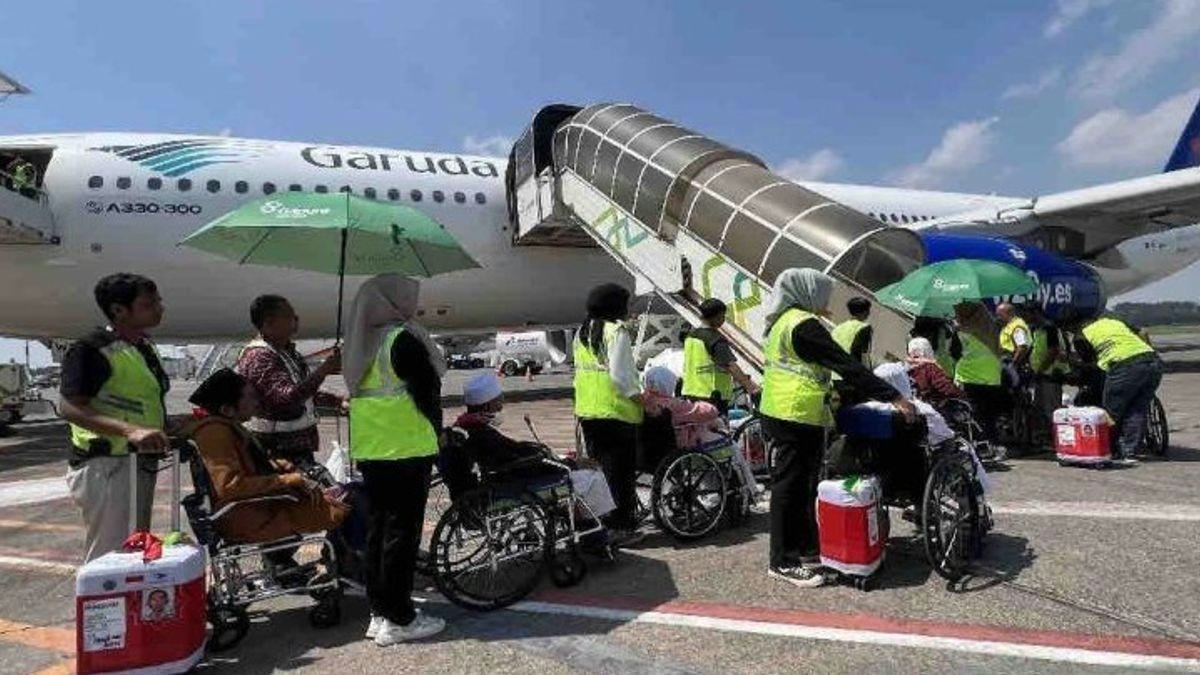
Garuda Indonesia Leases Widebody Aircraft for 2026 Hajj Operations
Garuda Indonesia has commenced its 2026 Hajj operations by deploying a mixed fleet of owned and leased widebody aircraft to transport over 102,000 Indonesian pilgrims to Saudi Arabia. The national carrier is operating 15 widebody jets in total, comprising eight aircraft from its own fleet and seven leased units, servicing ten embarkation points across Indonesia.
Fleet Composition and Leasing Details
The leased aircraft include Airbus A330-300s operated by Thai AirAsia X, World2Fly Portugal, and World2Fly Spain, alongside an A330-900neo from Lion Air. According to Garuda’s CEO Glenny Kairupan, the airline’s Hajj fleet consists of six Boeing 777-300ERs, six A330-300s, and three A330-900neos. Flight tracking data from the initial departures confirms the active deployment of four leased aircraft: Thai AirAsia X’s HS-XTI, World2Fly Portugal’s CS-WFP, World2Fly Spain’s EC-KCP, and Lion Air’s PK-LET. Additionally, at least seven in-house aircraft—five Boeing 777-300ERs and two A330-900neos—were operational as of April 24, 2026.
Garuda Indonesia, alongside Saudi Arabian Airlines (Saudia), remains one of the two carriers authorized to operate Indonesia’s Hajj flights. Outbound services to Jeddah and Madinah are scheduled from April 22 to May 21, with return flights planned between June 1 and June 30, 2026. While the airline has not disclosed specific terms of its leasing agreements, previous tender documents suggest a preference for damp lease contracts, which typically provide aircraft and crew but exclude full operational support.
Market Context and Strategic Implications
Garuda’s decision to augment its fleet through leasing reflects broader shifts in the global aviation market. In the United States, for example, American Airlines trails competitors Delta and United in expanding their widebody fleets, with the latter two carriers having over 100 widebody aircraft on order. This trend highlights the increasing strategic importance of widebody capacity in securing profitable long-haul routes, a factor likely influencing Garuda’s fleet planning.
Regionally, the shortage of widebody aircraft in markets such as India—underscored by comments from IndiGo’s incoming chief executive—illustrates the challenges airlines face in acquiring suitable aircraft for peak demand periods like the Hajj. Meanwhile, Malaysia Airlines’ parent company has indicated no major changes to its fleet strategy despite ongoing instability in the Middle East, suggesting that Garuda’s leasing approach is primarily driven by operational requirements rather than geopolitical factors.
Industry analysts observe that Garuda’s leasing strategy may prompt competitors to reevaluate their own fleet and leasing policies, potentially intensifying competition within the widebody leasing market. As demand for long-haul and charter services continues to grow, airlines in the region are expected to increasingly rely on flexible leasing arrangements to adapt to evolving market conditions and operational demands.

Etihad Airways Suspends Airbus A380 Flights on Key Route

Aditya Birla Group Seeks Approval for Aircraft Leasing in GIFT City

Qatar Airways Highlights Innovation and Connectivity at Arabian Travel Market 2026

Hong Kong's Five-Year Plan Includes Andrew Fan's Aircraft Parts Processing Hub Proposal

ACIA Aero Leasing Delivers ATR72-600 to Air Nostrum

RTX Appoints Jill Albertelli as Head of Pratt & Whitney

TAT Technologies Joins Beyond Aero Hydrogen Aircraft Program

AURAK Study Highlights Barriers to Air Taxi Adoption in Emerging Economies

Xiamen Air Selects Altitude for 787 Maintenance at Heathrow

Etihad and Swissport Extend Global Partnership
