
Превращайте аналитические выводы ИИ в реальные действия

В тренде
Categories
GE Aerospace and Pratt & Whitney Develop NGAP Engines for Boeing F-47 Fighter
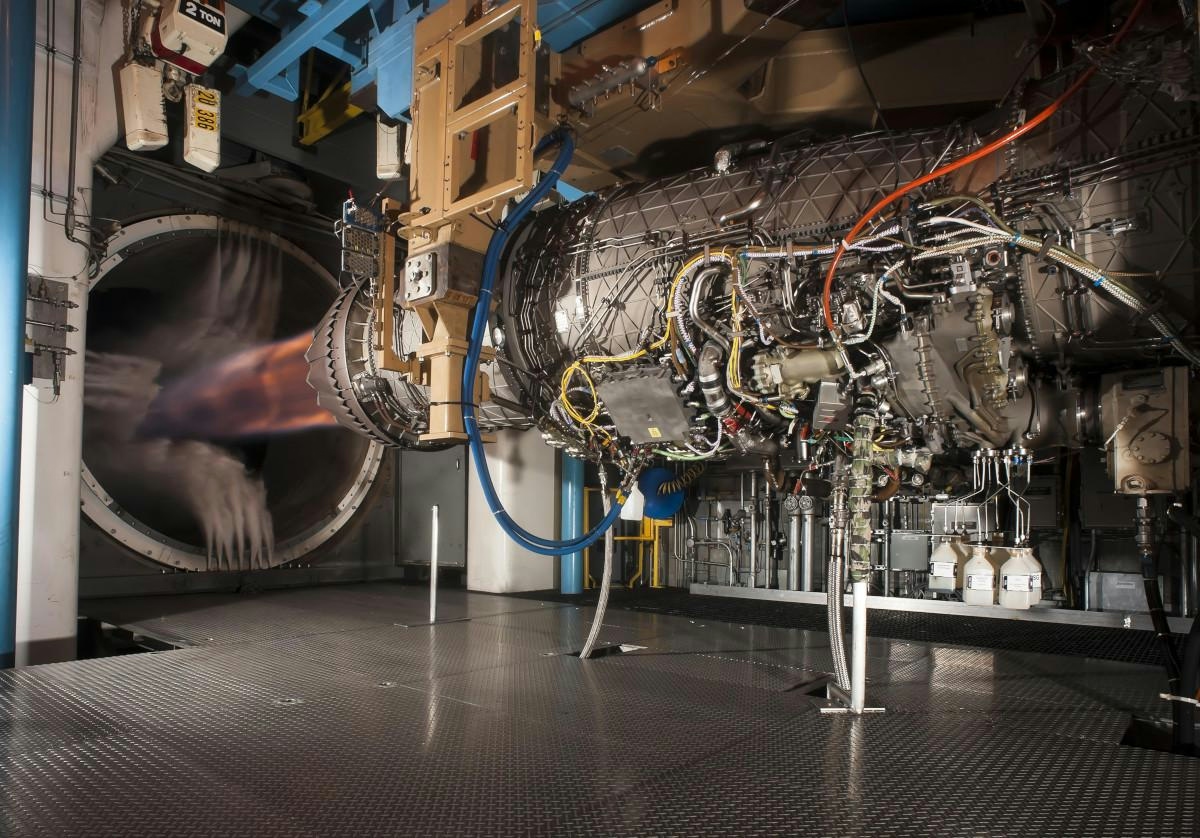
GE Aerospace and Pratt & Whitney Advance NGAP Engines for Boeing F-47 Fighter
Progress in Adaptive-Cycle Engine Development
GE Aerospace and Pratt & Whitney have achieved critical design milestones in the development of adaptive-cycle turbofan engines under the US Air Force’s Next Generation Adaptive Propulsion (NGAP) program. These engines are intended to power Boeing’s forthcoming F-47 sixth-generation air dominance fighter. On May 11, 2026, GE Aerospace completed an assembly readiness review of its XA102 engine design, while Pratt & Whitney finalized a technical assessment of its XA103 engine on May 8, 2026. Both companies utilized fully digital engine models to accelerate development and facilitate a smoother transition from design to manufacturing.
GE Aerospace’s assembly readiness review assessed the XA102’s design integrity, manufacturing processes, and supply chain readiness. The company anticipates receiving additional US Air Force funding to support the next phase of NGAP development later this year. Steve Russell, general manager of GE’s Edison Works advanced projects unit, underscored the maturity of the XA102 and highlighted the benefits of a digital-first approach, which enables faster and more precise delivery of advanced propulsion capabilities.
Similarly, Pratt & Whitney, a subsidiary of RTX, views the completion of its XA103 technical assessment as a pivotal step toward prototype assembly. Jill Albertelli, president of military engines at Pratt & Whitney, emphasized the development of innovative digital validation tools and projected that the XA103’s performance will exceed that of current propulsion systems. The company plans to assemble an XA103 prototype in the late 2020s, followed by ground testing.
Challenges and Strategic Implications
The development of NGAP engines presents significant technical challenges, including the complexity of adaptive-cycle turbofan technology and the necessity for rigorous testing to meet stringent military standards. Potential delays in US Air Force funding could further complicate development timelines. Despite these obstacles, advancements in next-generation propulsion have attracted increased investor interest in the aerospace sector. Competitors are expected to intensify efforts to secure similar contracts, with some likely to pursue partnerships to mitigate the technological and financial risks associated with developing cutting-edge engine designs.
F-47 Flight Testing and NGAP Integration
The Pentagon plans to commence flight testing of the Boeing F-47 as early as 2028, prior to the certification of NGAP engines. As a result, the initial F-47 fighters will not be equipped with adaptive-cycle turbofan engines. Neither the US Air Force nor Boeing has disclosed which engines will power the first production batch of F-47 aircraft.
The NGAP program aims to mature technologies that extend fighter range, reduce aircraft thermal signatures, and increase onboard electrical power generation—capabilities essential for supporting advanced weapons and sensors on sixth-generation aircraft. Adaptive-cycle engines offer the ability to dynamically adjust airflow, switching between high-thrust and fuel-efficient modes to optimize performance and endurance.
As GE Aerospace and Pratt & Whitney continue to advance their NGAP engine designs, the competition to equip the next generation of US fighters with superior propulsion technology is reshaping the landscape of military aviation.

Etihad Airways Suspends Airbus A380 Flights on Key Route

Aditya Birla Group Seeks Approval for Aircraft Leasing in GIFT City

Qatar Airways Highlights Innovation and Connectivity at Arabian Travel Market 2026

Hong Kong's Five-Year Plan Includes Andrew Fan's Aircraft Parts Processing Hub Proposal

ACIA Aero Leasing Delivers ATR72-600 to Air Nostrum

RTX Appoints Jill Albertelli as Head of Pratt & Whitney

TAT Technologies Joins Beyond Aero Hydrogen Aircraft Program

AURAK Study Highlights Barriers to Air Taxi Adoption in Emerging Economies

Xiamen Air Selects Altitude for 787 Maintenance at Heathrow

Etihad and Swissport Extend Global Partnership
