
Превращайте аналитические выводы ИИ в реальные действия

В тренде
Categories
GE Aerospace CF34 Engine Sustains Regional Jet Operations
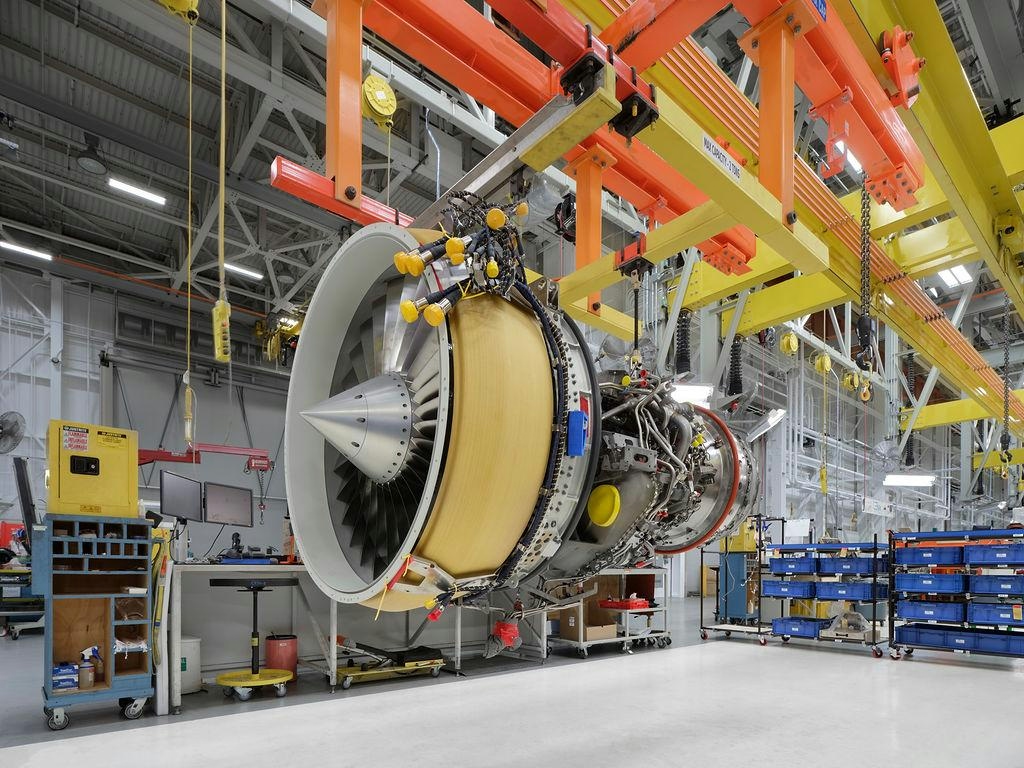
GE Aerospace CF34 Engine Sustains Regional Jet Operations Amid Emerging Challenges
The GE Aerospace CF34 engine, though largely unnoticed by the average airline passenger, continues to underpin thousands of regional jet flights daily. Installed on aircraft such as Embraer and Bombardier models, the CF34 has established itself as a dependable and enduring powerplant within the regional aviation sector. However, as the industry undergoes significant transformation, the engine confronts increasing regulatory scrutiny and mounting competition.
A Proven Workhorse in Regional Aviation
Since its debut, the CF34 has earned a reputation for exceptional reliability and longevity. With over 6,000 units delivered and more than 100 million flight hours accumulated, it remains the preferred engine for many regional carriers. Its appeal lies in extended on-wing intervals and a comprehensive global maintenance infrastructure, which includes authorized repair facilities and readily available spare parts. These factors collectively reduce operational disruptions and maintenance costs for airlines.
From a passenger perspective, the CF34 is characterized by a relatively quiet operation, producing a subdued hum rather than the louder noise associated with older engines. Originally derived from a military turbofan designed for the A-10 attack aircraft, the CF34 was adapted for commercial use with thrust capabilities ranging from 8,700 to 20,000 pounds. Current variants, such as the CF34-8 and CF34-10, power widely used regional jets including the Embraer E170/E175 and E190 series, as well as the Bombardier CRJ family.
Navigating Regulatory and Competitive Pressures
Despite its established performance record, the CF34 faces new challenges. Recent incidents involving aircraft powered by the CF34, notably the Hop-A-Jet crash, have prompted intensified oversight from aviation regulators. This increased scrutiny may lead to more stringent operational and maintenance protocols for airlines operating these engines.
Concurrently, the competitive landscape is evolving rapidly. Manufacturers like Honeywell Aerospace are advancing alternative propulsion technologies, exemplified by the development of the SkyShot1600 engine intended for next-generation light class Collaborative Combat Aircraft. Such innovations have the potential to alter market dynamics, particularly as the industry prioritizes enhanced fuel efficiency and reduced emissions.
Strategic Developments at GE Aerospace
GE Aerospace is currently undergoing a strategic transition, investing significantly in hybrid-electric propulsion systems and seeking funding for new engine programs, including the GE426 designed for uncrewed fighter aircraft. While these initiatives aim to position the company at the forefront of future aerospace technologies, they may also shift focus and resources away from the regional jet segment where the CF34 has historically been dominant.
The CF34 continues to be a vital component of regional aviation, valued for its durability and consistent performance. Nonetheless, as regulatory requirements become more rigorous and competitors introduce advanced technologies, GE Aerospace faces the critical task of maintaining the engine’s relevance in a rapidly evolving market. The CF34’s legacy remains intact, but its future will depend on the company’s ability to balance innovation with the operational demands of regional jet operators.

Korean Air Finalizes $36.2 Billion Deal with Boeing

Korean Air Finalizes Order for 103 Boeing Jets and Engines

Embraer E195-E2 Features Distinctive Engine Placement Among Regional Jets

What Passengers Can Expect on Boeing’s New 777X Jet

How Ethiopian Airlines Became Africa’s Leading Carrier Amid Gulf Competition

Joby Aviation Extends Autonomous Flight Capabilities with Cross-Country Tour

Strengthening Europe's Aviation Supply Chain Amid Uncertainty
The Evolution of the Aircraft Maintenance Engineer Role
He 111Z Zwilling: Twin Fuselages, Five Engines, One Pilot
Monacair Plans Electric Air Taxi Service Between Monaco and Nice by 2029
